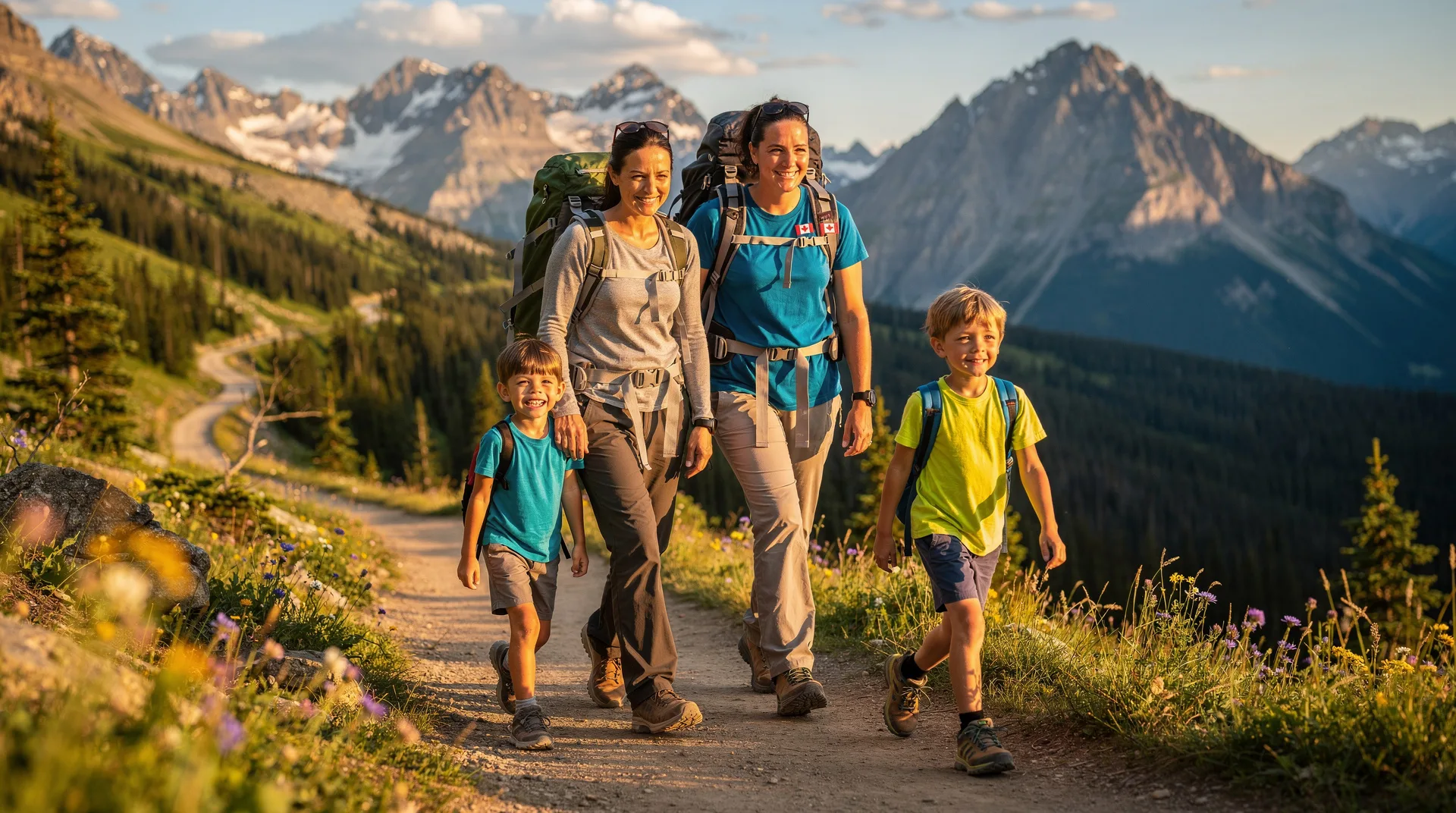
Canada with kids: family trip planning
Is Canada a good destination for families with kids?
Canada is one of the best family destinations in the world. It's safe, clean, logistically easy, and packed with outdoor experiences that genuinely excite children. The main challenges are cost, distances, and managing expectations around weather.
Canada ranks among the world’s great family travel destinations — not because it has theme parks and resorts built around children (though it has those too), but because the country’s defining experiences — mountains, wildlife, snow, big cities, and wide-open spaces — are things children find genuinely extraordinary.
A child seeing a wild bear in Banff, or their first snowfall in Quebec City, or a humpback whale surface beside a zodiac in BC — these are the moments that define a generation of family travel memories. This guide helps you plan a Canada family trip that actually works: right destinations, right timing, right logistics.
Why Canada works so well for families
The practical case for Canada as a family destination is strong:
Safety: Canada consistently ranks among the world’s safest countries. Cities are clean and low-crime. National parks have excellent infrastructure. Healthcare is good and accessible.
English-speaking (mostly): For families without French, 80% of Canada is fully English. Even in Montreal, navigating with children is easy — most Montrealers are bilingual and patient with tourists.
Outdoor activity for every age: A 4-year-old can do a 3km lake walk in Banff. A 12-year-old can manage a full-day hike. A teenager can ski Whistler’s double blacks. There’s almost nothing in Canadian nature that doesn’t scale by age.
City infrastructure: Toronto, Vancouver, and Montreal are walkable, transit-friendly, and full of museums, science centres, and parks designed with children in mind.
Wildlife: Seeing animals in the wild — bears, moose, elk, whales, polar bears — is something children remember forever, and Canada offers that in a way very few countries do.
Best destinations for families
Banff and the Canadian Rockies
The Rockies are the headline act for a reason. Turquoise glacial lakes, elk wandering into campgrounds, gondola rides to mountain summits, and some of the most photogenic scenery on earth. Children of almost any age respond to the Rockies.
Practical tips for families in Banff:
- The Banff Gondola to Sulphur Mountain summit is excellent for all ages — the views are genuinely dramatic
- Lake Louise is crowded in summer but still magical; visit early morning (before 8am) to avoid the worst of it
- Moraine Lake requires a shuttle reservation — book far in advance
- Bears are real and present; teach children the rules before you go and carry bear spray
Vancouver
Vancouver is one of the world’s most liveable cities and extremely family-friendly. Key highlights:
- Stanley Park: 400 hectares of old-growth forest with a seawall cycle path, totem poles, a miniature railway, and a petting zoo. Free to access and easy to spend a full day.
- Science World: Excellent interactive science museum — particularly good for ages 5–14.
- Vancouver Aquarium: Canada’s largest aquarium with beluga whales, dolphins, and Pacific sea life.
- Capilano Suspension Bridge: A family classic — the treetops adventure adds real excitement.
- Grouse Mountain: Easy access from central Vancouver, with skiing in winter and grizzly bears, ziplining, and lumberjack shows in summer.
Quebec City
Quebec City in winter is one of Canada’s most extraordinary family experiences. The Winter Carnival (late January to mid-February) includes ice sculptures, snow slides, outdoor concerts, and the famous ice hotel. For children who’ve never seen a proper European-style walled city, the Plains of Abraham and Château Frontenac are genuinely awe-inspiring.
In summer, the Old City is charming, walkable, and stuffed with street entertainers, horse-drawn carriages, and excellent crêperies.
Niagara Falls
Niagara is unambiguously spectacular — one of those natural wonders that actually lives up to the hype. The Hornblower / Niagara City Cruises boat tour (formerly Maid of the Mist) gets you close enough to get soaked, which children love. The surrounding town is touristy but harmless. It’s best done as a day trip from Toronto.
Toronto to Niagara Falls day tour with boat cruise — the classic family excursionToronto
Canada’s largest city has excellent family infrastructure:
- Royal Ontario Museum: World-class natural history and culture, with a dedicated family zone
- Toronto Zoo: One of the largest zoos in the world
- Ontario Science Centre: Hands-on science — particularly good for ages 6–14
- CN Tower: The views are impressive but the EdgeWalk (outdoor walk on the edge) is adults only; the glass floor section is the family highlight
- Ripley’s Aquarium of Canada: Excellent — the shark tunnel is a highlight for all ages
Prince Edward Island (for younger families)
PEI is Canada’s most family-friendly maritime province — small, safe, beautiful, and home to the Green Gables Heritage Place (Anne of Green Gables). The beaches are warm enough to swim in July and August (warmer water than Nova Scotia), the cycling trails are excellent, and the island is genuinely manageable in scale.
Planning your family itinerary
Suggested 10-day family itinerary: Western Canada
Days 1–3: Vancouver — Stanley Park, Science World, North Shore day trip
Day 4: Drive to Whistler — or take the tour — summer adventure park or winter skiing
Days 5–9: Banff and the Rockies — fly or drive; Banff Gondola, Lake Louise, Icefields Parkway, hot springs
Day 10: Calgary — Fly home from Calgary
This route is compact enough to work with younger children (under 8) and exciting enough for teenagers.
Suggested 10-day family itinerary: Eastern Canada
Days 1–3: Toronto — CN Tower, ROM, Toronto Zoo
Day 4: Niagara Falls — day trip from Toronto
Days 5–7: Montreal — Old Port, Biodome, La Ronde amusement park
Days 8–10: Quebec City — Old Town, Plains of Abraham, depending on season: Winter Carnival or summer festivals
Both itineraries avoid the mistake of trying to cover too much distance. See our trip planning guide for more itinerary ideas.
Age-by-age guide to Canada
Babies and toddlers (0–3)
Canada is manageable with very young children but requires more planning. Accommodation with kitchenette access helps. The national parks are beautiful but trails with pushchairs are limited (many are gravel or rocky). Cities — Vancouver, Toronto, Montreal — are the easiest option for this age group, with good restaurant facilities and easy access to anything you might need.
Young children (4–8)
This is arguably the best age for Canada. Children old enough to remember the trip but still young enough to be genuinely amazed by everything. The wildlife, the mountains, the snow — it all lands. Activities to prioritise: Banff Gondola, Stanley Park, Quebec Winter Carnival, Niagara Falls boat tour.
Pre-teens (9–12)
More stamina for longer hikes and travel days. This age group can handle the Icefields Parkway drive, glacier walks, whale watching, and more demanding hikes. Science centres and natural history museums are particularly popular.
Teenagers (13–17)
Whistler skiing, zip-lining in Banff, sea kayaking in BC, whale watching — Canada has excellent experiences for teenagers. Some will also engage well with Canada’s Indigenous cultural sites (Haida Gwaii, reconciliation-focused museum exhibits in major cities). The key is building in some activities they get to choose.
Practical tips for families
Book everything in advance
Peak season (July–August) in Banff, national park campgrounds, and popular tours sells out months ahead. The Moraine Lake shuttle, for example, must be reserved online — walk-ins are not possible in peak season. Niagara boat tours have queues that can be 2+ hours without a reservation.
Health and safety
Canada has excellent healthcare, but it is not free for visitors. Comprehensive travel insurance with medical coverage is essential — a single emergency room visit without insurance can cost thousands of Canadian dollars. See our safety guide.
Children’s medications (pain relief, fever reducers, allergy medication) are available in Canadian pharmacies but are expensive. Bring your own supply.
Food and costs
Canada is expensive. A family of four eating at a mid-range restaurant will typically spend CAD $120–180 per sitting before tip. Self-catering or choosing accommodation with a kitchen dramatically reduces costs. Groceries are expensive by European standards but manageable. See our budget guide for full cost breakdowns.
Supermarkets: Loblaws, Sobeys, Metro, and Save-On-Foods are the main chains. Bulk Barn is excellent for trail mix and snack supplies for hiking days.
Getting around with children
Domestic flights are the fastest option between regions but add cost and stress with young children. Canada’s train network (VIA Rail) is comfortable and scenic — children love train travel and it removes the airport hassle. Rental cars with car seats are widely available but must be reserved in advance during peak season. See our domestic flights guide and public transport guide.
Wildlife and child safety
Canada has real wildlife. Bears, cougars, moose, and coyotes are present in national parks and some suburban areas. Teach children the basics before arrival:
- Never approach or feed wildlife
- Make noise on trails to avoid surprising bears
- Stay in groups
- Follow park rangers’ instructions
The risks are low if basic rules are followed, but they are real. The same wildlife that makes Canada magical for children also requires sensible behaviour.
Budget planning for families
A family of four (2 adults, 2 children) travelling Canada can expect:
| Budget level | Daily cost (CAD) | Notes |
|---|---|---|
| Budget | $300–450 | Vacation rentals with kitchen, self-catering, free parks |
| Mid-range | $500–750 | Hotels, restaurant meals, 2–3 paid activities per day |
| Comfortable | $800–1,200 | Good hotels, guided tours, ski days, scenic experiences |
Key money-saving strategies for families:
- Choose vacation rentals with kitchens over hotels
- Buy a national parks pass (Parks Canada Discovery Pass — covers the whole family for an entire year)
- Visit Banff in shoulder season (late September or late May/early June) when prices drop 20–30%
- Book activities directly with operators rather than through hotel concierge (significantly cheaper)
- Use grocery stores rather than resort restaurants for lunches
Recommendations by family type
Young families (under 6s): Focus on one or two easy regions — Vancouver + Whistler, or Toronto + Niagara. Avoid ambitious multi-region trips that involve many travel days.
Adventure families: The Rockies are unbeatable. Consider camping (reservations essential) for the full experience, or glamping if you want comfort with wilderness access.
Culture-focused families: Eastern Canada (Montreal, Quebec City, Ottawa) has exceptional museums, French culture, and history that engages older children well.
Winter holiday families: Quebec City in January or February for Winter Carnival, or Whistler for skiing. Both are extraordinary family winter experiences.
Frequently asked questions about Canada with kids: family trip planning
What is the best age for a child’s first Canada trip?
Most families find 6–10 to be the sweet spot — children are independent enough for real hiking and activities, still genuinely excited by wildlife and scenery, and young enough that the wonder hasn’t faded. That said, teenagers often surprise parents by falling in love with Canada’s outdoors.
Is Canada safe for families with children?
Canada is one of the safest countries in the world for family travel. Crime rates are low, healthcare is excellent (though expensive for visitors), and the outdoor environments are well-managed. See our safety in Canada guide for full details.
Do children need an eTA to enter Canada?
Yes — all foreign nationals, including children, need either an eTA or a visitor visa to enter Canada. Each child needs their own. Apply at canada.ca before travelling. See our visa requirements guide.
Are there good beaches in Canada for families?
Yes. PEI and Nova Scotia have beautiful Atlantic beaches (warmest water east of BC). BC’s Tofino area has dramatic Pacific beaches, though the water is cold. Ontario’s Lake Huron and Georgian Bay have warm freshwater beaches excellent for young children. The Okanagan in BC has warm lake swimming in summer.
How do you handle long travel days with children?
Book direct flights where possible. For road trips, break the day into 2-hour maximum driving segments with a proper stop in between. Canada’s highways have excellent rest stops. Download offline entertainment on tablets and bring car snacks. The Trans-Canada Highway is long but has spectacular scenery — some stretches genuinely hold children’s attention.
What wildlife can children realistically expect to see?
In the Rockies: elk (extremely common, even in Banff townsite), black bears (frequently spotted on roadsides), bighorn sheep, and pikas. In BC: orca and humpback whales on whale-watching tours, black bears, sea lions. In Manitoba: beluga whales (summer), polar bears (October–November). Seeing wildlife is never guaranteed but is remarkably likely in the right locations and seasons.
What is the best season for a family Canada trip?
July and August are easiest logistically — long days, warm weather, everything open. Late June and September offer similar experiences with fewer crowds and lower prices. Winter is magical for families willing to embrace cold-weather activities. Spring (April–May) is the most variable but beautiful in BC. Our best time to visit guide has full seasonal breakdowns.