Dog sledding in Banff & Canmore: tours & tips
How much does dog sledding near Banff cost?
Dog sledding tours near Banff and Canmore typically range from CAD $150–$350 per person depending on duration (1–3 hours) and operator. Most tours run from December through March. Advanced booking is essential as tours have small group sizes and limited availability.
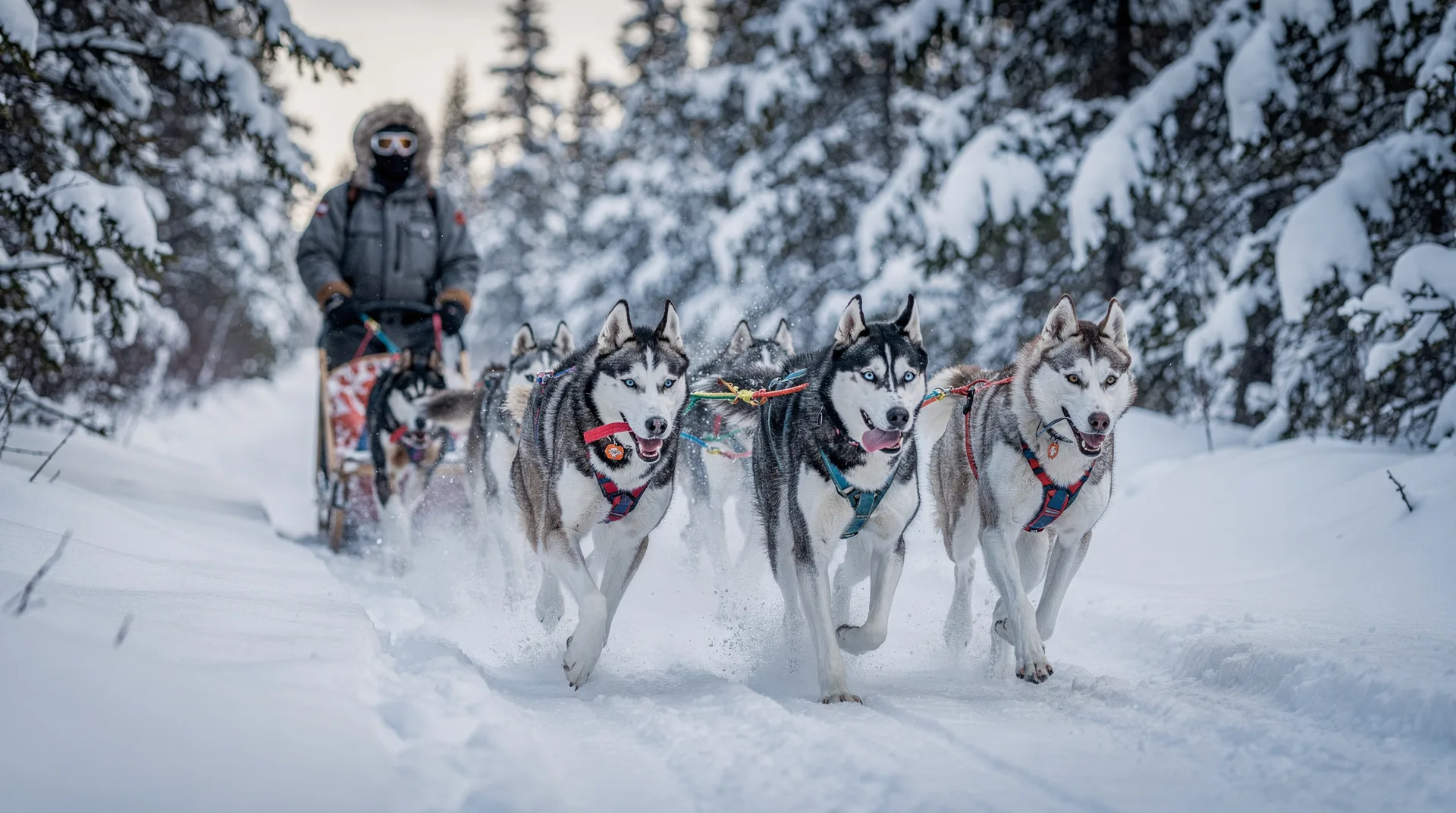
There are few winter experiences in Canada that combine physical sensation, animal connection, and spectacular scenery as effectively as dog sledding. Sitting in a sled pulled by a team of huskies through snow-covered Rockies terrain — the only sounds the padding of paws, the hiss of runners on snow, and the breathing of the dogs ahead — is one of those experiences that stays with visitors for years after the trip.
| At a glance | |
|---|---|
| Where | Kananaskis Country and terrain around Canmore and Banff, Alberta |
| Cost | Around CAD 150–350 per person for a 1–3 hour tour |
| Time needed | 2–4 hours including transfer, briefing and the run itself |
| Getting there | Most operators offer pickup from Banff or Canmore hotels; self-drive also possible |
| Best time | Mid-December through March, with January and February most reliable for snow |
Dog sledding has a deep history in Canada: it was the primary means of winter transportation in the north for centuries before snowmobiles, and the tradition continues both as working transport in the far north and as a sport and tourism experience in the mountain west. Banff and Canmore sit at the edge of the terrain that suits sled dog operation — forested valleys, groomed trail systems, and reliable winter snowpack from December through March.
How dog sledding tours work
Most dog sledding tours near Banff and Canmore operate on a similar model:
Team meeting: The experience typically begins with an introduction to the dogs — their names, breeds, personalities, and the harnessing process. Watching an experienced musher prepare a 6–10 dog team for a run is itself educational and engaging. Sled dogs in operation are different animals from pets — focused, energetic, and vocal with excitement before a run.
Mushing instruction: Before the run, guides teach you the basics of controlling a sled: how to stand on the runners, work the brake, lean through turns, and manage speed. Most tours allow passengers to ride in the basket (the main sled body) for part of the run and take the musher’s position on the runners for another section.
The run: Runs typically cover 5–15 km through forest trails or river valleys, lasting 1–3 hours depending on the package. Guides typically accompany each sled or travel with the group.
Post-run: Meeting the dogs after the run, with hot drinks and debrief, is standard practice at most operators.
Tour operators near Banff and Canmore
Several established dog sledding operations serve the Banff/Canmore corridor. Most operate on private land or via permits in the Kananaskis Country recreation area rather than within national park boundaries. Key things to look for in an operator:
Reputable markers:
- Certified membership in the Canadian Sled Dog Association or equivalent
- Clear communication about animal welfare standards and kennel practices
- Small group sizes (typically 4–12 people maximum per session)
- Experienced guides and professional mushers with competition or long-distance touring experience
- Season of 3+ years of operation
Canmore-based operators tend to use trails in the Bow Valley Kananaskis area. Banff-adjacent operators may use the Lake Minnewanka area or transport you to operating terrain outside the national park.
Tour formats:
- Passenger-only tours: You ride in the basket throughout; ideal for young children and visitors who want the experience without physical responsibility
- Mushing tours: You take control of the sled under guidance for part or all of the run; more physically engaging
- Half-day expeditions: Extended runs with wilderness picnic, covering 15+ km
- Kennel tours only: Some operators offer tours of the kennel and introduction to the dogs without a full sled run — useful for visitors with mobility limitations or very young children
Booking and availability
Dog sledding is one of the most capacity-limited winter activities in the Rockies. Each run requires a specific number of trained dogs, multiple sleds, and experienced staff. This limits the number of available spots per day to a fraction of the demand at peak times.
Peak demand: Christmas and New Year’s period, Family Day long weekend (Alberta, February), and Presidents’ Day period draw the highest demand. Book these dates 2–3 months in advance.
Regular winter season (January–February): Book 3–6 weeks in advance. Last-minute spots occasionally open from cancellations but should not be relied upon.
March: The latest viable month for guaranteed snow conditions in most years. Some operators extend through March; conditions vary by year.
Cancellation policy: Weather and trail conditions occasionally require cancellations. Most operators have clear cancellation and rebooking policies — verify before booking.
When to go
December: The season opens with the first reliable snowpack, typically early December. Holiday-season runs have a magical quality — short days, cold temperatures, and the novelty of a winter experience in the Rockies. Expect premium pricing during the Christmas-New Year window.
January: Reliable cold temperatures, settled snow conditions, and slightly easier booking availability after the holiday rush. This is arguably the best month for dog sledding — stable cold, good trail grooming, and peak dog performance (cold weather suits the dogs better than warmer months).
February: Excellent conditions. Days begin lengthening, air temperatures are still reliably cold, and the light quality improves. Family Day long weekend requires very early booking.
March: The transition month. Early March is often still excellent; late March sees warming temperatures and wet snow that can compromise trail conditions. Monitor weather and book operators who confirm conditions before the tour date.
What to wear
Dressing for dog sledding requires planning for a combination of sitting still (cold) and active mushing (warm). The musher’s position on the runners involves physical work; the passenger position in the basket means sitting without generating significant body heat.
Base layer: A moisture-wicking thermal layer (merino wool or synthetic). Do not wear cotton.
Insulating mid-layer: A substantial insulating layer — a heavy fleece or puffy jacket. This is where most heat retention comes from.
Outer layer: A windproof and waterproof shell jacket and pants. Wind at sled speed on the runners is real; a wind-stopping outer layer is essential.
Extremities:
- Warm mittens (warmer than gloves; you need all fingers together for heat)
- Wool or fleece-lined balaclava or hat that covers ears
- Wool socks (two pairs if your boots are not heavily insulated)
- Insulated, waterproof winter boots rated to at least -20°C
Most operators provide: Outer snowsuits, mitts, and boot covers as loan equipment for passengers who don’t have appropriate gear. This is standard practice and the gear provided is generally of high quality. Confirm with your operator what is provided.
Temperatures to expect: Sled dog operations occur in conditions from -5°C to -30°C. The experience is not cancelled by cold — the dogs perform better in cold conditions — but personal preparation matters significantly.
Animal welfare
Dog sledding is a subject of public discussion regarding animal welfare. Reputable tour operators in Canada operate under provincial animal welfare legislation and voluntary standards that include:
- Minimum standards for kennel space, exercise, and enrichment
- Veterinary care requirements
- Off-season exercise and socialization requirements
- Breed standards (typically Alaskan Huskies, Siberian Huskies, or crosses bred for athleticism and endurance)
When selecting an operator, ask directly about their kennel conditions, exercise program, and off-season practices. Responsible operators welcome these questions and are typically proud of their animal care standards. Operators who deflect welfare questions should be approached with caution.
The sled dogs used in Banff/Canmore tourism operations are specifically bred and trained for this work. They display visible enthusiasm at harnessing time — the noise and energy of a team being prepared is unmistakable. This is not performance; these animals are working within their evolved and trained purpose.
Banff or Canmore: where to base yourself
Most dog sledding operators serving this corridor are based in or near Canmore rather than inside Banff National Park, since commercial dog sledding generally runs on Kananaskis Country land or private leases outside Parks Canada boundaries. Staying in Canmore puts you closer to the kennels and avoids a transfer; staying in Banff means a 20–30 minute drive to most meeting points, which operators usually include as pickup.
If you’re deciding between the two towns for your whole trip, our Banff vs Canmore comparison covers the practical trade-offs beyond dog sledding. Remember that any time spent inside the national park itself — Lake Louise, Moraine Lake, the Icefields Parkway — requires a Banff park pass, which is separate from and unrelated to your dog sledding booking.
Cost breakdown and what changes the price
A CAD 150 tour and a CAD 350 tour from the same region are usually not the same experience. Price generally scales with: run length (a 1-hour taster versus a 3-hour route), whether you drive the sled yourself or ride as a passenger throughout, group size (private or small-group sessions cost more per person than larger shared sled trains), and season (Christmas–New Year and Family Day weekend command a premium over a regular January weekday).
Multi-dog private sled bookings, where a couple or family gets a dedicated sled and musher rather than sharing, sit at the top of the price range. If your budget is tight, a shorter shared-sled weekday tour in January delivers most of the same core experience — the harnessing, the run, meeting the dogs — for meaningfully less than a weekend Christmas slot.
Combining dog sledding with other winter activities
Dog sledding pairs naturally with other winter activities in the Banff/Canmore corridor:
- Ice walks in Alberta — winter canyon exploration at Johnston Canyon or Maligne Canyon
- Banff Upper Hot Springs — an obvious and satisfying post-sled recovery option
- Banff ski resorts — full-day ski and half-day dog sledding combinations are popular
- Cross-country skiing in Canada — the Canmore Nordic Centre is near most Canmore-based sled dog operators
- Stargazing in Jasper — dark sky experiences complement winter wildlife activity
Frequently asked questions about Dog sledding in Banff & Canmore: tours & tips
Is dog sledding suitable for children?
Yes — dog sledding is one of the better winter activities for children in the Rockies. Most operators accept children from age 4–5 upward in the passenger basket. The experience is exciting without being physically demanding for passengers. Very young children should dress in full winter gear (the basket is cold despite the sled speed). Children old enough to stand on the runners (typically 10+) can take brief turns in the mushing position under supervision.
Do I need prior experience to mush a sled?
No. Operators provide complete instruction before the run. The basics of sled control are straightforward, and guides typically position themselves to support less experienced mushers. Prior experience is not required and most participants have none.
How cold is too cold for dog sledding?
For the dogs, there is essentially no lower temperature limit in the range of a Canadian winter — these breeds are built for extreme cold. For passengers and mushers, -30°C with wind chill is the practical limit for most people without expedition-level gear. Operators generally cancel tours in conditions that create safety risks for human participants, not the dogs.
What if it snows during my tour?
Snowfall during a dog sled run is generally a positive — fresh snow is ideal sled surface, and running through falling snow in a forest is atmospherically extraordinary. Heavy snowfall with poor visibility may require tour modification or postponement, at the operator’s discretion.
Is dog sledding inside Banff National Park itself?
Most commercial operators run on Kananaskis Country land or private leases just outside the national park boundary, not within Banff National Park. This means a Parks Canada park pass is generally not required for the sledding tour itself, though you’ll still need one if your trip includes park attractions like Lake Louise or the Icefields Parkway on the same visit.
Can I combine dog sledding with a Banff or Jasper road trip?
Yes — dog sledding pairs well with a broader winter Rockies itinerary. Many visitors base in Canmore or Banff for a few days, adding a half-day dog sledding tour alongside skiing, the Banff Gondola, and a scenic drive. If your itinerary extends further along the Icefields Parkway toward Jasper, allow extra travel time for winter road conditions.
Explore winter adventure experiences across Canada