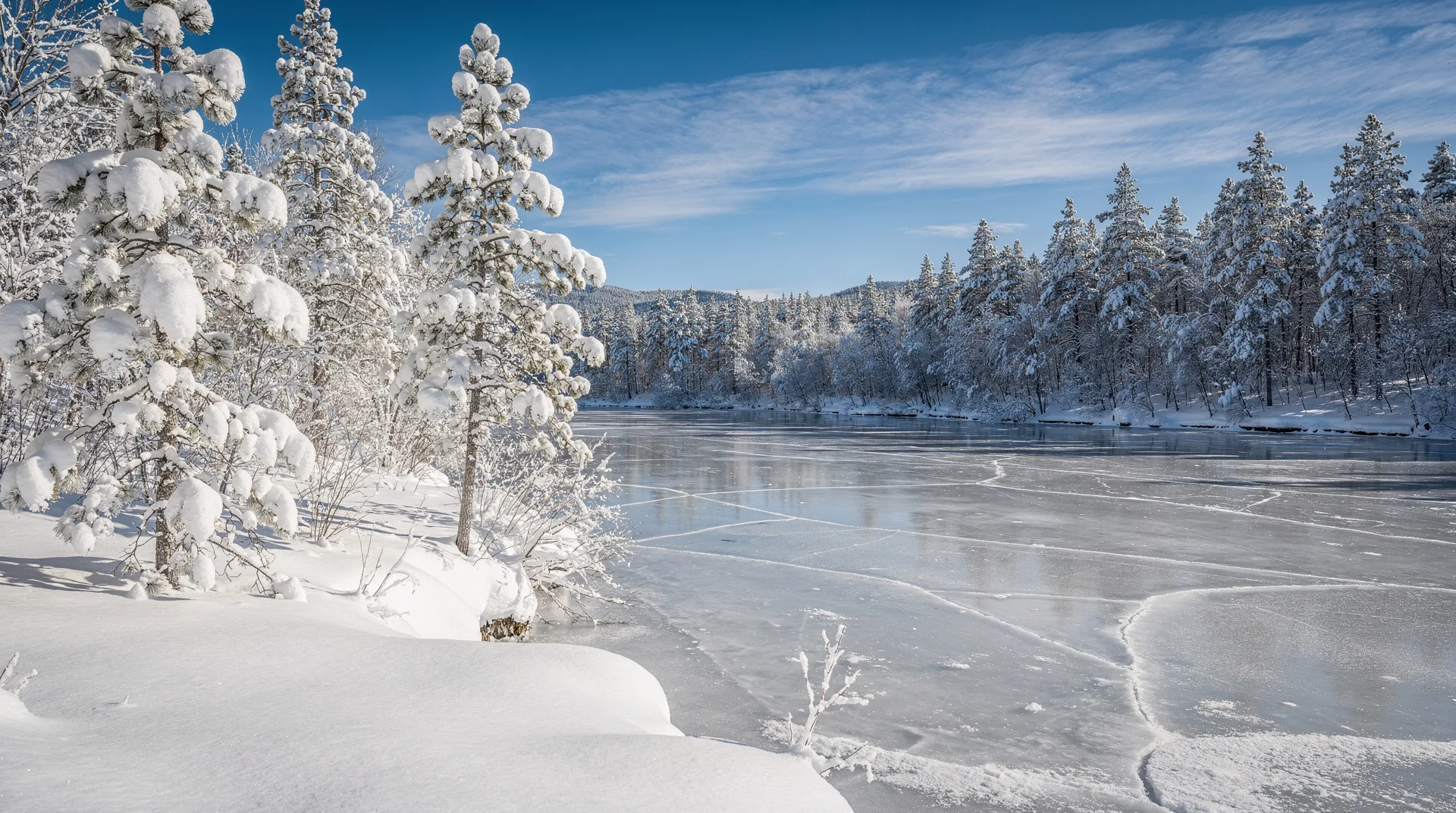
Quebec winter itinerary: 7 days of ice, snow and carnival
| At a glance | |
|---|---|
| Where | Montreal, Quebec City, Charlevoix (Le Massif, Baie-Saint-Paul) |
| Cost | Around CAD 1,800-3,200 per person for 7 days mid-range, excluding flights |
| Time needed | 7 days, best split 2 Montreal / 3 Quebec City / 2 Charlevoix |
| Getting there | Fly into Montreal (YUL) or Quebec City (YQB) |
| Best time | Late January to mid-February, to catch Carnaval and peak snow |
Quebec in winter is the rare cold-weather destination that actively markets its winters as a feature rather than a liability — and for good reason. The combination of the world’s largest winter carnival in Quebec City, Canada’s only annual ice hotel at Valcartier, outstanding cross-country skiing across the Laurentians and Charlevoix, dogsledding through boreal forest, and the genuine pleasure of walking cobblestone streets in the snow makes a Quebec winter trip feel like a story you will tell for years.
This itinerary is timed specifically for late January through late February, the window when the carnival runs, the ice hotel is open, snow conditions are reliable, and the temperatures — though genuinely cold — are manageable with the right gear.
For non-winter alternatives see Quebec 7-day itinerary and Quebec fall 7-day itinerary.
The winter window — when to go
- Early January: post-holiday quiet; cold but often very cold (-25°C snap possible). Ski conditions building.
- Mid-January to early February: peak cold but consistent snow. Hotel de Glace opens early January.
- Late January through mid-February: the sweet spot. Carnival runs first 2 weeks of February. Ski conditions peak. Ice hotel at peak form.
- Late February to early March: days lengthening, still cold. Carnival over but everything else open.
- Mid-March onwards: ice hotel closes by late March. Ski season continues into April.
Aim for early to mid-February to coincide with Quebec Winter Carnival (Carnaval de Québec) and full winter activity.
Gear — the single biggest determinant of trip enjoyment
Quebec winter averages -15°C daytime / -25°C nighttime in January-February with wind chill often -30°C or colder. Proper gear transforms the experience:
- Base layers: merino wool tops and bottoms.
- Insulating mid-layer: fleece or down.
- Outer shell: windproof, waterproof parka (knee-length recommended); insulated snow pants.
- Head: wool hat covering ears; balaclava or neck gaiter.
- Hands: insulated mittens (warmer than gloves); thin glove liner for phone use.
- Feet: insulated winter boots rated to -30°C; wool socks.
- Traction: ice grippers (Yaktrax or similar) for urban icy sidewalks.
If travelling light, rent gear in Quebec City — several outfitters do full-kit rentals for reasonable rates.
Dress in layers you can adjust, because the real challenge is not the cold outside but the swing between freezing sidewalks and overheated indoor spaces. Shops, museums, restaurants and the Underground City are all warm, so a layering system you can strip down quickly beats one enormous coat. Keep a spare pair of dry socks and a spare liner in your day bag, and carry your phone close to your body, since batteries drain fast in the cold. For a deeper look at what to expect month by month, the Quebec in winter guide and the Canada in February overview are useful companions, and the general packing list covers the basics you should not forget.
Day-by-day summary
| Day | Base | Focus |
|---|---|---|
| 1 | Montreal | Underground City, Old Port skating |
| 2 | Montreal to Quebec City | Notre-Dame Basilica, drive east |
| 3 | Quebec City | Winter Carnival or Old Quebec winter activities |
| 4 | Quebec City | Hôtel de Glace, Valcartier, dogsledding option |
| 5 | Charlevoix | Le Massif skiing |
| 6 | Charlevoix | Snowshoeing or ice fishing, spa |
| 7 | Return | Baie-Saint-Paul to Quebec City or Montreal |
Day 1: Montreal — urban winter
- Arrive Montreal.
- Check in (Old Montreal or Plateau for walking access).
- Afternoon: walk Underground City (RÉSO) — 33 km of interconnected shopping and Metro passages, unique Canadian adaptation to winter.
- Late afternoon: ice skating at the Old Port (Bonsecours Basin rink, open daily).
- Dinner: fondue or raclette at Fondue La Rabouilleuse or classic bistro at L’Express.
Day 1 is deliberately gentle. After a flight, the Underground City lets you shake off the travel fatigue while staying warm, and the evening skate gives you a first taste of how Montrealers treat winter as a playground rather than an obstacle. If you want more context on the city before you leave, the Montreal destination page and the Vieux-Montréal guide cover the neighbourhoods in detail, while the STM Montreal metro guide explains how to get around underground without ever putting on your parka. Food lovers can browse the Montreal food guide to swap in a different dinner.
Day 2: Montreal → Quebec City
- Morning: Notre-Dame Basilica (always stunning, especially with snow-white light outside).
- Jean-Talon Market (market in winter runs; smaller scale).
- Lunch: smoked-meat at Schwartz’s.
- Afternoon: drive to Quebec City (3 hrs via Autoroute 40; allow extra for possible winter conditions).
- Check in.
- Dinner: Le Lapin Sauté (Petit-Champlain classic).
Winter driving between the two cities is straightforward on a clear day, but leave early so that you arrive with daylight left and can see the walled city at its most atmospheric. If the forecast turns bad, the train is a calm alternative: read the Montreal to Quebec City guide for the options, and see the Via Rail Quebec guide if you would rather let someone else handle the snow. The Quebec City destination page is a good place to orient yourself before you arrive.
Day 3: Quebec City Winter Carnival (if early February)
- Morning: check the carnival program. Typical highlights:
- Ice palace at Place de l’Assemblée Nationale.
- Night parade (two, typically Saturdays).
- Pee-Wee hockey tournament.
- Canoe race across the St. Lawrence (pack-ice paddling, historic).
- Bonhomme’s Palace tour.
- Lunch: carnival food — beaver tails, caribou drink.
- Afternoon: Plains of Abraham — snow sculptures and activities.
- Evening: Grande-Allée ice canoe viewing (races typically Sundays).
- Dinner: Aux Anciens Canadiens for traditional tourtière and sugar-pie.
If visiting outside carnival dates, substitute:
- Tobogganing on Terrasse Dufferin (the historic Au 1884 slide).
- Musée de la civilisation (excellent year-round).
- Funicular to Petit-Champlain.
Whichever version of the day you end up with, build in time to simply wander Old Quebec. The narrow streets, stone walls and snow-covered rooftops are at their most photogenic in winter, and the pace of a slow walk with regular warm-up stops in cafés is part of the charm. The Old Quebec guide suggests routes through the old town, and the Quebec City in February page explains what is going on in the city that month. For a wider list of cold-weather options, see Quebec winter activities.
Day 4: Hôtel de Glace + Valcartier
- Morning: drive 30 min north to Valcartier.
- Tour the Hôtel de Glace (Quebec’s Ice Hotel). Rebuilt each January, open to tour visitors during the day; stay overnight option available for one of the most unique hotel nights in Canada.
- Lunch: Valcartier resort.
- Afternoon: Village Vacances Valcartier — Canada’s largest winter park. Tubing, skating, ice-slides.
- Evening return to Quebec City; dinner in Old Quebec.
Alternative: Dogsledding day — half-day dogsled excursions available with operators at Stoneham or Saint-Raymond (45 min from Quebec City).
If you prefer to have transport and a guide arranged, you can browse Quebec winter day tours before you go. Choosing between the ice hotel and the dogsled is easier if you think about what kind of traveller you are. The Hôtel de Glace is a visual, slow-paced experience that suits anyone, including families and people who do not love the cold, since you step in and out of heated areas. Dogsledding is more physical and immersive, and it suits those who want to feel the boreal forest in silence. Read the Hôtel de Glace guide for a closer look at the visit, and the dogsledding in Canada guide to compare what a good outfitter should offer. If neither appeals, snowmobiling in Quebec is another way to cover ground on the snow.
Day 5: Quebec City → Charlevoix — Le Massif skiing
- Morning: drive Route 138 east to Le Massif de Charlevoix (1 hr).
- Full day skiing. Le Massif has the best skiing views in eastern Canada — 770 m vertical drop with the St. Lawrence River directly below the runs.
- Non-skiers: ride the gondola for panoramic winter views; dog-sled tours run from Le Massif’s base.
- Evening: dinner at La Ferme hotel at Le Massif or drive to Baie-Saint-Paul.
- Overnight: Le Germain Charlevoix (La Ferme) or Baie-Saint-Paul inn.
The Charlevoix leg is where the trip shifts from city sightseeing to real mountain-and-river scenery. If you have never skied in eastern Canada, expect something different from the Rockies: smaller peaks, but a river view that is hard to match. The Charlevoix destination page describes the villages along the coast, and the Charlevoix vs Gaspésie comparison helps if you are wondering whether to extend the trip further east on another visit.
Day 6: Charlevoix winter activities
- Morning: snowshoe or cross-country ski in Parc national des Grands-Jardins (1 hr from Baie-Saint-Paul).
- Alternative: ice fishing on the Saguenay at Baie-Sainte-Catherine (organised experience).
- Lunch at the park or Baie-Saint-Paul.
- Afternoon: Nordik-spa-style soak at Les Chalets Flottants or a Baie-Saint-Paul inn spa.
- Dinner: Auberge La Muse restaurant or Le Mouton Noir.
Day 6 is the quieter, more reflective day of the trip, and it is a good one to keep flexible. If your legs are sore from skiing, choose the snowshoe walk over the cross-country option and let the spa soak do the rest. Beginners will find the snowshoeing in Canada guide and the cross-country skiing guide useful for knowing what to expect, and the ice fishing guide explains how organised outings work for people who have never drilled a hole in the ice.
Day 7: Return to Montreal or fly from Quebec City
- Morning in Baie-Saint-Paul for final pastry shopping (Le Trèfle Rouge, La Pinsonnière chocolates).
- Drive to Quebec City (1h30) for flight from YQB, or continue to Montreal (3h30).
If you want to add more winter experiences across the country on a later trip, see these guided tours across Canada. Leave generous margin on departure day. Winter roads along the river can slow down quickly in snow or wind, and missing a flight is the one mistake that is expensive to fix. If you are flying out of Montreal, the Quebec entry gateways guide explains the airport options, and the driving in Quebec in winter guide gives practical advice for the road home. Anyone planning a longer stay can continue with the Quebec 10-day itinerary.
Where to stay
- Montreal: Old Montreal hotels most walkable in winter (Hôtel Nelligan, Auberge Vieux-Port).
- Quebec City: inside the walls for carnival access — Château Frontenac, Auberge Saint-Antoine, or boutique inns on Rue Saint-Jean.
- Charlevoix: La Ferme at Le Massif for ski access; Le Germain Hôtel & Spa for comfort.
- Ice hotel: one-night stay at the Hôtel de Glace for bucket-list travellers. Insulated sleeping bags provided; expect a cold but memorable night.
What to book ahead
- Carnival passport: purchase online in advance; required for most activities.
- Hôtel de Glace stay: sells out 2-3 months ahead for February.
- Le Massif lift tickets: cheapest in advance online; weekend peak days may queue otherwise.
- Dogsledding: 2-4 weeks ahead in high season.
- Ice Hotel day tours: book timed-entry slots.
Practical tips
- Driving in winter: Quebec requires winter tires December 1 to March 15. Rental cars include them automatically. Allow extra time on highways after snowstorms.
- Weather-related flexibility: book at least one backup indoor day. Major storms happen 2-4 times per winter.
- Short daylight: sunrise ~7:30am, sunset ~4:30pm in early February. Plan outdoor activities for the light window.
- Dining hours: restaurants are open as usual year-round; reservations still recommended for top tables.
- Pair with: Quebec in winter, Hôtel de Glace guide, Le Massif skiing, Quebec Winter Carnival.
Shortening or adapting the itinerary
If you only have 4-5 days, cut Charlevoix and spend the extra time in Quebec City instead — the Quebec winter carnival guide and the Hôtel de Glace alone justify 3-4 focused days without the Charlevoix leg. If skiing is the priority over the Carnaval, shift the trip to late February or early March, when Le Massif and the Laurentians still have strong snow but the Carnaval crowds and hotel premiums are gone. Families with young children generally do better spreading fewer activities across more days rather than trying to hit every stop on this itinerary — the cold adds friction to transitions that a summer itinerary wouldn’t have.
For travellers without a rental car, the Montreal-Quebec City leg works well by Via Rail (see the Via Rail booking guide), but Charlevoix genuinely needs a car — there is no practical public transport option to Le Massif or the Charlevoix villages in winter.
Frequently asked questions about Quebec winter itinerary
Is this itinerary too ambitious for a first winter trip to Quebec?
Not if you follow the pacing as laid out — each stop has built-in flexibility (alternate activities on Day 3, an optional dogsledding swap on Day 4). First-timers who prefer a lighter pace should consider dropping the Charlevoix leg and adding an extra Quebec City day instead.
Do I need a car for the whole trip?
Not for Days 1-4 (Montreal and Quebec City are well served by Via Rail and walkable/transit-friendly once there), but Days 5-7 in Charlevoix require a rental car, since there is no practical public transport to Le Massif or the Charlevoix villages in winter.