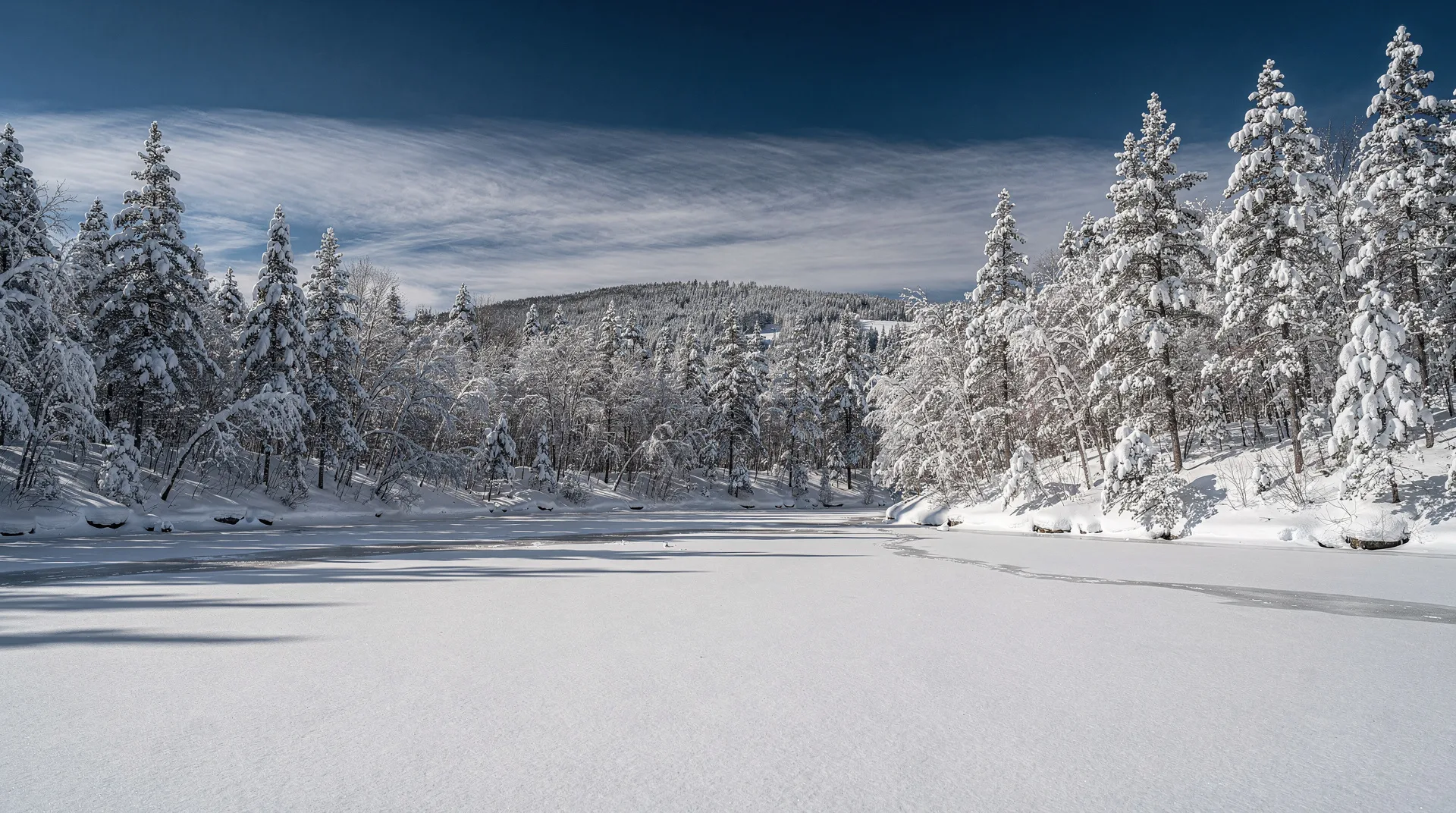
Quebec winter activities: ice canoe, Hôtel de Glace, snow kayak, ice fishing
What are the best winter activities unique to Quebec?
Ice canoe racing on the St. Lawrence, Hôtel de Glace (the ice hotel), snow kayaking at Quebec City's Carnaval, dog sledding in the Laurentians, and ice fishing on the St. Lawrence tributaries are Quebec's most distinctive winter experiences.
| At a glance | |
|---|---|
| Where | Quebec City, the Laurentians, Mauricie, and Saguenay-Lac-Saint-Jean |
| Cost | Free (Carnaval street events, shore viewpoints) to around CAD $300+/night for the Hôtel de Glace; most guided activities run $50-150 per person |
| Time needed | A single afternoon for one activity; a full winter week to combine several regions |
| Getting there | Rental car recommended for the Laurentians and Mauricie; Quebec City’s Carnaval sites are walkable from Old Town |
| Best time | Late January to mid-February for Carnaval and peak ice/snow conditions; December through mid-March for most activities |
Quebec winter: not to be endured, but celebrated
Quebec winters are severe by global standards — in Quebec City, average January temperatures hover around -12°C, and the St. Lawrence River partially freezes. In much of the Laurentians and Saguenay–Lac-Saint-Jean, temperatures drop to -25°C or below for extended periods. The province receives two to three metres of snowfall annually.
The Québécois response to this reality is not resignation but enthusiastic engagement. Quebec has developed a winter culture that may be unmatched anywhere in Canada — a combination of Indigenous-derived outdoor knowledge (snowshoes, dog sleds, toboggans) with European settler ingenuity (ice fishing shanties, snow sculpture, ice canoe construction) and a modern recreational infrastructure (groomed cross-country trails, snowmobile networks, ice hotels) that turns winter into one of the best reasons to visit, not one of the worst.
This guide covers the activities that are most distinctively Québécois — experiences you cannot have anywhere else in North America in the same form, or that Quebec executes better than anywhere else. Skiing is covered separately in the Mont-Tremblant vs Mont-Sainte-Anne comparison guide.
Carnaval de Québec: the world’s largest winter carnival
The Quebec Winter Carnival (Carnaval de Québec) is held annually for seventeen days in late January and February, making it the world’s largest winter carnival by attendance. Founded in 1955, the carnival draws approximately 600,000 visitors to Quebec City for a program of outdoor events, cultural activities, and spectacles built around the premise that winter is something to celebrate.
Bonhomme Carnaval: The portly, red-capped snowman who serves as the carnival’s mascot and presides over all official events. The Bonhomme is ubiquitous during carnival — greeting visitors at the Palace of Ice, appearing at major events, and serving as the symbol of Quebec’s winter joie de vivre.
The Ice Palace: A large structure built from snow and ice at the carnival site (typically Parc de l’Expédition or another major venue), lit dramatically at night and serving as the focal point for evening events. Construction begins in December; the palace opens with the carnival in late January.
The Night Parade: A major evening event featuring illuminated floats, music, and performers. Watching from the sidewalks of Grande-Allée — bundled in winter gear, Caribou in hand (the carnival’s traditional mulled-wine-like drink of port wine and various spirits) — is one of Quebec City’s most atmospheric experiences.
Ice sculpture competitions: Professional ice sculptors from around the world compete in front of live audiences. The skill level is extraordinary; watching a skilled sculptor transform a block of ice over several hours is hypnotic.
Snow baths: A characteristically Québécois carnival event — participants in bathing suits or minimal clothing jump into a snow bank, briefly, for the rush of extreme temperature contrast. Crowds gather; participants emerge exhilarated.
Carnaval logistics
The carnival runs from late January through mid-February — exact dates change each year. The site is in and around Old Quebec City, walkable from most accommodations in the Old Town. Quebec City hotels book up for carnival weeks; reserve four to six months in advance. Evening events can be bitterly cold (-15°C to -25°C is not unusual); dress for extreme cold — layering is essential.
Book a Quebec City winter tour and Carnaval experience on GetYourGuideHôtel de Glace: sleeping in ice
The Hôtel de Glace — the ice hotel — is one of Quebec’s most distinctive winter experiences and one of only a handful of ice hotels in the world. Originally built near Quebec City (at Valcartier Village), the hotel is constructed each winter from approximately 15,000 tonnes of snow and 500 tonnes of ice, with 44 suites and rooms, a chapel, an ice bar, and a hot tub (incongruously embedded in the frozen structure).
What it is like to stay there: Guest rooms are maintained at -5°C to -10°C. Beds are ice platforms covered with thick mattresses and sleeping bags rated to -30°C. Guests are cold when they first get into bed; body heat warms the sleeping bag to a tolerable temperature within minutes; most guests sleep well and report the experience as surprisingly comfortable. The remarkable architecture — vaulted ice ceilings, ice sculptures embedded in walls, coloured lighting that gives the ice a blue-green glow — is worth the discomfort of a cold room.
Alternatives: Most visitors experience the Hôtel de Glace without staying overnight. Daytime and evening guided visits are available — walk through the suites, see the chapel, have a drink at the ice bar (drinks served in ice glasses), and take photographs. The ice bar and communal areas are warmer than the sleeping rooms.
Location and timing: The Valcartier Village location is approximately 20 minutes north of Quebec City by car. The hotel typically opens in early January and remains until mid-March, weather permitting — warm spells can accelerate the melt. Always confirm current status before planning a visit.
Ice canoe racing: the St. Lawrence crossing
Ice canoe racing is the most distinctively Québécois winter sport and one of the most physically demanding athletic events in North America. Teams of five paddlers and polers navigate large canoes across the St. Lawrence River — partially frozen, with ice floes of varying thickness and speed — during the Quebec Winter Carnival. The crossing requires paddling open water sections, hauling the canoe over ice floes, and maintaining balance and momentum on a surface that is neither fully frozen nor fully liquid.
History: Ice canoes were the winter mail and supply transport of New France — the only means of crossing the St. Lawrence between Quebec City and Lévis during the river’s winter ice cycle. The competitive racing form emerged from this utilitarian tradition.
The Great Race: The highlight of the Carnaval, the Grande Traversée sees teams race across the St. Lawrence in front of tens of thousands of spectators gathered on both banks. The race is typically held on a weekend during the carnival; conditions vary annually, making each race different.
Watching vs. participating: Ice canoe racing requires extensive training and physical conditioning — it is not a tourist activity in the participatory sense. But watching from the riverbank, close enough to hear the paddlers’ exertion and see the ice conditions they navigate, is one of the most remarkable sporting spectacles in winter Canada.
Snow kayaking at the Carnaval
Snow kayaking — descending Quebec City’s iconic Dufferin Terrace toboggan run in a kayak-shaped sled — is one of the Carnaval’s most popular participatory activities. The wooden slide runs from the Château Frontenac terrace down toward the Lower Town and has been a Quebec City winter institution since the 1880s.
The original activity was (and still is) tobogganing — flat-bottomed sleds descending the iced wooden slide at speeds up to 70 km/h. The kayak-shaped sleds offered during the Carnaval period add a more theatrical element. Both are available to visitors of reasonable health; the experience is exhilarating, brief (the run lasts perhaps 30 seconds), and extremely popular.
Operating hours: The Dufferin Terrace slide operates during daylight hours when conditions permit, typically from late November through mid-March. During the Carnaval, lines are long — arrive early or expect a wait. Cost is modest (under CAD $10 per slide).
Ice fishing: shanty culture on the St. Lawrence tributaries
Ice fishing on the frozen rivers and lakes of Quebec is both a recreational tradition and a social institution — a winter parallel to the summer fishing camp. Participants drill through the ice, lower lines through the hole, and wait in heated shanties (cabanes) that have evolved from basic plywood shelters to elaborate mobile structures with wood stoves, fold-out beds, and satellite TV.
Where to go: The Rivière Sainte-Anne at Sainte-Anne-de-la-Pérade (Mauricie region, northwest of Quebec City) is the most famous ice fishing destination in Quebec — in January and February, a city of hundreds of heated shanties appears on the frozen river, specifically for fishing the tiny tomcod (poisson des chenaux) that spawn in these waters. The scale is remarkable: a village of ice fishing huts, smoke rising from every chimney, people wandering between shanties, and below the ice, extraordinary numbers of small fish. Family-oriented and completely accessible; shuttle services run from the village.
Other ice fishing regions: Lac Saint-Jean in Saguenay–Lac-Saint-Jean, the reservoirs of the Laurentians, and the Lac-Saint-Pierre area of the St. Lawrence are all productive ice fishing destinations. Many Laurentian ski resorts have adjacent lake fishing access in winter.
Equipment rental: Full equipment (drill, lines, jigging sticks, heated shelter) is available for rent at all established ice fishing destinations. No experience is needed; simple jigging technique is taught on the spot.
Find winter Canada experiences and seasonal tours on GetYourGuideDog sledding in the Laurentians
Dog sledding is available across the Laurentian ski region — many lodges and outfitters north of Montreal offer mushing experiences ranging from one-hour introductory runs to multi-day wilderness expeditions.
Introductory sledding: Typically 1–2 hours; participants take turns driving a team of 6–10 huskies through groomed forest trails. Most operators allow beginners to drive the sled with guide support. The speed (25–35 km/h on open stretches) and the sound of the dogs — enthusiastic, vocal, straining at the harness — is genuinely thrilling.
Multi-day expeditions: Several outfitters in the Laurentians and in the Saguenay–Lac-Saint-Jean region offer 2–5 day dog sledding expeditions through the boreal forest, camping in heated shelters or staying in wilderness lodges. These require physical fitness but not prior experience; participants take turns driving and resting.
Key operators: Aventures Nordic (Mont-Tremblant area) and Nord-Expé (Saguenay area) are among the most established dog sledding operators. Ferme 5 Étoiles in Amherst (Laurentians) combines dog sledding with other winter activities. Book well in advance for December–February.
Snowshoeing: the original Quebec winter technology
Snowshoes are Indigenous technology — the traditional snowshoe designs of the Cree, Algonquin, and Atikamekw nations enabled movement through deep snow across vast territories. In Quebec, modern snowshoeing is available throughout the provincial park network and in managed outdoor areas.
Best locations: Parc national du Mont-Orford (Eastern Townships), Parc national d’Oka (Laurentians), the trails of Parc de la Gatineau (western Quebec), and Parc national de la Jacques-Cartier (north of Quebec City) all have maintained snowshoe trails. Equipment rental is available at most park facilities.
Night snowshoeing: Several operators and parks offer guided evening snowshoe experiences — particularly compelling in forests with good snow cover, where the silence, the tree shadows, and the winter sky create an atmosphere impossible to replicate in other conditions.
Practical cold-weather guidance
Layering: The base layer (moisture-wicking), mid-layer (insulating fleece or down), and outer layer (windproof, waterproof) system is essential for extended outdoor activity in Quebec winter. Cotton against the skin is dangerous when wet.
Extremities: Frostbite affects fingers, toes, ears, and nose first. Quality winter gloves (not lightweight gloves), wool or synthetic socks, waterproof winter boots (rated to -30°C or below), and a hat that covers the ears are essential.
Temperatures: Quebec City winters average -8°C to -15°C in January, with cold snaps to -25°C or below. Montreal is slightly warmer. The Laurentians and Saguenay are colder.
Activities and accommodation booking: Most popular winter activities in Quebec (Hôtel de Glace, dog sledding, ice fishing guided experiences) require advance booking — often months in advance for peak periods (late January–February during Carnaval, holiday weeks).
Choosing between the signature experiences
| Activity | Best for | Typical cost | Advance booking |
|---|---|---|---|
| Carnaval de Québec | First-timers wanting the full winter festival atmosphere | Free to attend, drinks/food extra | Book hotels 4-6 months ahead |
| Hôtel de Glace | Novelty-seekers, couples, photographers | Around $80-120 for a day visit, $300+ to stay overnight | Weeks to months ahead in peak season |
| Ice fishing at Sainte-Anne-de-la-Pérade | Families, anyone wanting a low-effort, high-atmosphere outing | Around $30-60 per person with shanty rental | A few days to a week |
| Dog sledding | Active travellers wanting a physical, hands-on experience | Around $80-150 for a 1-2 hour introductory run | 1-2 weeks, longer for December-February weekends |
Combining winter activities without overloading the trip
Trying to fit the Carnaval, the Hôtel de Glace, ice fishing, and dog sledding into a single short visit usually means rushing all of them. A more realistic pattern: base in Quebec City for the Carnaval and a Hôtel de Glace day visit (they’re roughly 20 minutes apart), then dedicate a separate day trip toward Mauricie for ice fishing or north into the Laurentians for dog sledding.
See our Quebec winter 7-day itinerary for a route that sequences these without doubling back. If you’re weighing whether winter or another season suits your trip better, our summer vs winter Canada guide lays out the trade-offs, and the Quebec winter carnival guide goes deeper on Carnaval logistics specifically.
For travellers who want the cold-weather experience without the full Carnaval crowds, Quebec in February outside the festival’s peak two weeks still delivers the ice hotel, ice fishing, and dog sledding with noticeably easier bookings.
Frequently asked questions about Quebec winter activities
Is Quebec winter too cold for a first-time visitor?
Not with the right gear. Proper layering, waterproof boots, and a good hat and gloves make outdoor activities comfortable even at -15°C to -20°C. Most attractions also have heated indoor spaces to warm up between outdoor stretches.
Do I need a car for Quebec winter activities?
For Quebec City’s Carnaval and the nearby Hôtel de Glace, no — both are reachable by taxi or short drive from Old Town. For ice fishing in Mauricie or dog sledding in the Laurentians, a rental car (or an organised tour with transport included) is generally necessary.
Related pages
- Mont-Tremblant vs Mont-Sainte-Anne: best Quebec ski resort comparison
- Quebec dark sky preserves: astronomy tourism and night photography
- Cabane à sucre guide: Quebec’s maple sugar shack experience
- Quebec hiking guide: top trails across all regions
- Quebec City destinations
- Saguenay–Lac-Saint-Jean destinations