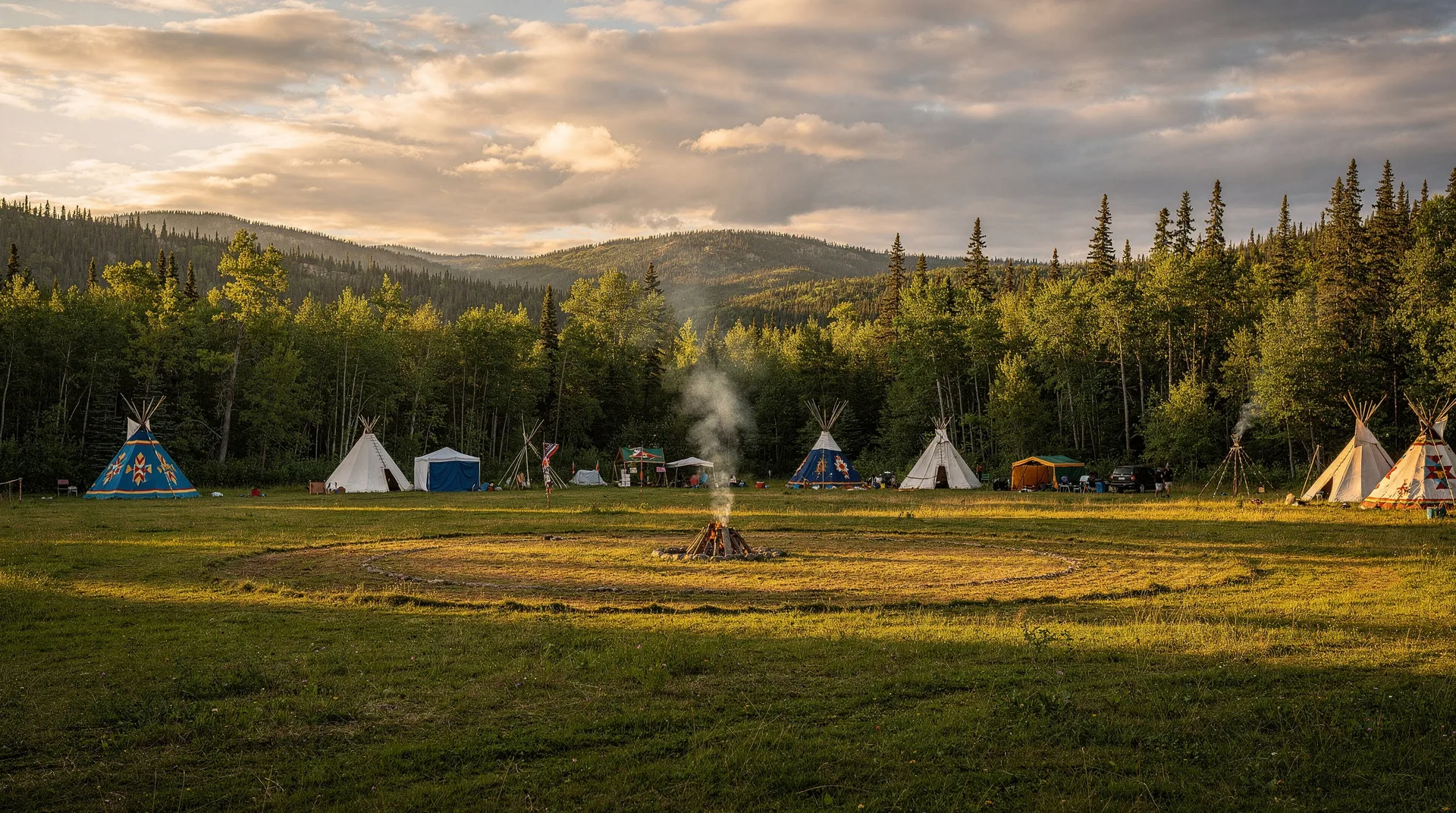
Powwow experiences in Canada: where to go and how to attend
Can tourists attend powwows in Canada?
Yes — most Canadian powwows welcome respectful visitors. Major powwows happen from May through September, with the largest being Manito Ahbee (Winnipeg), Wikwemikong (Manitoulin Island) and Kahnawake (near Montreal).
A living tradition, not a performance
Powwows are among the most accessible and profound Indigenous cultural experiences a visitor can have in Canada. They are not performances staged for tourists; they are living cultural and spiritual gatherings that have been happening in some form for centuries and have been adapted, revived, and strengthened over the past hundred years into what you will see today.
For a visiting traveller, attending a powwow means being welcomed as an observer into a community event that includes ceremony, dance competition, singing, traditional foods, crafts, and reunion. The experience rewards cultural preparation — understanding what you are seeing, what is permitted, and how to engage respectfully.
This guide covers the main powwows across Canada, what happens at a powwow, proper etiquette, and how to build a trip around one.
| At a glance | |
|---|---|
| Where | Coast to coast, but the biggest events cluster around Winnipeg, Manitoulin Island (Ontario), Six Nations, and Kahnawà:ke (near Montreal) |
| Cost | Most community powwows are free with donations welcomed; some competition events charge around CAD $10-20 |
| Time needed | A single full day (arrive for Grand Entry, stay into the evening session) is enough for a first-timer; major events run 2-4 days |
| Getting there | Usually a short drive from a major city — see the “combining a powwow with a trip” section below |
| Best time | May through September, with the densest calendar in July and August |
What is a powwow?
A powwow is a gathering hosted by an Indigenous community featuring dance, song, drumming, food, and cultural exchange. Modern North American powwows evolved significantly in the 20th century, drawing from older intertribal gathering traditions, Plains dance traditions, and post-contact adaptations. Today, powwows serve multiple purposes:
Cultural revitalisation. After generations of cultural suppression through the potlatch ban (1885–1951), residential schools, and assimilation policy, powwows are one of the most visible expressions of Indigenous cultural continuity and revival.
Competition. Many large powwows are competition events, with dancers competing in categories (men’s traditional, women’s jingle dress, grass dance, fancy dance, etc.) for significant prize money.
Community and spirituality. The Grand Entry, prayer, honour songs, and ceremonial moments have sacred significance.
Economic activity. Powwows include vendors selling Indigenous crafts, art, beadwork, regalia materials, traditional foods, and contemporary items.
Competition vs traditional powwows
Competition powwows feature dancers competing for prize money in multiple categories. These are typically the largest events, drawing dancers from across North America.
Traditional powwows prioritise ceremony and community, often without prize money or formal competition. Dances are still central but in a less formal structure.
Most publicly welcoming powwows visitors attend are competition powwows; the atmosphere includes both competition and cultural celebration simultaneously.
The major Canadian powwows
Manito Ahbee (Winnipeg, Manitoba)
The largest powwow in Canada, held in late May at the RBC Convention Centre. Multi-day event with elite competition, a film festival, music awards, and cultural programming. One of North America’s premier Indigenous cultural events. Winnipeg is also home to one of Canada’s largest Indigenous urban populations, making the city a strong cultural destination in general.
Wikwemikong Cultural Festival (Manitoulin Island, Ontario)
Held annually over the August long weekend at Wikwemikong First Nation on Manitoulin Island. One of Canada’s most beautiful traditional powwows in a lake-and-forest setting. Manitoulin Island itself is a strong tourism destination; the powwow is a cultural highlight of the Ontario summer.
Kahnawà:ke Echoes of a Proud Nation Powwow (near Montreal)
Hosted each July by the Kahnawà:ke Mohawk community just south of Montreal. One of the most accessible powwows for visitors based in Quebec or combining a Quebec-Ontario trip. Excellent cultural programming and visibility of Mohawk dance traditions.
Six Nations Champion of Champions Powwow (Ontario)
Held at Six Nations of the Grand River near Hamilton/Brantford each July. One of Ontario’s most competitive events, drawing top dancers from across North America.
Squamish Nation Youth Powwow (BC)
Held in July on Vancouver’s North Shore. Accessible from Vancouver, making it one of the best options for West Coast visitors wanting a powwow experience.
Kamloopa Powwow (Kamloops, BC)
Held in August, hosted by Tk’emlúps te Secwépemc First Nation. Western Canada’s largest traditional powwow and a strong cultural event in a beautiful BC setting.
Piapot First Nation Powwow (Saskatchewan)
Held in August. A traditional prairie powwow with deep Plains cultural roots.
Thunderchild Traditional Powwow (Saskatchewan)
Held in August. One of the most acclaimed prairie powwows.
Atlantic Canada powwows
Elsipogtog Mi’kmaq Powwow (New Brunswick, July) and various Mi’kmaq community powwows across Nova Scotia and New Brunswick. Smaller than western events but culturally rich.
The powwow calendar
Most Canadian powwows run from May through September, with the densest concentration in July and August. Some key dates (verify specifics each year):
Late May: Manito Ahbee (Winnipeg).
Late June–early July: Summer Solstice Indigenous Festival (Ottawa — not a classic powwow but a major Indigenous festival). National Indigenous Peoples Day (June 21).
July: Kahnawà:ke, Six Nations Champion of Champions, Squamish Youth.
August: Wikwemikong, Kamloopa, Piapot, Thunderchild, numerous small community powwows.
September: Smaller community events, end of the season.
Winter powwows: Some indoor winter powwows happen (such as Manito Ahbee historically in February, now in May). Overall the powwow season is primarily May-September.
Browse Winnipeg cultural experiencesWhat happens at a powwow
Grand Entry
The powwow opens with a Grand Entry — a procession led by veteran dancers and flag bearers carrying eagle staffs, national flags, and band flags, followed by all dancers in regalia entering the arena circle by category. This is ceremonial and deeply significant. Stand, remove hats, and do not photograph unless specifically permitted.
Invocation and opening songs
Prayers and opening songs are offered. Many are in Indigenous languages.
Intertribal dances
Between competition rounds, the MC often invites everyone to join “intertribal” dances where non-dancers and non-Indigenous visitors can participate, usually around the outside of the arena. These are welcoming moments.
Competition dances
Different categories compete in sequential rounds over multiple days. Each category has specific steps, regalia, and music. Watching several categories reveals the depth and distinction of the dance traditions.
Vendors and food
Outside the dance arena, dozens of vendors sell Indigenous-made crafts, regalia materials, art, and traditional and contemporary foods. Bannock burgers, Indian tacos (bannock with chili), buffalo burgers, and corn soup are common.
Honour songs and ceremonies
Throughout the event, specific honour songs recognise veterans, elders, and significant community members. These are not spectator moments — stand, be quiet, and respect the moment.
Etiquette at a powwow
Arrive at Grand Entry. Being present for Grand Entry is both practical (understanding the event structure) and respectful.
Stand during Grand Entry, honour songs, and ceremonies. Remove hats. Hands out of pockets. Silence phones.
Ask before photographing. Some powwows allow photography broadly; some restrict it. Look for signage and ask ushers. Never photograph specific ceremonies even if general photography is allowed. Never photograph children or people in regalia without specific permission.
Dance only when invited. Intertribal dances welcome everyone. All other dances are for designated categories only.
Do not touch regalia. Dancers’ regalia often include sacred and highly personal items. Never touch without permission.
Drinking and drugs are not permitted. Most powwows are dry events.
Buy from vendors. Supporting Indigenous vendors is a meaningful way to engage. Authentic craft is often priced lower than in city galleries.
Tip the MC and the drum groups. Some powwows have a protocol where visitors can offer a cash gift to drum groups — ask an organiser about local practice.
Ask questions respectfully. MCs often explain each dance category and protocol during the event. Quietly asking a nearby elder or organiser is usually welcomed.
Find Indigenous culture tours in CanadaWhat to wear and bring
Casual, respectful clothing. Jeans and a shirt are fine. Do not wear stylised “Native” clothing or headdresses.
Weather-appropriate. Most powwows are outdoors. Bring sun protection, water, and layers for cool evenings.
Folding chair. Many powwow grounds have limited bleacher seating. A folding camping chair is useful.
Cash. Vendors and food stalls are cash-preferred.
Respectful attitude. The single most important thing.
Combining a powwow with a trip
Manitoulin Island for Wikwemikong (August): Combine 4-5 days on Manitoulin Island with a Toronto-based trip. Beautiful lake country; the powwow sits within a strong cultural and natural destination.
Winnipeg for Manito Ahbee (late May): Combine with The Forks, the Canadian Museum for Human Rights, and Manitoba’s spring landscape. Good shoulder-season timing.
Montreal for Kahnawà:ke (July): An easy day trip from Montreal. Combine with a broader Quebec-Ontario summer itinerary.
Vancouver for Squamish Youth Powwow (July): Excellent addition to a broader BC coastal trip.
Kamloops for Kamloopa (August): Combine with a BC interior trip including Okanagan wine country and the Rockies.
Powwow alternatives and year-round cultural experiences
If your travel dates do not match powwow season, excellent Indigenous cultural experiences are available year-round:
- Squamish Lil’wat Cultural Centre (Whistler) — year-round
- Hotel-Musée Premières Nations (Wendake, Quebec) — year-round
- Wanuskewin Heritage Park (Saskatchewan) — year-round
- Kwanlin Dün Cultural Centre (Whitehorse) — year-round
- Canadian Museum of History (Gatineau/Ottawa) — First Peoples Hall
- Manitoulin cultural programmes — year-round beyond the summer powwow
See the Indigenous tourism Canada overview and Indigenous culture Canada guide for year-round options. Travellers focused on British Columbia can also read our dedicated Indigenous experiences in BC guide, and those based around Quebec City or Montreal should see Indigenous tourism in Quebec.
Building a powwow trip around Winnipeg
Winnipeg deserves a closer look for travellers timing a visit around Manito Ahbee. Beyond the powwow itself, the city’s Forks market district and the Canadian Museum for Human Rights make for an easy two or three extra days. Because the powwow falls in late May, accommodation is easier to secure than in peak July-August travel season, and Manitoba’s shoulder-season weather is generally mild. If Winnipeg is your base, our broader Winnipeg weekend itinerary is a useful starting point for structuring the rest of the visit, and it pairs naturally with a wider prairies road trip if time allows.
Frequently asked questions about Powwow experiences in Canada: where to go and how to attend
Are powwows free to attend?
Most community powwows are free with modest donations welcomed. Some competition powwows charge a nominal admission (CAD $10-20) to support prize money. Specific events at convention venues may have ticketed prices.
Can I take photos at a powwow?
Policies vary. Some allow general photography but prohibit during specific dances or ceremonies. Always ask, watch for signage, and never photograph individuals without permission.
Do I need to know anything before attending?
Basic respect and curiosity are enough. Reading about the specific community hosting the powwow is appreciated. The MC typically explains dance categories during the event.
Can I bring children?
Yes — powwows are family events. Children are welcomed; many First Nations communities prioritise teaching dance and culture to children.
Should I participate in intertribal dances?
Yes, when invited. Intertribal dances are specifically for everyone, including non-Indigenous visitors. Follow others’ steps and stay on the outside of the arena.
Is a powwow a religious event?
Elements are ceremonial and spiritual (Grand Entry, invocation, honour songs). Elements are competitive and social (competition dances, vendor area). The mix is authentic to the living tradition.
How long does a powwow last?
Major powwows run two to four days with multiple sessions per day. A first-time visitor benefits most from attending a full day including Grand Entry and an evening session.
What is the difference between a powwow and a traditional ceremony?
Many traditional ceremonies are private and closed to outsiders. Powwows are explicitly public events, even though they include ceremonial elements. A powwow is the appropriate public expression of Indigenous culture open to visitors.
Do I need to travel far to see a powwow if I’m based in Toronto or Vancouver?
No. The Wikwemikong Cultural Festival on Manitoulin Island and the Six Nations Champion of Champions Powwow near Hamilton/Brantford are both reachable as extended day trips or short overnight trips from Toronto. Vancouver-based visitors can reach the Squamish Nation Youth Powwow on the North Shore easily; combine it with a broader look at our Indigenous experiences in BC guide.