Niagara Icewine Festival: Guide to January's Best Wine Event
When is the Niagara Icewine Festival?
The Niagara Icewine Festival runs across three weekends in January each year, with outdoor wine-and-food pairings at Jordan Village and winery events throughout Niagara-on-the-Lake and the Twenty Valley. Tickets from CAD $40 per weekend; book in advance.
The Niagara Icewine Festival is the single best reason to visit Ontario wine country in winter. For three weekends each January, the Niagara region — the global centre of icewine production — opens its wineries for tastings, hosts outdoor wine-and-food pairings in the snow, and runs chef dinners, winery tours, and special releases of the year’s newly bottled icewines. It is a genuine event rather than a tourist trap, and it coincides with one of the two moments each year when icewine production itself is happening — the midnight hand-harvests when grapes are picked from frozen vines at -8°C or colder. For international visitors willing to travel to Canada in January, the festival is a remarkable and surprisingly civilised experience.
This guide covers the dates, ticketing, best wineries, how to plan your weekend, and how the festival fits into a broader Niagara visit. For the wider wine context, start with the Niagara wineries guide and the Ontario wine regions overview.
| At a glance | |
|---|---|
| Where | Jordan Village (Twenty Valley) and wineries across Niagara-on-the-Lake |
| Cost | Discovery Pass around CAD $40-65/weekend; Gourmet Pass around CAD $90-120 |
| Time needed | A weekend (2-3 days) does the festival justice |
| Getting there | Around 90 minutes by car from Toronto; not self-drive between wineries |
| Best time | Any of the three January weekends; book the first weekend early as it sells out |
Dates and format
The Niagara Icewine Festival runs across three consecutive weekends in January each year, traditionally the second, third, and fourth weekends of the month. The 2026 festival runs January 9-25. Exact dates vary year to year — check niagarawinefestival.com for the current programme.
The festival operates on two tracks:
Discovery Pass weekends: Jordan Village in the Twenty Valley hosts an outdoor wine-and-food pairing village, with 20+ wineries offering tastings alongside food stations from local chefs. The atmosphere is a cross between a European Christmas market and a wine festival, staged in deep winter conditions with fire pits, heated tents, and mulled drinks. This is the signature festival experience and runs across all three weekends.
Winery events: Individual wineries throughout Niagara-on-the-Lake and the Twenty Valley run their own tastings, chef dinners, special icewine releases, and vineyard tours. Many require separate booking.
What is icewine, exactly?
Icewine (ice wine, Eiswein) is a dessert wine made from grapes that have frozen on the vine at -8°C or colder, then are harvested and pressed while still frozen. The freezing concentrates the sugars, acids, and flavours; pressing produces a tiny amount of extraordinarily intense juice (typically 15-20% of the volume pressed from unfrozen grapes).
Ontario — specifically the Niagara region — is the world’s largest producer of icewine by a significant margin, producing more than Germany and Austria combined. The VQA Ontario certification is the quality mark to look for. The signature grape is Vidal (a hybrid well-suited to freezing), but Riesling, Cabernet Franc, and Chardonnay icewines are also produced and are often the more complex expressions.
A half-bottle (200ml) typically sells for CAD $30-70; the finest single-vineyard releases can run CAD $100+. Icewine is served chilled in small pours (50ml) as a dessert wine — it is extraordinarily sweet but balanced by high acidity.
Ticketing
Discovery Pass: CAD $40-65 per weekend, covering tastings from 8 stations (a mix of wine and food). Additional tastings can be purchased. Passes are date-specific and sell out for the first weekend; book through niagarawinefestival.com in advance.
Gourmet Pass: CAD $90-120, covering 12 premium tastings including chef pairings at participating wineries.
Individual winery events: Priced separately; chef dinners run CAD $150-300 per person. Book directly through the winery websites.
Best wineries for icewine
The festival’s participating wineries number around 40. For international visitors with limited time, these are the strongest producers:
Inniskillin (Niagara-on-the-Lake): The historical pioneer of Canadian icewine — the Vidal icewine that won the 1991 Vinexpo Grand Prix d’Honneur in France, putting Canadian icewine on the global map. The winery is set up for tastings and runs tours explaining the production process.
Peller Estates (Niagara-on-the-Lake): The icewine lounge here is arguably the most atmospheric tasting room in Ontario — a below-ground cellar kept at -10°C, where you drink icewine in genuine winter conditions while wearing parkas. Their Signature Series Riesling Icewine is consistently among the finest Ontario icewines produced.
Reif Estate Winery (Niagara-on-the-Lake): Smaller family operation with a reliable Vidal icewine at a more approachable price point.
Jackson-Triggs Niagara Estate: Major producer with extensive icewine range and a visitor-friendly tasting room.
Henry of Pelham (Twenty Valley): Riesling-focused producer with excellent icewine; strong value across the range.
Pillitteri Estates Winery (Niagara-on-the-Lake): World’s largest estate producer of icewine; family-run, with a genuinely good tour.
Tawse Winery (Twenty Valley): Biodynamic and organic; their icewines are among the most refined in the region.
Stratus Vineyards (Niagara-on-the-Lake): Architecturally striking LEED-certified winery; their Cabernet Franc Icewine is remarkable.
Food pairings
Icewine pairs with foie gras, strong blue cheese, fruit tarts, caramel desserts, and — a Niagara specialty — seared scallops with ginger. The festival’s food stations at Jordan Village typically feature pairings designed by regional chefs, and the winery dinners offer substantially more sophisticated multi-course tastings.
How to plan a festival weekend
Base: Niagara-on-the-Lake is the better winter base — more walkable, more hotels, closer to the Niagara-on-the-Lake wineries. The Twenty Valley (Jordan, Vineland, Beamsville) is more rural but puts you closer to Jordan Village.
Accommodation: Prince of Wales Hotel, Pillar & Post, and Queen’s Landing (all Vintage Hotels properties) are the traditional Niagara-on-the-Lake luxury options. Book early — festival weekends fill months in advance.
Transport: This is not a self-drive festival. Every wine tasting involves driving, and Ontario has strict impaired-driving laws. Options:
- Winery limo/tour services: The most practical. Niagara Wine Tours International, Magnificent 7 Tours, and several others run dedicated festival day tours from Niagara-on-the-Lake hotels with a driver covering 4-6 wineries per day.
- Designated driver in your group: Works if one person accepts the role; limited pours can be requested at most wineries.
- Toronto shuttle: Some tour operators offer direct day trips from Toronto during the festival, and you can compare Niagara Falls day tours before you book.
Weather: January in Niagara runs -5°C to -15°C typically, with occasional deeper cold. Winterproof clothing is essential — the outdoor Jordan Village pairings are genuinely cold. Insulated boots, thick gloves, and a warm hat matter more than a fashionable coat.
How to taste icewine well
Icewine rewards a slow approach. Take a small pour, let it warm slightly in the glass, and smell it before you sip. Vidal tends toward apricot, honey, and tropical fruit; Riesling icewine usually shows more citrus and mineral tension; Cabernet Franc icewine, often deep pink to amber, leans toward red berries and a savoury, almost herbal edge. Because the sweetness is so concentrated, the acidity is what makes a great bottle feel balanced rather than syrupy, and it is worth noticing that balance at each stop.
Pace yourself across the day. Alternate sweet pours with the savoury food stations, drink water between tastings, and do not try to taste everything on your pass in the first hour. A short break by a fire pit helps reset your palate, and the cold itself keeps the wine pleasantly chilled in the glass. If a winery offers a comparison of the same grape across different vintages or producers, take it: it is the quickest way to learn what you actually like.
Who the festival suits
Couples find the festival easy to enjoy: the setting is romantic, the pace is relaxed, and a chef dinner after a day outdoors makes a natural highlight. Groups of friends often do best with a shared driver and a loose plan that leaves room for one long lunch. Solo travellers are welcome too, since the village format makes it easy to strike up conversations at the tasting stations. Families with young children will find the programme less suited to them, as the whole event is organised around wine, and the cold, crowded outdoor setting is demanding for little ones.
If you are building a wider winter trip, the festival slots naturally into a longer route through Ontario. The Ontario 7-day itinerary and the Ontario and Quebec 10-day itinerary both leave room for a Niagara stop, and the Canada in January guide helps with the practical side of travelling in deep winter.
What to pack and wear
Layering is the whole strategy. Start with a thermal base layer, add a warm mid-layer such as fleece or wool, and finish with a windproof, insulated outer jacket. Waterproof boots with real insulation matter most, because you will be standing on packed snow and ice for long stretches. Bring thick gloves that still let you hold a tasting glass, a hat that covers your ears, and a scarf or neck warmer. Hand warmers in your pockets are a small luxury that makes a large difference.
Keep a small day bag with water, a phone charger, and any tickets saved offline, since mobile signal can be patchy in rural vineyard areas. For more on dressing for the season, the packing list and the Canada in winter guide cover the essentials.
Bringing icewine home
Many visitors buy a bottle or two as a souvenir, and icewine travels well when packed with care. Wrap bottles in clothing inside a hard-sided case or a padded wine shipper, and check your airline and customs allowances before you buy. Most wineries can advise on packing, and some will ship within Canada. Taste before you buy, as the festival is the best chance to compare several producers side by side, and consider choosing a style you could not easily find at home. For wider context on regional producers, see the Niagara wine guide and the Canadian whisky guide if you enjoy exploring Canadian drinks beyond wine.
Combining with other Niagara activities
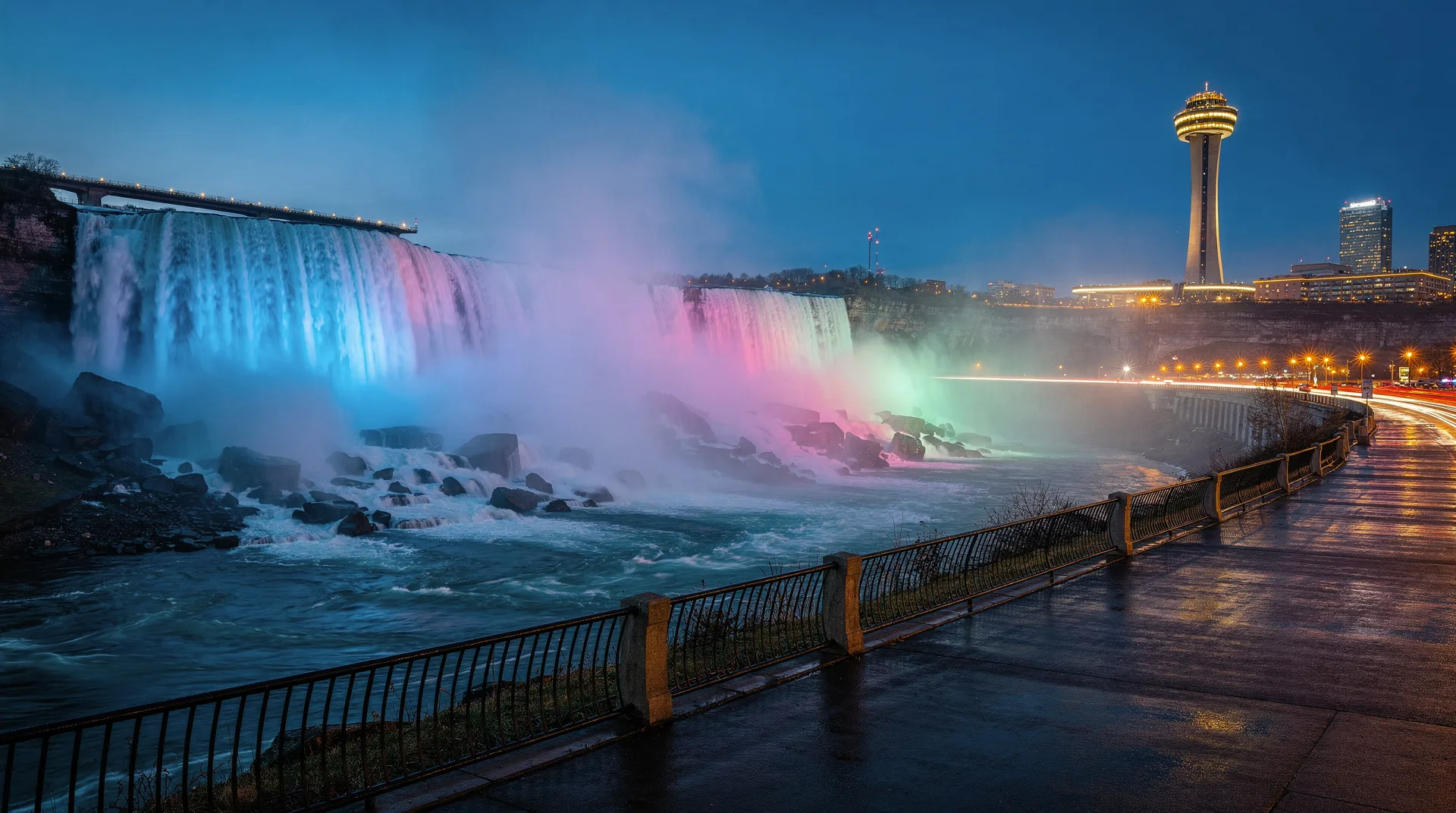
The festival pairs well with a visit to Niagara Falls in winter. The falls themselves are spectacular in January — partially frozen, the mist freezes on railings and trees in ice formations, and the Niagara Parkway light display (Winter Festival of Lights) runs through January. See Niagara Falls in winter for the full winter planning guide.
Combined three-day plan:
- Friday: Arrive Niagara-on-the-Lake; evening at winery chef dinner
- Saturday: Day at Jordan Village Discovery Pass; evening in Niagara-on-the-Lake
- Sunday: Morning at Niagara Falls; afternoon winery tour in Niagara-on-the-Lake
Beyond the falls, the town of Niagara-on-the-Lake rewards an unhurried wander between tastings, with its historic main street, shops, and cosy restaurants. If you want a day that is not about wine at all, the best tours in Niagara Falls guide lists other ways to fill a winter weekend, and the Niagara Falls in December guide shows how the area looks earlier in the season.
From Toronto
The festival is 90 minutes by car from Toronto. Day trips are feasible but the full experience benefits from an overnight stay. See Toronto to Niagara Falls for transport options, and Toronto-Niagara weekend for the weekend itinerary.
Booking strategy and avoiding disappointment
The first weekend of the festival routinely sells out weeks in advance, particularly Discovery Pass slots for Saturday. If your dates are flexible, the third weekend tends to have more availability and slightly thinner crowds at Jordan Village, without any real difference in wine quality — the icewine on pour is the same across all three weekends.
Because the outdoor Jordan Village pairings are weather-dependent, arriving right at opening (typically late morning) gives the best combination of manageable crowds and full stock at each tasting station — popular stations sometimes run low on their food pairing by mid-afternoon. If you are also trying to fit in a winery chef dinner, book that first: the best dinners (Peller Estates, Stratus) are capped at a few dozen seats and sell out before the Discovery Pass weekends do.
For a broader sense of what else is worth doing in Ontario wine country outside the festival window, the Ontario icewine guide and Ontario wine regions overview cover the category and the geography respectively.
Frequently asked questions about Niagara Icewine Festival
Do I need a car to attend the festival?
No — in fact a self-drive approach is discouraged because every stop involves wine tasting. Most visitors use a winery tour service with a driver, or base themselves in Niagara-on-the-Lake and walk to nearby winery events, supplementing with a tour for the Twenty Valley wineries.
Can I just show up without tickets?
Not recommended. Discovery Pass weekends are date-specific and the first weekend regularly sells out; individual winery dinners and tastings also require advance booking, especially for the more popular producers.
Related guides
- Niagara wineries guide for the full year-round winery picture
- Ontario wine regions for the provincial overview
- Ontario icewine guide for the category deep dive
- Niagara Falls in winter for pairing the festival with the falls
- Niagara-on-the-Lake for the main festival base
- Niagara Falls destination guide for the area overview