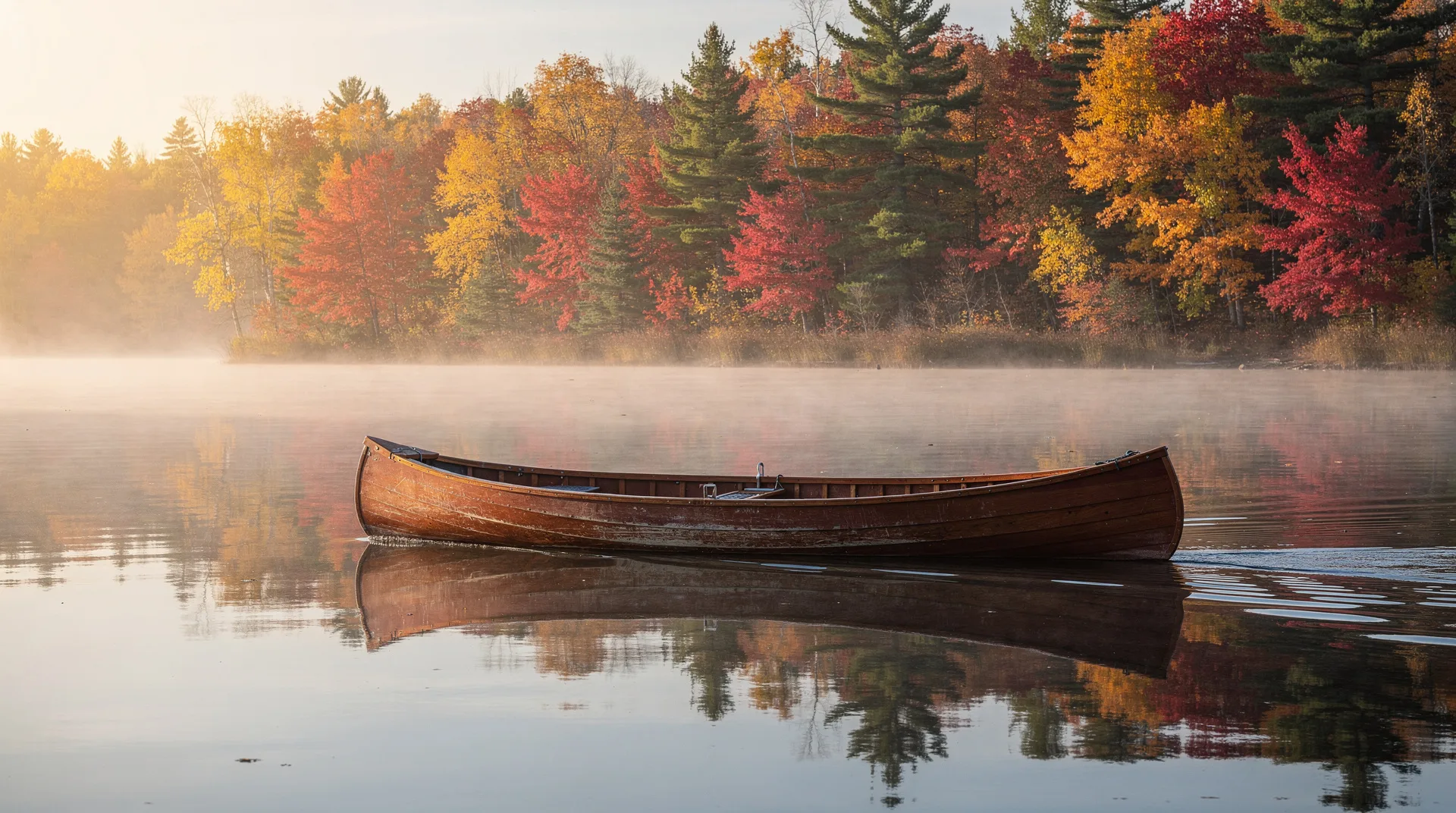
Algonquin Provincial Park guide: canoeing, moose and fall colours in Ontario
What is Algonquin Provincial Park famous for?
Algonquin is Ontario's oldest and most famous provincial park, known for its exceptional canoe route network, reliable moose sightings along Highway 60, spectacular fall colours in late September, wolf howling programs, and the sense of true wilderness within easy reach of Toronto and Ottawa.
No park in Ontario carries more cultural weight than Algonquin. Established in 1893 — making it the oldest provincial park in Canada — Algonquin protects 7,653 square kilometres of the southern edge of the Canadian Shield, a landscape of interconnected lakes, rivers, and portages that has been a canoeing destination since Indigenous peoples first paddled its waters thousands of years ago. The Group of Seven came here to paint; Tom Thomson, the most celebrated of Canadian wilderness painters, worked extensively in the park and drowned in Canoe Lake in 1917. Algonquin’s visual identity — moody skies, red pines reflected in dark water, the silhouette of a loon — is woven into the fabric of Canadian national identity.
The park sits roughly equidistant between Toronto (280 km south) and Ottawa (250 km west), making it the natural wilderness escape for two of Canada’s largest cities. The Highway 60 corridor crosses the park’s southern section, stringing together campgrounds, visitor centres, day-use areas, and lodges along 56 kilometres of accessible road. Step north of this corridor and Algonquin reveals its true character: hundreds of lakes connected by portage trails, wolf packs whose howls carry across the water on still August nights, and a sense of space and silence that is genuinely restorative.
Canoeing is Algonquin’s defining activity. The park’s 2,000-plus kilometres of canoe routes range from calm day trips to multi-week expeditions through the remote northern interior. But the park is equally rewarding for hikers, cyclists, fishers, and wildlife watchers — and its fall colours, peaking in late September, rank among the finest in Canada.
The park that shaped Canadian art and wilderness
Tom Thomson’s years in Algonquin, painting the lakes and forests with an urgency and directness that influenced every Group of Seven artist, transformed Canadian landscape art. The park’s visual character — the twisted red pines, the reflective dark lakes, the drama of a storm over a spruce ridge — appeared on his canvases and established a visual language that still defines how Canadians think about their wilderness. The Algonquin Art Centre on the Highway 60 corridor displays works by contemporary artists following in Thomson’s tradition; it is worth an hour of any visitor’s time.
The park’s ecology tells a story of transition. Algonquin sits at the meeting point of the southern hardwood forest (sugar maple, yellow birch, red oak) and the northern boreal forest (black spruce, balsam fir, white birch). Two distinct ecosystems interpenetrate throughout the park, creating exceptional biodiversity. The highway corridor passes through hardwood forest in the west — spectacular in fall colour — while the eastern interior is predominantly boreal spruce-fir. This ecological boundary also produces two distinct amphibian and bird communities, making Algonquin a genuinely diverse natural laboratory.
The wolf population is one of Algonquin’s greatest treasures. The Eastern wolf — a distinct species found primarily in and around Algonquin — has been studied in the park continuously since 1958, in the longest-running field study of wolves in North America. The Ontario Parks Public Wolf Howl programs, run on Thursday evenings in August when wolf activity is highest, represent one of the most extraordinary wildlife experiences available anywhere in Canada.
Top things to do in Algonquin Provincial Park
Canoe a lake route or river system
Algonquin’s canoe network is the park’s reason for being. Routes range from the gentle Tim River loop (one to two days, minimal portaging, ideal for novices) to the Petawawa River system (fast water, technical whitewater, multi-day commitment) to the remote northern canoe routes that can occupy experienced paddlers for two weeks or more. All routes involve portaging — carrying canoe and gear overland between lakes — typically on well-maintained trails of 100 metres to several kilometres.
The most popular introductory overnight canoe route is the Canoe Lake area to Smoke Lake or Little Doe Lake — one or two portages, calm paddling, excellent wildlife opportunities, and manageable distances. Outfitters at Canoe Lake (Portage Store, in continuous operation since 1921) rent canoes, camping gear, and food packs, and provide route guidance tailored to your experience level.
Browse Ontario wilderness and nature tours from TorontoMoose spotting on Highway 60
Algonquin has one of the highest concentrations of moose in Ontario, and spotting one from the car along the Highway 60 corridor is almost guaranteed on a morning or evening drive in May and June — when moose frequent roadside ditches and bogs to eat aquatic vegetation and escape biting insects. The classic moose-watching time is dawn; the classic locations are the boggy sections of highway between the West Gate and Mew Lake Campground.
Moose can also be found reliably at specific ponds along the Mizzy Lake Trail (11 km, moderate) in the early morning. This is the park’s premier wildlife trail, passing through a sequence of beaver ponds and boreal lakes that are home not only to moose but also to beaver, otter, and a remarkable variety of waterbirds.
Attend the Public Wolf Howl
Every August, Ontario Parks staff conduct a reconnaissance of the park’s wolf pack territories in the days preceding the Thursday evening Public Wolf Howl programs. When conditions are right — wolves nearby and responsive — the public is invited to gather in a designated area and listen as staff imitate wolf howls, eliciting responses from wild wolves in the darkness. The events attract hundreds of participants and the silence before the first wolf answers is electric.
The Public Wolf Howls are free with park admission and require no registration — simply show up at the designated meeting place on Highway 60 when announced. Check the Algonquin Park website for confirmation each Thursday afternoon in August. Even when wolves are not heard directly, the program includes excellent interpretation on wolf ecology and Algonquin’s long research history.
Hike the Lookout Trail
The Lookout Trail (1.9 km return, easy) is the most popular short hike in the park, climbing quickly through old-growth red and white pine to a rocky escarpment with a panoramic view over the hardwood forest canopy below and the lakes beyond. The view is spectacular in any season, but particularly extraordinary in the last week of September when the sugar maple and red oak turns the landscape into a quilt of crimson and amber. The trail is one of the first to fill on autumn weekends; arrive before 9 am.
Cycle the interior trails
The Old Railway Bike Trail follows 10 kilometres of former railroad bed through the park interior between Mew Lake and Rain Lake, providing a flat, traffic-free cycling route through varied forest habitats. Mountain biking is permitted on several interior fire roads — the park cycling map is available at the East and West Gate visitor centres. Cycling is an excellent way to cover more ground quietly, increasing wildlife encounter probability.
Fish for brook trout
Algonquin is legendary for its brook trout fishery. The park’s cold, clear interior lakes support a self-sustaining brook trout population; these brilliantly coloured native char are the park’s most sought-after catch. Fishing requires an Ontario fishing licence. Interior lake access generally requires canoe travel, making a two-day canoe-and-fish trip the classic Algonquin fishing experience. Catch-and-release is encouraged, particularly in smaller lakes.
Best hikes and trails
Lookout Trail — 1.9 km return, easy. Best fall colour viewpoint in the park. Start early on autumn weekends.
Mizzy Lake Trail — 11 km, moderate. Premier wildlife trail through beaver ponds and boreal lakes. Allow 4-5 hours. Best at dawn.
Track and Tower Trail — 7.5 km return, moderate. Old railway grades and fire lookout tower remnants through mixed forest. Good for birding.
Centennial Ridges Trail — 10 km loop, strenuous. The park’s most demanding day hike, crossing two exposed ridges with exceptional views. Requires good footwear.
Booth’s Rock Trail — 5.1 km loop, moderate. Follows the shore of Rock Lake to a cliff-top lookout above the lake. One of the park’s best lake views.
Whiskey Rapids Trail — 2.1 km loop, easy. River walk through old pine forest to the rapids on the Oxtongue River. Good for families.
Beaver Pond Trail — 2 km loop, easy. Interpretive trail to active beaver ponds with lookout platforms. Ideal for young children.
Wildlife you might see
Algonquin is one of the finest wildlife-watching parks in Ontario. The moose population is the largest draw — the park has hundreds of individuals and roadside encounters are common from May to October, peaking in spring when moose feed on aquatic vegetation in roadside bogs.
Eastern wolves are present but rarely seen; hearing them howl at night, or attending the Public Wolf Howl, is the primary wolf experience available to visitors. Black bears are widespread — exercise standard bear precautions on backcountry trips. River otters are frequently spotted at lake outlets; beavers are active at dusk on almost any lake with a dam.
The loon is Algonquin’s acoustic signature — the tremolo call of a common loon across a still evening lake is the sound that encapsulates the park for most visitors. Great blue herons, belted kingfishers, and ospreys patrol the waterways. The park is excellent for boreal forest songbirds including the Blackburnian warbler, white-throated sparrow, and olive-sided flycatcher. Algonquin is a significant birding destination in the spring migration (May) and fall migration (August-September).
Getting there
Algonquin Provincial Park is located in central Ontario, approximately 280 kilometres north of Toronto and 250 kilometres west of Ottawa. The Highway 60 corridor through the park’s southern section provides the primary access.
From Toronto, take Highway 400 north to Highway 60 east (via Huntsville) to the West Gate, or Highway 400 north to Highway 11 north to Highway 60 west to the East Gate. Journey time from Toronto is approximately 3 hours to the West Gate.
From Ottawa, take Highway 417 west to Highway 60 west. Journey time is approximately 3 hours to the East Gate.
There is no public bus service directly to the park. Ontario Northland operates bus service to Huntsville (30 minutes from the West Gate), where car rental is available. A car is strongly recommended for Highway 60 corridor access and essential for canoe tripping (loading/unloading equipment).
Where to stay
Campgrounds: Algonquin has over 1,200 drive-in campsites across eight campgrounds on the Highway 60 corridor, plus hundreds of interior canoe-in sites. Mew Lake, Canisbay, and Pog Lake campgrounds are the largest. Reservations through Ontario Parks are strongly recommended for July and August weekends and essential for Thanksgiving weekend (prime fall colours). Interior canoe sites require a separate interior camping permit.
Lodges: Arowhon Pines Lodge, accessible by private road north of the highway corridor, is the most celebrated Algonquin resort — family-owned since 1935, with American Plan dining and canoe-centred programming. Killarney Lodge on the shores of Lake of Two Rivers is another historic option. Both lodges require advance booking, typically months ahead for summer.
Nearby towns: Huntsville (35 km from the West Gate) is the main service centre, with a full range of hotels, restaurants, and the excellent Muskoka region to explore. Barry’s Bay (near the East Gate) is a smaller community with basic accommodation.
Best time to visit
Late September to mid-October is the single best time for those prioritising fall colours. The hardwood forest transforms to a canopy of crimson, orange, and gold, peaking typically in the last week of September. The Lookout Trail on a clear October morning is one of the finest scenes in Canada. Book campgrounds and lodges months in advance for the Thanksgiving weekend — the park is at maximum capacity.
May to June is the best season for wildlife: moose are roadside in the ditches and bogs, wolves are vocally active near their den sites, and spring warblers arrive in force. Canoe routes are paddle-able from ice-out (typically late April) with limited crowds.
July and August bring warm temperatures, good canoe-tripping weather, and the Public Wolf Howl programs. Blackfly season typically ends by late June; mosquitoes persist until mid-July. The park is at its busiest in August.
Winter (December–March): Cross-country skiing on groomed trails near the visitor centres, snowshoeing, and a quiet, deeply atmospheric park experience. The Mew Lake Campground operates year-round with winter camping facilities.
Practical info
Park fees (2026): Ontario Provincial Park daily vehicle permit approximately CA$22. Interior camping permit (per person per night) approximately CA$12. Reservations through Ontario Parks at ontarioparks.com.
Canoe outfitters: Portage Store at Canoe Lake (portagestore.com) and Algonquin Outfitters (algonquinoutfitters.com) offer canoe, kayak, and camping rentals with route planning services. Both operate from the Highway 60 corridor.
Visitor centres: The Algonquin Visitor Centre at km 43 of Highway 60 is open year-round with natural history exhibits, a bookstore, and an observation deck. The Logging Museum near the East Gate (open seasonally) tells the story of the park’s logging history.
Wildlife viewing: Respectful wildlife observation distance: moose, at least 30 metres; black bears, at least 100 metres. Never feed any wildlife. Report all bear encounters to park staff.
Frequently asked questions about Algonquin Provincial Park guide: canoeing, moose and fall colours in Ontario
How experienced do I need to be to canoe in Algonquin?
Algonquin offers routes for all experience levels. The calm introductory routes around Canoe Lake and the Tim River require only basic paddling ability and physical fitness for portaging. Intermediate routes involve longer portages and potentially some minor current. The challenging northern canoe routes and Petawawa River sections require whitewater experience. The outfitters at Canoe Lake are expert at matching routes to experience level and should be your first consultation.
What does a portage involve?
A portage is the overland carry between two lakes or around a section of impassable river. In Algonquin, portages typically involve carrying your canoe on your shoulders (using a padded portage yoke) and making one or two trips with packs. Portage trails range from 100 metres to several kilometres. Most trails are well-maintained and signed, with basic distance and difficulty information on maps available from the outfitters and visitor centres.
When is the best time to see moose?
May and June are by far the best months for moose viewing along the Highway 60 corridor. Moose congregate at roadside bogs and ditches to eat sodium-rich aquatic plants and escape biting insects. Dawn and dusk drives in this period almost always produce moose encounters. Summer visits offer encounters along the Mizzy Lake Trail. In fall, moose are more dispersed and active during the rut (September-October) but less likely to be roadside.
Are there reservations required for camping?
Reservations are strongly recommended for all Highway 60 campgrounds and are essentially mandatory for summer weekends and the Thanksgiving weekend. Book through Ontario Parks (ontarioparks.com). Interior canoe camping sites also require reservation from mid-May to mid-October. Some walk-in sites are available on a first-come basis, but do not count on these in summer.
Can I see the fall colours in Algonquin as a day trip?
Yes. Many people drive through the park on the Highway 60 corridor as a day trip from Toronto or Ottawa during the fall colour season. The Lookout Trail is accessible in 20 minutes from the highway. However, the full fall experience — paddling across a glass-still lake in October surrounded by blazing colour — requires an overnight stay. Even a single-night campground booking transforms the visit.
What is an Eastern wolf and how is it different from other wolves?
The Eastern wolf (Canis lycaon) is a medium-sized canid distinct from both the grey wolf and the coyote, with DNA suggesting ancient hybridization between grey wolves and red wolves. Algonquin supports approximately 30 packs of Eastern wolves. They are smaller than grey wolves and their howls are thinner and more coyote-like in quality. The wolf research program at Algonquin, begun by Douglas Pimlott in 1958 and continued by colleagues including John and Mary Theberge, is the most comprehensive long-term wolf study in North America.
Is Algonquin suitable for young children?
The Highway 60 corridor is excellent for families with children. Short, easy trails like the Beaver Pond Trail and Whiskey Rapids Trail are accessible to young children; the visitor centre exhibits are engaging; and moose spotting from the car requires no physical effort whatsoever. Car camping at Mew Lake or Canisbay Campground provides a comfortable base. Canoe tripping with young children is possible on the gentlest routes but requires careful planning — outfitters can advise on age-appropriate itineraries.