Terra Nova National Park guide: Newfoundland's coastal boreal wilderness
What is Terra Nova National Park known for?
Terra Nova is Newfoundland's second national park, protecting a rugged coastal boreal forest landscape of fjords, coves, and inlets along Bonavista Bay. The park is excellent for sea kayaking, iceberg and whale watching, moose spotting, and the hiking trails that combine coastal and inland forest scenery.
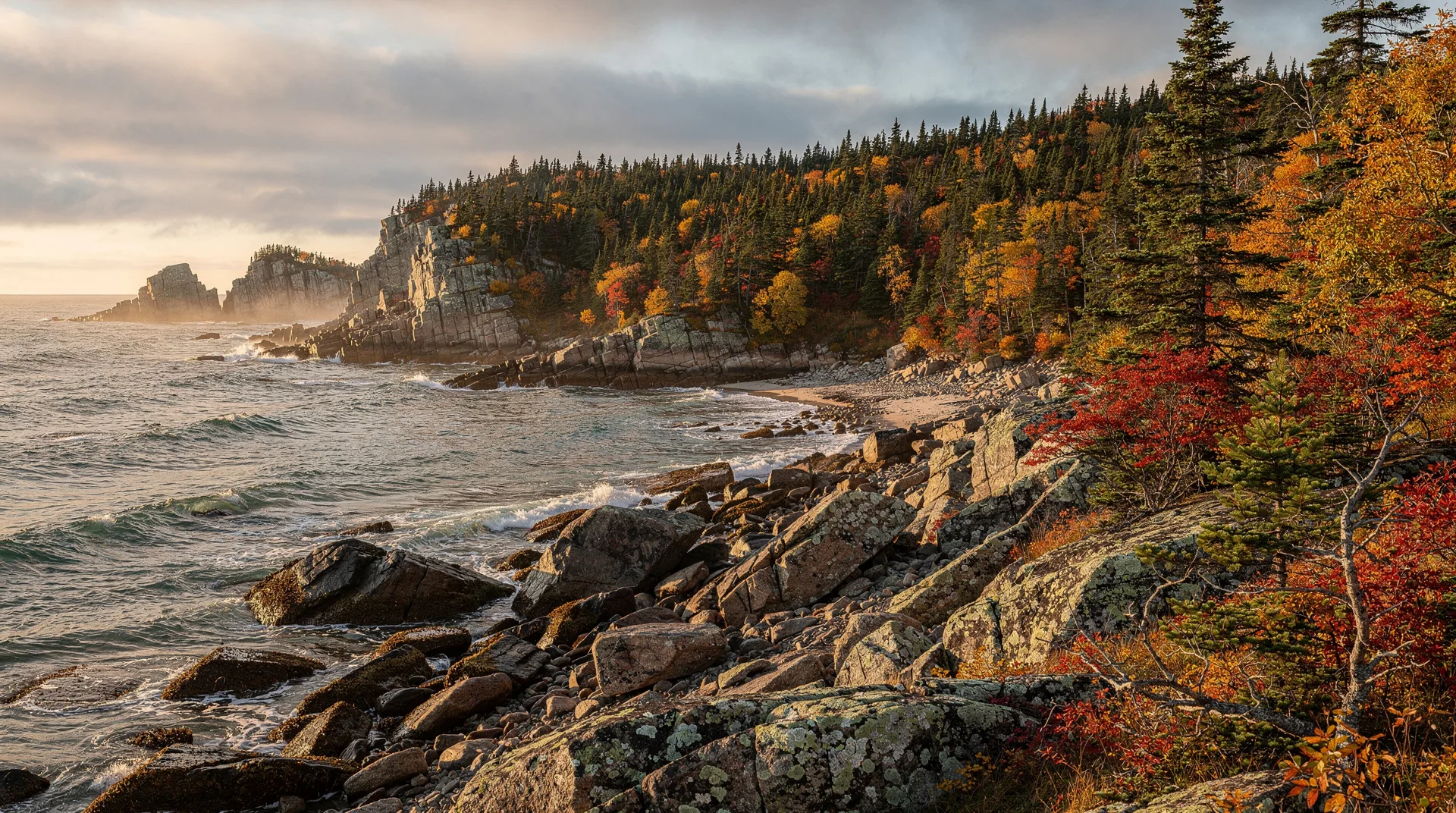
Terra Nova National Park occupies a different emotional register from its more famous Newfoundland counterpart, Gros Morne National Park. Where Gros Morne overwhelms with geological spectacle and dramatic scale, Terra Nova is intimate, intricate, and quietly beautiful — a park of coastal coves, spruce-fir headlands, inland ponds, and the ever-present sound of the sea on rock. Established in 1957 as the most easterly national park in Canada, Terra Nova protects 400 square kilometres of the Bonavista Bay coast on the island’s northeast, where the boreal forest meets the North Atlantic in a coastline of extraordinary ecological richness.
The park’s name means “new land” — the same name that John Cabot gave to Newfoundland when he made landfall somewhere in this region in 1497. It is apt: the landscape feels genuinely new, still emerging from the last ice age, with exposed bedrock, shallow soils, and the pioneering spruce and fir that characterise the younger ecological communities of Newfoundland’s interior. The coastline is a complex geometry of headlands, coves, and narrow fjords — Clode Sound and Newman Sound cut deep into the park’s interior, accessible by water to kayakers and by walking trail to hikers.
Terra Nova is the Newfoundland park for those who want to be on the water rather than in the mountains. Sea kayaking among icebergs (typically April to June), whale watching from headland viewpoints (June to October), and kayaking the fjord-like sounds are the park’s defining experiences. The Trans-Canada Highway bisects the park, making it highly accessible — the journey from St. John’s is approximately 2.5 hours, and many Newfoundlanders make Terra Nova their park of first acquaintance before venturing to the more remote Gros Morne.
A coast shaped by ice and sea
The Terra Nova landscape was shaped by the last glacial advance, which ended approximately 10,000 years ago. The glaciers carved the fjords and sounds, deposited the thin soils over Precambrian bedrock, and left the rounded, hummocky terrain that characterises the park’s inland sections. The boreal forest that has colonised this landscape is relatively young in ecological terms — maximum-age spruce and fir trees rarely exceed 150 years, and open bog ecosystems (covering perhaps 30% of the park’s area) are typical of regions where the thin, acidic soils favour Sphagnum moss over forest.
The coastline is the park’s ecological and visual centrepiece. Newman Sound — the largest of the park’s inlets, penetrating 14 kilometres inland from Bonavista Bay — is a complex marine environment where the cold, nutrient-rich waters support exceptional concentrations of marine life. Humpback whales, minke whales, and fin whales feed in the sound throughout summer; harbour porpoises are a daily sight in the shallow coves; harbour seals and grey seals haul out on islands and exposed rocks. In late spring (April-June), icebergs calved from Greenland glaciers drift south along the Labrador Current, passing within view of the park’s headlands and occasionally grounding in the shallower waters of the bays.
The park’s pond and bog system, the Jack Pine Trail, and the inland sections of the Trans-Canada corridor provide habitat for one of the highest moose densities in Newfoundland. Woodland caribou have been present historically and are occasionally reported. Black bears patrol the forest edges. American martens move through the old spruce stands.
Top things to do in Terra Nova National Park
Sea kayaking in Newman Sound
Newman Sound is one of the finest sea kayaking environments on the east coast of Canada. The sound is sheltered from the open Atlantic by its narrow entrance and provides calm, protected paddling conditions through spectacular coastal scenery. Kayaking from the park’s marine interpretation centre at Saltons, past the headlands, and into the upper sound provides views of coastal forest, seabird colonies on the offshore rocks, and frequent encounters with harbour porpoises and seals.
Parks Canada’s Outdoor Discovery Programs offer guided kayaking tours on Newman Sound; the sea kayaking programs are among the most popular park activities and should be booked before arriving. Independent sea kayakers can launch from the Saltons Brook boat ramp; rental equipment is available from outfitters in nearby Glovertown.
Browse Newfoundland nature and adventure toursIceberg watching
Terra Nova is one of the best land-accessible iceberg viewing destinations in Newfoundland. The Labrador Current carries icebergs calved from Greenland’s glaciers south past the Newfoundland coast from April through June — sometimes into July in heavy ice years. The park’s headlands, particularly at the Dunphy Pond viewpoint and along the Southwest Arm Trail, provide elevated positions from which to scan Bonavista Bay for the brilliant white shapes of grounded and drifting bergs. Some years bring icebergs close to shore; others keep them further out to sea. The iceberg finder website (icebergfinder.com) and iceberg alerts from Parks Canada help plan sightings.
Whale watching from the headlands
Humpback, minke, and fin whales feed in Bonavista Bay from late June through September, drawn by the cold, nutrient-rich waters of the Labrador Current. The park’s coastal walking trails provide elevated headland viewpoints from which whale blows and breaches can be spotted. The Southwest Arm Trail and the Newman Sound coastal sections are the most productive. Early morning offers the best calm conditions; the sounds carry further on flat water. Whale watching boat tours from the nearby communities of Eastport and Salvage (both within easy reach of the park) offer water-level experiences.
Hike the coastal and inland trails
Terra Nova’s trail network connects coastal headlands with inland ponds and bog systems, providing walks of distinctive Newfoundland character. The boreal forest is low and dense — black spruce and balsam fir with dense ground cover of Labrador tea, crowberry, and pitcher plant (Newfoundland’s provincial flower). The bog sections are carpeted with Sphagnum moss and insectivorous plants. The combination of open bog, dense forest, and sudden coastal viewpoints creates a varied walking experience.
Find guided nature experiences in Newfoundland and LabradorVisit the Marine Interpretation Centre
The Marine Interpretation Centre at the Saltons area within the park provides exhibits on the marine ecology of Newman Sound and Bonavista Bay — the whale species, the fish communities, the oceanographic processes that make these waters so productive, and the history of the inshore fishery that shaped Newfoundland culture. The centre includes an aquarium with local marine species and offers daily interpretive programs in summer. It is the best starting point for understanding the coastal environment before paddling or walking the shore.
Cycling and exploring the park roads
The park road network and the sections of the Trans-Canada within the park create an accessible cycling environment. The Blue Hill Road and the Ochre Hill Road provide quiet park driving and cycling through interior forest and bog habitats with excellent moose-spotting potential at dawn and dusk. The park’s cycling map is available at the visitor centre.
Best hikes and trails
Southwest Arm Trail — 7.2 km one way (point-to-point), moderate. The park’s finest coastal walk, following headlands above Southwest Arm with views of Bonavista Bay, seabird colonies, and potential whale sightings. Shuttle recommended.
Coastal Trail — 3.5 km one way, moderate. Follows the Newman Sound coastline through mature spruce forest to viewpoints over the sound. Good for seals and seabirds.
Blue Hill Trail — 8 km loop, moderate. Interior loop through boreal forest and bog with viewpoints from Blue Hill. Excellent moose habitat.
Dunphy Pond Trail — 5.5 km loop, easy-moderate. Woodland and bog trail to a headland viewpoint above Bonavista Bay — one of the best iceberg viewing spots when bergs are present in spring.
Jack Pine Trail — 1.9 km loop, easy. Short interpretive trail through jack pine forest (unusual in Newfoundland) on the northern side of the Trans-Canada. Botanical interest.
Ochre Hill Trail — 4.4 km return, easy-moderate. Climbs through boreal forest to a viewpoint over Newman Sound and the coastal terrain. Good all-round orientation to the park.
Louil Hills Trail — 7.4 km loop, moderate. Longer inland forest and bog circuit. Good for solitude and typical Newfoundland boreal vegetation.
Wildlife you might see
Moose are abundant and highly visible. The park’s road corridors and pond margins are productive moose-watching locations at dawn and dusk — Newfoundland moose, descendants of four animals introduced from New Brunswick in 1904, have become the island’s most iconic wildlife species. Encounters are almost certain on a dawn drive.
Black bears are present throughout the forest, particularly in berry-producing habitats in late August and September. American marten — a weasel-family carnivore dependent on old-growth boreal forest — inhabit the park’s mature spruce stands and are rarely seen but present. Beaver are active on all freshwater ponds.
The marine wildlife is the park’s greatest treasure. Harbour porpoises are present year-round in the sound and coves; grey seals and harbour seals haul out regularly. Humpback, minke, and fin whales feed in Bonavista Bay from late June through September. Common eiders, black guillemots, razorbills, and Atlantic puffins nest on the offshore islands and can be seen from the coastal trails.
The park’s boreal ponds support breeding common loons; the tremolo call across a flat evening pond is one of the signature Newfoundland wilderness sounds. Bald eagles are common — the park has several nesting pairs. In spring migration (May), the coastal spruce attracts warblers moving north.
Getting there
Terra Nova National Park is located on the Trans-Canada Highway (Highway 1) approximately 250 km northwest of St. John’s (about 2.5 hours) and 290 km southeast of Gros Morne National Park (via the Trans-Canada, about 3.5 hours).
The nearest airports are St. John’s International Airport (YYT, 250 km southeast) and Deer Lake Regional Airport (YDF, near Gros Morne, approximately 290 km northwest). Car rental is available at both airports. A car is essential for park access.
DRL Coachlines provides a Trans-Canada bus service between St. John’s and Deer Lake that stops at Glovertown (the main town near the park), but services are infrequent and the bus stop is outside the park boundary.
Where to stay
Inside the park: Parks Canada operates the Malady Head Campground (the main campground, on Newman Sound, with serviced and unserviced sites) and the Central Campground (smaller, inland, near the visitor centre). The park’s backcountry allows wilderness camping with a permit. Campground reservations through Parks Canada are recommended for peak summer weekends.
Glovertown (immediately adjacent to the park’s western boundary) is the main service town, with a small selection of motels, B&Bs, and a grocery store.
Port Blandford (at the eastern park boundary on the Trans-Canada) has additional accommodation options, including the Inn at Riverbend, one of the area’s better small hotels.
St. John’s (250 km southeast) provides full urban services and the island’s main international airport, and makes a natural starting point for a Terra Nova and Gros Morne National Park circuit.
Best time to visit
June to August are the primary season for kayaking, whale watching, and hiking. Icebergs are most likely in June and early July (some years through to late July). Whale activity peaks in July and August. Parks Canada’s Outdoor Discovery Programs are fully operational.
May to June is the best period for icebergs — the peak of the Newfoundland iceberg season. The boreal forest is alive with spring arrivals; moose cows have calves in late May. The park is relatively quiet before peak summer.
Late April sees icebergs arriving and the first open days of the season. Services are limited; the campground may not yet be open. A genuine off-season experience for iceberg enthusiasts.
September brings cooler temperatures, no crowds after Labour Day, the first fall colours on the hillsides, and peak berry season for wildlife activity. Whale activity continues into October. A very rewarding time to visit.
October to April: The park is open for walking year-round but services close for the winter after Thanksgiving. Cross-country skiing on ungroomed trails is possible in snowy winters. Icebergs return in late April.
Practical info
Park entry fee (2026): Adult CA$7.80/day, family/group CA$15.70/day. The Parks Canada Discovery Pass (CA$145.25/adult) covers all national parks for 12 months.
Outdoor Discovery Programs: Parks Canada’s guided kayaking and hiking programs run from late June to late August. Book in advance through the park visitor centre or Parks Canada website; popular programs fill quickly.
Icebergs: Not guaranteed. Peak iceberg season is April through June. The iceberg tracker at icebergfinder.com provides current sightings. Parks Canada staff can advise on current iceberg activity on arrival.
Campground reservations: Book campground sites at Parks Canada’s reservation system. The Malady Head Campground on Newman Sound is highly sought-after in July and August.
Frequently asked questions about Terra Nova National Park guide: Newfoundland’s coastal boreal wilderness
How does Terra Nova compare to Gros Morne?
Terra Nova and Gros Morne are complementary parks rather than alternatives. Gros Morne is dramatic, mountainous, geologically spectacular, and demands more physical effort. Terra Nova is coastal, intimate, and water-focused — the better choice for kayaking, iceberg watching, and exploring a classic Newfoundland boreal shoreline. Many visitors include both on a Newfoundland itinerary: Terra Nova is a natural stop on the Trans-Canada en route to or from Gros Morne.
When is the best time to see icebergs at Terra Nova?
Icebergs drifting south on the Labrador Current typically arrive off the Newfoundland coast in April and May, with the peak iceberg season running from mid-April to late June. Some years produce exceptional numbers; other years are lean. The headland viewpoints at Dunphy Pond and along the Southwest Arm Trail are the best vantage points within the park. The icebergfinder.com website tracks reported sightings and is updated regularly during the season.
Is sea kayaking at Terra Nova suitable for beginners?
Newman Sound is relatively sheltered, making it suitable for beginner kayakers in calm conditions with a guide. Parks Canada’s guided kayaking programs are designed for all experience levels and are the safest introduction to the sound. Independent paddlers without sea kayaking experience should not paddle in Newman Sound without guidance — coastal fog, unexpected swells from the open bay, and cold water temperatures all require experience and appropriate preparation.
Are there icebergs in July and August?
Most years, icebergs have either drifted past or melted by July. Late ice years can produce stragglers into July and occasionally August, but this is not reliable. The whale watching, which peaks in July-August, more than compensates for the end of iceberg season.
How close is Terra Nova to St. John’s?
Terra Nova is approximately 250 km from St. John’s, about 2.5 hours on the Trans-Canada Highway. It is the closest national park to St. John’s and a natural first Newfoundland park experience for those flying into the capital. A weekend trip from St. John’s provides sufficient time for a kayak tour, coastal hikes, and a day exploring the park’s interior pond and bog terrain.
What is the boreal forest like in Terra Nova?
Terra Nova’s boreal forest is the quintessential Newfoundland forest: low, dense black spruce and balsam fir with a ground layer of Sphagnum moss, Labrador tea, and carnivorous plants (the pitcher plant is Newfoundland’s provincial flower). The forest is less imposing in height than the old-growth forests of BC, but has a distinctive, primordial character — ancient-feeling despite its relative youth, and rich with the smells of spruce resin and damp moss. Open bogs interrupt the forest throughout the park, their pale green and russet colours contrasting with the dark spruce. Walking through this landscape on a grey, damp Newfoundland morning is a genuinely atmospheric experience.