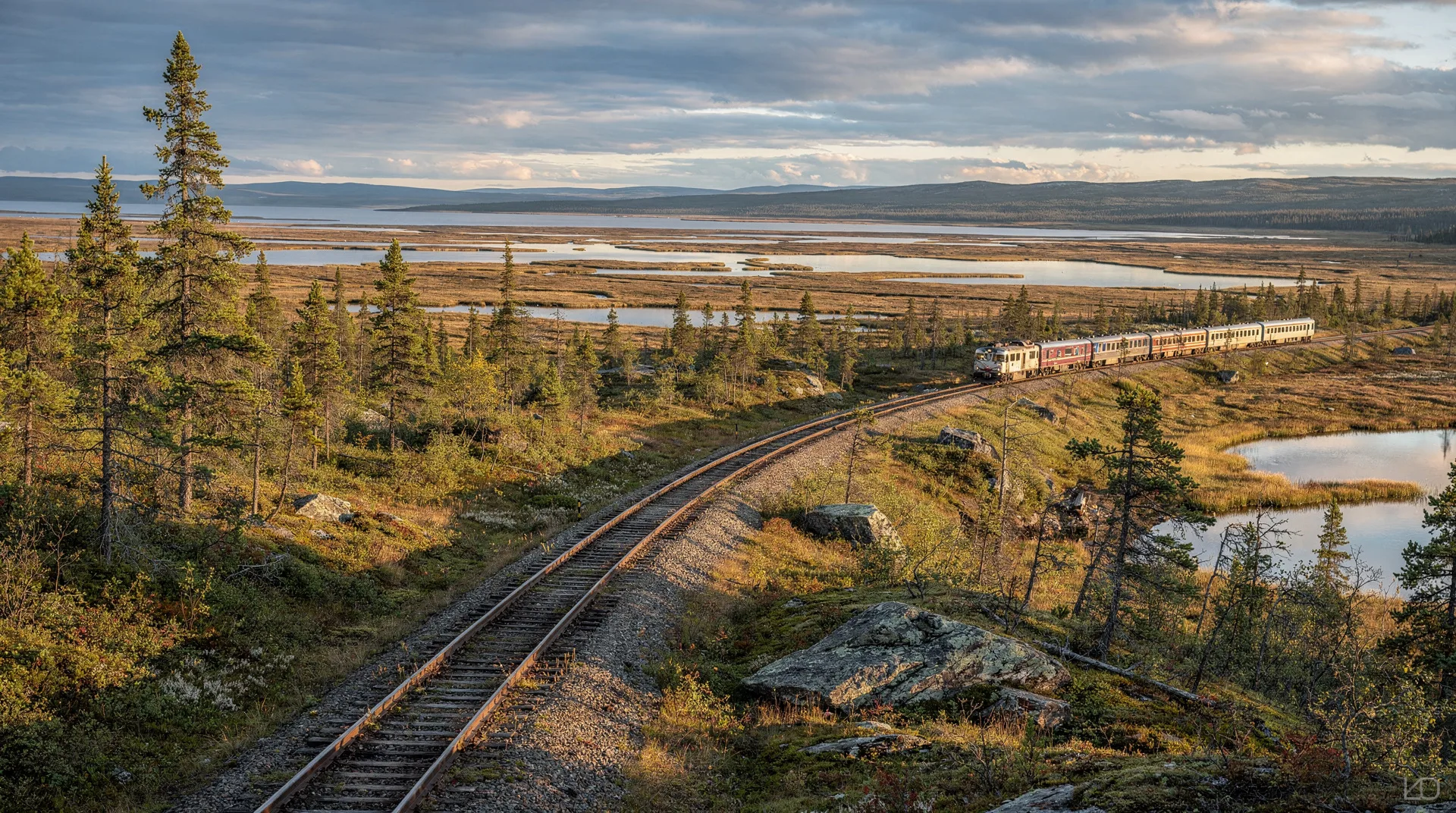
Hudson Bay Train: Winnipeg to Churchill on VIA Rail
How long does the Hudson Bay train from Winnipeg to Churchill take?
Approximately 44–48 hours northbound. The train departs Winnipeg twice weekly (typically Tuesdays and Sundays) and traverses boreal forest, Canadian Shield, and subarctic tundra. Economy seat fares from CAD $340 return; sleeper cabins from CAD $1,000.
VIA Rail’s Hudson Bay is one of the most distinctive train journeys in Canada. The twice-weekly service runs from Winnipeg to Churchill across 1,697 kilometres of boreal forest, Canadian Shield rock, muskeg, and finally subarctic tundra — a 44–48 hour journey that is the only land route to Hudson Bay.
For some travellers it is simply transportation: the practical alternative to flying for a Churchill trip. For others it is the reason to go — a slow, northward passage through landscapes that transition from southern boreal to genuinely Arctic, with the train as a compelling experience in its own right. This guide covers what to expect, how to book, and how to decide whether the Hudson Bay is right for your trip.
At a glance
| Where | Winnipeg to Churchill, Manitoba — 1,697 km, no road alternative for the final stretch |
| Cost | Around CAD $340-500 return economy; $1,200-2,000 return for a private cabin |
| Time needed | 44-48 hours scheduled each way (delays common) |
| Getting there | Departs Winnipeg’s Union Station twice weekly |
| Best time | July-August for beluga whales and long daylight; October-November for polar bear season |
Seasonal comparison
| Season | Conditions | Wildlife highlight | Notes |
|---|---|---|---|
| Winter (Dec-Mar) | Deep snow, possible aurora from the train | Arctic foxes, ptarmigan | Extreme cold at stops; book cabins well ahead |
| Spring (Apr-Jun) | Thaw, muddy trackside terrain | Migratory birds | Shoulder season, fewer crowds |
| Summer (Jul-Aug) | Long daylight (20+ hours near Churchill) | Beluga whales, moose | Peak booking season, insects at stops |
| Fall (Sep-Nov) | Cooling temperatures, tundra colours | Polar bears (Oct-Nov) | Highest demand and fares; book 6 months out |
The route
The Hudson Bay train follows a track laid originally for grain shipments from the Prairies to a proposed Hudson Bay port. The route:
- Winnipeg. Departure from Winnipeg’s Union Station.
- Dauphin, Manitoba. First major stop, about 4 hours north.
- The Pas. Small northern town, key transfer point.
- Thompson. Northern Manitoba’s largest city; nickel mining economy.
- Gillam. The last community on the road network; road access ends here.
- Wabowden, Thicket Portage, Pikwitonei, Lynn Lake line connections. Small trackside stops.
- Thompson to Churchill. Over 20 hours across permafrost terrain, crossing Ghost River, Bylot, and finally reaching the Churchill River.
- Churchill. End of the line — the only station on Hudson Bay.
The final stretch from Gillam to Churchill crosses terrain that has no road alternative. The track itself was damaged by flooding in 2017 and the route was out of service until 2018; track maintenance remains an ongoing challenge given permafrost movement.
Schedule
Frequency. Two departures per week in each direction. Typical schedule:
- Northbound (Winnipeg to Churchill): Departs Winnipeg Sunday and Tuesday evenings. Arrives Churchill late Tuesday and Thursday nights.
- Southbound (Churchill to Winnipeg): Departs Churchill Tuesday and Thursday evenings. Arrives Winnipeg Thursday and Saturday.
Exact times and days change periodically. Check VIA Rail’s website before booking.
Duration. 44–48 hours scheduled. Delays of several hours are common; delays of 12+ hours happen occasionally, usually related to track conditions or northern weather.
Reliability. Improved since the 2017–2018 service disruption but not at the standard of major rail lines. Build buffer days into your itinerary.
Classes of service
VIA Rail offers three classes on the Hudson Bay.
Economy
A reclining seat in a shared coach. Comfortable for short journeys, not ideal for 44 hours.
Pros. Least expensive. Access to dining car and lounge. Cons. Minimal privacy. Difficult to sleep for two consecutive nights. Fare (return). CAD $340–$500. Suitable for. Young budget travellers, one-way short segments, those who truly cannot justify the sleeper cost.
Sleeper Plus (Berth)
A curtained bunk in an open car. Seating during the day converts to upper and lower berths at night. Meals are included in the dining car.
Pros. Proper sleep. Meals included. Good mid-range value. Cons. Shared washroom; less privacy than a cabin. Fare (return). CAD $700–$1,000. Suitable for. Solo travellers and experienced rail travellers who don’t need a private cabin.
Sleeper Plus (Cabin)
A private compartment with its own washroom. Available in single and double configurations. Meals included.
Pros. Private space for 44+ hours. Bathroom access without leaving the compartment. Cons. Most expensive. Limited availability — cabins book up first. Fare (return). CAD $1,200–$2,000. Suitable for. Couples, travellers valuing privacy, those with medical needs requiring private bathroom access.
What it’s like on board
The Hudson Bay is not the Canadian — VIA’s flagship Toronto-to-Vancouver service — and expectations should be adjusted accordingly. The rolling stock is older, the service is friendly but less polished, and the experience is more “northern local train” than “luxury long-distance journey.”
Dining. The dining car serves three meals daily for Sleeper Plus passengers (included in fare). Food is simple Canadian fare — eggs and bacon for breakfast, soups and sandwiches for lunch, meat-and-potato-style dinners. Economy passengers can purchase meals.
Lounge. A lounge/dome car (when attached) provides shared seating with large windows for scenery viewing. This is where much of the social life of the train happens — passengers gather, play cards, watch the landscape pass.
Wi-Fi and cell. Intermittent cell coverage in southern Manitoba; effectively absent north of Thompson. No Wi-Fi on board. The journey is genuinely offline for most of its duration.
Power outlets. Limited. Bring battery packs for phones and cameras.
Stops. The train stops at small communities along the way. Some stops are long enough to disembark briefly and stretch legs; others are whistle-stop drop-offs for northern residents. The railway is genuinely a working transportation link for the communities it serves.
The landscape
The Hudson Bay passes through a sequence of distinct landscapes.
Winnipeg to Dauphin. Farmland and Lake Winnipeg’s southern shore.
Dauphin to The Pas. Into the boreal forest. Spruce and pine increase; lakes and wetlands proliferate.
The Pas to Thompson. Classic Canadian Shield — granite outcrops, dense boreal, many water crossings. Wildlife possibilities include moose, black bear, and occasionally caribou or wolves.
Thompson to Gillam. The forest thins. Muskeg becomes the dominant landscape. Trees shrink and space out.
Gillam to Churchill. Permafrost zone. The landscape becomes truly subarctic — stunted black spruce, open muskeg, and finally the tundra approaching Churchill. The final hours of the journey are across barely-forested terrain with a genuine Arctic feel.
Wildlife possibilities
Wildlife viewing is not the primary purpose of the train — the journey is too fast and the viewing angles are too restricted for reliable animal observation. That said, the route passes through good wildlife territory and sightings do occur:
- Moose. Regular sightings in southern and mid-route sections, often in willow-lined wetlands near the tracks.
- Black bear. Occasional, mostly in southern sections.
- Wolves. Rare but possible sightings of tracks or animals at forest edges.
- Caribou. In the northern permafrost zone, usually small groups.
- Polar bears. Very rare, typically only in the final hours approaching Churchill in October and November.
- Arctic foxes and ptarmigan. Visible in white winter coats as the train approaches Churchill in winter.
Sit on the left (west) side during the day for the best lighting of passing landscapes.
Pros and cons vs flying
When the train is the right choice
- You have 7+ days for the Churchill component of your trip
- You value slow travel and sequential experience
- You want to see the landscape transition from southern to Arctic Canada
- You have unrestricted travel schedule and can absorb delays
- You are claustrophobic or anxious about small-aircraft flying
- You are carrying significant camera gear and want to avoid weight restrictions
When flying is the right choice
- You have limited total trip days
- Your Churchill bookings (tour, accommodation) have zero flexibility
- You need predictable arrival
- You dislike the confined space of a long train journey
- You are travelling with children who struggle with long transit
Many travellers combine the modes — flying north to start Churchill activities promptly, taking the train south to enjoy the journey without schedule pressure. If you arrive in Winnipeg a day early, you can fill the gap with guided tours in Winnipeg.
Booking
How to book
Through VIA Rail’s website (viarail.ca) or by phone. Online booking is straightforward. Tours and activities for the rest of your trip can be reserved separately, for example through Canada tours and activities.
Timing
6 months ahead. Cabin class for peak season (October–November polar bear season, July–August beluga season).
3 months ahead. Berth class for peak season, cabin class for shoulder.
1–2 months ahead. Economy seats, off-peak dates.
Discounts
VIA Rail occasionally offers sale fares. Join their email list for notifications.
Canrailpass
If you are also taking the Canadian (Toronto-Vancouver) or other VIA routes, the Canrailpass may offer value. Calculate carefully — the Hudson Bay is priced favourably on point-to-point tickets for many itineraries.
Packing for the train
Beyond normal travel gear:
- Warm layers (the train can be over-cooled or under-heated)
- Slippers or soft shoes for in-room comfort
- Reading material (the journey is long; online content is not available)
- Battery banks for electronics
- Snacks (dining car operates fixed hours; snacks extend onboard flexibility)
- Eye mask and earplugs (essential in economy, useful in sleeper)
Winter vs summer train journeys
Winter. Deep snow landscapes, possible aurora visible from lounge windows at night, challenging weather requires flexibility. Temperatures inside the train are managed but step-offs at stops are extreme.
Summer. Long daylight (20+ hours near Churchill in late June), insect season for any significant stops, generally more reliable on-time performance.
Planning around Churchill’s peak seasons
The train’s usefulness depends heavily on why you’re going to Churchill. For polar bear season, most visitors combine the Hudson Bay with a structured tour — see Churchill polar bears and Churchill cost guide for a fuller budget picture beyond the train fare itself.
For a shorter, tour-anchored trip, the Churchill polar bear 5-day itinerary shows how the train (or a flight) fits around guided tundra buggy days. Summer travellers focused on belugas should also check beluga kayaking Churchill and aurora Churchill for shoulder-season northern lights viewing from town.
Alternative ways to reach Churchill
Flying is the main alternative and worth comparing properly before committing to the train — see Churchill: how to get there for a full comparison of the two options, including cost and schedule trade-offs. Travellers doing a longer rail trip across Canada sometimes combine the Hudson Bay with VIA’s flagship transcontinental service; our best scenic train routes in Canada guide places the Hudson Bay in context against the Canadian and the Rocky Mountaineer.
Frequently asked questions about Hudson Bay Train
Can I book just one direction of the Hudson Bay train?
Yes — many travellers fly one way (often north, to start Churchill activities on schedule) and take the train the other way to enjoy the journey without time pressure.
Is the Hudson Bay train worth it if I’m not going all the way to Churchill?
Generally no — intermediate stops like Thompson or The Pas are working communities, not tourist destinations, and the scenic payoff of the journey builds through the final stretch to Churchill, so shorter segments miss most of the appeal.
Related reading
- Churchill logistics
- VIA Rail Canadian (Toronto-Vancouver)
- Churchill polar bears
- Best scenic train routes Canada
- Canada rail pass
The Hudson Bay train is not for everyone. But for travellers willing to invest the time, it delivers a slow, contemplative approach to Churchill that flying cannot replicate — the landscape unfurling over two days, the gradual transition from southern to Arctic Canada, and a genuine sense of how remote the northern terminus really is.