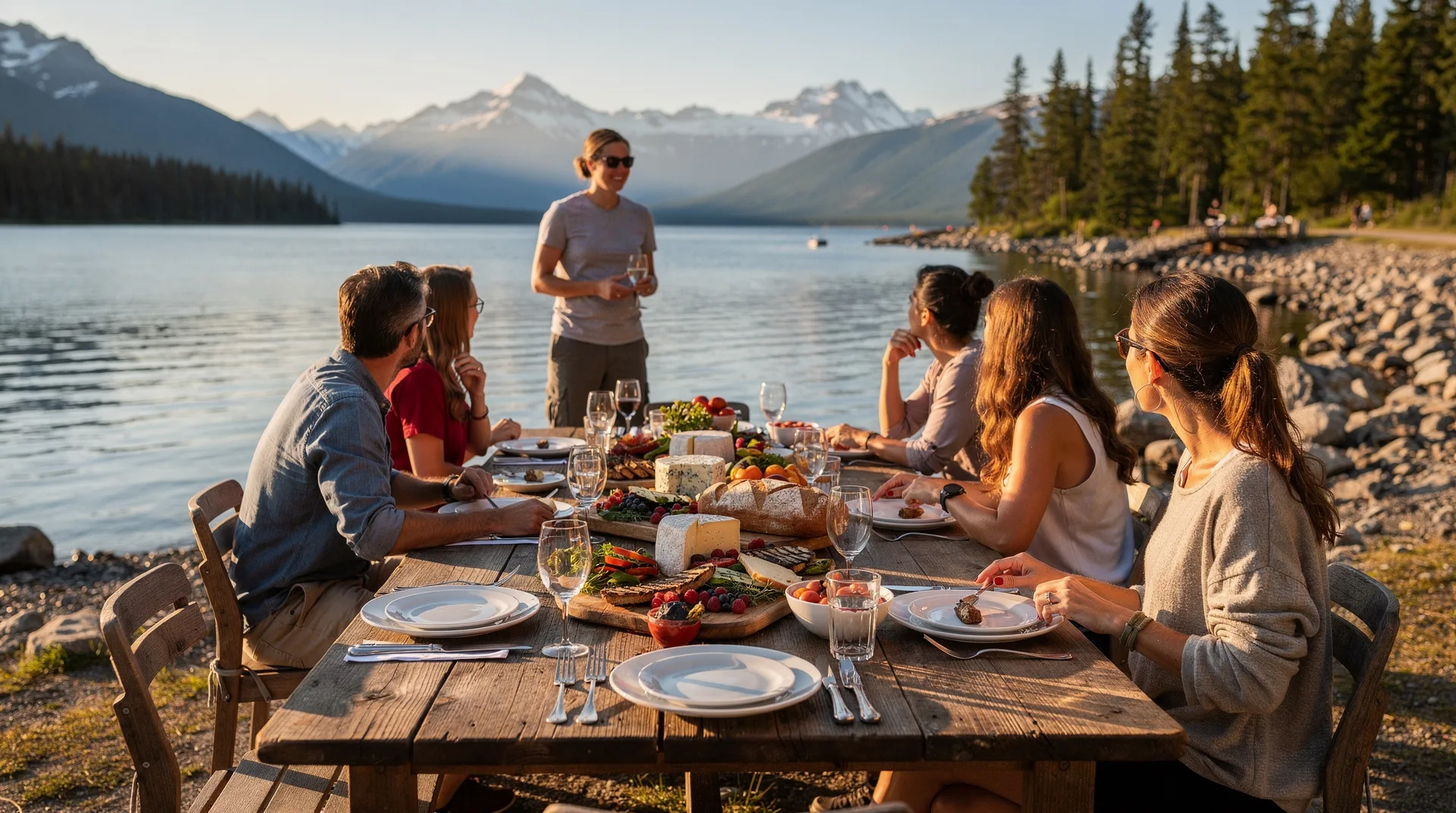
Guided food tours in Canada's major cities
Are guided food tours worth it in Canadian cities?
Yes — a guided food tour covers more ground in 3 hours than most visitors manage independently, combines eating with local history and neighbourhood storytelling, and introduces you to places you would never find alone. They typically run CAD $65–$120 per person with 6–12 tastings included.
At a glance
| Cost | Around CAD $65-120/person for a 2.5-3.5 hour walking tour |
| Time needed | 2.5-3.5 hours for most walking tours, 4-5 hours for cooking-class combos |
| Best cities | Montreal, Vancouver, Toronto, Quebec City, Halifax |
| Booking lead time | 48-72 hours usually; a week ahead for peak Saturdays |
| Best time | Year-round; summer for outdoor market tours, any season for neighbourhood walks |
Why food tours unlock Canadian cities differently
Every city has a face it shows to tourists and a face it saves for people who know it. The tourist face has signposted attractions and mid-range restaurants with photos on the menu. The insider face is the Portuguese bakery that doesn’t have a sign, the Chinatown noodle shop operating from a walk-up window, the Polish delicatessen that has been selling the same smoked meats since 1962.
A good food tour is a shortcut to that insider face. Your guide is not a travel agent reciting facts — they are a neighbourhood obsessive who knows the owner of the dumpling shop personally, who will tell you that the best baklava in the city is made by a 70-year-old Greek man who learned in Athens, who will walk you past the alley where the best new chef in town is testing recipes out of a borrowed kitchen.
Canada’s major cities have developed outstanding food tour cultures over the past two decades, and the options range from leisurely walking tours through historic market districts to cycling tours through food-focused neighbourhoods, evening cocktail-and-cuisine experiences, and specialty tours focused on specific cuisines or dietary preferences.
This guide covers the best food tour options in each major city, what to expect, how to book, and practical advice for getting the most from your experience.
Montreal: one of North America’s great food tour cities
Montreal has a passionate, complex food culture — French bakery tradition, Jewish deli heritage, Italian-immigrant influence, Lebanese and Southeast Asian immigration waves, and a contemporary restaurant scene that consistently ranks among the world’s best. A food tour here covers extraordinary ground.
Mile End Food Tour is the classic Montreal walking food tour. Mile End is a neighbourhood that has been successively Jewish, Greek, Sephardic Jewish, Portuguese, Haitian, and now fashionably diverse, and every layer of immigration left food behind. A typical tour covers Montreal bagels (St-Viateur is the cathedral), smoked meat (either Schwartz’s or a neighbourhood specialist), Romanian sausage, Quebec cheese, and Portuguese pastries — all within a few blocks. Tours run approximately 3 hours and cost CAD $75–$95 per person.
Old Montreal food tour covers the historic district’s surprising culinary depth — maple products, artisanal chocolate, poutine (done properly, with fresh Quebec cheese curds), Québécois charcuterie, and the city’s extraordinary pastry culture. The backdrop of 400-year-old stone buildings and cobblestone streets makes the eating feel more theatrical.
Jean-Talon Market tours focus on the enormous Marché Jean-Talon in the Petite-Italie neighbourhood — an outdoor market that in summer becomes a carnival of Quebec produce, fresh herbs, artisanal cheeses, imported Italian ingredients, and street food. Food tour operators offer guided market visits where you taste your way through the stalls.
Evening cocktail and restaurant tours in the Plateau-Mont-Royal and Mile End cover Montreal’s vibrant bar and natural wine scene alongside food stops.
Browse Montreal food and neighbourhood tours on GetYourGuideVancouver: the Pacific Rim food city
Vancouver is one of the world’s great food cities, shaped by Indigenous culinary traditions, a massive Chinese-Canadian community (the largest in North America), Japanese-Canadian influence, South Asian immigration, and the most extraordinary local seafood available anywhere on the continent.
Granville Island food tour is Vancouver’s signature food experience. Granville Island Public Market is a covered market under the Granville Bridge with dozens of permanent vendors selling local produce, BC cheese, fresh-baked pastries, wild salmon, charcuterie, and specialty foods. A guided tour adds context about producers, BC food culture, and the market’s history. Tours run 2–3 hours and cost CAD $65–$85 per person, typically with 8–10 tastings.
Chinatown and Strathcona food tour covers North America’s second-oldest Chinatown alongside the emerging Strathcona neighbourhood, with stops at hand-pulled noodle shops, traditional herbalists, Chinese bakeries, Vietnamese bánh mì vendors, and contemporary fusion restaurants. This tour gives the fullest picture of Vancouver’s Asian food heritage.
Richmond food tour ventures to the suburb of Richmond — technically not Vancouver proper but home to what many food experts call the finest Chinese food outside mainland China and Hong Kong. The Golden Village area on Alexandra Road has hundreds of Chinese restaurants representing regional cuisines from Sichuan to Cantonese to Yunnan. A structured tour or self-guided eating expedition here is one of the most extraordinary food experiences in Canada.
East Vancouver brewery and food tour combines craft beer culture with the food scene in East Van, visiting breweries and the food trucks and restaurants that have grown around them.
Find Vancouver food and market tours on GetYourGuideToronto: North America’s most diverse food city
Toronto is genuinely among the most culinarily diverse cities on the planet — a city where you can eat authentic Nigerian, Sri Lankan, Macedonian, Tibetan, and Peruvian food within a few city blocks, all prepared by first or second-generation immigrants from those countries. Food tours here are windows into the extraordinary human diversity of the city.
Kensington Market food tour is the iconic Toronto option. Kensington Market is a labyrinthine neighbourhood of Victorian houses converted into shops, cafes, and food stalls — cheese shops, Caribbean spice vendors, vintage clothing, Mexican street food, West African grocers, and a dozen other food cultures crammed into a few square blocks. Guided tours run 2.5–3 hours and cost CAD $70–$90.
Chinatown and Spadina food tour covers one of North America’s most vibrant Chinatown corridors alongside the Spadina Avenue food strip — dim sum, Hong Kong-style BBQ, Taiwanese bubble tea, Vietnamese noodles, and Korean fried chicken in rapid succession.
St. Lawrence Market area tour covers Toronto’s historic market (a working covered market since 1803), the surrounding food streets, and the Distillery District. The focus is often on Ontario food products and artisanal producers.
Toronto’s Little Portugal, Little Italy, and West End tours cover the immigrant-neighbourhood food culture that gives Toronto its extraordinary culinary diversity. Pastel de nata, Portuguese grilled chicken, Roman-style pizza, Neapolitan pastry — all within a few minutes’ walk in the west end.
Specialty dietary tours are widely available in Toronto — specifically vegan or vegetarian tours, gluten-free options, and kosher food culture tours in the Lawrence-Bathurst corridor.
Explore Toronto food and neighbourhood toursQuebec City: French culinary heritage in a walled city
Quebec City’s food tour scene is narrower in scope but deep in authenticity — this is a city with a continuous French culinary tradition stretching back to the 17th century, and a contemporary restaurant scene that takes its Quebec heritage seriously.
Old Lower Town food tour covers the Petit-Champlain neighbourhood — North America’s oldest commercial street — with tastings of Quebec artisanal cheese, charcuterie, maple products, and traditional pastries. The setting, within UNESCO-listed Old Quebec, is extraordinary.
Marché du Vieux-Port tours cover the city’s public market with seasonal Quebec produce and local artisans. In summer the market is spectacular; in fall it becomes a harvest festival of Quebec vegetables, fruit, and preserves.
See the Old Quebec guide for the broader context of visiting the historic city.
Halifax: Atlantic Canada’s food hub
Halifax’s food tour scene has matured rapidly, driven by the city’s extraordinary seafood proximity and a growing creative restaurant scene.
Halifax waterfront food tour covers the Seaport area and surrounding streets with stops at seafood vendors, the Seaport Farmers’ Market, Maritime charcuterie producers, and local breweries. Fresh lobster, chowder, and donair (the Halifax-specific street food) feature prominently.
North End Halifax tour covers the gentrifying North End neighbourhood with its mix of heritage food institutions and contemporary restaurants.
Find Halifax food and harbour tours on GetYourGuideSpecialty food tour types across Canada
Cycling food tours are offered in several flat-terrain cities. Montreal’s Plateau is well suited to bike-based food touring. Several Vancouver operators run cycling tours between Granville Island, Chinatown, and East Van breweries.
Market tours with cooking classes combine a guided market visit with a hands-on cooking session using ingredients purchased that morning. Available in Montreal (Jean-Talon), Vancouver (Granville Island), and Toronto (St. Lawrence Market vicinity). These run 4–5 hours and cost CAD $100–$175 per person.
Indigenous food experience tours are offered in several cities and First Nations communities. These cover traditional and contemporary Indigenous food cultures, often including wild ingredients, bannock preparation, and storytelling. See the Indigenous culture guide for operators.
Craft beer and food pairing tours are available in Vancouver, Victoria, and Calgary, combining brewery visits with food pairings. These are particularly well developed in BC.
What to expect on a food tour
Group size: Most food tours cap at 8–12 people. Private tours for 2–6 people are available from most operators.
Duration: Typically 2.5–3.5 hours for walking tours. Cycling and cooking class combinations run 4–5 hours.
Food quantity: A well-structured food tour provides enough food to replace a meal — you should not need dinner after a lunch-time food tour. Communicate dietary restrictions when booking; good operators accommodate them.
Physical requirements: Most walking tours cover 2–4 km at a relaxed pace. City terrain is mostly flat, though Montreal and Quebec City have some slopes.
Weather: Canadian food tours run year-round. Dress for the season; guides are used to bad weather. Some tours move partially indoors when conditions are extreme.
Which city to pick for a food tour
| City | Signature tour | Best for |
|---|---|---|
| Montreal | Mile End | Layered immigrant food history, bagels and smoked meat |
| Vancouver | Granville Island / Richmond | Seafood, Asian-Canadian food culture |
| Toronto | Kensington Market | Sheer culinary diversity in a few blocks |
| Quebec City | Petit-Champlain | French heritage in a walkable historic core |
| Halifax | Waterfront/Seaport | Fresh seafood and Maritime charcuterie |
Food is also one of the best lenses on Canadian identity more broadly — see the Canadian food culture guide for the bigger picture beyond guided tours, and the best souvenirs guide if a tour leaves you wanting to bring some of it home.
How to book and what to pay
Booking: Most operators use Viator, GetYourGuide, or their own websites. Booking 48–72 hours ahead is usually sufficient, though popular Saturday afternoon tours in high season can sell out a week ahead.
Prices (approximate):
- Walking neighbourhood food tour (3 hrs): CAD $65–$95 per person
- Market tour with tastings: CAD $55–$80 per person
- Cycling food tour (3.5 hrs): CAD $80–$110 per person
- Cooking class with market tour (5 hrs): CAD $120–$175 per person
- Private tour for 2 people: CAD $150–$250 total
Tipping: CAD $10–$20 per person is standard for a walking food tour if the guide is excellent. It is not mandatory but greatly appreciated.
Budgeting for a food tour on top of the rest of a trip is worth planning for in advance — see the Canada budget guide and the budget tips guide for how a CAD $65-175 tour fits into a daily travel budget.
Frequently asked questions about Guided food tours in Canada’s major cities
How hungry should I be before a food tour?
Arrive with a moderate appetite — not starving, not just after a full meal. A light breakfast 2–3 hours before a morning food tour is ideal. For an afternoon tour (2pm start), have a light lunch. The tour will provide enough food to satisfy you; you do not need to supplement with additional eating.
Are food tours suitable for children?
Many food tour operators welcome families with children, particularly at markets and neighbourhood walking tours. Some evening bar-focused tours are adults only. Check with the operator when booking.
Can I do a food tour with dietary restrictions?
Yes, with advance communication. Operators in major Canadian cities are accustomed to vegetarian, vegan, gluten-free, halal, and kosher requirements. The more specific the restriction, the more lead time the operator needs.
What is the best neighbourhood for a food tour in Montreal?
Mile End for cultural depth and the Jewish-Quebec-Portuguese food layers. Old Montreal for history and traditional Québécois products. The choice depends on whether you prioritise contemporary food culture or heritage.
Are self-guided food tours available?
Yes — tourism offices in Vancouver, Montreal, and Toronto publish self-guided food tour routes with maps. Vancouver Tourism’s Granville Island self-guided map, Montreal’s neighbourhood food guides, and Toronto’s various neighbourhood eating guides all provide excellent DIY frameworks. The advantage of a guided tour is context and access to places not on the tourist radar.
Do food tours include drinks?
Some include wine, beer, or cocktail pairings at certain stops; others are food-only. Check the specific tour description. Afternoon tours rarely include alcohol; evening tours more often do.
What should I wear on a food tour?
Comfortable walking shoes are the main requirement. Dress for the current weather — guides operate in all seasons. Some market areas and restaurant kitchens require closed-toe shoes.
Which Canadian city has the best food tour for a first-timer?
Montreal and Toronto are the easiest starting points — both have well-established, highly rated walking tours (Mile End and Kensington Market respectively) that need no special planning beyond booking ahead. Vancouver’s Granville Island tour is equally accessible and pairs well with a visit to the Vancouver destination guide.
Are food tours a good way to save money on a Canada trip?
Not directly — a food tour costs more than eating the same food independently — but the tastings typically replace a full meal, so it can offset one meal’s cost while adding context and access you would not get alone.