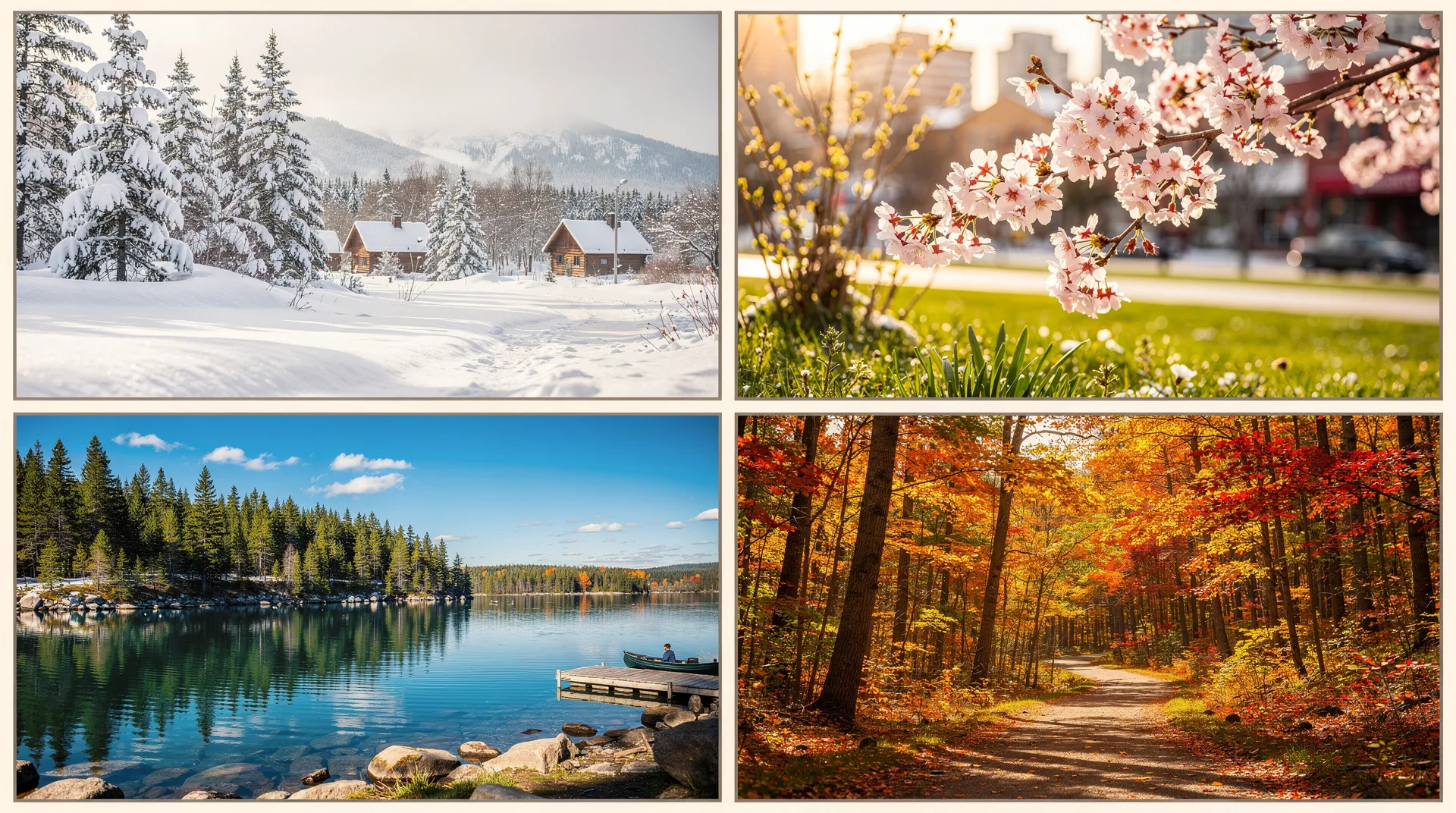
Atlantic Canada weather: month-by-month travel guide
When is the best time to visit Atlantic Canada?
July through mid-September is the peak season across Atlantic Canada — warmest temperatures (18-25°C), all attractions open, best whale watching. Late June is best for icebergs in Newfoundland. September offers fall colour and fewer crowds.
Atlantic Canada’s four provinces — Nova Scotia, New Brunswick, Prince Edward Island, and Newfoundland and Labrador — share a maritime climate shaped by the cold Labrador Current and the warm Gulf Stream meeting offshore. This produces a climate that is more moderate than the Canadian interior (milder winters, cooler summers) but also notably foggier, rainier, and more changeable. Understanding what the weather will actually be like across the region is essential to planning a successful trip.
This guide walks through the Atlantic calendar month by month, covers the major weather patterns by province, and provides activity-specific timing advice. The short answer: July through early September is the primary tourist season, with late June for iceberg viewing and September for fall colour and lower crowds.
| At a glance | |
|---|---|
| Where | Nova Scotia, New Brunswick, Prince Edward Island, Newfoundland and Labrador |
| Cost | Weather itself is free; shoulder-season accommodation runs noticeably cheaper than July-August peak rates |
| Time needed | A useful weather-aware trip is 7-10 days to absorb a few rainy or foggy days |
| Getting there | Fly into Halifax, Moncton, Charlottetown or St. John’s, then drive |
| Best time | Late June through mid-September, peaking in July-August |
The overall picture
Atlantic Canada is cool, damp, and maritime. Summers are mild — typically 18-25°C inland, 15-22°C on the coasts. Winters are cold but rarely as extreme as the Canadian interior — typically -5 to -10°C daytime, with significant snow and storm activity.
Rain is a year-round companion. St. John’s is the rainiest, foggiest major city in Canada — 1,500+ mm of precipitation annually, fog on 120+ days per year. Halifax sees 1,400+ mm. Even at their “driest,” Atlantic Canadian locations see meaningful precipitation most months.
Fog is a seasonal feature. The fog season peaks in June and July when warm air over the land meets cold ocean water. Some coastal locations can be fogged in for days at a time in early summer. Plan flexibility into any itinerary that includes whale watching or coastal scenery.
Wind is constant on the coast. The prevailing winds are strong year-round. This matters for boat tours, outdoor photography, and anyone not accustomed to Atlantic conditions.
Ocean temperatures vary dramatically by location. The Gulf of St. Lawrence on PEI’s north shore warms to 19-22°C in late July and early August — swimmable by Canadian standards. The open Atlantic coasts of Nova Scotia and Newfoundland stay cold (10-14°C) all year — not swimmable for most visitors.
January and February: deep winter
Temperatures: daytime -5 to -10°C inland; -2 to -5°C on warmer coasts; colder in Newfoundland and inland Nova Scotia.
Conditions: significant snow. Nor’easter storms can drop 30-60cm in a single event. Sea fog is reduced but ice storms occur.
What’s open: most major tourist attractions closed or on reduced schedule. Major cities (Halifax, St. John’s, Moncton, Charlottetown) remain fully operational. Cabot Trail and Gros Morne are drivable but with serious winter driving conditions.
What’s good: Winterlude in Ottawa (January/February) is technically in Ontario but accessible. Some Cabot Trail ski and cross-country venues operate. Halifax’s Ice Wine Festival (February) is notable.
What to avoid: most coastal hiking, most wildlife tours, most small-town heritage sites (closed), and most iconic Atlantic experiences (icebergs are months away; whales are absent).
Recommendation: unless you live in Atlantic Canada or have specific winter interests, postpone your trip. The region is at its most challenging.
March: late winter
Temperatures: 0 to -5°C daytime. Snow remains on the ground in most of the region.
Conditions: still winter in most practical senses. Weather begins to moderate by late March.
What’s open: similar to January-February.
What’s good: Halifax and St. John’s remain operational. Some ski venues still open. Maple syrup season begins in some areas.
Recommendation: still a poor time for visiting Atlantic Canada as a tourist destination. Save for shoulder or peak season.
April: spring begins
Temperatures: 5-10°C daytime by late April. Remnant snow mostly gone by month’s end except in higher elevations and interior Newfoundland.
Conditions: highly variable. Rain is frequent. Fog increases. Still early-season feel throughout most of the region.
What’s open: tourist operations begin to open mid-month in Halifax and Charlottetown. Fredericton, Saint John, and smaller communities mostly still closed. Newfoundland operations do not open until May.
What’s good: low prices, no crowds, the occasional sunny day. Early icebergs begin to appear off Newfoundland’s coast in some years.
Recommendation: for budget travellers who can handle changeable weather and limited services, late April can work. Most visitors should wait.
May: shoulder season opens
Temperatures: 10-15°C daytime; 5-10°C at night. Warm days are possible.
Conditions: variable — sunny and warm stretches alternating with cold fronts. Fog is significant, particularly on the open coast.
What’s open: most tourist operations open by mid-May. Parks Canada sites open. Restaurants and accommodation generally operating. Puffins arrive in Newfoundland mid-May; icebergs are at peak visibility in some years.
What’s good: the iceberg-watching season begins in Newfoundland. Lobster season opens in Nova Scotia and PEI. Spring wildflowers. Lower prices and lighter crowds than July-August.
What to know: mid-May can still have cold snaps. Plan with flexibility.
Recommendation: late May is a strong window for Newfoundland (icebergs) and for budget-conscious travellers elsewhere. The region is clearly in tourist mode but without peak-season crowds.
June: early summer
Temperatures: 15-20°C daytime; 10-15°C at night. Warm sunny days increase in frequency.
Conditions: the famous “June fog” affects the Atlantic coast heavily, particularly Nova Scotia’s South Shore, New Brunswick’s Fundy coast, and Newfoundland’s Avalon Peninsula. Rain is frequent.
What’s open: everything. June is full tourist season.
What’s good: icebergs at peak visibility in Newfoundland (especially late June). Puffin colonies in full nesting activity. Whales arriving in the Bay of Fundy and the Gulf of St. Lawrence. Wildflowers abundant. Lobster season continues. Accommodation still below peak pricing.
Conditions to know: fog can completely obscure coastal attractions (Peggy’s Cove, Cape St. Mary’s, coastal hiking trails). A day or two of poor visibility is common.
Recommendation: excellent month with the caveat that fog affects some scenic experiences. Budget 3-4 extra days in a trip to allow for weather substitutions.
July: peak summer
Temperatures: 20-25°C daytime; 15-18°C at night. Warm across the region.
Conditions: the driest and sunniest month of the year for most of the region. Fog decreases from June levels. Rain events are typically shorter and less severe.
What’s open: all tourism infrastructure at peak operation. Festivals, theatre productions, major events (Cavendish Beach Music Festival, Halifax Jazz Festival) occur in July.
What’s good: whale watching at peak, warm ocean swimming on PEI, puffins actively feeding chicks, wildflowers at peak, excellent light for photography.
What’s not: this is also the most crowded and most expensive month. Accommodation at peak pricing; popular venues fully booked 2-3 months ahead.
Recommendation: the peak month. If you can only visit once and want reliable good weather, this is the choice. Boat trips and coastal outings fill quickly, so it helps to browse Canada tours and activities early.
August: continued peak
Temperatures: similar to July — 20-25°C daytime, occasionally warmer.
Conditions: sunny and warm with more short thunderstorm activity than July. Hurricane season begins in theory (Atlantic Canada hurricane activity is rare but possible August-September).
What’s open: everything. Peak operation throughout.
What’s good: warmest ocean water of the year (PEI warms to 21-22°C typically). Excellent whale watching. Puffins until mid-month. Gardens at peak. Pick-your-own berries and orchards active.
What’s not: peak pricing and crowds continue. Traffic on Cabot Trail and main tourist corridors can be significant.
Recommendation: equally strong with July. For water-based activities and beaches, August is the single best month.
September: fall transition
Temperatures: 15-20°C early in the month; 10-15°C by late September. Nights cool into single digits.
Conditions: often the most reliably clear weather of the year. Fog largely gone. Rain events shorter and less frequent.
What’s open: most tourist operations remain open through mid-month. Some operations close after Labour Day or mid-month. Gros Morne, Cabot Trail, and major parks remain fully operational.
What’s good: fall colour begins (peak varies — typically early to mid-October in Cape Breton and Gros Morne). Cool evenings but warm days. Significantly lower crowds. Shoulder pricing. Still-swimmable water on PEI in early September.
What’s not: puffins have left. Iceberg season is over. Whale activity declines late in the month.
Recommendation: the best shoulder month. For visitors who can handle slightly cooler temperatures and reduced some wildlife, September offers the best combination of weather, prices, and crowd density.
October: fall colour and shoulder
Temperatures: 10-15°C daytime; 5-10°C at night. Colder in Newfoundland.
Conditions: fall colour is at peak early in the month in Cape Breton Highlands and Gros Morne. Rain increases. First frost events.
What’s open: many tourist operations close after Canadian Thanksgiving (mid-October). Major cities remain fully functional.
What’s good: Celtic Colours Festival on Cape Breton (early October) — one of the region’s signature events. Fall foliage peaks. Apple harvests in Nova Scotia’s Annapolis Valley.
Recommendation: an excellent window for fall colour and cultural tourism, but plan around operational calendars — some iconic experiences close by month’s end.
November and December: late fall into winter
Temperatures: 0-5°C declining to -5°C by late December.
Conditions: cold, often wet. First significant snow accumulations begin.
What’s open: most rural tourist operations closed. Major cities operate at reduced capacity.
Recommendation: not a typical tourist window. Urban experiences in Halifax or St. John’s are possible; rural and nature-based experiences are generally not.
Province-specific weather notes
Newfoundland: the foggiest, wettest, and most weather-variable of the Atlantic provinces. St. John’s sees fog on 120+ days a year. Inland (central Newfoundland) is notably drier. Plan extra days into a Newfoundland itinerary for weather flexibility.
Nova Scotia: divided between the Atlantic coast (foggy, cool, damp) and the interior/Bay of Fundy side (warmer, sunnier). The Annapolis Valley is the sunniest large region in Atlantic Canada.
New Brunswick: inland NB is similar in feel to southern Quebec. The Fundy coast sees significant fog. Miramichi and the eastern shore are warmer.
PEI: the most moderate weather in Atlantic Canada. Warmest ocean water north of Virginia. Snowbelt in winter but mild summer conditions.
Weather and specific activities
Iceberg watching: late May through early July, with peak in June. Twillingate and the Bonavista Peninsula are the best bases. Many travellers book guided Canada excursions for boat-based viewing.
Whale watching: late June through September. Peak in July-August. Bay of Fundy, Witless Bay, Pleasant Bay.
Puffins: late May through mid-August. Witless Bay NL, Elliston NL, Bird Island NS.
Fall colour: late September to mid-October. Cape Breton Highlands, Gros Morne, Fundy NP.
Beach weather: mid-July to mid-August on PEI’s north shore. Limited beach opportunity elsewhere in Atlantic Canada.
Hiking: late May through October, with peak in July-August. Fall hiking (September) is often the best in terms of weather reliability.
Quick seasonality table
| Month | Typical daytime temp | Rain/fog risk | Crowds |
|---|---|---|---|
| May | 10-15°C | Moderate fog | Low |
| June | 15-20°C | High fog on the coast | Moderate |
| July | 20-25°C | Lowest of the year | High |
| August | 20-25°C | Low, occasional storms | High |
| September | 15-20°C | Low, often clearest month | Moderate |
| October | 10-15°C | Rising | Low-moderate |
Packing and planning around Atlantic weather
Layering matters more than any single garment. Even in July, a foggy morning on the Bay of Fundy or Cape Breton coast can feel 5-8°C cooler than an inland forecast suggests, and afternoon sun can bring it back up quickly. A waterproof shell earns its space in every season, and footwear that handles wet rock and boardwalks matters on the Cabot Trail and around Peggy’s Cove.
Travellers deciding between provinces for a shorter trip often ask whether Newfoundland’s fog and rain risk outweighs its scenery — the St. John’s vs Halifax guide and the Nova Scotia vs New Brunswick guide both weigh weather reliability against what each region offers.
For a longer circuit built with weather buffer days in mind, the Atlantic Canada 10-day itinerary and 14-day itinerary both allow more flexibility than a tight 7-day plan. Anyone driving the region should also read the driving Atlantic Canada guide for road-condition notes that change with the season.
Frequently asked questions about Atlantic Canada weather
Is Atlantic Canada colder than the rest of Canada in summer?
Yes, generally — coastal fog and ocean-moderated temperatures keep Atlantic Canada’s summer highs a few degrees cooler than inland Ontario or Quebec, especially right on the coast. Inland areas like the Annapolis Valley and central New Brunswick run noticeably warmer than the open coast.
How much rain gear do I actually need?
Pack a proper waterproof shell and waterproof footwear regardless of season or forecast — rain and fog can arrive with little warning even in July and August, and a light rain jacket alone is usually not enough on an exposed coastal hike.
Combining weather considerations with trip planning
A 7-day Atlantic trip in peak summer (July-August) balances reliability with cost. A 7-day trip in late June or September trades some wildlife viewing or warmer water for lower prices and crowds.
See the Atlantic Canada 7-day itinerary and fall-focused travel guides for month-specific planning.
For specific destination guidance, see province-specific destination pages:
Bottom line
Atlantic Canada rewards flexibility with weather planning. The core tourist season runs late June through mid-September with July and August at peak. Late June is optimal for iceberg viewing. September offers the best combination of good weather and lower crowds. Outside these windows the region is genuinely quieter — not necessarily closed but operating at a different scale. For most visitors, a trip between late June and late September provides the best experience.