Quick facts
- Located in
- Kananaskis Country, southwest Alberta
- Best time
- June to September for hiking; winter for skiing
- Getting there
- 1 hour from Calgary on Highway 1 and Highway 40
- Days needed
- 2-4 days
| At a glance | |
|---|---|
| Where | Kananaskis Country, southwest Alberta, centred on Peter Lougheed Provincial Park and Kananaskis Village |
| Cost | No national park pass needed; a Kananaskis Conservation Pass fee applies for parking; activities vary from free hikes to paid spa/ski access |
| Time needed | A single day trip works from Calgary; 2-4 days lets you cover hiking, biking, and the spa |
| Getting there | About 1 hour from Calgary via Highway 1 and Highway 40; 70-80 km / roughly 1-1.5 hours from Banff |
| Best time | June to September for hiking and biking; December to March for skiing and Nordic skiing |
Kananaskis Country has an activity range that rivals Banff while operating under the radar of most international visitors. The mountains are the same mountains — the same geology, the same wildlife, the same turquoise lakes — but the crowds are a fraction of the size, the access road requires no national park pass, and the experience is more rugged and less managed. For visitors willing to do slightly more research, Kananaskis repays the effort generously.
This guide covers everything worth doing in Kananaskis Country across the seasons: hiking, mountain biking, the Nordic spa, wildlife watching, skiing, and the specific destinations that define each area of this large and varied region.
Hiking the Kananaskis Lakes
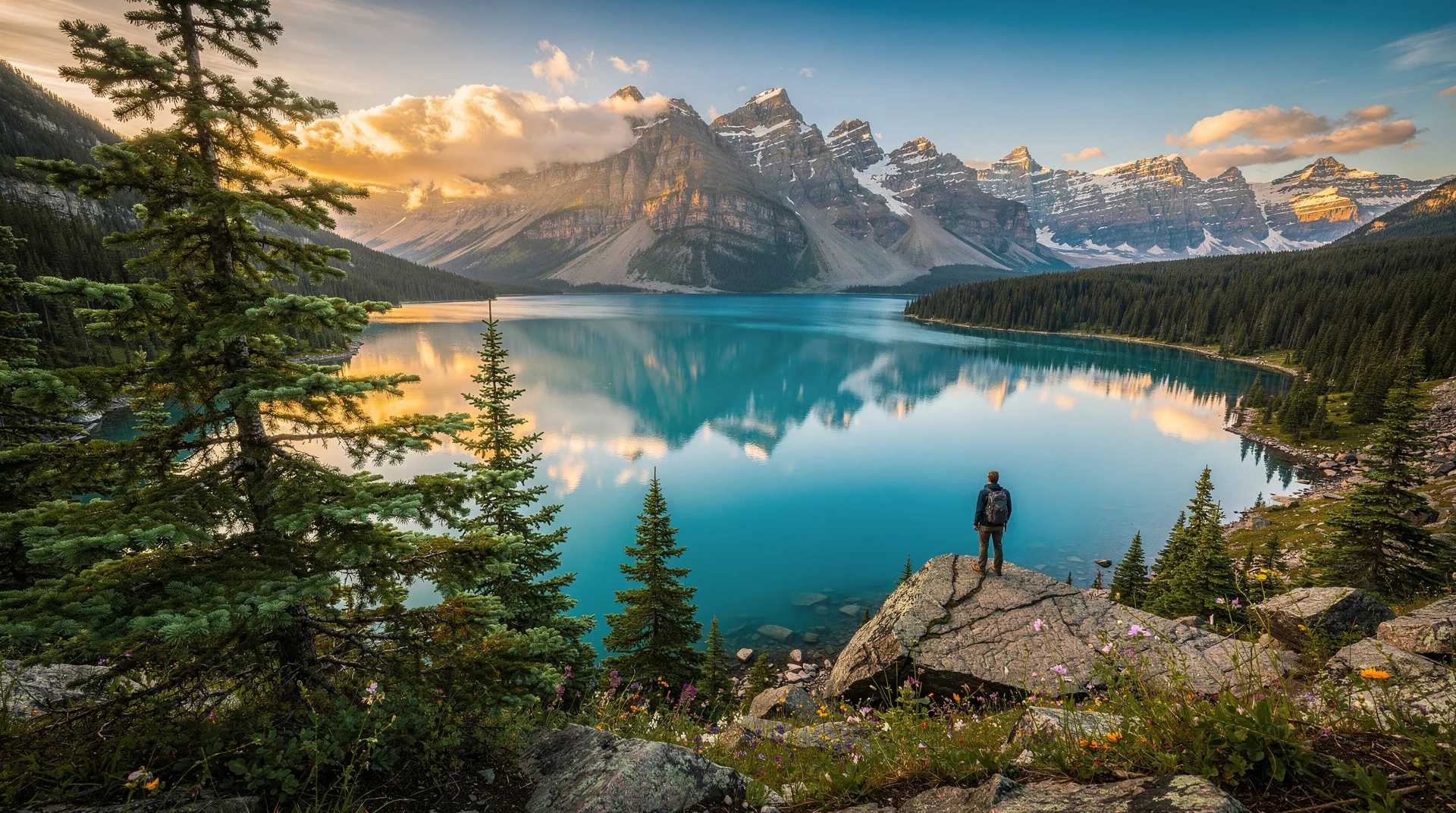
The Kananaskis Lakes — Upper and Lower, connected by a short gorge in Peter Lougheed Provincial Park — are the scenic heart of the region. The surrounding peaks reach above 3,000 metres; the lake surfaces are the vivid turquoise of glacially fed water.
Upper Kananaskis Lake circuit (15 km, 100 m gain) is the signature lake hike — a full circuit of the upper lake through mixed forest and open rocky shoreline. The trail crosses the gorge between the lakes via a bridge and returns along the opposite shore. Allow 4-5 hours for the full circuit; the north shore section (away from the main trailhead) is the most rewarding for lake views and solitude.
Rawson Lake (7.4 km return, 350 m gain from Upper Lake trailhead) is the most popular day hike from the lakes area — a steep climb through forest to a small cirque lake above the main valley. The trail is steady and rewarding; the lake setting is classic high-alpine.
Three Isle Lake (21 km return, 500 m gain) is the Kananaskis Lakes area’s most ambitious day hike — a remote alpine lake in a hanging valley with outstanding views. Popular with backpackers who camp at the lake overnight. A full day for fit hikers doing it as a day trip.
Ptarmigan Cirque (5.4 km return, 245 m gain, from Highwood Pass) is the finest short alpine hike in Kananaskis — a trail above the highest paved pass in Canada, through high-altitude tundra and into a glacial cirque. Snow may persist into July on the upper section; wildflowers bloom intensely in mid-July at this elevation.
Mountain biking
Kananaskis Country has the most developed trail-based mountain biking in the Alberta Rockies — a network of singletrack and purpose-built trails centred on the Ribbon Creek area near Kananaskis Village.
Ribbon Creek trail system: Over 100 km of trails ranging from beginner-friendly multi-use paths to technical singletrack. The ribbon-like trail network connects Kananaskis Village to the surrounding terrain; the Jewel Bay connector and Terrace trails are accessible entry points for intermediate riders.
Canmore Nordic Centre (at the north end of the Kananaskis trail network, accessible from Canmore) is the hub of competitive cross-country and mountain biking infrastructure in the region — built for the 1988 Olympics, now operated as a public facility with rental bikes and guided tours.
Elk Pass trail (in Peter Lougheed) is open to cyclists — a forested doubletrack route to the BC border that covers 10 km each way with modest elevation gain. Good option for those wanting a long pedal into remote terrain.
Bike rentals are available from outfitters in Canmore (closest full-service town) and from Kananaskis Village. A full-suspension mountain bike is recommended for the Ribbon Creek singletrack.
Browse Banff and Kananaskis area guided outdoor toursNordic Spa
The Kananaskis Nordic Spa at the Pomeroy Kananaskis Mountain Lodge is one of the finest outdoor thermal spa experiences in Alberta — an increasingly popular destination in its own right, combining hot pools, cold plunges, steam rooms, and saunas in a mountain setting.
The facility is laid out across multiple outdoor pools at different temperatures, with forested mountain views from every position. The contrast bathing (hot-cold-rest cycles) approach is the Nordic thermotherapy model; the spa provides instruction on the sequence. Multiple pools mean the experience varies — some are designed for social activity, others for quiet contemplation.
Reservations are essential: The spa caps daily visitor numbers. Book online through the Pomeroy Kananaskis Mountain Lodge website. Weekends fill weeks ahead; weekdays have more availability.
Combining with a hike: The spa as an après-hike destination is the ideal Kananaskis formula — a morning on the Kananaskis Lakes trail followed by two hours in the hot pools. Spa facilities include a restaurant and changing areas.
Season: Open year-round. Winter is arguably the best season — soaking in hot water while snow falls around the pools and mountains disappear into cloud is an experience the summer version cannot replicate.
Wildlife watching
Kananaskis Country’s lower visitor pressure means wildlife is less habituated to humans than in Banff — potentially more visible in natural behaviour and certainly less difficult to approach safely.
Grizzly bears: The Kananaskis Lakes area, the Spray Valley, and the Mount Engadine meadows are all active grizzly territories. The meadows at Mount Engadine Lodge, in the Spray Valley, are among the best roadside grizzly viewing locations in Alberta — the lodge’s position on the edge of open meadow allows observation from a safe distance. Early morning and evening in June and July, when bears are feeding on early vegetation, offer the best opportunities.
Elk: Large herds winter in the Kananaskis River valley and are frequently visible from Highway 40 in spring and fall. Rut season (late September to early October) concentrates elk activity and produces the bugling that is one of the great wildlife soundtracks of the Rockies.
Bighorn sheep: The canyon terrain in the Kananaskis River valley between the Trans-Canada and Kananaskis Village is bighorn sheep habitat — visible from the road on most visits, often crossing Highway 40.
Wolves and cougars: Both are present in Kananaskis but rarely seen. Evidence of wolf activity (tracks, howling) is periodically reported. The Spray Valley and upper Kananaskis areas are the most likely zones for wolf sightings.
Skiing at Nakiska
Nakiska Ski Resort at Mount Allan, 2 km from Kananaskis Village, was built for the 1988 Calgary Winter Olympics and remains in operation as a mid-sized ski area with 68 named runs across 259 hectares. The terrain serves beginner through advanced skiers; the vertical drop of 735 m is respectable.
Nakiska’s key advantage over the Banff resorts is accessibility from Calgary (90 minutes versus 2 hours to Banff Sunshine) and significantly lower lift ticket prices. On busy Banff days when the SkiBig3 resorts are packed, Nakiska offers comparable mountain terrain at lower pressure.
The ski season typically runs December through April; exact dates depend on snowfall. Nakiska receives somewhat less natural snowfall than the higher-elevation Banff resorts but benefits from extensive snowmaking.
Sledding and tubing: Kananaskis Nordic Spa winter area, and several Kananaskis Family Sport rental operators, offer snowshoeing, ice skating on Kananaskis Lakes (when frozen), and sledding opportunities for families.
Cross-country skiing and snowshoeing
The Canmore Nordic Centre and the Peter Lougheed cross-country trail network together provide over 100 km of groomed cross-country skiing in the Kananaskis area — among the best Nordic infrastructure in western Canada.
Peter Lougheed Provincial Park maintains groomed trails around the Kananaskis Lakes in winter, including an illuminated evening trail for after-dark skiing. The scenery — frozen lakes, snow-covered peaks, forest corridors — is exceptional.
Snowshoeing is accessible across virtually all of the summer hiking trail network in winter. The Rawson Lake trail, the Ribbon Creek trails, and the Kananaskis Lakes area all work well on snowshoes.
Canoe and kayak on Kananaskis Lakes
The Kananaskis Lakes are open for non-motorised watercraft. Bring your own canoe or kayak, or rent through outfitters in Canmore (most require a short drive to the lake). The absence of motorboats on the Upper Lake makes it a particularly peaceful paddling environment.
Note: Winds can pick up significantly in the afternoon on the open lake — plan morning paddles for the calmest conditions.
Book guided Kananaskis and Calgary outdoor experiencesFishing
The Kananaskis River and Kananaskis Lakes have resident populations of brown and rainbow trout. Alberta fishing requires a provincial fishing licence (available online at mywildalberta.ca). The Kananaskis River below the Barrier Lake dam is a designated catch-and-release section and is one of the more productive fishing locations in the system.
Rock climbing
The limestone cliffs in the lower Kananaskis Valley and in the Bow Valley near Canmore provide established sport and traditional climbing routes. The Heart Creek canyon near Exshaw (east edge of the Bow Valley) is a popular introductory climbing area with bolted sport routes at various grades. Experienced climbers can access more serious routes on the main range walls above the Kananaskis Lakes.
Day trip or destination?
The natural question for visitors based in Banff or Calgary: is Kananaskis a day trip, or a destination in its own right?
For Calgary visitors: Kananaskis is one of the best half-day and day-trip options from the city. The Peter Lougheed Lakes area can be comfortably visited and returned from in a single day.
For Banff visitors: Kananaskis is 70-80 km south from Banff town — accessible as a day trip (2-3 hours driving each way plus activity time) but more rewarding as an overnight. Kananaskis Village accommodation is good and usually cheaper than Banff equivalents.
See our Kananaskis Country insider guide for the full overview of the region.
Kananaskis vs. Banff: which should you pick?
| Kananaskis | Banff | |
|---|---|---|
| Park pass | No national park pass; separate Conservation Pass fee for parking | Discovery Pass or daily entry fee required |
| Crowds | Noticeably lighter, even in peak summer | Heaviest crowds in the Canadian Rockies |
| Scenery | Comparable peaks and turquoise lakes | Iconic, more internationally recognised |
| Access from Calgary | About 1 hour | About 1.5-2 hours |
| Accommodation | Kananaskis Village, generally cheaper | Banff town, wider range but pricier in peak season |
Neither is strictly “better” — travellers based in Calgary short on time often do Kananaskis as an efficient day trip, while those chasing the classic postcard views of Banff National Park still make that the longer trip worthwhile.
Where to stay if you make it an overnight
Kananaskis Village has the main concentration of accommodation, anchored by the Pomeroy Kananaskis Mountain Lodge (also home to the Nordic Spa). For a wider range of options at various price points, many visitors instead base themselves in Canmore, a 25-30 minute drive from Kananaskis Village, or check where to stay in Canmore for specifics. Camping within Peter Lougheed Provincial Park is also popular in summer and, like the Jasper and Banff Parks Canada campgrounds, fills quickly on July and August weekends.
Frequently asked questions about Things to do in Kananaskis Country
Do I need a park pass to visit Kananaskis? No national park (Discovery) pass is needed, since Kananaskis is provincial rather than federal land, but a Kananaskis Conservation Pass fee applies for parking at most trailheads and day-use areas — budget for it separately from any Banff or Jasper park pass.
Is Kananaskis doable without a car? Not really. There is no scheduled public transit into Kananaskis Country from Calgary or Banff, so a rental car, private vehicle, or a booked tour is effectively required to reach the lakes, trails, and Nordic spa.