Quick facts
- Located in
- Charlevoix, Quebec
- Best time
- June–October; December–March (skiing)
- Getting there
- 2 hrs from Quebec City via Hwy 138
- Days needed
- 2-3 days
La Malbaie occupies the eastern arm of Charlevoix, where the St. Lawrence narrows toward the Saguenay confluence and the mountains press closest to the river. The town’s name comes from Samuel de Champlain, who ran his ship aground here in 1608 and called it “la mauvaise baie” — the bad bay — but subsequent visitors have taken a more favourable view. American and Canadian politicians, industrialists, and writers discovered the therapeutic charms of the Charlevoix coast in the late 19th century, building grand summer estates on the cliff above the river and establishing La Malbaie as the fashionable equivalent of Newport, only facing north.
The physical centrepiece of that era survives as the Fairmont Le Manoir Richelieu, a turreted château-style hotel perched on the cliff above the river that has been drawing guests since 1899. The current building — rebuilt after a fire in 1928 — is one of the most photographed structures in Quebec and one of the great examples of the railway-era château hotel style that the CPR railway company promoted across Canada. Whether you stay here or simply walk the grounds, the Manoir sets the tone for La Malbaie: a place that has always been about the combination of grand scenery and comfortable refuge.
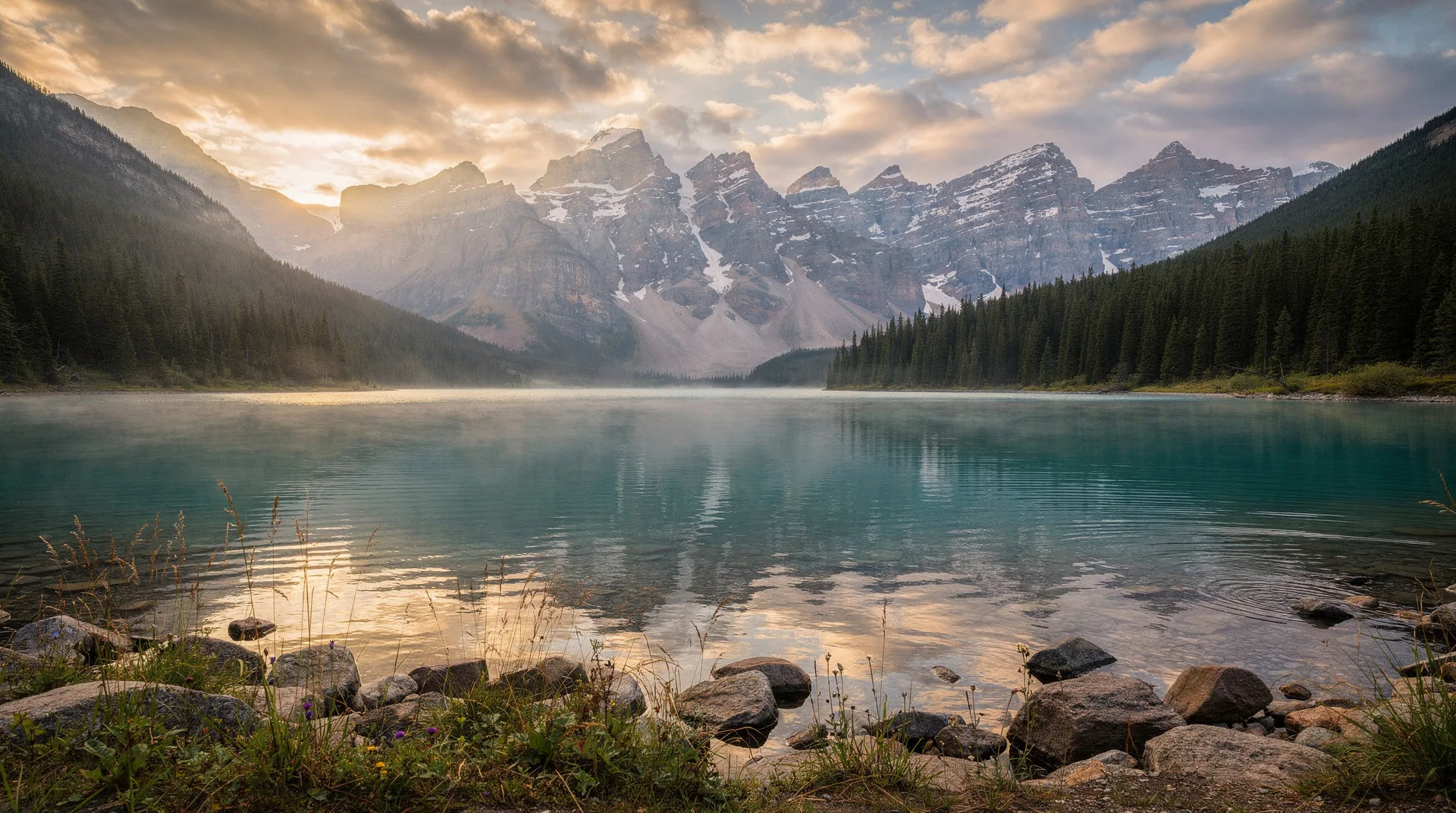
Beyond the Manoir, La Malbaie is the gateway to Parc National des Hautes-Gorges-de-la-Rivière-Malbaie, which protects what may be Quebec’s most dramatic interior canyon. The river that gives the town its name cuts through rock walls rising more than 900 metres — higher than anything in the Rocky Mountain parks of comparable width. That canyon is accessible by boat, on foot, and by guided tour, and it represents a completely different Charlevoix experience from the river-and-farmland landscapes of the western part of the region.
At a glance
| Where | Eastern Charlevoix, on the St. Lawrence near the Saguenay confluence |
| Cost | Mid-range rooms around CAD 150-250/night; Fairmont Manoir Richelieu considerably more in summer |
| Time needed | 2-3 days |
| Getting there | Around 2 hrs from Quebec City via Highway 138 |
| Best time | Summer for hiking and fjord views, autumn for foliage, winter for skiing |
The Fairmont Manoir Richelieu
The Manoir Richelieu dominates the visual identity of La Malbaie in the way that few buildings dominate any Canadian destination. From the river, from the road below, and from the ferry crossing from Saint-Siméon, its grey-stone towers and copper roofline are unmistakeable. The hotel sits on a cliff 60 metres above the St. Lawrence with an unobstructed view of the river from virtually every south-facing room and from the extensive terraces.
The property includes a casino (Casino de Charlevoix, operated by Loto-Québec), a golf course, a spa, and multiple dining options ranging from formal dining rooms to bistro-style alternatives. The golf course — designed by Graham Cooke — runs along the cliff edge and offers views that make concentration on the game somewhat challenging.
The Manoir’s history intersects with Canadian political history in an unexpected way: Prime Ministers Mackenzie King, St. Laurent, and Trudeau (Pierre) were all regular guests, and the hotel hosted international economic summits in the era when the Charlevoix coast was considered one of Canada’s prestige destinations. That history gives the property a weight beyond its architectural merits.
Non-guests can walk the grounds, take afternoon tea on the terrace, and visit the casino. The terrace view over the river at sunset — the St. Lawrence wide and silver, the mountains of the south shore blue in the distance — is worth the walk up from the village below.
Parc National des Hautes-Gorges
The Hautes-Gorges park entrance is approximately 40 kilometres west and north of La Malbaie town, following the Malbaie River as it cuts back into the mountains. The drive alone is impressive — the valley narrows progressively as you climb, the forest thickens, and the rock walls begin to close in from both sides.
The canyon itself — accessible by the boat cruise that runs from the park docks — is a geological spectacle that puts Charlevoix’s usual riverine landscapes in a completely different context. The walls rise 900 metres above the river; the valley floor is only a few hundred metres wide; the sky narrows to a ribbon above you. The boat cruise allows access to the deepest sections of the canyon that would otherwise require a full day’s hike to reach on foot.
For hikers, the Acropole des Draveurs trail climbs the canyon wall to a viewpoint at the rim — a demanding hike with a 750-metre elevation gain that rewards effort with one of the finest panoramas in eastern Canada. The full park trails system covers multiple difficulty levels from riverside walks to technical ridge routes.
The park operates a campground with serviced and non-serviced sites and a limited number of ready-to-camp oTENTik structures for visitors who want the park immersion without equipment. Reservations through Parks Quebec (Sépaq) are essential in summer. Full details in the Hautes-Gorges park guide.
Book Charlevoix and Quebec region tours on GetYourGuideThings to do in La Malbaie
Viewpoints and cliff walking
The road along the cliff above the Manoir — Chemin des Falaises — passes through the old Murray Bay residential district where the grand summer estates of the political and industrial elite were built from the 1880s onward. Many survive as private residences; the streetscape of Victorian and Edwardian cottages (large cottages — these are significant buildings) is one of the most intact examples of late 19th-century resort architecture in Quebec.
The viewpoints along this road offer the best elevated perspectives on the St. Lawrence available anywhere in Charlevoix. On clear days the view extends across to the south shore of the river more than 20 kilometres away.
Cap-à-l’Aigle and Pointe-au-Pic
La Malbaie is actually a merged municipality encompassing several former villages, including Cap-à-l’Aigle and Pointe-au-Pic. Cap-à-l’Aigle is a quieter residential area with a strong garden culture — the humid, river-cooled climate is particularly suited to large perennial gardens, several of which are open to visitors in summer. The Jardins des Quatre-Vents, a private garden occasionally open for tours, is regarded as one of the finest gardens in North America.
Pointe-au-Pic is the area immediately around the Manoir Richelieu and has the highest concentration of tourist infrastructure: restaurants, boutiques, and the casino.
Mont-Grand-Fonds skiing
The ski hill north of La Malbaie — Mont-Grand-Fonds — is a smaller operation than Le Massif de Charlevoix but offers a more intimate experience with shorter lift lines and local character. The vertical drop of 335 metres supports 14 runs and a cross-country skiing network. It functions as the community mountain for eastern Charlevoix residents and is a good option for families or less experienced skiers who find Le Massif’s scale and steepness daunting.
River ferry to Saint-Siméon
The ferry crossing from Saint-Siméon on the south shore to Rivière-du-Loup on the north shore operates from the quay below La Malbaie (technically from Saint-Siméon, a few kilometres east). The 65-minute crossing is a practical way to access the Lower St. Lawrence region and Gaspésie. Even if you are not crossing, the arrival of the large ferry at the wharf and the views it provides of the cliff below the Manoir are worth timing a visit.
Seasonal guide
June and July: The gardens of Cap-à-l’Aigle are at their most spectacular. The weather is often unpredictable — warm and clear days alternate with river fog. The Manoir’s terrace fills with guests from Québec and Montreal.
August: The peak visitor month. The Hautes-Gorges park is at maximum activity with boat cruises and hiking. Accommodation throughout La Malbaie requires early booking.
September and October: Arguably the finest months. The canyon walls of Hautes-Gorges take on extraordinary autumn colour; the cliff drive turns gold and copper; the Manoir’s golf course plays through a landscape of changing foliage. Crowds thin from mid-September onward.
December–March: Winter skiing at Mont-Grand-Fonds and nearby Le Massif draws a weekend clientele. The Manoir operates year-round and has a particular atmospheric quality in winter — fires in the great hall, snow on the cliff outside, the river grey and cold below.
Where to stay
Fairmont Le Manoir Richelieu: The obvious prestige choice — rooms range from standard hotel configurations to suites with river views from private terraces. The rate reflects the location, the history, and the amenities. Off-season rates are significantly lower and the experience of the building in shoulder season (particularly October and early December) is in some ways superior to the peak summer experience.
Auberge des 3 Canards: A long-established auberge in Pointe-au-Pic with comfortable rooms, a reliable kitchen, and views over the river. A good mid-range option that has maintained quality over many years.
Maison Otis: A historic property in Baie-Saint-Paul that serves La Malbaie guests who prefer a base in the regional capital and the flexibility to drive east.
Gîtes in Cap-à-l’Aigle: Several bed-and-breakfast properties in the Cap-à-l’Aigle residential area offer quiet rooms with garden access and a distinctly unhurried character.
Where to eat
The Manoir Richelieu’s dining rooms use Charlevoix regional producers extensively and are reliable for a formal evening meal. The bistro on the terrace is better value for lunch with comparable views.
In the village below, several independent restaurants have established strong local reputations using the same regional ingredient network that supplies the better restaurants in Baie-Saint-Paul. Charlevoix lamb, smoked lake trout, local cheeses, and river-caught fish appear consistently across menus.
Getting there
From Quebec City, follow Highway 138 east along the north shore of the St. Lawrence past Baie-Saint-Paul and continuing approximately 50 kilometres to La Malbaie. Total driving time is approximately two hours in normal conditions.
From the south shore, the ferry from Rivière-du-Loup to Saint-Siméon operates seasonally and docks close to La Malbaie — a useful option for travellers coming from the Bas-Saint-Laurent region.
Casino de Charlevoix
The casino inside the Manoir Richelieu, operated by Loto-Québec, is a modest gaming floor by international standards but a notable presence in a region otherwise defined by nature and food. It draws a day-trip clientele from Quebec City in addition to hotel guests, and it operates independently of the hotel’s other amenities — you don’t need to be a guest to visit. It is a minor part of most itineraries but worth knowing about if a low-key evening indoors appeals after a day of hiking or driving.
Frequently asked questions
Do you need to stay at the Manoir Richelieu to visit it? No. Non-guests can walk the grounds, take afternoon tea on the terrace, and visit the casino without booking a room, though restaurant reservations and any spa access are typically easier to arrange as a guest.
How far is La Malbaie from the Hautes-Gorges canyon? The park entrance is about 40 kilometres from La Malbaie town, roughly 40-45 minutes by car, following the Malbaie River valley inland.
The Charlevoix things to do guide covers the full range of activities across the region and puts La Malbaie in the context of the broader Charlevoix experience. For a structured route through the region, the 4-day Charlevoix itinerary covers La Malbaie on day 3 or 4, typically as the eastern endpoint before returning via Baie-Saint-Paul.