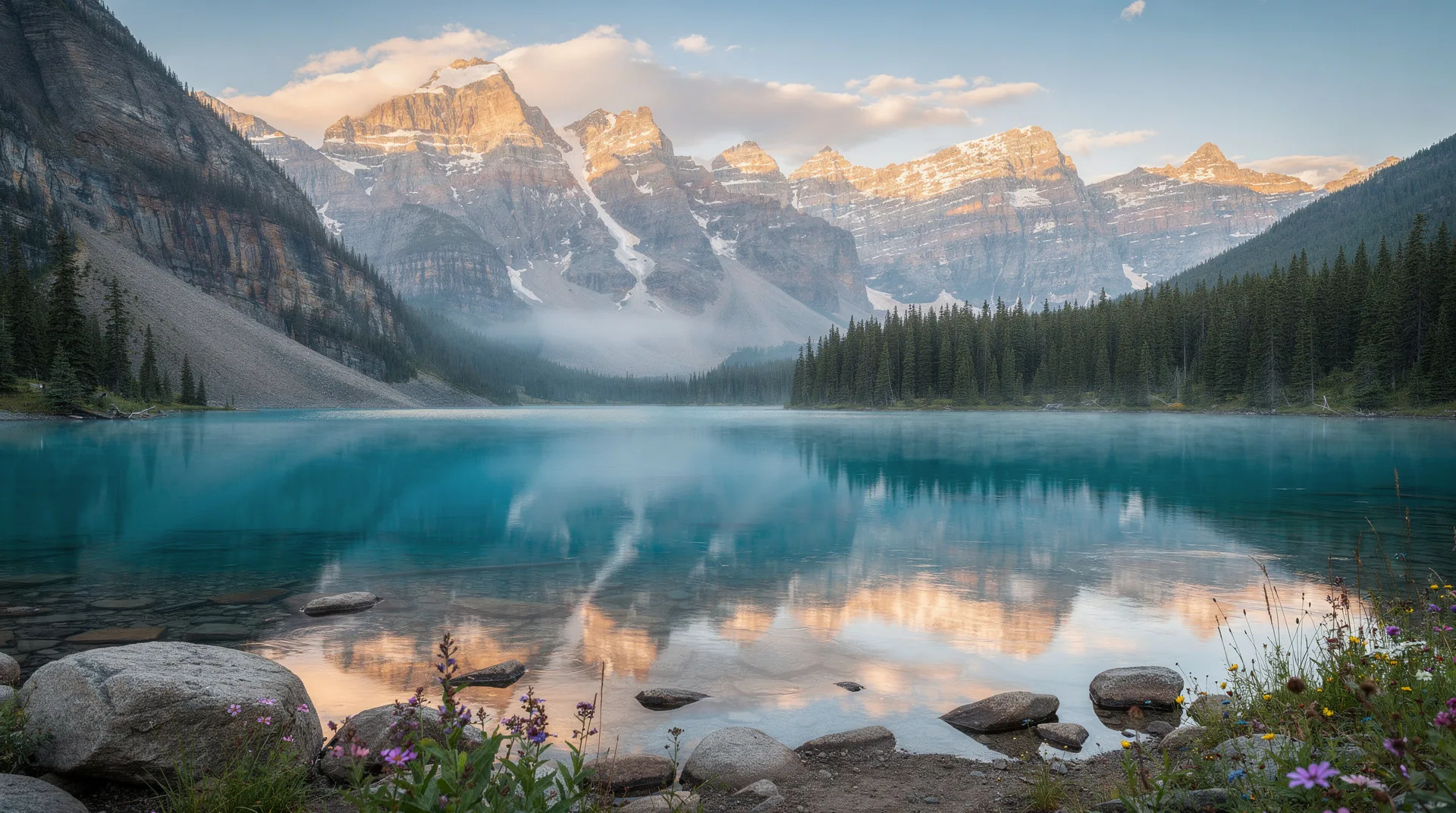
Is Canada expensive? Our budget breakdown
The honest answer to “is Canada expensive?” is: yes, relative to most of the world, Canada is a mid-to-high cost destination, and it is more expensive than a lot of travellers expect. The honest answer also includes a caveat: Canada generally delivers good value for money, the quality of food, infrastructure, and safety is high, and the experiences at the top end of the price range — a tundra buggy in Churchill, a floatplane into the BC wilderness, a night at a Fairmont château hotel — are genuinely world-class.
I have travelled Canada at multiple price points over several trips: sleeping in hostel dorms, renting apartments, staying at historic railway hotels. The budget breakdown below reflects real costs across all three levels, updated with current prices.
| At a glance | |
|---|---|
| Where | Nationwide — costs vary significantly by region |
| Cost | Roughly CAD $90-500+ per person per day depending on travel style |
| Time needed | N/A — a planning reference for any trip length |
| Getting there | Currency is the Canadian dollar (CAD); most international cards work, but check foreign transaction fees before you go |
| Best time | Shoulder seasons (May/June, September/October) for the best value |
How Canada’s cost compares by region
Not every province costs the same. The Rockies, Whistler, and Tofino are consistently the most expensive corners of the country, driven by seasonal demand and limited accommodation supply. Atlantic Canada — Halifax, Cape Breton, Prince Edward Island — tends to run noticeably cheaper for accommodation and food outside the height of summer.
The Prairies (Calgary, Winnipeg, Saskatoon) are generally the best value cities for a comfortable mid-range trip, with lower accommodation costs than Vancouver or Toronto and comparable food quality. Quebec sits in between — Montreal is relatively affordable for a major city, while Quebec City skews slightly pricier in the historic core during peak season.
Where the money really goes on a Rockies trip
The Rockies deserve a specific note because they’re where budgets most often go sideways. Accommodation in Banff and Jasper townsites commands a real premium over comparable Canadian cities, and popular activities — the Banff Gondola, the Columbia Icefield Skywalk, guided hikes — are ticketed rather than free, unlike simply walking a trail. Booking accommodation outside the townsite (in Canmore rather than Banff, for instance) and self-guiding the free trails while picking one or two ticketed splurges is the most effective way to keep a Rockies trip on budget without missing the highlights.
What you’ll spend on accommodation
Accommodation is typically the biggest single cost in Canada. The country does not have a budget accommodation culture comparable to Southeast Asia or parts of Europe — hostels exist but are less common outside the major cities, and budget motels in smaller towns can be surprisingly expensive.
Budget level (CAD $50–90/night): Hostel dorms in Toronto, Vancouver, Montreal, and Quebec City. Basic motels on the highway. Camping in national parks (CAD $20–40/night for serviced sites, less for backcountry). Airbnb shared rooms.
Mid-range (CAD $150–280/night): Three-star hotels in cities, better motels on popular routes, mid-range B&Bs in scenic areas. Airbnb private apartments. In Banff, this buys you a perfectly comfortable but unremarkable room in peak season — the Rockies skew prices significantly.
Top end (CAD $350–800+/night): The Fairmont properties (Banff Springs, Château Frontenac in Quebec City, Château Lake Louise) are the Canadian benchmark for luxury accommodation. Historic railway hotels, boutique wilderness lodges, and premium properties in Whistler and Tofino sit in this range.
The Rockies, Whistler, and Tofino consistently command the highest accommodation prices in the country. If you’re visiting these regions in summer, expect to pay 30–50% more than you’d pay for comparable accommodation in a city.
Food costs: wide range, generally honest
Canadian food culture has improved enormously in the past decade, and the range of options — from excellent cheap Asian food in Vancouver to fine dining in Montreal — means you can eat well at most price points.
Budget eating (CAD $15–30/day): Grocery stores are good and well-stocked. Cooking your own meals in a hostel kitchen, grabbing sandwiches and poutine from casual spots, eating lunch specials rather than dinner, and making strategic use of food courts in city shopping centres (genuinely good and cheap) can keep food costs manageable. Tim Hortons and grocery store deli counters are the budget traveller’s friends.
Mid-range (CAD $50–100/day): A full day of café breakfasts, casual restaurant lunches, and sit-down dinners with a couple of drinks. Canada’s better casual restaurants represent good value — a poutine or a fish sandwich in a Halifax waterfront restaurant, a ramen bowl in Vancouver’s Japantown, a smoked meat sandwich at a proper Montreal deli. Budget for tipping (15–20%) on top of menu prices.
Eating well (CAD $120–200+/day): Montreal and Vancouver in particular have fine dining scenes that are internationally competitive and somewhat underpriced compared to equivalent restaurants in New York, London, or Paris. Quebec’s farm-to-table movement produces excellent tasting menus at prices that feel reasonable by European standards.
Provincial taxes on restaurant meals vary — in Ontario you’ll pay HST (13%), in Quebec TVQ + GST adds up to about 15%, in Alberta there’s no provincial sales tax. These are always added at the till, not included in menu prices.
Transport: where costs escalate quickly
Transport is often where Canadian trip budgets get surprised, because the country is so large that covering ground costs serious money.
Flights: Domestic air travel in Canada is expensive relative to distances. A Toronto–Vancouver flight is typically CAD $300–600 return, sometimes more. Competition is improving with the growth of discount carriers, but Canada’s domestic aviation market remains oligopolistic. Book early for the best prices.
Rental cars: Essential for the Rockies, Vancouver Island, Cape Breton, and most of rural Canada. Budget CAD $50–100/day for a standard vehicle, more for SUVs (often advisable in winter). Gas is cheaper than in Europe but costs add up on long drives. Highway tolls are minimal; parking in city centres is expensive.
VIA Rail: The cross-Canada train is not a budget option for covering ground — a Toronto–Vancouver ticket on The Canadian costs CAD $500–1,500+ depending on class — but it is a spectacular experience that many travellers consider worth the premium for the journey itself. Shorter VIA routes (Toronto–Quebec City, Halifax corridor) are more competitively priced.
City transit: Canada’s major cities have good public transit. Vancouver’s SkyTrain and bus network is excellent. Toronto’s TTC covers the city well. Montreal’s metro is one of the best in North America. Day passes and transit cards offer good value for city-based travel.
Activities and experiences
This is where Canadian travel budgets can swing enormously, because the range of experiences — from free hiking to heli-skiing — is vast.
Free or nearly free: Hiking in national parks (once you’ve paid the entry fee — CAD $12.25/adult/day at Banff and Jasper (youth free), or covered by the annual Discovery Pass at CAD $83.50). Walking neighbourhoods in Montreal, Quebec City, Toronto, Vancouver. Most city museums have at least one free day per week. Watching the northern lights in Yukon or northern Manitoba (the best things in life, genuinely free if you have a clear night).
Mid-range activities (CAD $50–150/person): Guided hikes with outfitters in the Rockies. Whale watching on the St Lawrence or Pacific coast. Banff gondola and hot springs day tours. Niagara Falls boat cruise. Sea kayaking off Vancouver Island or in the Maritimes.
Premium experiences (CAD $200–800+/person): Churchill polar bear tundra buggy day trips run around CAD $200–400 per person. Aurora viewing tours in the Yukon, white-water rafting on the Nahanni, heli-hiking in the Rockies — all fall in the higher price brackets. Skiing at Whistler in peak season is expensive even by global resort standards.
A realistic daily budget by travel style
These figures are per person, per day, assuming two people sharing accommodation costs. They exclude international flights.
Budget traveller (CAD $90–130/day): Hostel dorms or basic campgrounds, grocery and casual eating, public transit in cities, rental car shared between two or more people, mostly free or low-cost activities. This is achievable but requires discipline and tends to mean missing some of the higher-cost experiences Canada is famous for.
Mid-range traveller (CAD $200–300/day): Three-star hotels, restaurant meals twice a day, rental car, a mix of free and paid activities. This is the realistic comfortable middle for most travellers and allows a good range of experiences without constant cost anxiety.
Comfortable traveller (CAD $350–500/day): Better hotels, good restaurants, guided tours and premium activities, occasional splurges. This is the price point at which Canada delivers its full potential — comfortable transport, memorable experiences, excellent food.
Luxury (CAD $600+/day): Fairmont and boutique lodge accommodation, tasting menus, helicopter access, premium guides. Canada’s luxury tier is genuinely world-class.
Ways to reduce costs without reducing the experience
Some of the best things in Canada are free or nearly free. The hiking in Banff and Jasper requires only the park entry fee and your legs. The scenery along the Cabot Trail is visible from a car window. The autumn colour on the Trans-Canada Highway through Quebec is free. Watching moose in Algonquin Provincial Park costs a provincial park day-use fee of CAD $10–20.
Visit in the shoulder seasons — May/June or September/October — and save 20–40% on accommodation, face shorter queues, and often experience the landscapes at their most beautiful. Consider cooking some meals. Buy the Parks Canada Discovery Pass. Use credit cards with no foreign transaction fees. Book accommodation with free cancellation so you can reprice if better deals appear.
See the budget tips guide for a longer treatment of cost-reduction strategies that don’t compromise the quality of the trip.
Final thoughts
Canada is expensive. It is also worth it. The question is whether you’re getting value for what you spend, and the answer — across all price points — is generally yes. The infrastructure is reliable, the wildlife is real, the landscapes are extraordinary, the food is increasingly excellent, and the country is safe and functional in ways that matter when you’re travelling with a limited time window.
The trap is trying to do Canada cheaply in ways that cut the experiences that make it worth visiting. Budget accommodation and grocery meals are fine. Skipping the Churchill polar bears or the Moraine Lake sunrise to save money on a once-in-a-decade trip is a different calculation.
Frequently asked questions about Is Canada expensive? Our budget breakdown
Is Canada more expensive than the US?
It depends on the comparison. The Canadian dollar is generally weaker than the USD, which benefits US visitors. Restaurant prices and accommodation costs are broadly comparable to the US, though Canada’s higher taxes can make the final bill feel steeper. National park fees are lower in Canada than in equivalent US parks.
Is tipping included in Canadian restaurant prices?
No. Canadian restaurant prices are always listed before tax and tip. Expect to add 13–15% tax (varies by province) and 15–20% tip to the menu price. A CAD $20 meal costs roughly CAD $24–27 once tax and tip are added.
Can I do Canada on a tight budget?
Yes, but it requires discipline and some trade-offs. Camping, hostel dorms, grocery meals, and free hiking lower costs significantly. The main challenge is transport — internal distances mean that covering ground costs money, and the most spectacular experiences often carry premium price tags.
Are credit cards widely accepted in Canada?
Yes. Credit cards are accepted almost universally, including contactless payment. Visa and Mastercard are preferred over American Express at smaller establishments. Some smaller restaurants, markets, and rural businesses prefer cash — it’s always worth carrying some. ATMs are widely available in cities and towns but less so in remote areas and national parks.
What is the cheapest time to visit Canada?
November through April (excluding ski resorts) is generally the cheapest period for accommodation and flights. May and October offer good shoulder-season value with reasonable weather. The most expensive period is July and August in popular regions, particularly the Rockies and Atlantic provinces.
Is it cheaper to base a trip in one city or move around?
Moving around usually costs more overall because of transport and the loss of any weekly accommodation discounts, but it also means seeing more of the country, which is often the point of a Canada trip. If budget is the priority, basing in one region (the Rockies, or southern Ontario and Quebec together) and doing day trips from a single base cuts transport costs significantly compared with a coast-to-coast itinerary.