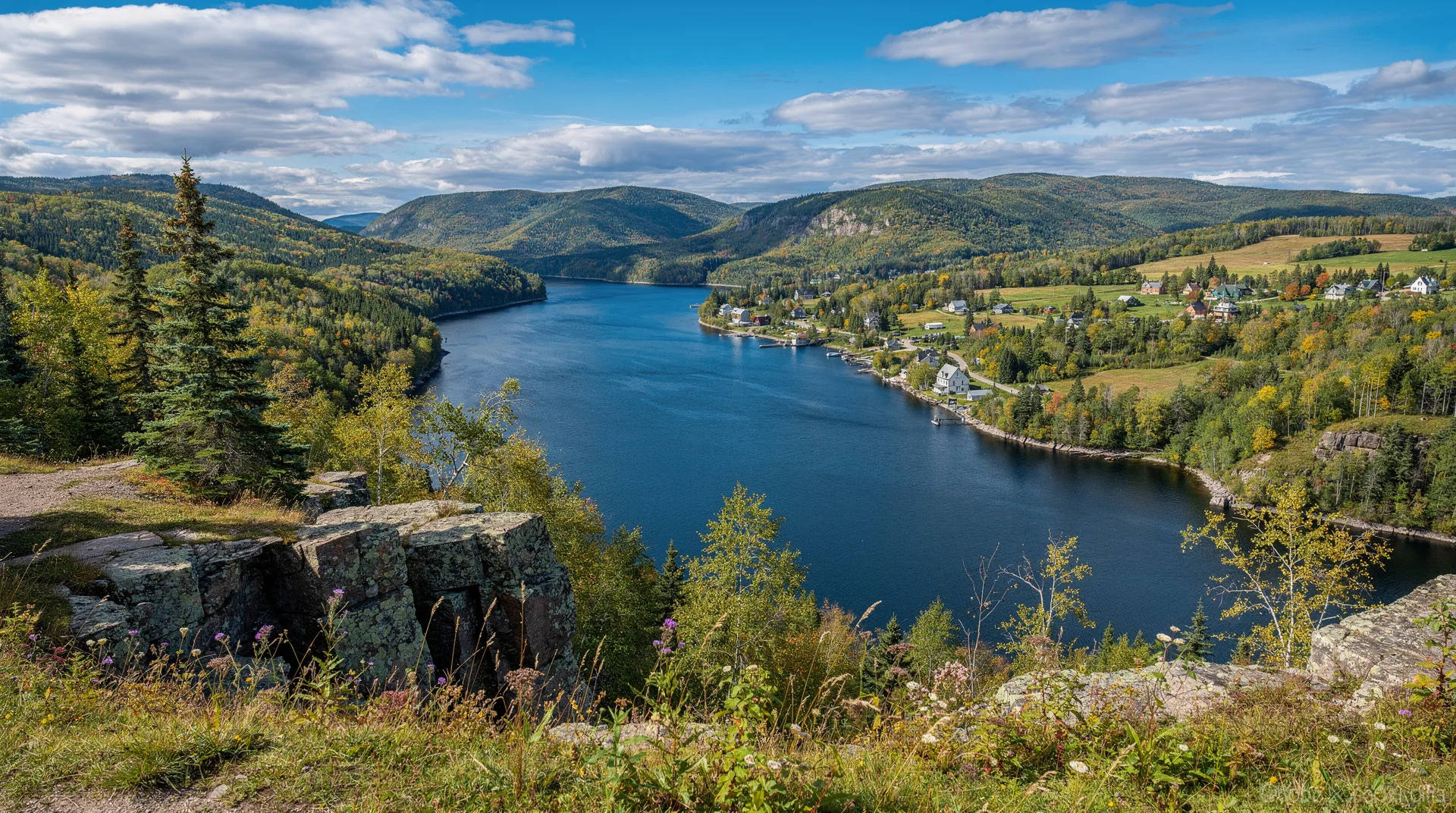
21 Days in Quebec: The Ultimate Deep Dive Including Côte-Nord
Overview
Twenty-one days is the threshold at which Quebec reveals its full depth. The province’s geography — the vast north shore wilderness of the Côte-Nord, the dramatic Gaspésie Peninsula, the concentrated culture of Montreal and Quebec City, the distinctive coastal identity of Charlevoix — requires real time to experience on its own terms. This three-week itinerary is the most complete Quebec road trip possible by car, covering over 4,000 kilometres of driving across regions that feel as different from each other as different countries.
This is not a rushed highlights tour. It includes two of North America’s most remote publicly accessible road destinations (the end of Route 138 at Natashquan, and Forillon National Park at the Gaspé tip) alongside the urban sophistication of Montreal. It demands comfort with long driving days (several exceed 300 kilometres), flexibility in accommodation planning in remote areas, and genuine curiosity about Quebec’s less-visited regions.
Trip essentials
| Where | Montreal, Quebec City, Charlevoix, Tadoussac, Côte-Nord (Baie-Comeau, Sept-Îles), Gaspésie, Percé |
| Cost | Roughly CAD 6,850-10,000 per person, moderate budget (see budget breakdown below) |
| Distance | Over 4,000 km of driving across the full loop |
| Getting there | Fly into Montreal-Trudeau (YUL); fly out of Gaspé, Quebec City or return to Montreal |
| Best time | June to September for Côte-Nord accessibility and Tadoussac whale watching; the road to Natashquan and Mingan boat access are seasonal |
| Entry requirement | Visa-exempt air travellers generally need an eTA — see the Canada eTA and visa guide |
At a glance
| Days | Destination | Highlights |
|---|---|---|
| 1–3 | Montreal | Old Montreal, Plateau, Mile End, museums |
| 4–5 | Quebec City | Old City, Plains of Abraham, Île d’Orléans |
| 6 | Drive to Charlevoix | Baie-Saint-Paul, Route 362 |
| 7 | Charlevoix to Tadoussac | Saguenay Fjord, whale watching |
| 8–10 | Côte-Nord: Baie-Comeau to Sept-Îles | Remote north shore wilderness |
| 11 | Côte-Nord: Sept-Îles and Mingan | Mingan Archipelago day excursion |
| 12 | Return west: Matane ferry crossing | Cross to south shore for Gaspésie |
| 13 | Gaspésie north coast | Sainte-Anne-des-Monts, Gaspésie National Park |
| 14–15 | Forillon National Park and Gaspé | Forillon hiking, whale watching from cliffs |
| 16–17 | Percé | Rocher Percé, Île Bonaventure gannet colony |
| 18 | South Gaspésie: Chaleur Bay | Carleton-sur-Mer, Bonaventure |
| 19 | Return via Matapédia Valley | Amqui, Rimouski |
| 20 | South shore west | Saint-Jean-Port-Joli, Kamouraska |
| 21 | Return to Quebec City or Montreal | Departure |
Days 1–3: Montreal
Three days in Montreal follow the same structure as the 7-day Quebec itinerary Days 1–3. The key experiences: Jean-Talon Market and the Mile End neighbourhood, the Basilique Notre-Dame and Old Montreal, Mont-Royal Park and the MBAM (Musée des beaux-arts), and the neighbourhood terrasse culture of the Plateau-Mont-Royal.
The distinction from a shorter trip: use the extra time to go beyond the standard circuit. The Rosemont neighbourhood east of the Plateau is increasingly excellent for independent restaurants and cafés without tourist positioning. The Hochelaga-Maisonneuve neighbourhood, once industrial, has become one of the city’s most interesting cultural zones with the Marché Maisonneuve and a growing gallery district.
Book a Montreal highlights or neighbourhood food tourDays 4–5: Quebec City
Two full days in Quebec City. Day 4: the fortification walls circuit, the Citadelle, and the Plains of Abraham with the Musée des Plaines d’Abraham. Dinner in the Lower Town (Chez Boulay or Chez Muffy at Auberge Saint-Antoine). Day 5: the Musée de la civilisation (Quebec’s finest museum on provincial history and culture), Île d’Orléans circuit, and Montmorency Falls.
Use the evening of Day 5 to prepare for the next morning’s drive into Charlevoix.
Day 6: Charlevoix — the crater landscape and the coast
Drive northeast to Baie-Saint-Paul (Route 138, 100 kilometres from Quebec City). Spend the morning in the town — the Musée d’art contemporain, the cheese shops, the artisan boutiques of the historic core. After lunch, drive Route 362 northeast toward La Malbaie for the most scenic coastal stretch in the province. Stay overnight in La Malbaie (Manoir Richelieu is the landmark hotel; more modest options exist in the village).
Day 7: Charlevoix to Tadoussac and the Saguenay
Drive northeast from La Malbaie along Route 138, through the villages of Clermont and Saint-Siméon to the Saguenay Ferry. The free ferry crossing from Saint-Siméon to Rivière-du-Loup (south shore) is an option if the itinerary is reversed, but for this routing continue north to the Tadoussac–Baie-Sainte-Catherine ferry — also free, a 10-minute crossing at the mouth of the Saguenay Fjord.
Spend the afternoon in Tadoussac for a whale watching cruise — the afternoon departures (typically 1pm or 2pm) capture the best light for photography. The Pointe-Noire interpretation centre at Baie-Sainte-Catherine (Parks Canada, free) provides excellent shore-based beluga viewing in addition to any boat experience.
See the Quebec whale season guide for species timing and operator recommendations.
Days 8–10: Côte-Nord — the great wilderness drive
The Côte-Nord (North Shore) is the least-visited and most remote region covered by paved highway in Quebec. Route 138 continues northeast from Tadoussac along the north shore of the St. Lawrence — a road that grows increasingly remote as it heads toward Baie-Comeau, Sept-Îles, and eventually Natashquan (the road’s current terminus, 760 kilometres northeast of Tadoussac). Beyond Natashquan, the north shore is accessible only by air or boat.
Day 8 — Tadoussac to Baie-Comeau (200 kilometres): The drive passes through Les Escoumins (additional whale watching possibilities from shore at Cap-de-Bon-Désir) and Forestville. Baie-Comeau is an aluminium smelting city of 22,000 with a clean downtown core and a dramatic position at the mouth of the Manicouagan River.
Day 9 — Baie-Comeau: the Manicouagan reservoirs (day excursion): The inland road north of Baie-Comeau leads to the Manicouagan hydroelectric complex — one of the world’s largest hydroelectric installations, impounding the Manicouagan Reservoir in the visible remnant of an ancient meteor impact crater (the circular reservoir ring is visible from space). Manic-5 (the Daniel-Johnson Dam, the world’s largest multiple-arch buttress dam) is open for guided tours. This excursion covers approximately 220 kilometres round-trip from Baie-Comeau on Route 389. Allow a full day.
Day 10 — Baie-Comeau to Sept-Îles (220 kilometres): Continue northeast to Sept-Îles, the Côte-Nord’s largest city (approximately 28,000 residents). Sept-Îles sits on a near-circular bay sheltered by seven islands — hence the name — and serves as a hub for iron ore shipping from northern Quebec. The city has a genuine working-port character, good seafood restaurants, and the Musée Shaputuan, which covers the Innu (Montagnais) First Nations culture of the north shore comprehensively and respectfully.
Day 11: Sept-Îles and Mingan Archipelago
The Mingan Archipelago National Park Reserve, located approximately 200 kilometres northeast of Sept-Îles near the village of Havre-Saint-Pierre, protects an extraordinary series of limestone monolith islands sculpted into columns, arches, and flower-pot forms by millennia of wave action. The islands are accessible only by boat; Parks Canada runs interpretation services and boat access from the visitor centre at Havre-Saint-Pierre.
The distance from Sept-Îles makes Mingan a logistical challenge for this itinerary — a possible option is an early morning drive to Havre-Saint-Pierre (2 hours) and afternoon boat tour, returning to Sept-Îles in the evening. Alternatively, overnight at Havre-Saint-Pierre to allow a morning boat excursion at the golden-hour light before returning to Sept-Îles.
If Mingan proves impractical within the schedule, Sept-Îles itself rewards a half-day — the old village quarter (Vieux Poste) and the bay walk are the highlights.
Book a Quebec wilderness and Côte-Nord nature tourDay 12: Return west and the Matane ferry crossing
Drive southwest from Sept-Îles back to Baie-Comeau (220 kilometres) and take the Matane–Baie-Comeau ferry across the St. Lawrence to the south shore. This ferry crossing (approximately 2.5 hours, runs two to three times daily depending on season) delivers you to Matane — the gateway town to the Gaspésie Peninsula — and transitions the itinerary from the remote north shore wilderness to the populated Gaspésie circuit.
Alternatively, if avoiding backtracking, drive back west to Tadoussac and cross via the Saguenay ferry to continue south, but the Matane ferry is the better geographic option for this itinerary routing.
Arrive in Matane in the evening. Matane is known for its shrimp (the Port de Matane area has commercial shrimping operations and good seafood restaurants). Overnight in Matane.
Day 13: Gaspésie north coast — the mountains meet the sea
Drive east from Matane on Highway 132, which follows the Gulf of St. Lawrence coast closely through a series of coastal villages backed by the Chic-Choc Mountains. This is Gaspésie at its most dramatic: the mountains — ancient Appalachian ridges reaching over 1,200 metres — drop almost directly to the sea.
Stop at Sainte-Anne-des-Monts for provisions, then take the inland road to Parc national de la Gaspésie. The park’s flagship trail is the Mont Jacques-Cartier ascent — at 1,268 metres, the second-highest accessible summit in Quebec east of James Bay. The summit plateau in summer is above the treeline, with alpine tundra and views that stretch to the Gulf on clear days. Allow 7 to 8 hours for the full round-trip. The park’s Gîte du Mont-Albert is one of Quebec’s finest wilderness lodges.
Days 14–15: Forillon National Park and the Gaspé tip
Continue east to Forillon National Park at the very tip of the Gaspésie Peninsula — approximately 180 kilometres from Sainte-Anne-des-Monts. Forillon is where the Appalachian Mountains meet the Gulf of St. Lawrence, creating a landscape of dramatic limestone cliffs, boreal forest, and productive marine habitat.
Day 14: Drive to Forillon, check into accommodation in Gaspé town (10 kilometres outside the park). Afternoon walk at Cap-Bon-Ami, where the cliff-edge trail follows the Gulf shoreline with views of gannets, razorbills, and the possibility of minke and fin whales offshore. The trail is 9 kilometres and takes approximately 3 hours.
Day 15: Full day in Forillon. Morning: the Cap-Gaspé trail to the lighthouse at the very tip of the peninsula (18 kilometres round-trip, allow 5 hours). The trail passes through boreal forest before emerging to dramatic cliff-top views over the Gulf. Afternoon: the Grande-Grave historic site (a reconstructed 19th-century fishing village, one of the most evocative heritage sites in Quebec) and the park’s sea-kayaking launch at the calmer inner bay.
The town of Gaspé has the Musée de la Gaspésie (history of the region from Mi’kmaq First Nations to present) and the Gaspé Cathedral — the wooden cathedral is architecturally modest but historically significant as the oldest parish in New France.
Days 16–17: Percé
Drive south from Gaspé to Percé (75 kilometres). Percé is built around its extraordinary geological landmark — the Rocher Percé — and makes the most of it. The village has a permanently festive quality in summer despite (or because of) its tourist orientation, with good restaurants, galleries, and the consistently excellent infrastructure for the Île Bonaventure gannet colony excursion.
Day 16: Arrive mid-morning, check in, and take the afternoon boat to Île Bonaventure. The gannet colony — approximately 60,000 nesting pairs — covers the island’s eastern cliff face in a spectacle of noise, motion, and biological excess. The trail through the island’s interior boreal forest allows a walking approach to the colony from above. Allow 4 hours for the full boat and island experience.
Day 17: A second day in Percé allows time for the kayak tour around the Rocher Percé (accessible from the beach at low tide on foot, or by kayak at all tides), the Géoparc de Percé interpretive trail on the mainland cliff behind the village, and pure leisured enjoyment of one of Quebec’s most remarkable landscapes. The light on the Rocher at sunrise (approach the viewpoint point on the village waterfront at 5:30am in summer) is extraordinary.
Day 18: South Gaspésie — Chaleur Bay
Drive south and west from Percé on Highway 132 as it rounds the peninsula’s southern coast toward Chaleur Bay (Baie des Chaleurs). This coast — sheltered from the Gulf, with water temperatures 5 to 8°C warmer than the north shore — has a different character: beach resort towns, the Acadian cultural heritage, and the warmest seawater in Quebec.
Stop at Carleton-sur-Mer for the view from Mont Saint-Joseph (accessible by road to near the summit, with a panoramic platform over the full length of the bay to New Brunswick’s coast). The town of Bonaventure has the Musée acadien du Québec, covering the Acadian people’s history in the region thoughtfully. Stay overnight in Carleton-sur-Mer or continue to New Carlisle (an anglophone town with an interesting heritage house museum).
Day 19: Matapédia Valley return
Drive north from Chaleur Bay through the Matapédia Valley — a forested river valley cutting through the Appalachian foothills between the Gaspésie and the Bas-Saint-Laurent. The VIA Rail Gaspé train (which has its own scenic reputation, though service is now limited) follows this valley; driving it provides the same landscape with more flexibility.
Pass through Amqui (a pleasant town with good services) and continue to Rimouski on the south shore of the St. Lawrence. Rimouski is a genuine city of 48,000 with excellent restaurants and a notable marine history — the RMS Empress of Ireland memorial at nearby Sainte-Luce marks the site of Canada’s worst maritime disaster.
Day 20: South shore villages
Drive west from Rimouski along Highway 132 (the more scenic south shore road) through a series of villages that reward slow travel: Kamouraska (one of the most beautiful in Quebec, with historic manor houses and tidal flat views), Saint-Jean-Port-Joli (the wood-carving capital of Quebec, with artisan workshops and the Musée de la sculpture sur bois), Montmagny (good overnight option with an interesting natural history in goose migration), and finally to Lévis, directly across the St. Lawrence from Quebec City.
The Lévis–Quebec City ferry (operates frequently throughout the day, approximately 10 minutes crossing) provides the finest view of Old Quebec from the water — the Château Frontenac and the fortifications above the cliff are at their most dramatic from this perspective.
Day 21: Departure from Quebec City or Montreal
Final morning in Quebec City for a last walk through the Old City, then drive or take VIA Rail to Montreal for international flights. Alternatively, fly from Quebec City’s Jean-Lesage airport for connections through Toronto or Montreal. See the Quebec entry gateways guide for airport comparison and logistics.
Budget breakdown
Per person, two people sharing, Canadian dollars.
| Category | Budget (CAD) | Moderate (CAD) | Comfort (CAD) |
|---|---|---|---|
| Accommodation (21 nights) | 1,700–2,200 | 3,000–4,500 | 5,000–8,000 |
| Food and drink | 950–1,400 | 1,600–2,400 | 2,500–4,000 |
| Car rental and fuel (21 days) | 1,000–1,300 | 1,400–1,800 | 1,900–2,500 |
| Ferries (Saguenay, Matane, Tadoussac) | 150–200 | 150–200 | 150–200 |
| Activities, admissions, whale watching | 400–600 | 700–1,100 | 1,100–1,800 |
| Total per person | ~4,200–5,700 | ~6,850–10,000 | ~10,650–16,500 |
Booking tips
The Côte-Nord — Baie-Comeau, Sept-Îles — has limited accommodation in the comfort range. Book any quality hotel in these cities immediately upon confirming your dates, particularly for July and August when business travellers and summer visitors compete for the same rooms. The Gîte du Mont-Albert in Parc national de la Gaspésie and the Manoir Richelieu in Charlevoix both book out months in advance for summer weekends.
Whale watching in Tadoussac: book before your trip dates are confirmed if visiting July or August. The best operators sell out their July and August departures quickly.
Variations
Natashquan extension: From Sept-Îles, continue on Route 138 to Havre-Saint-Pierre and Natashquan — the road’s end at a remote Innu village 450 kilometres northeast. This adds two to three days and requires retracing the route back west, but delivers the most remote road-accessible Quebec landscape. Only recommended for visitors with genuine wilderness interest and flexibility.
Reduce driving: Skip the Côte-Nord east of Tadoussac entirely, replacing Days 8–12 with a slower exploration of Charlevoix, the Saguenay Fjord, and the Laurentians. This reduces the driving intensity considerably while keeping the itinerary at 21 days.
Is this itinerary right for you?
Twenty-one days with 4,000+ km of driving is a genuine commitment, not a relaxed vacation pace. It suits travellers who find long drives through changing landscape rewarding in themselves — the Côte-Nord section in particular delivers more solitude and wilderness than scenery in the conventional postcard sense. If your idea of a good Quebec trip is maximising time in Montreal and Quebec City’s restaurants and museums with day trips nearby, this is the wrong itinerary; the 10-day Quebec itinerary or 14-day itinerary will suit you better.
For context on the Indigenous heritage covered at Wendake and Sept-Îles’ Musée Shaputuan, the Indigenous tourism in Quebec guide is useful background before you go, and the speaking French in Quebec guide is worth reading given how much of this route runs through francophone rural communities with little English.
Fuel, phone signal and remote-driving logistics
The Côte-Nord and the road to Natashquan involve stretches with limited fuel stations and patchy or absent mobile signal, particularly east of Sept-Îles. Fill up whenever the tank drops below half in this region rather than waiting for a convenient stop, and download offline maps before departing Sept-Îles. This is standard remote-Canada practice — the same caution applies on the Dempster Highway or driving to Churchill — and is not unique to Quebec, but it catches first-time visitors off guard because the rest of the province feels thoroughly developed.
Frequently asked questions about 21 Days in Quebec
Is 21 days too long for Quebec? Not if the Côte-Nord genuinely interests you — without it, most travellers are well served by the 14-day itinerary, which covers the cities, Charlevoix, Tadoussac and the Gaspésie at a considerably easier pace.
How remote is the Côte-Nord really? Sept-Îles is a real city of about 28,000 with normal services, but beyond it toward Natashquan, fuel stations and mobile signal both thin out significantly. It is the most remote road-accessible stretch covered in this itinerary — genuinely wilder than anywhere in the Gaspésie loop.
Closing
Three weeks in Quebec covers extraordinary ground. The progression from Montreal’s sophistication to the remote shoreline of the Côte-Nord and back through the dramatic Gaspésie peninsula traces the full arc of what Quebec offers — urban, coastal, wilderness, historical, and cultural — in a single connected journey. The drive from Sept-Îles back to Montreal covers over 1,400 kilometres of road through landscapes that most visitors to Canada never see. That is precisely the point: Quebec is a province that consistently exceeds first impressions, and three weeks begins to do it justice.