5 days in Banff: the complete first-timer's itinerary
Five days in Banff is the ideal first visit. Long enough to cover the park’s defining highlights without rushing, with enough slack for a longer hike, a slow morning, or an unexpected discovery. This itinerary adds the Icefields Parkway and a full day at Lake Louise and Moraine Lake to the core Banff experience — the additions that separate a good visit from an exceptional one.
A rental car is required. Book accommodation and the Moraine Lake shuttle well in advance — this cannot be overstated for July and August travel.
At a glance
| Day | Focus | Highlight |
|---|---|---|
| 1 | Arrive Calgary, drive to Banff | Banff Gondola at dusk |
| 2 | Banff area hikes and Bow Valley | Johnston Canyon Upper Falls |
| 3 | Lake Louise + Moraine Lake | Moraine Lake Rockpile at dawn |
| 4 | Icefields Parkway day trip | Peyto Lake viewpoint |
| 5 | Lake Minnewanka + depart | Bighorn sheep above the lake |
Total driving: ~500 km including Icefields Parkway day trip
Best season: Late June through September
Essential booking: Moraine Lake shuttle (Parks Canada, opens April)
Day 1: Arrive, settle, summit
Morning: Calgary to Banff
Fly into Calgary (YYC) and collect your rental car. The airport-to-Banff drive is 128 km — follow Stoney Trail (Highway 201) west to the Trans-Canada (Highway 1) and head west. You pass through the park gate approximately 118 km from the airport. Fill your fuel tank in Calgary or Canmore; fuel inside the park costs significantly more.
Stop in Canmore (20 km east of the gate) if you want coffee and mountain air before entering the park — the views of the Three Sisters are good from the main valley road. The Communitea Café on 8th Street is reliable.
Check into your Banff accommodation. Aim to arrive by early afternoon to make the most of the day.
Afternoon: Banff Gondola
Take the Banff Gondola (Mountain Avenue, 10 minutes from the town centre) to the 2,281-metre summit of Sulphur Mountain. Book tickets in advance. The 8-minute ride covers 698 metres of elevation gain; the summit boardwalk leads to Sanson Peak and the historic Banff Cosmic Ray Station. On a clear afternoon, the 360-degree view of the Bow Valley and the surrounding mountain ranges establishes why this place is considered one of the world’s great national parks.
Allow 1.5-2 hours at the top.
Evening: Vermilion Lakes and dinner
Drive west from town to Vermilion Lakes Road — three shallow wetland lakes with beavers, herons, and the classic reflected-mountain views that appear on a thousand postcards. This is the best sunset photography spot in the Banff area. Then dinner on Banff Avenue: the Bison Restaurant, Saltlik, or the Maple Leaf for classic Alberta beef.
Day 2: Hiking and the Bow Valley
Today is for exploring the immediate Banff area on foot and by car.
Morning: Johnston Canyon
Drive 18 km west to Johnston Canyon, the finest short canyon hike in the park. Arrive before 9 AM to secure parking. The trail follows metal catwalks above the creek to the Lower Falls (1.1 km) and Upper Falls (2.7 km), where a 30-metre cascade drops into a turquoise pool. The full route to the Inkpots — seven cold mineral springs in an alpine meadow — is 11.5 km return and adds a genuine wilderness feel to the morning. Allow 2-4 hours depending on how far you go.
Afternoon: Bow Valley Parkway wildlife
Return via the Bow Valley Parkway (Highway 1A). This older, quieter road through the valley is one of the best wildlife corridors in the park. Elk, deer, coyotes, and occasionally wolves and bears are seen from the road. Stop at the Muleshoe picnic area and Backswamp Viewpoint. The drive takes 45 minutes back to Banff without rushing, longer if wildlife appears.
Late afternoon: Banff town and hot springs
Explore the town at leisure: the Whyte Museum of the Canadian Rockies has excellent displays on the park’s natural and cultural history. After dinner, the Banff Upper Hot Springs on Sulphur Mountain Road (reachable by ROAM Transit Route 1) are worth an evening soak — particularly good if you have been hiking all day.
Book Banff guided hikes, gondola and hot springs packagesDay 3: Moraine Lake and Lake Louise
The most logistically demanding day — and potentially the most memorable.
5:45 AM: Wake up and drive
Leave Banff by 6:00 AM for the 58-km drive to the Lake Louise Park and Ride. On the way, the Bow Valley in the early morning light is extraordinary — elk are often in the valley meadows, and the mountains are lit from the east.
6:30-7:00 AM: Moraine Lake shuttle
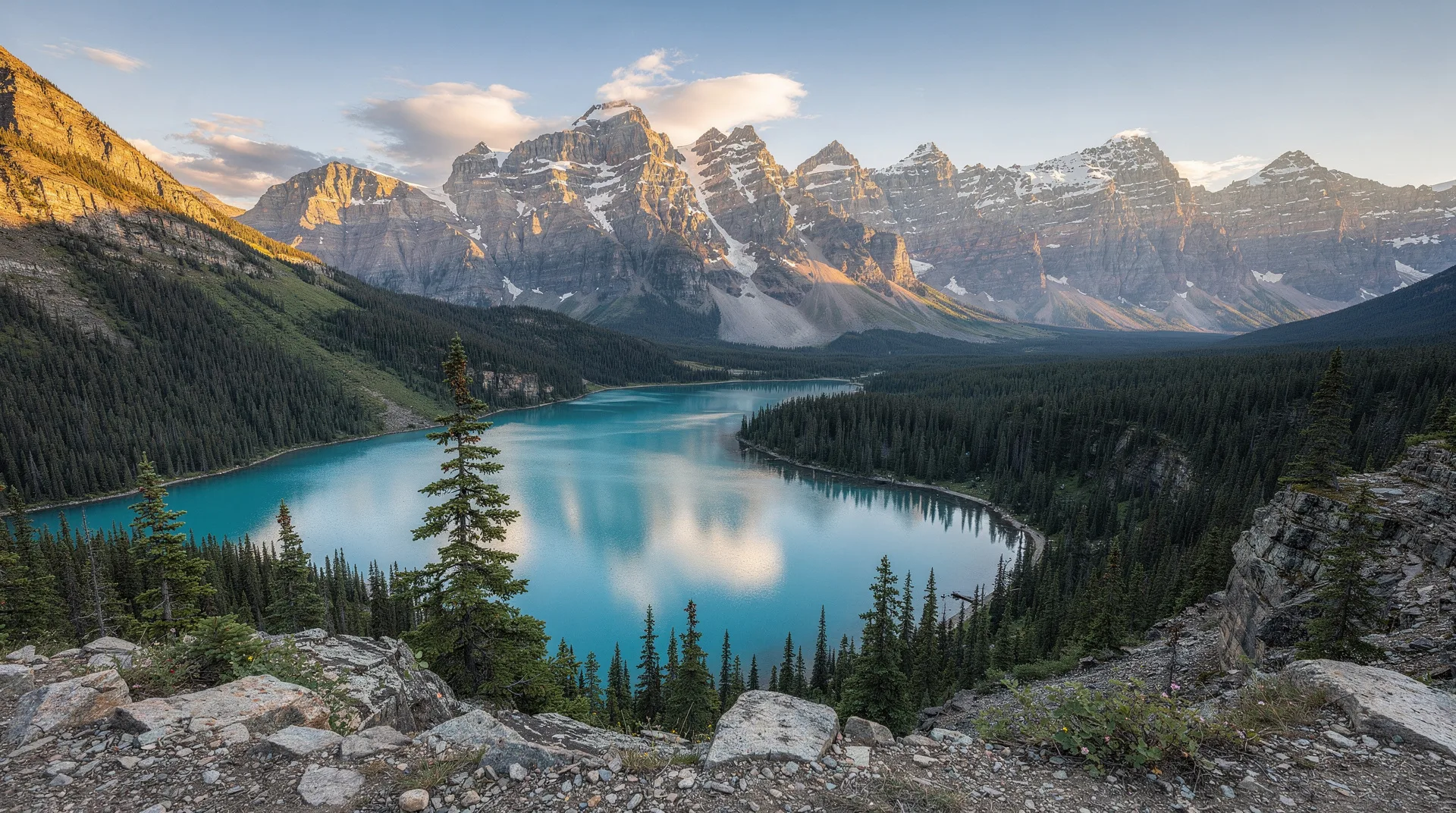
Board your pre-booked Parks Canada shuttle to Moraine Lake (25 minutes). Go straight to the Rockpile — the 10-minute scramble over boulders delivers the view of Moraine Lake and the Valley of the Ten Peaks. In the morning light before 9 AM, the water is at its most vivid blue-green. This is genuinely one of the great viewpoints in North America.
Canoe rentals open at the dock; paddling the lake before the crowds arrive is a highlight. The Lakeshore Trail (3.4 km return) along the southern shore gives additional perspectives.
Late morning: Lake Louise
Return shuttle to the Park and Ride and take the lakeshore shuttle to Lake Louise itself. The Fairmont Chateau Lake Louise sits at the end of the lake with the Victoria Glacier as a backdrop — the scale and colour of the scene exceeds most expectations. Walk the lakeshore to the far end and back (4 km return, easy, flat).
For those with energy: the Lake Agnes Tea House trail (7.4 km return, 380 m elevation gain) climbs to a mountain lake with a charming hike-in teahouse. Cash only; the pancakes are worth the effort.
Afternoon: Return via Bow Valley Parkway
Return to Banff via Highway 1A, stopping at Castle Cliffs Viewpoint and the Backswamp. Have dinner at leisure in Banff.
Day 4: Icefields Parkway day trip
7:00 AM: Drive north
Leave Banff by 7:00 AM for the Icefields Parkway day trip — 232 km north from Lake Louise to the Columbia Icefield and back. The round-trip is approximately 530 km from Banff, requiring a full day of 9-10 hours including stops.
Drive north from Banff 58 km to Lake Louise, then join Highway 93 North (the Icefields Parkway) at the Lake Louise junction.
Key stops northbound:
Bow Lake (36 km from Lake Louise): The turquoise headwaters of the Bow River with the Num-Ti-Jah Lodge on the shore. 30-minute stop for photos and a lakeshore walk.
Peyto Lake viewpoint (77 km): The single most spectacular viewpoint on the drive. A 2.5-km return walk from the parking area leads to the platform overlooking the wolf-shaped electric-blue lake in the valley below. Go early; the lot fills by 9 AM in summer. Allow 60-90 minutes.
Saskatchewan River Crossing (108 km): Fuel up here if needed. The only fuel between Lake Louise and Jasper.
Columbia Icefield Discovery Centre (126 km): Walk the 1.5-km trail to the toe of the Athabasca Glacier. The interpretive markers showing the glacier’s historical extent are sobering. Book an Ice Explorer tour (onto the glacier surface) in advance if this interests you.
Sunwapta Falls (175 km): Worth a 30-minute detour for the double waterfall.
Athabasca Falls (198 km): The most powerful waterfall in the Rockies — all of the Athabasca River forced through a narrow quartzite gorge. Allow 30 minutes.
Turn around at Athabasca Falls or continue to Jasper (30 km further) for a meal before returning south. The return drive takes approximately 3 hours without stops.
Day 5: Lake Minnewanka and depart
Morning: Lake Minnewanka
Drive northeast of Banff to Lake Minnewanka — the park’s largest lake, 21 km long, backed by sharp front-range ridges. The walk along the north shore to Stewart Canyon (3.4 km one way) is easy and productive for wildlife. Bighorn sheep are almost always visible on the rocky slopes above the parking area. The lake has a different character than the glacial showpiece lakes — wilder and less visited.
The boat tour on the lake (operated from the dock) is recommended for those wanting a different perspective. If you would rather not plan it yourself, you can compare guided tours in Banff before you go.
Midday: Farewell to Banff
A final walk on Banff Avenue, perhaps a visit to a bakery or café. Then drive east on Highway 1 to Calgary (128 km, 1.5-2 hours). Return your rental car at the airport or city location.
Budget breakdown
| Item | Budget (CAD) | Moderate (CAD) |
|---|---|---|
| Accommodation (4 nights) | $480-600 | $700-1,100 |
| Food (5 days) | $200-300 | $350-500 |
| Parks Canada Discovery Pass (family) | $145 | $145 |
| Gondola (2 adults) | $110 | $110 |
| Moraine Lake shuttle (2 adults) | $24 | $24 |
| Icefields Parkway parking/pass (covered) | — | — |
| Fuel | $80-100 | $80-100 |
| Total per couple | ~$1,040-1,280 | ~$1,410-2,080 |
Booking tips
- Moraine Lake shuttle: The most critical booking. Reserve at reservation.pc.gc.ca when the April window opens. Book the 6:30 AM or 7:00 AM departure for best light. See our shuttle guide.
- Accommodation: Book 3-6 months ahead for July-August. Canmore (20 km east) has significantly more availability at lower prices. See Banff vs Canmore.
- Ice Explorer tour: If including the glacier tour on Day 4, book at the Pursuit website well ahead.
- Discovery Pass: See our complete Discovery Pass guide.
Variations
Extend to 7 days with Jasper: Instead of returning to Calgary on Day 5, drive the Icefields Parkway to Jasper and spend two nights. This is the classic Rockies road trip. See our Banff and Jasper 7-day itinerary.
Larch season (late September): Add the Larch Valley trail from Moraine Lake (5.8 km return, 350 m elevation gain) on Day 3. September crowds are dramatically lower and the gold larch display is exceptional. See our larch season guide.
Family version: Reduce hiking ambition and add more time at Vermilion Lakes and Lake Minnewanka for wildlife. See our Banff with kids itinerary.
Bear safety on the Icefields Parkway and Bow Valley
Bear activity is a real consideration on this route, particularly along the Bow Valley Parkway, the Johnston Canyon-Inkpots trail, and the pullouts on the Icefields Parkway near Bow Lake and Peyto Lake. Carry bear spray on any hike beyond a short paved viewpoint walk, and check trailhead postings for closures before setting out — these change through the season, especially during berry season in late summer. See our bear watching guide for the safest ways to see bears from a vehicle rather than on foot.
Banff versus Jasper — is the extra distance worth it on Day 4
The Icefields Parkway day trip is the single longest day of this itinerary and the one most worth planning around clear weather — Peyto Lake and the Columbia Icefield views are dramatically better under sun than under cloud. If the forecast looks poor for Day 4, consider swapping it with Day 2 or 3 rather than pushing through low visibility. Our Banff vs Jasper guide and Icefields Parkway stops guide both help with prioritising if time gets tight.
Frequently asked questions about 5 days in Banff
Is five days enough to see Banff and the Icefields Parkway properly? Yes — five days is a comfortable length for the core Banff highlights plus a full Icefields Parkway day trip. Extending to Jasper for a night or two (see our 7-day itinerary) removes the need to drive the parkway twice in one day.
Can I do this itinerary without a rental car? Not comfortably. The Icefields Parkway day trip and the early Moraine Lake departure both rely on a car (or a booked tour); ROAM Transit covers Banff town and the gondola but not the wider itinerary.