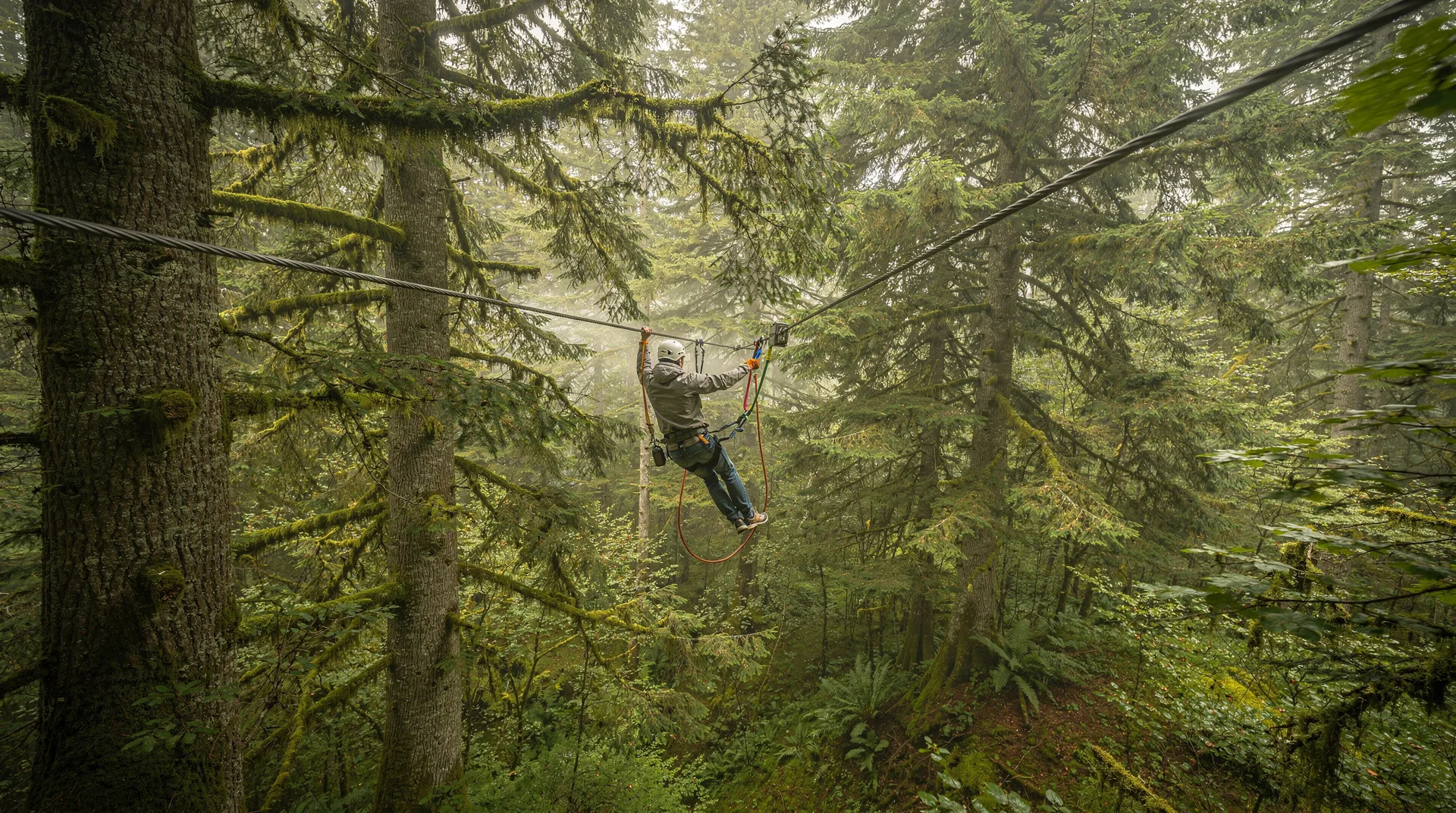
Zip-lining in Canada: Whistler Ziptrek, Mont-Tremblant, and the best experiences
Where is the best zip-lining in Canada?
Whistler Ziptrek Ecotours is Canada's most celebrated zip-line operation, with five lines running through old-growth forest above Fitzsimmons Creek. Mont-Tremblant in Quebec offers zip-lining with Laurentian mountain scenery. Other excellent experiences operate near Vancouver, Banff, and in Ontario's cottage country. Most require no experience and operate spring through fall.
Zip-lining in Canada has evolved from a novelty activity to a serious adventure tourism sector, and the country’s geography makes it an obvious home for the sport. Steep valleys, old-growth forest canopies, mountain ridgelines, and gorges carved by glacial rivers all provide the vertical drop and dramatic scenery that define the best zip-line experiences. Whether you want to glide through temperate rainforest above a glacier-fed creek in British Columbia, skim the treetops of the Laurentian Highlands in Quebec, or soar over alpine meadows in the Rockies, Canada delivers.
The best Canadian zip-line operations don’t just offer a fast ride from point A to point B. They combine multiple lines of increasing length and speed with interpretive content about the ecosystems you’re flying through, safety systems that have been refined over years of operation, and platforms in locations that would otherwise require a serious hike to reach. The activity is accessible to almost anyone — height restrictions, minimum weights, and age limits vary but the barrier to entry is genuinely low.
At a glance
| Where | Whistler and Grouse Mountain (BC), Mont-Tremblant (Quebec), Banff area (Alberta), Niagara Falls and Horseshoe Valley (Ontario) |
| Cost | Roughly CAD 35-200 per person depending on operator and number of lines |
| Time needed | 1.5-3.5 hours depending on the tour |
| Getting there | Most operations are close to major resort towns or cities; some, like Whistler, are a scenic drive from the nearest major airport |
| Best time | May through October for most operators; Whistler Ziptrek runs year-round |
What makes a great zip-line experience
The zip-line industry ranges from short, gentle single-line experiences at ski resorts to full multi-hour tours on systems with five or more lines reaching speeds over 100 km/h. The best experiences share a few qualities: meaningful length (300+ metres per line), significant height above ground (30+ metres at the highest point), interesting terrain below, and guides who make the experience educational rather than purely transactional.
The distinction between zip-line tours and zip-line parks matters. A tour moves you through a sequence of platforms connected by lines, often with short hiking sections between, and works as a guided experience. A zip-line park offers individual lines on a pay-per-ride basis, often as an add-on at a ski resort or adventure park. Tours generally deliver more value and a more complete experience.
Whistler Ziptrek Ecotours: Canada’s benchmark
Five lines above Fitzsimmons Creek
Whistler Ziptrek Ecotours is the benchmark against which other Canadian zip-line operations are measured. Launched in 2002 on the steep forested slopes between Whistler and Blackcomb mountains, the operation now runs five increasingly thrilling lines through old-growth Douglas fir, western red cedar, and hemlock forest above Fitzsimmons Creek. The creek runs in the valley 100+ metres below the highest platforms.
The five lines progress from the relatively gentle introductory Blackcomb line (180 m) to the Bear line (300 m) and Eagle line (430 m) before reaching the full-length Sasquatch (2.3 km — the longest in Canada) for those on the extended tour. The Raven line, a more recent addition, adds a parallel high-speed option for those wanting to race a partner side by side.
The Ziptrek experience includes a guided forest walk between platforms, interpretive information about the temperate rainforest ecosystem, and views up to the Whistler and Blackcomb ski runs above. The guides are notably good — knowledgeable about the ecology and skilled at calibrating the experience for nervous first-timers and adrenaline-seekers alike.
Book Whistler Ziptrek Ecotours directly on GetYourGuide for the Eagle Tour (4 lines) or the extended Sasquatch Tour (5 lines).
Operating season: Year-round, though summer (June–September) offers the most comfortable conditions. Winter zip-lining through snow-covered old-growth is available and popular.
Restrictions: Minimum weight 30 kg; maximum weight 113 kg. Minimum age approximately 6–7 for the Eagle tour. No upper age limit for healthy adults.
Duration: Eagle Tour (4 lines) takes approximately 2.5–3 hours. Bear Tour (2 lines) is approximately 1.5 hours.
Getting to Whistler Ziptrek
The Ziptrek base is at the Whistler Village gondola base. Participants take the Whistler gondola (Ziptrek includes this in some packages, or you can ride down after) to reach the upper platforms. The entire operation is walkable from the Whistler Village hotels. From Vancouver, Whistler is a 2-hour drive north on the Sea-to-Sky Highway — one of Canada’s most scenic drives.
Book a full-day Vancouver to Whistler tour including Ziptrek on GetYourGuide if you want guided transport from the city.
Mont-Tremblant: Laurentian zip-lining
Tremblant’s Via Ferrata and zip-line complex
Mont-Tremblant in the Laurentian Mountains of Quebec has invested heavily in summer adventure programming to balance its winter ski revenue. The mountain’s zip-line complex operates on the resort’s south side and offers a series of lines with views across Lac Tremblant and the surrounding Laurentian hills.
The Tyroparc at Mont-Tremblant features multiple lines with a mix of heights and speeds, accommodating families with younger children through to adults seeking a significant adrenaline hit. The Via Ferrata climbing route can be combined with zip-lining for a full adventure day on the mountain.
The atmosphere at Mont-Tremblant is different from Whistler — the Laurentian landscape is lower and more rounded than BC’s coastal mountains, the colour palette runs to hardwood forest rather than evergreen, and the fall foliage (late September through mid-October) makes autumn the most visually spectacular time to visit.
Getting there: Mont-Tremblant is 1.5 hours north of Montreal via Autoroute 15. The resort village has its own accommodations and is easily accessed without a car from Montreal via shuttle services.
Other top zip-line experiences across Canada
Grouse Mountain, Vancouver (North Shore)
Grouse Mountain, directly accessible from Vancouver via the Skyride gondola, offers zip-lining as part of its broader adventure programming. Lines run through the mountain’s upper forest zone with Vancouver and Burrard Inlet visible on clear days. Combined with the grizzly bear refuge, lumberjack shows, and gondola ride, zip-lining at Grouse fits naturally into a full Vancouver day-trip itinerary. See the full Grouse Mountain guide for more detail.
Banff area, Alberta
Several operators in the Banff National Park corridor offer zip-line experiences with Rocky Mountain backdrop. Banff Gondola’s Skyline Ridge Ziplines operate near the Sulphur Mountain summit station, providing views over the Bow Valley from elevation. Cliffside Zip Tours near Lake Louise operates on private land adjacent to the national park with views toward the Rockies.
For a complete picture of Banff’s mountain activities, see the Banff National Park guide and the Banff Gondola guide.
Niagara Falls, Ontario
The Niagara area has produced its own zip-line operation — WildPlay Niagara Falls sends participants over the Niagara Gorge from the Canadian side with the falls visible in the background. The experience is more about the iconic backdrop than the technical quality of the line, but it’s a genuinely thrilling combination.
Horseshoe Valley, Ontario
For Ontario visitors who want a zip-line day trip from Toronto, Horseshoe Resort in Barrie offers zip-lining through Ontario’s southern forest. The lines aren’t as dramatic as BC operations, but the proximity to the city (90 minutes from downtown Toronto) makes it a practical option.
Kicking Horse Mountain Resort, BC
Kicking Horse near Golden, BC, between Banff and Revelstoke, offers zip-lining from the resort’s upper mountain area — one of the highest verticals in Canadian skiing — with views across the Columbia Valley to the Purcell Mountains. The combination of gondola ride and zip lines provides a full mountain day.
Comparing Canada’s top zip-line experiences
| Operator | Best for | Longest line | Typical price |
|---|---|---|---|
| Whistler Ziptrek | The full multi-line adventure experience | Sasquatch, 2.3 km | CAD 109-199 |
| Mont-Tremblant Tyroparc | Families and fall foliage | Varies by package | CAD 65-95 |
| Grouse Mountain | A quick add-on to a Vancouver day trip | Shorter, single-line focused | CAD 35-55 |
| Niagara WildPlay | Iconic scenery over technical quality | Single gorge crossing | CAD 55-80 |
| Banff area operators | Rocky Mountain views without a BC trip | Varies by operator | CAD 80-130 |
If you only have time for one Canadian zip-line experience, Whistler Ziptrek remains the benchmark for line length, forest immersion, and guide quality. For a shorter, lower-cost taste of the activity as part of a broader city day, Grouse Mountain or Niagara WildPlay deliver a satisfying experience without requiring a dedicated half-day trip.
Combining zip-lining with a wider mountain day
Zip-lining rarely needs to be the only activity on the day. At Whistler, the Ziptrek base sits right at the Village gondola, so a morning zip-line tour combines naturally with an afternoon gondola ride up Whistler for hiking or simply the view, and both activities are easily reached without a car once you are in the Village. At Grouse Mountain, the zip-line is one part of a broader package that includes the grizzly bear refuge and the Skyride gondola, making it an efficient single Vancouver day trip.
In the Banff area, pairing a zip-line tour with the Banff Gondola or a morning of wildlife watching on the Bow Valley Parkway makes for a well-rounded adventure day without overloading the schedule. Mont-Tremblant visitors often combine zip-lining with the resort’s Via Ferrata route for a full day of vertical activity, especially rewarding during the fall foliage window.
Best time of year
Most Canadian zip-line operations are designed primarily for summer operation, typically May through October. Whistler Ziptrek is a notable exception and runs year-round including through the ski season.
Summer (June–August): Peak season for all operators. Best weather, longest days, most lines open. Book in advance for Whistler and Mont-Tremblant, especially on summer weekends.
Fall (September–October): Excellent conditions, reduced crowds, and extraordinary foliage — particularly at Mont-Tremblant. Temperatures are cooler but most operations are fully functional through mid-October.
Winter (November–April): Only a few operators run through winter. Whistler Ziptrek offers winter zip-lining through the snow-covered old-growth forest — a unique and atmospheric experience. Dress in warm layers; the wind chill at speed is significant.
Spring (May): Some operations open as early as May, though high-elevation lines may have delayed openings due to snowpack. Check individual operator websites for opening dates.
How to book and what to bring
Booking: Book Whistler Ziptrek at least 2–3 weeks ahead in summer; weekdays and shoulder season are easier. Most other operations can be booked a few days to a week ahead. Direct operator booking versus aggregators — both work, aggregators sometimes offer slightly better cancellation terms.
What is provided: Full harness, helmet, gloves, and all safety equipment. Training and briefing at the first platform.
What to wear:
- Closed-toed shoes with a secure heel (required at virtually all operations)
- Comfortable clothing that won’t snag on equipment — avoid loose scarves, dangling drawstrings, or overly baggy pants
- Layers appropriate to the temperature — platforms can be exposed and breezier than ground level
- Secure your glasses with a strap if you wear them
What to leave behind: Loose items in pockets, hats that will blow off, or anything you’d regret losing at 80 km/h
Costs in Canadian dollars
Whistler Ziptrek Bear Tour (2 lines): CAD 109–129 per person Whistler Ziptrek Eagle Tour (4 lines): CAD 149–179 per person Whistler Ziptrek Sasquatch Tour (5 lines): CAD 169–199 per person Mont-Tremblant Tyroparc: CAD 65–95 per person depending on number of lines Grouse Mountain zip-line: CAD 35–55 per person (standalone) Niagara WildPlay: CAD 55–80 per person Banff area zip-line operations: CAD 80–130 per person
Combination packages bundling zip-lining with gondola rides (Whistler, Grouse, Banff) often save 10–20% versus purchasing separately.
Safety and tips
Zip-line safety in Canada is governed by provincial recreation safety standards and the Association for Challenge Course Technology (ACCT) or equivalent certification bodies. Reputable operators inspect equipment daily and replace harnesses, trolleys, and cables on manufacturer-specified schedules.
Before you go:
- Disclose medical conditions, recent surgeries, or physical limitations to the operator
- If you have a fear of heights that you want to overcome, start with a shorter/lower tour — the psychological challenge is real and the operators have seen all levels of nervousness
- Arrive hydrated and having eaten a reasonable meal — no alcohol before zip-lining
On the lines:
- Keep your chin up and look forward during the descent, not down — it helps manage the visual vertigo
- Trust the braking system — modern zip-lines use passive magnetic braking or friction systems that work regardless of your weight within the specified limits
- Follow guide instructions on body position precisely — the correct position is both safer and more comfortable
Where to stay nearby
Whistler: The Village has hundreds of accommodation options from hostel dorm rooms to luxury ski-in/ski-out suites. Pan Pacific Whistler Mountainside and Fairmont Chateau Whistler anchor the luxury end. For mid-range options near the gondola base, Summit Lodge Boutique Hotel and Adara Hotel both deliver good value. See the Vancouver to Whistler guide for transport and accommodation options.
Mont-Tremblant: The pedestrian resort village has hotels and condos walking distance from the gondola base. Fairmont Tremblant dominates the luxury segment. Hotel Club Tremblant offers mid-range value with direct slope access. Vacation rentals in the broader village area provide apartment options for families.
Frequently asked questions about Zip-lining in Canada: Whistler Ziptrek, Mont-Tremblant, and the best experiences
Do I need any experience to go zip-lining?
No experience is required. All operators provide full training and orientation at the start of the tour. If you can walk and follow instructions, you can zip-line.
What is the weight limit for zip-lining?
Most Canadian zip-line operations have a minimum weight of 30–40 kg and a maximum weight of 113–120 kg (250–265 lbs). These limits are set by the physics of the braking system — riders outside the weight range may not brake correctly at the end of the line. Check the specific operator’s limits when booking.
Is zip-lining safe for people with heart conditions?
Zip-lining involves brief but intense adrenaline responses. People with cardiac conditions, recent heart surgery, or high blood pressure should consult their physician before booking. Operators require participants to sign a health declaration form; disclose relevant conditions honestly.
Can children zip-line at Whistler?
Yes. Whistler Ziptrek accepts children from approximately age 6–7 and a minimum weight of 30 kg on the Eagle Tour. Younger or lighter children may be restricted to shorter options. Children must be accompanied by an adult.
How long does a Whistler Ziptrek tour take?
The Bear Tour (2 lines) takes approximately 1.5 hours. The Eagle Tour (4 lines) takes 2.5–3 hours. The Sasquatch extended tour takes 3–3.5 hours including all five lines and the forest walk sections.
What happens if it’s raining?
Zip-lining runs in light rain — operators provide rain ponchos and the experience is still excellent. Heavy thunderstorms with lightning are the standard cancellation trigger. Most operators offer rescheduling or credits rather than refunds for weather holds. Bring a light rain jacket.