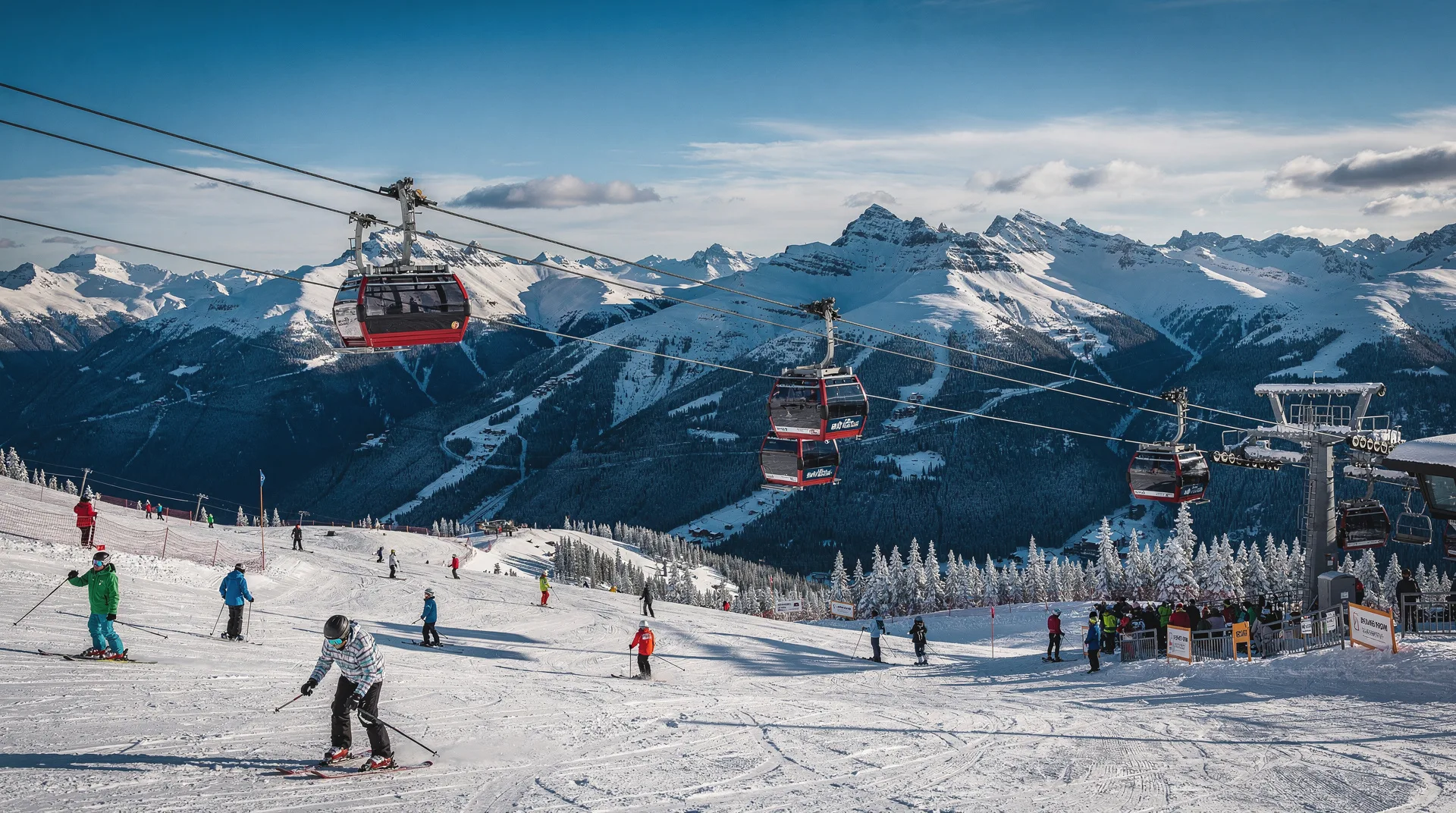
Whistler vs Banff: best for skiing?
Should I ski Whistler or Banff?
Whistler Blackcomb is North America's largest ski resort with the most vertical drop and a purpose-built village. Banff has three separate ski areas (Lake Louise, Sunshine Village, Mt Norquay) with more reliable powder snow and a historic mountain town atmosphere. For a pure ski resort experience, Whistler. For variety and national park setting, Banff.
For ski enthusiasts planning a Canada trip, the debate almost always narrows to two destinations: Whistler Blackcomb in British Columbia and the Banff ski triangle in Alberta. Both are world-class. Both attract skiers from across Europe, Asia, and North America. They are fundamentally different in structure, snow character, and surrounding experience.
Whistler is a single mega-resort — the largest ski area in North America by most measures — with a purpose-built, pedestrian-only village at its base. Banff is a national park town surrounded by three separate ski resorts, each with its own character, all within 30–45 minutes of the town of Banff.
This guide covers skiing first, then summer activities, then helps you decide which fits your trip.
At a glance
| Whistler | Banff | |
|---|---|---|
| Where | 125 km north of Vancouver, BC | 128 km west of Calgary, Alberta |
| Cost | Day lift pass around CAD 160-250 | Tri-Area day pass around CAD 140-180 |
| Time needed | 4-7 days for the full mountain | 4-7 days across the three ski areas |
| Getting there | Vancouver airport + Sea-to-Sky Highway | Calgary airport + Trans-Canada Highway |
| Best time | January for reliability and lighter crowds | January-March for driest powder |
Two different models
The core difference is structural. Whistler Blackcomb is one interconnected ski area with two mountains linked by the PEAK 2 PEAK Gondola — you ski it as a single resort. Everything is within the resort system.
The Banff ski triangle consists of three separate areas:
- Lake Louise Ski Resort (45 km from Banff town)
- Sunshine Village (20 km from Banff town)
- Mt Norquay (6 km from Banff town)
The Banff Tri-Area pass covers all three. Each requires driving or taking a shuttle. This is either a drawback (logistics) or an advantage (variety) depending on your perspective.
Location and getting there
Getting to Whistler
Whistler is 125 km north of Vancouver on the Sea-to-Sky Highway (Highway 99). The drive takes approximately 2 hours from Vancouver International Airport — it is one of the most scenic approaches to any ski resort in the world, climbing alongside Howe Sound and the Tantalus Range.
Shuttle services from Vancouver airport to Whistler run several times daily (CAD $60–$85 one way). In winter, this is the standard approach. A full-day Whistler tour from Vancouver is also available for those who want a guided day trip.
There is no scheduled air service into Whistler — Vancouver is the gateway.
Getting to Banff
Banff is 128 km west of Calgary on the Trans-Canada Highway, about 90 minutes from Calgary International Airport (YYC). The airport has direct international connections from Europe, Asia, and across North America.
Shuttle services from Calgary airport to Banff run regularly (CAD $50–$70 one way). From Banff town, each ski area operates its own shuttle service from the Banff bus loop — no car needed to ski all three mountains, though a car makes logistics easier.
| Whistler | Banff ski areas | |
|---|---|---|
| Gateway airport | Vancouver (YVR) | Calgary (YYC) |
| Drive from airport | 2 hrs | 90 min |
| Number of ski areas | 1 (interconnected) | 3 (separate) |
| Base town | Whistler Village (purpose-built) | Banff (historic national park town) |
Skiing: the mountain comparison
Whistler Blackcomb
Whistler Blackcomb is the benchmark by which North American ski resorts are measured. The numbers are significant: 8,171 acres of skiable terrain, 200+ marked runs, 37 lifts including 3 gondolas, a vertical drop of 1,609 m (the most in North America), and terrain that spans beginner greens to double-black couloirs.
The PEAK 2 PEAK Gondola links Whistler and Blackcomb mountains at their summits — a 4.4 km crossing at over 3,000 m that has become an attraction in its own right, with a glass-floored gondola cabin.
Whistler snow: The resort sits at 2,182 m summit elevation on the BC coast — wetter snow than the Rockies, heavier in texture, excellent in quantity. Annual snowfall is approximately 10–11 metres. The wet snow packs well and the resort invests heavily in snowmaking. The downside: foggy, stormy days are more common than in Alberta.
Whistler terrain breakdown:
- Beginner: 18% of runs
- Intermediate: 55% of runs
- Advanced/Expert: 27% of runs
The resort is genuinely all-levels — the intermediate terrain is the best in Canada for those at that skill level.
Banff ski areas
Lake Louise Ski Resort is the largest of the three at 4,200 acres across four mountain faces. The north-facing back bowls hold snow exceptionally well and offer some of the best powder skiing in the Rockies. Views from the lifts across the Lake Louise valley are extraordinary.
Sunshine Village sits at higher elevation (2,730 m base) than any other Canadian resort, receiving reliably cold, dry powder snow. Its snowpack is deeper and lighter than Whistler’s. The Delirium Dive and Silver City terrain are among the most challenging in-bounds runs in Canada.
Mt Norquay is the smallest of the three — more limited terrain but excellent for beginners and intermediates, closest to town, and often the best option for a half-day or last ski before heading home.
The Banff Tri-Area lift pass (covers all three resorts) is approximately CAD $140–$180/day. The SkiBig3 Adventure Hub coordinates activities and equipment rentals across all three mountains.
Banff snow: Rocky Mountain powder is drier and lighter than coastal BC snow. Annual snowfall across the three areas averages 8–9 metres, with Sunshine Village’s high elevation ensuring a long season from November through May. Sunshine Valley gets 9 metres alone.
| Whistler Blackcomb | Banff Tri-Area | |
|---|---|---|
| Total terrain | 8,171 acres | ~6,000 acres combined |
| Vertical drop | 1,609 m | Up to 1,000 m (Lake Louise) |
| Lifts | 37 | 30+ combined |
| Annual snowfall | ~10 m (coastal) | ~9 m (Rockies powder) |
| Season | Nov–Apr/May | Nov–May |
| Lift pass (day) | CAD $160–$250 | CAD $140–$180 (Tri-Area) |
Village life and aprés-ski
Whistler Village
Whistler Village is a purpose-built pedestrian resort village — designed from the ground up for skiing and never having been anything else. The village has no cars, consistent architecture, and a density of restaurants, bars, and shops that makes it one of the liveliest après-ski scenes in North America.
Accommodation ranges from slopeside chalets to luxury hotels (Four Seasons, Fairmont Chateau Whistler). The village walkability is excellent — most accommodation is within 10 minutes’ walk of the lifts.
Après-ski starts early at Garibaldi Lift Company (GLC) at the base of the Whistler gondola and carries through to the late-night venues on Village Stroll. The Merlin’s Bar, Dubh Linn Gate Irish pub, and Longhorn Saloon are among the classic après destinations.
Banff town
Banff is a genuine historic mountain community — not purpose-built for skiing, but evolved over 130+ years as a national park town with a permanent population of 8,000. Banff Avenue is a working main street with local restaurants, independent shops, and the same mix of locals and tourists that any small mountain town has.
The après-ski scene is excellent but more dispersed — the ski areas are 20–45 minutes from town, so après starts later after the drive back. The Wild Bills Legendary Saloon, St. James’s Gate Irish Pub, and Elk & Oarsman are Banff institutions.
Accommodation in Banff is better for those who want the national park town experience — the Fairmont Banff Springs, the Buffalo Mountain Lodge, the Rimrock Resort — as opposed to slopeside convenience.
Summer activities
Both destinations have excellent summer offerings, which matters for visitors considering shoulder-season visits.
Whistler summer
The Whistler Mountain Bike Park is one of the best in the world — over 80 km of purpose-built trails for all ability levels, served by the gondola. It opens from late May to mid-October. The village also offers hiking, golf (two championship courses), zip-lining, and the PEAK 2 PEAK Gondola for views.
Banff summer
Banff in summer is one of the most complete national park experiences in the world — hiking, canoeing on the lakes, wildlife viewing, the Icefields Parkway drive to Jasper, and the Banff Gondola to Sulphur Mountain. See our Banff vs Jasper guide for the full summer comparison.
A Banff gondola, Lake Louise, and Moraine Lake combination tour covers the summer highlights efficiently.
Cost comparison
Skiing
| Expense | Whistler | Banff (Tri-Area) |
|---|---|---|
| Day lift pass | CAD $160–$250 | CAD $140–$180 |
| 5-day pass | CAD $650–$900 | CAD $550–$750 |
| Equipment rental/day | CAD $60–$90 | CAD $50–$80 |
| Ski lesson (group) | CAD $120–$160 | CAD $100–$140 |
Accommodation (per night)
- Mid-range hotel (Whistler): CAD $300–$550
- Mid-range hotel (Banff): CAD $200–$400
- Slopeside condo (Whistler, 2-bedroom): CAD $500–$1,200
- Banff has no slopeside accommodation at the major resorts; all stays are in town
Banff is generally 20–30% less expensive for accommodation than Whistler.
Getting there
Calgary is a more affordable flying destination than Vancouver for many international markets, and the airport is closer to the resort (90 min vs 2 hrs). However, Whistler requires no rental car if you use the shuttle; Banff also works without a car using the resort shuttles.
Best for…
Choose Whistler if you:
- Want the single largest ski experience in North America
- Prefer a purpose-built ski village with everything within walking distance
- Are flying via Vancouver or coming from Asia-Pacific
- Value a strong après-ski and nightlife scene
- Want the best intermediate terrain in Canada
- Are planning a ski-only trip without broader national park exploration
Choose Banff if you:
- Want dry Rocky Mountain powder
- Prefer a historic mountain town to a purpose-built resort
- Want variety across three different mountain personalities
- Are combining skiing with a national park / Icefields Parkway trip
- Are flying via Calgary or coming from Europe
- Want to extend the trip to Jasper or the broader Rockies
Can you do both?
Yes, though it requires some planning. Whistler and Banff are about 10 hours apart by car via the Trans-Canada through the Rockies — a beautiful drive but a long one. Most skiers who do both fly between Vancouver and Calgary. A two-week ski trip with 5–6 nights at each destination is very achievable and gives a complete picture of Canadian skiing.
Whistler tours and activities are available for those who want guided experiences, lessons, or day trips during their stay.
Our verdict
For the purest, biggest ski resort experience in Canada: Whistler. The size, vertical, village, and the PEAK 2 PEAK connection make it the most complete mountain resort destination in the country.
For the best combination of skiing, national park exploration, and Rocky Mountain atmosphere: Banff. The tri-area variety, the historic town, and the ability to connect to Jasper and the Icefields Parkway make it the more complete Canada trip.
For powder quality: Banff’s Rocky Mountain snow is lighter and drier. Whistler’s coastal snow is heavier but abundant.
For a first Canadian ski trip with no other itinerary considerations, we give Whistler a narrow edge for the sheer scale of the experience. For a trip that combines skiing with broader Canadian Rockies exploration, Banff wins.
See also: Banff vs Jasper comparison, Lake Louise vs Moraine Lake, Banff National Park guide.
A third option: Sun Peaks instead of Whistler
If the Whistler-Banff decision is really a decision about budget and crowds rather than terrain scale, it’s worth knowing there’s a third BC option that doesn’t require flying to Alberta at all. Sun Peaks, roughly 400 km from Whistler, offers drier interior powder and considerably lower prices without Whistler’s crowds — see the Whistler vs Sun Peaks comparison for the details. It won’t match Whistler’s scale or Banff’s national-park setting, but for travellers prioritising value and quiet runs over either destination’s headline draws, it belongs in the conversation.
Planning the ski days: what a typical week looks like
At Whistler, a typical week alternates between the two connected mountains via the PEAK 2 PEAK — see the Whistler skiing guide for a full breakdown of runs and lift logistics, and the Whistler Peak 2 Peak Gondola guide if you’re also curious about the non-ski sightseeing side of that connection. At Banff, a typical week rotates across the three Tri-Area resorts, with a rest day often built in for Banff town itself or a drive up the Icefields Parkway if conditions allow. Neither destination rewards trying to “do everything” in under four days — budget enough time to see more than one zone of whichever resort you choose.
Frequently asked questions about Whistler vs Banff: best for skiing?
Which has better snow — Whistler or Banff?
They have different types of snow. Banff’s Rocky Mountain powder is drier, lighter, and more consistent — classic champagne powder. Whistler’s coastal snow is heavier and wetter but falls in very high volumes and provides excellent coverage. Serious powder skiers generally prefer Banff’s snow quality; most recreational skiers won’t notice a significant difference.
Is Whistler or Banff better for beginners?
Both resorts have strong beginner programs. Whistler has more beginner terrain proportionally (18% of runs are green) and a large ski school. Banff’s Mt Norquay specialises in learning-to-ski programs and is an excellent option for first-timers. Sunshine Village has gentler terrain at mid-mountain suitable for beginners. Edge goes to Whistler for beginner infrastructure.
What is the best time to ski Whistler or Banff?
Whistler: January through March for best snow and conditions. December and April are good shoulder options with lower prices. Banff: January through March for powder; Sunshine Village’s season extends through May on some years due to its high elevation. February tends to be the coldest and driest month at both destinations.
Do I need a car at Whistler or Banff?
At Whistler, a car is not necessary — shuttles from Vancouver run regularly and the village is entirely walkable. At Banff, a car makes the Tri-Area logistics easier, though the resort shuttles from Banff bus loop serve all three mountains adequately. Neither destination requires a car if you are prepared to use shuttles.
Which is more expensive overall — Whistler or Banff?
Whistler is more expensive, particularly for accommodation. Lift passes are broadly similar (Whistler slightly higher). Total daily costs in Whistler typically run 20–30% higher than in Banff. Banff has a slight advantage on value without compromising on ski quality.
Can I ski both Whistler and Banff on the same trip?
Yes. The standard approach is to fly into Vancouver, spend 4–5 days at Whistler, fly from Vancouver to Calgary, and spend 4–5 days in Banff. Total flights are short and the two experiences complement each other. Budget 10–14 days for a comfortable combined trip.
Should I consider Sun Peaks instead of Banff if I’m already going to BC?
If your main draw to Banff is drier powder rather than the national park setting, Sun Peaks is worth comparing before booking flights to Calgary — it delivers similar interior-style snow quality to parts of the Rockies while staying within BC. See the Whistler vs Sun Peaks comparison for the specifics; it won’t replace Banff’s Icefields Parkway and national-park scenery, but it’s a genuine option for a pure ski-quality decision.