Surfing Tofino: Pacific Rim surf culture, schools, and when to go
Is Tofino good for beginner surfers?
Yes — Tofino is one of the best beginner surf destinations in Canada. Long Beach and Chesterman Beach have consistent rolling waves suitable for beginners, multiple established surf schools offer lessons year-round, and the town has a well-developed surf tourism infrastructure. Water is cold year-round (8–14°C), so a thick wetsuit is essential even in summer.
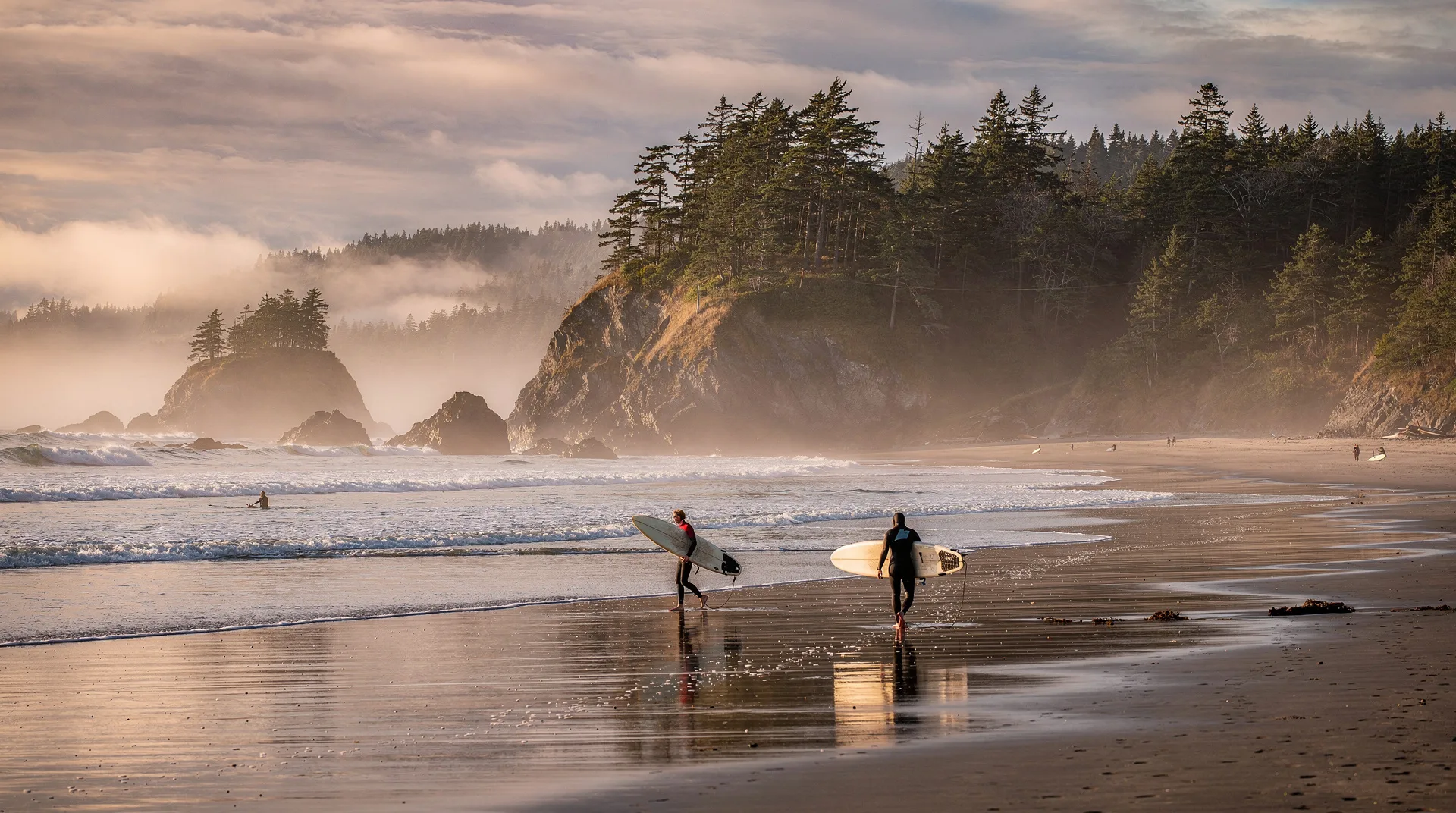
Tofino sits at the end of the road on the west coast of Vancouver Island — literally. Highway 4 terminates at the small fishing and surfing town after crossing the island from Port Alberni, depositing visitors at the edge of the Pacific in one of the most dramatically beautiful coastal environments in North America. Old-growth rainforest crowds the shoreline. Fog rolls off the ocean on most mornings. And for much of the year, swells generated by storms thousands of kilometres out in the North Pacific arrive on Tofino’s beaches with the consistency and quality that have made the town Canada’s undisputed surfing capital.
That the same Pacific Ocean that produces California’s famous waves also rolls up the BC coast is something many visitors don’t expect. But Tofino’s exposure to the open Pacific, the shape of the beaches — particularly Long Beach, Cox Bay, and Chesterman Beach — and the consistency of swell throughout the fall and winter months have created a surf culture here that is genuine, deep-rooted, and increasingly recognized beyond Canada’s borders.
The cold water (8–14°C year-round) separates Tofino from tropical surf destinations, but it also means the waves are consistent in every season and the beaches are never overcrowded the way warmer surf spots become. For first-time surfers, for experienced riders visiting on a road trip, and for those who want to combine surfing with old-growth hiking and wildlife watching, Tofino delivers comprehensively.
At a glance
| Where | Long Beach, Cox Bay, Chesterman Beach — within or near Pacific Rim National Park |
| Cost | Around CAD 85-110 for a 2-hour group lesson; national park day pass around CAD 12.25/adult |
| Time needed | A half-day for one lesson; 3-4 days if you want to actually build surf skills |
| Getting there | Around 4.5 hours’ drive from Victoria, or a scenic float plane from Vancouver |
| Best time | Spring/summer (May-Aug) for beginners; fall/winter (Sep-Feb) for experienced surfers chasing bigger swell |
Tofino’s surf culture and history
From fishing town to surf capital
Commercial fishing dominated Tofino’s economy through most of the 20th century. Surfing arrived in the late 1960s when a small group of Californian and BC surfers discovered the quality of the Pacific Rim waves and began making pilgrimages to the beaches within what would become Pacific Rim National Park Reserve. The surf culture that developed here is quieter and less performative than California’s — shaped by the rain, the fog, the bears that occasionally wander onto the beach, and the general sense of remoteness.
By the 1990s, Tofino had established commercial surf schools, surf shops, and a small but real population of year-round surfers who live in the area specifically for the waves. Today, the town has a dozen surf-related businesses, an annual surfing competition, and a reputation that draws visitors from across Canada and internationally.
The opening of the Wickaninnish Inn in 1996 — a luxury hotel that embraced the stormy Pacific rather than treating it as a weather inconvenience — helped legitimize Tofino as a serious travel destination beyond the surfing community. The inn’s glass-fronted dining room, positioned to face directly into Pacific storms, encapsulates Tofino’s particular attitude toward wild weather: something to experience and celebrate, not avoid.
Pacific Rim National Park Reserve
Most of Tofino’s surf beaches sit within or adjacent to Pacific Rim National Park Reserve, which protects 125 km of the west Vancouver Island coast. The park’s Long Beach unit encompasses the main surfing area. A national park day pass (CAD 12.25 per adult) is required for access to the park beaches, including Long Beach. The passes support the lifeguard services and beach facilities in the park.
Best surf beaches in Tofino
Long Beach
Long Beach is the longest stretch of sand on Vancouver Island’s Pacific coast — approximately 16 km of surf beach within the national park. The beach faces west and south, collecting swell from across the Pacific, and its gradual bathymetry creates the kind of rolling, shoulder-height waves that are ideal for beginner and intermediate surfing.
Lifeguards patrol designated surf zones during summer (approximately July through early September). Outside the lifeguarded zones and outside the summer season, surfing is at your own risk. The Kwisitis Visitor Centre at the south end of Long Beach provides park information, interpretive displays about the local ecosystem, and washroom facilities.
Long Beach is the default location for surf lessons from all Tofino operators. The wide, sandy beach provides plenty of room for large beginner groups, the sand bottom is forgiving for wipeouts, and the waves are consistent without being overwhelming for first-timers.
Cox Bay
Cox Bay, a smaller beach south of Long Beach, is the primary venue for the annual Rip Curl Pro Tofino surfing competition and is considered the best wave in the area for intermediate and experienced surfers. The beach break here can produce hollow waves that Long Beach rarely offers — when swell size and period are right, Cox Bay can rival some of the better-known breaks on the Pacific coast.
Several surf schools also operate lessons at Cox Bay, and conditions are still manageable for beginners in moderate swell, but the bay’s position and bottom make it slightly less forgiving than Long Beach.
Chesterman Beach
Chesterman Beach sits at the south end of Tofino proper, adjacent to the Wickaninnish Inn. It’s a 2 km beach accessible year-round and popular with locals for early-morning sessions before the tourist crowds arrive at Long Beach. Frank Island, a small tidal island accessible at low tide at the north end of Chesterman, is a landmark of Tofino’s coastline.
Chesterman is excellent for intermediate surfers and for those staying at nearby accommodations who want early-morning sessions without driving to Long Beach.
Wick Beach and other breaks
Other breaks in the Tofino area include Wick Beach (within Pacific Rim NP, less crowded than Long Beach), Florencia Bay (accessible via a forest trail, more secluded, intermediate wave), and various seasonal breaks that local surfers know from years of reading the coast. Your surf school guides will direct you to the best conditions on any given day.
Best surf schools in Tofino
Pacific Surf Co.
Pacific Surf Co. is one of Tofino’s longest-operating surf schools, with group lessons, private lessons, and multi-day surf camps available year-round. Their instructors are experienced surfers themselves — not summer-job employees — and the quality of instruction reflects this. Group lessons run 2 hours and include wetsuit, board, and all equipment.
Tofino Surf Adventures
Tofino Surf Adventures offers group and private lessons from their Long Beach base and is known for small group sizes (8 students maximum per instructor for group lessons). Their multi-day programs are popular with visitors who want to commit a full 3–4 days to building genuine surf skills rather than a single introductory session.
Live to Surf
Live to Surf is both a surf school and the longest-established surf shop in Tofino. Operating since 1984, they sell and rent boards, wetsuits, and accessories as well as offering lessons. For travellers who have some surf experience and want to rent equipment independently rather than take lessons, Live to Surf is the standard starting point.
Surf Sister
Surf Sister, established in 1999, was one of the first women-focused surf schools in North America and remains highly regarded for its inclusive teaching approach and instructor quality. They run co-ed lessons as well as women-only sessions and have an excellent reputation for beginner instruction.
Browse Vancouver Island surf lessons and Pacific Rim outdoor tours on GetYourGuide for operator comparison and advance booking.
Best time of year for surfing in Tofino
Fall and winter: the best waves
September through February is when Tofino receives its most powerful and consistent surf. North Pacific storm systems generate long-period swells that arrive at Tofino’s beaches with height and shape that genuinely attracts experienced surfers from around BC and beyond. Wave heights of 2–4 metres are common in October through January, and periods of 14–18 seconds produce well-shaped, rideable waves rather than the confused choppy sea of short-period wind swell.
For experienced surfers, November and December in Tofino are genuinely exciting. The same big Pacific storms that bring dramatic surf also bring rain and wind — the full Tofino experience, embraced by those who know the town. Wetsuits in winter need to be 5/4mm or 6/5mm thickness to manage the cold (water 8–10°C).
Spring and summer: beginner-friendly
May through August brings smaller, more mellow swell that is more forgiving for beginners. Lessons concentrate in this season because the waves are the most manageable. Water temperatures rise to 12–14°C and air temperatures average 16–20°C in July and August — still cold by BC standards, but pleasantly mild for west coast conditions.
The town is busiest in July and August with general tourists, many of whom take a single surf lesson as part of their Tofino visit. Book lessons 2–3 weeks ahead for summer weekends.
Year-round surfing
Tofino’s surf schools operate every month of the year. Outside summer, the beaches are quieter, the vibe is more authentic, and accommodation rates drop substantially. Many experienced travellers specifically target shoulder season visits (May, September, October) for the best balance of wave quality, crowd levels, and value.
What to wear: wetsuit essentials
Summer (June–August): 3/2mm full wetsuit (full-length arms and legs). Some people use a 4/3mm for additional warmth. Booties optional in July–August, recommended in June.
Spring and fall (April–May, September–October): 4/3mm full wetsuit. 3mm booties recommended. Gloves optional.
Winter (November–March): 5/4mm or 6/5mm full wetsuit is the minimum for comfort. 5mm booties, 3–5mm gloves, and a 2mm hood are standard for extended sessions. This is serious cold-water gear and is non-negotiable for comfort.
All surf schools provide full wetsuit packages with lessons. Rental wetsuits are generally suitable for the lesson duration. If you plan multiple daily sessions over several days, the rental cost accumulates; purchasing or bringing a wetsuit of appropriate thickness becomes worthwhile.
Costs in Canadian dollars
2-hour group surf lesson (equipment included): CAD 85–110 per person Private 2-hour lesson: CAD 180–240 per person Multi-day surf camp (3 days, 2 lessons/day): CAD 350–500 per person Surfboard rental per day: CAD 30–45 Full wetsuit rental per day: CAD 20–30 Surfboard + wetsuit daily package: CAD 45–65 National park day pass (Long Beach area): CAD 12.25 per adult
How to get to Tofino
By car: Tofino is approximately 4.5 hours from Victoria or 5.5 hours from Nanaimo (including the ferry from the BC mainland). The drive from Nanaimo crosses the island through old-growth forest and the MacMillan Provincial Park (Cathedral Grove) en route. The final section of Highway 4 through Kennedy Lake and the Pacific Rim is scenic.
By ferry + bus: BC Ferries connects Vancouver (Horseshoe Bay) to Nanaimo, and Tofino Bus runs daily coach service from Nanaimo and Victoria to Tofino. This combination makes the trip feasible without a rental car.
By float plane: Harbour Air and other float plane operators run scheduled service from Vancouver Harbour to the Tofino Inlet — a spectacular 40-minute flight with views of the Salish Sea and Vancouver Island’s mountains. Float plane service makes a day trip to Tofino from Vancouver possible, though staying overnight is strongly recommended.
Safety and tips
Rip currents: Long Beach experiences rip currents, particularly in larger surf. Surf schools teach rip current escape (swim parallel to shore, not directly against the current). Do not surf outside designated zones without understanding how to identify and escape rips.
Cold water: Even with appropriate wetsuit gear, cold water immersion is a physiological stressor. Beginners should limit cold-water sessions to 1.5–2 hours until they understand their body’s response.
Wildlife: Bears, wolves, and cougars are present on the surrounding trails. On beaches, keep food in vehicle or bear-proof storage. Bald eagles are a constant overhead presence.
Surf etiquette: Don’t drop in on other surfers (take a wave that someone else is already riding). Yield to surfers further out on the wave. These aren’t just courtesy rules — they’re safety practices that prevent board collisions.
Where to stay near the surf beaches
Wickaninnish Inn (luxury): The benchmark Tofino accommodation, positioned directly above Chesterman Beach with wave-facing rooms. Rates from CAD 550–1,200/night. The restaurant is one of the best in BC.
Long Beach Lodge Resort: Situated above Cox Bay, with direct beach access and surf-oriented programming. Cabins and resort-style rooms from CAD 350–700/night.
Middle Beach Lodge: A more rustic luxury property at the northern edge of the Long Beach zone, popular with couples. Rates from CAD 260–450/night.
Camping: Pacific Rim National Park’s Greenpoint Campground (within the park) is the most popular camping option, with sites from CAD 28–38/night. Books out months ahead in summer.
Tofino town: Various B&Bs, motels, and vacation rentals in town provide mid-range options. The town is a 10-minute drive from Long Beach.
For more west coast BC experiences, see the Pacific Rim National Park guide, the kayaking in Canada guide, and the whale watching guide.
Tofino or Ucluelet for a surf trip?
Ucluelet, 40 minutes south of Tofino on the same stretch of Highway 4, is the quieter, cheaper alternative — and a growing number of surfers base themselves there instead. Neither town owns the waves outright; Long Beach and Cox Bay sit roughly midway between the two, so drive times to the breaks are similar from either base.
| Tofino | Ucluelet | |
|---|---|---|
| Vibe | Established surf town, busier in summer | Quieter fishing-village feel |
| Accommodation cost | Higher, especially oceanfront | Generally 20-30% cheaper |
| Surf schools | Most operators based here | Fewer, but growing |
| Distance to Long Beach | Around 20-30 minutes | Around 15-25 minutes |
| Best for | First-timers who want lessons, restaurants, nightlife | Budget trips, storm watching, a quieter base |
See the full Tofino vs Ucluelet comparison for a longer breakdown beyond surfing.
Renting a car and getting around
A car (or the ferry-plus-bus combination above) is close to essential — surf gear, wetsuits, and the drive between beaches are all easier with your own vehicle. See the Canada car rental guide for booking tips and the driving distances in BC guide for planning the rest of a Vancouver Island road trip. If you’re combining surfing with storm watching in the shoulder season, the BC storm watching guide is worth reading before you go, and the Canada wildlife safety guide covers what to do if a bear turns up on the beach access trail.
Frequently asked questions about Surfing Tofino: Pacific Rim surf culture, schools, and when to go
Can I surf in Tofino without lessons?
If you have previous surfing experience on similar-sized waves, yes. Long Beach is accessible for experienced surfers without a lesson requirement. If you are a complete beginner, attempting to learn independently in cold Pacific water without instruction is genuinely dangerous — the cold water, rip currents, and surf etiquette requirements make a lesson strongly recommended for safety and efficiency.
How cold is the water in Tofino in summer?
Surface water temperatures at Tofino’s beaches run approximately 12–14°C in July and August. This feels very cold — comparable to the North Sea in England. A 3/2mm wetsuit is the minimum for a comfortable surf session, and most experienced Tofino surfers wear 4/3mm year-round.
Is Tofino appropriate for children learning to surf?
Yes, for children over approximately 8–10 years old. Surf Sister and Pacific Surf Co. both run youth lessons, and Long Beach’s mellow summer waves are well-suited to young beginners. Children need appropriate wetsuit sizes — most schools have youth wetsuit rentals available. Younger children (under 8) may find the cold water challenging.
Can I surf in Tofino in winter?
Experienced surfers do, and the waves in November through January are the best of the year. But winter surfing requires a 5/4mm or 6/5mm wetsuit with booties, gloves, and a hood, plus significant cold-water comfort. Most surf schools still offer winter lessons for motivated students. If you’re a beginner, summer or early fall lessons provide a much more comfortable introduction.
What other activities are there in Tofino besides surfing?
Tofino is also excellent for sea kayaking, whale watching (grey whales arrive March–May, then humpbacks June–October), hot springs day trips (Hot Springs Cove, accessible by water taxi), old-growth forest hiking, and storm watching from the Wickaninnish Inn in winter. The town has outstanding restaurants showcasing local seafood. For a rest day between sessions, you can compare Vancouver Island day tours and book ahead.
How long does it take to learn to surf?
In a 2-hour beginner lesson on Tofino’s forgiving summer waves, most people are able to stand up on a foamie board and ride a few waves to shore. Building real surfing ability — catching unbroken waves, executing turns — takes weeks to months of regular practice. Multi-day camps compress the learning curve significantly.
Should I stay in Tofino or Ucluelet for a surf trip?
Either works, since the main beaches sit roughly between the two towns. Tofino has more surf schools and restaurants and suits first-timers; Ucluelet is quieter and typically cheaper. See the Tofino vs Ucluelet guide for details.
Do I need my own car to go surfing in Tofino?
Not strictly — the BC Ferries plus Tofino Bus combination gets you there without a car, and some surf schools offer pickup from town accommodation. But a car makes it much easier to move between Long Beach, Cox Bay, and Chesterman Beach depending on conditions. See the Canada car rental guide for booking advice.