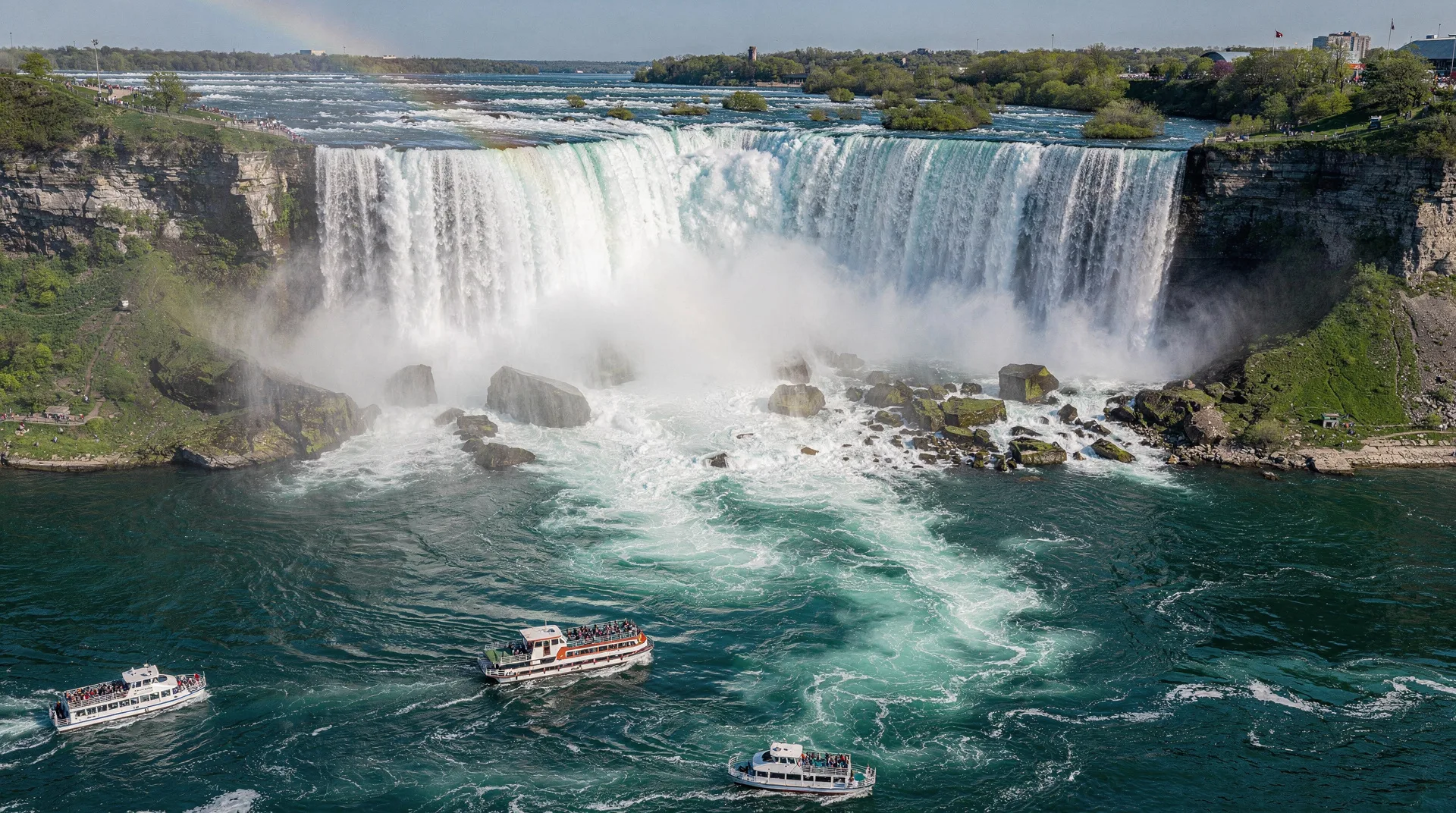
Niagara Falls in Winter: What to See & Do
Is Niagara Falls worth visiting in winter?
Yes — winter Niagara Falls is spectacular and dramatically less crowded than summer. The frozen mist creates ice formations on every surface around the falls, and the low winter light gives extraordinary photography conditions. Expect cold temperatures (-10°C to -5°C) and bring warm layers.
Niagara Falls in summer is a spectacle overwhelmed by spectacle — the falls are magnificent, but so are the crowds, the tour bus queues, and the Clifton Hill tourist strip at full intensity. Winter Niagara is a genuinely different experience: the volume of water over the falls is unchanged (the falls never freeze, despite persistent myth — the sheer quantity of water prevents it), but the surrounding environment transforms into something almost fantastical.
When the temperature drops below -10°C — a common occurrence from late December through February — the mist thrown up by Horseshoe Falls freezes on contact with every surface it reaches. Trees become coated in thick ice crystal formations; the walkway railings develop icicle fringes; the observation areas build up layers of ice that change shape daily as mist, wind, and temperature interact. The falls at the centre of this frozen landscape are thundering full-volume — a striking contrast.
This guide covers what to expect from a winter visit, the best things to see and do, practical cold-weather preparation, and why this might be the best time to visit Niagara Falls.
What winter actually looks like at Niagara Falls
The falls themselves do not freeze. Horseshoe Falls carries approximately 168,000 cubic metres of water per minute — a flow powerful enough to prevent ice formation in the main cascade. What does freeze is everything around the falls: the shoreline rocks, the railings and barriers of the observation areas, the trees in Queen Victoria Park, and the spray zone.
The ice bridge: In extreme cold winters, an ice bridge forms below the falls — a natural ice sheet that builds from both shorelines across the Niagara Gorge. In very cold years (temperatures sustained below -20°C), this ice bridge reaches significant thickness and has a dramatic, otherworldly appearance when viewed from the falls above. Ice bridges formed reliably before the upper-river regulatory structures were built in the 1950s; modern winters still produce ice bridges in cold years, though less consistently.
The ice formations: The most visually striking winter feature is the ice buildup in the immediate spray zone. Trees coated entirely in ice crystal, frozen waterfalls on the gorge walls, ice shelves building on the observation platforms — these create photographs that look enhanced but are accurately depicting what is there. The formations change daily; a morning after a very cold clear night produces the most dramatic accumulations.
Light: Winter light at Niagara is exceptional for photography. The low sun angle in December–February illuminates the mist and ice from the side, creating a warmth in the otherwise cold blue-white landscape. The falls are south-facing; best light for photography is mid-morning to early afternoon in winter (the sun is never high, so the “golden hour” effect lasts longer).
Winter events at Niagara Falls
Winter Festival of Lights
The Winter Festival of Lights is Niagara Falls’ main winter attraction — an illuminated display running from November through January. The festival covers Queen Victoria Park and surrounding streets with LED light displays, animated figures, and illuminated waterfall viewings. The falls themselves are lit in rotating colours each evening from dusk to approximately 10pm (falls illumination is a year-round feature, not exclusive to the festival, but the festival surrounds it with additional programming).
The festival draws a significant local and regional audience; it is less crowded than summer but busier than a regular winter weekend.
When it runs: Typically late November through the last week of January. Check the Niagara Parks website for the current year’s dates.
New Year’s Eve at the Falls
Niagara Falls’ New Year’s Eve celebration is one of Ontario’s largest — fireworks over the falls at midnight, illuminated falls, and a festive atmosphere in the hotel district. The Canadian side of the falls is the better viewing position; the fireworks are launched from both sides of the river. Accommodation books out months ahead for New Year’s Eve.
What to do at Niagara Falls in winter
The walkway along Horseshoe Falls
Table Rock — the main viewing platform at the crest of Horseshoe Falls — is open year-round. In winter, the spray coats the walkway and railing with ice, and the mist creates visible breath-like clouds around every visitor. The proximity to the falls at the Table Rock House is unchanged from summer; the winter experience of standing at the rail with the full force of the falls in front of you and the ice formations behind is actually more intense than the summer equivalent, precisely because the surrounding landscape is so transformed.
Wear appropriate footwear: The walkways can be icy — cleated boots or YakTrax ice grippers over regular boots are recommended in January and February. The Niagara Parks Commission salts and clears the main walkways but cannot prevent all icing.
Journey Behind the Falls
Journey Behind the Falls — the tunnel system cut through the rock behind Horseshoe Falls, leading to observation portals directly behind the curtain of water — is open year-round. In winter, the tunnel is noticeably warmer than the outside air (geothermal effect of the rock), and the portal viewpoints give the most intimate close-range view of the falls available. The experience is less crowded than summer; you can spend as long as you want at the portal without being jostled.
Bring the poncho: Mist still reaches the portals in winter, though less than in summer (the ice formations outside reduce spray somewhat). The tunnels are heated; the portals are not. Dress in warm layers that can be partially removed in the tunnels and replaced at the portals.
Book Journey Behind the Falls and Niagara winter experiencesThe Skylon Tower
The Skylon Tower on Robinson Street rises 160 metres above the falls and provides a bird’s-eye view over both falls and the gorge. In winter, the observation deck view is particularly dramatic — the white of the ice formations surrounding the falls contrasts with the dark water of the gorge, and on clear days the ice bridge (in cold winters) is visible below. The tower’s revolving restaurant serves a full dinner menu and makes a practical warm base for an extended winter visit.
Niagara-on-the-Lake in winter
The immaculately preserved 19th-century town 15 kilometres north of the falls is quiet in winter — the Shaw Festival theatre is dark, the summer tourists are gone — but the town itself is beautiful in snow. The wine country around NOTL operates differently in winter: the ice wine harvest, the most distinctive Ontario wine experience, happens when temperatures drop below -8°C and the Vidal Blanc grapes (left on the vine after the main harvest) freeze on the vine. Pressing the frozen grapes at this temperature produces a concentrated, sweet juice that ferments into the famous ice wine.
Ice wine tastings: Several Niagara-on-the-Lake wineries (Inniskillin, Peller Estates, Reif Estate) offer winter tastings including ice wine. This is available year-round, but visiting in January or February — when the ice wine has just been harvested — gives the opportunity to taste the current vintage.
The Gorge Discovery Trail (partial winter access)
The Niagara Gorge — the deep canyon carved by the falls over 12,000 years of recession upstream — offers hiking trails in three seasons but some sections are closed in winter when ice creates hazardous conditions on the trail. The upper gorge sections (Oakes Garden and accessible views from Queen Victoria Park) are open and provide good winter views. The lower gorge hiking trails re-open in April.
Practical cold-weather preparation
Temperature: Niagara Falls sits on the Ontario side of the Great Lakes; it receives lake-effect snow and cold from Lake Ontario and Lake Erie. January average temperatures range from -11°C (overnight) to -3°C (day), with wind chill frequently making it feel -15°C to -20°C in the spray zone near the falls. February is similar; December is milder (-5°C average high).
Clothing: Dressing for Niagara Falls in winter requires more layers than you think:
- Thermal base layer (wool or synthetic — never cotton in cold weather)
- Insulating mid-layer (fleece or down)
- Waterproof outer shell (the falls produce mist even in winter, which will wet an unprotected layer)
- Insulated, waterproof boots — essential; sneakers or fashion boots are wholly inadequate
- Warm hat covering ears
- Insulated gloves or mittens (mittens are warmer)
- Neck gaiter or scarf for wind protection at the falls railing
Camera care: Cold temperatures reduce battery life significantly — keep spare batteries warm inside a jacket pocket, and expect your phone battery to drain faster than usual. Camera lenses fogging when moved from cold to warm (inside a restaurant or the tunnel) can temporarily ruin a shot; give the camera 10–15 minutes to acclimate before using it in the cold.
Getting to Niagara Falls in winter
By car: Highway 420 from the QEW is straightforward in good weather. Ontario winter road maintenance is generally reliable on the 400-series highways; check 511.on.ca for road conditions before travelling in active snowfall.
By GO Bus: GO Transit operates Route 12 service from Toronto’s Union Station to Niagara Falls year-round. Winter schedules may differ slightly from summer; check gotransit.com. The bus is the easiest option for those without winter driving experience. See our GO Transit tourist guide for details.
Book a Niagara Falls winter experience tour from TorontoWhere to stay at Niagara Falls in winter
Falls-view hotels: The Marriott Fallsview, Sheraton Fallsview, and Embassy Suites by Hilton all offer rooms with direct falls views. Rates drop 40–60% from summer peaks — a premium falls-view room that costs CAD 400/night in August may be CAD 180–220 in January. This makes winter the best value window for falls-view accommodation.
Niagara-on-the-Lake: The Prince of Wales Hotel and the Gate House Hotel are both open year-round, quieter than the falls accommodation zone, and closer to wine country.
Budget options: Motels and standard hotels in the Clifton Hill area drop to very low winter rates (CAD 80–130/night). The tourist strip is less overwhelming in winter when most of its attractions are closed.
Winter vs summer: the honest comparison
| Factor | Summer | Winter |
|---|---|---|
| Crowds | Very high | Low |
| Price | Peak | 40–60% less |
| Ice formations | None | Spectacular |
| Falls volume | High | Slightly lower (regulated) |
| Boat cruise | Yes | No (closed November–March) |
| Journey Behind the Falls | Yes | Yes |
| Evening illuminations | Yes | Yes |
| Walking comfort | Easy | Cold, ice on paths |
| Photography | Good | Exceptional (low light, ice) |
| Niagara-on-the-Lake | Busy | Quiet; ice wine season |
The boat cruise — the Hornblower Niagara — is the main experience unavailable in winter (the boat operates May through October). If the boat ride is the centrepiece of your Niagara visit, come in summer. For photography, uncrowded walkways, and the ice formations, winter is categorically better.
Related guides
- Toronto vs Niagara Falls as a base — whether to stay in Toronto or at the falls
- Best time to visit Ontario — full seasonal guide
- GO Transit tourist guide — getting to Niagara from Toronto without a car
- Ontario ski resorts guide — combining Niagara with a ski trip to Ontario’s resorts
Frequently asked questions about Niagara Falls in Winter: What to See & Do
Do Niagara Falls freeze in winter?
The main falls themselves do not freeze — the volume of water (approximately 168,000 cubic metres per minute over Horseshoe Falls) is too great for ice formation in the cascade. What freezes is everything around the falls: the mist crystallises on surfaces, trees, and railings to create ice formations. An “ice bridge” — a sheet of ice below the falls in the gorge — can form in very cold winters.
Is the boat cruise available in winter?
No — the Hornblower Niagara Cruises boat (and the former Maid of the Mist) operates from May through October only. The boat is the most famous single activity at Niagara Falls; if this is your priority, plan a summer or fall visit. Winter offers other experiences in compensation.
Is it safe to visit Niagara Falls in winter weather?
Yes — the main walkways and viewing areas are maintained and accessible year-round. Icy paths require appropriate footwear (see above), and some lower gorge hiking trails close in winter due to ice hazard. The Table Rock viewing area, Journey Behind the Falls, and the Skylon Tower are all safely accessible. Drive carefully on secondary roads in active snowfall conditions.
When is the best winter month to visit Niagara Falls?
January is typically the best month for ice formations — sustained cold temperatures allow the most dramatic ice buildup around the falls. December is milder and the Winter Festival of Lights is running, making it the most festive option. February is similar to January for ice formations. Mid-January through mid-February is the window for the most spectacular winter conditions.