Montreal to Mont-Tremblant: the Laurentians in a day
What's the best day trip from Montreal to Mont-Tremblant?
Drive 90 minutes north on Highway 15 to reach Mont-Tremblant Resort. In winter, ski 102 runs on eastern Canada's best mountain. In summer, hike or bike the resort and explore Mont-Tremblant National Park. The village has excellent restaurants year-round.
Mont-Tremblant is the flagship of the Laurentian Mountains — and the most celebrated ski resort in eastern Canada. At 875 metres, it is not a tall mountain by western Canadian standards, but it compensates with 102 runs spread across four mountain faces, a genuinely charming resort village designed to resemble a traditional Quebec town, and a setting within the Laurentian Shield that is stunning in all four seasons. From Montreal, it is just 140 km north on Highway 15 — a 90-minute drive that feels like a transition between two completely different worlds.
The decision to come to Tremblant as a day trip versus an overnight stay depends largely on what you want to do. Serious skiers who want full days on the mountain should stay over; the lift lines on winter weekends can be long, and an early start from the resort makes a difference. But for those who want to combine a morning on the mountain with a pleasant afternoon in the village, or those visiting in summer for hiking and the national park, the day trip formula works well.
| At a glance | |
|---|---|
| Where | Mont-Tremblant Resort, Laurentians, about 140 km north of Montreal |
| Cost | Lift tickets roughly CAD 100-130/day; free hiking/village access in summer |
| Time needed | A full day; overnight recommended for a full ski day |
| Getting there | Highway 15 North then Highway 117 North by car, or seasonal shuttle/bus |
| Best time | January-March for skiing, mid-October for foliage |
Overview: the Tremblant landscape
The Laurentian Mountains are among the oldest mountain ranges on Earth — ancient worn-down remnants of what were once peaks as high as the Himalayas, now rounded by billions of years of erosion into forested hills and ridges above a landscape of Shield lakes and rivers. Mont-Tremblant, the highest peak in the Laurentians at 875 metres, has been a resort destination since 1939, making it one of the oldest ski areas in North America.
If you would rather not drive, you can reserve guided tours in Mont-Tremblant in advance.
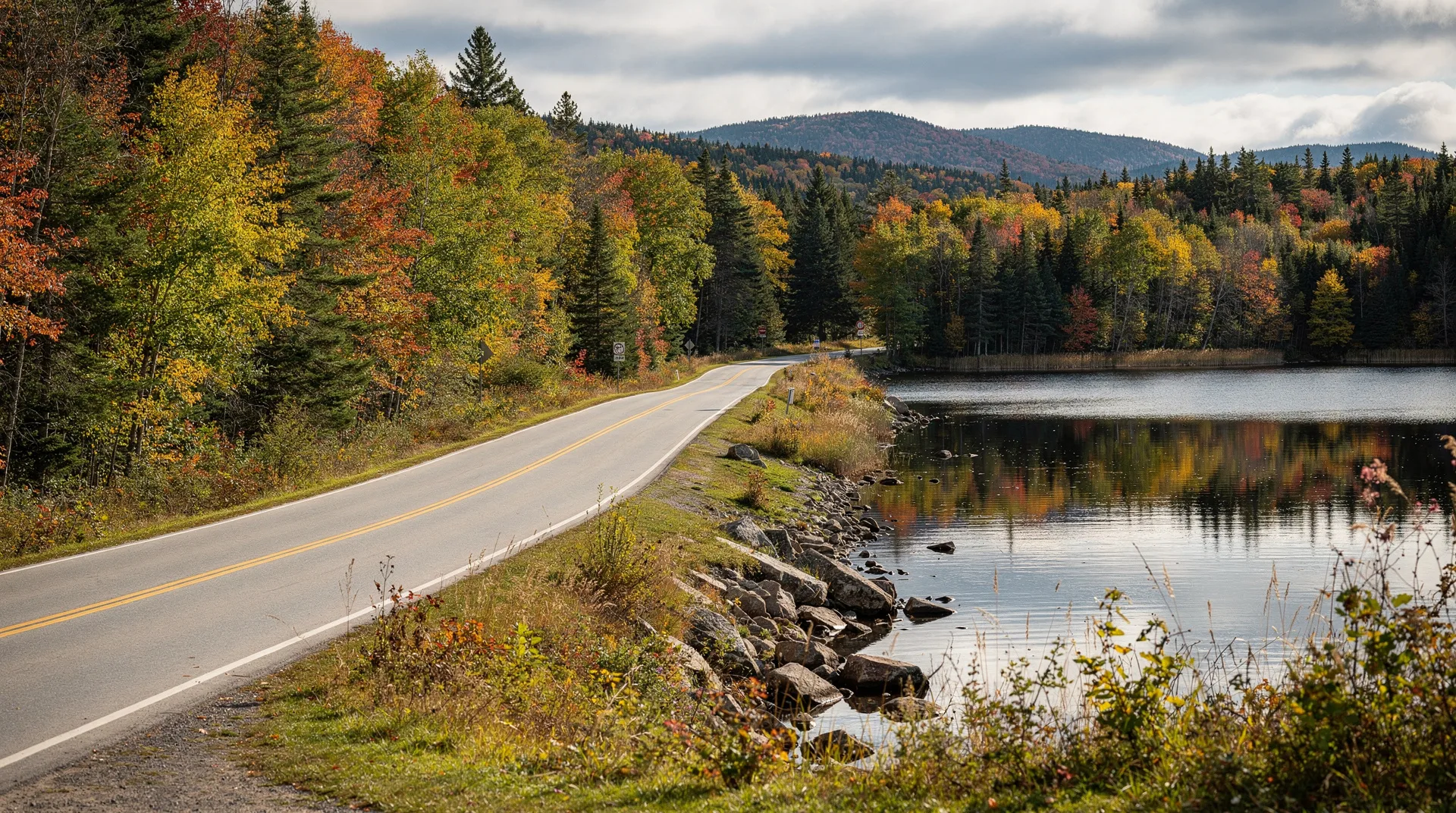
The mountain’s name comes from Algonquin oral tradition: Manitou (the great spirit of Algonquin belief) was said to make the mountain tremble when humans disturbed the natural order. Tremblant translates directly as “trembling” — and the peaks around the resort, particularly in late October when the forests flame orange and gold, do seem to tremble with colour.
The resort and national park are adjacent but distinct. The Mont-Tremblant Resort is a private ski and summer adventure operation. Mont-Tremblant National Park, located about 10 km north of the resort, is a provincial park protecting 1,510 square kilometres of Shield landscape with canoe routes, hiking trails, and exceptional wildlife.
How to get from Montreal to Mont-Tremblant
By car: Take Highway 15 North (Autoroute des Laurentides) from Montreal toward Saint-Jérôme, then continue on Highway 117 North to Mont-Tremblant. The resort village is just east of the town of Mont-Tremblant on Route 327. Total distance is approximately 140 km; journey time is 90 minutes in normal traffic. On Friday afternoons and winter ski weekends, traffic through Saint-Jérôme and along Highway 117 can extend this to 2.5 hours.
By bus: Galland bus services connect Montreal’s downtown bus terminal to Mont-Tremblant in ski season. Shuttle services also operate from downtown Montreal and Montreal-Trudeau Airport in winter. Check the resort website for current transportation partners.
Driving tips: The Highway 15 corridor through the lower Laurentians passes through Saint-Sauveur, Sainte-Adèle, and Sainte-Agathe-des-Monts — all appealing small towns that can add interesting stops on the way. Plan an extra 30-45 minutes if you want to stop in Saint-Sauveur for breakfast on the way north.
Parking: Free parking is available at the base of the mountain near the Cabriolet gondola and in peripheral lots. The village core has limited paid parking. In peak ski season, arrive before 8:30 AM to park close to the lifts.
What to see and do at Mont-Tremblant
Skiing and snowboarding
Mont-Tremblant’s ski terrain is the most varied in eastern Canada. The 102 runs spread across four faces — South, North, Edge, and Versant Soleil (sunny slope) — give a good distribution across all ability levels. The signature runs are on the South and North faces:
South Face: The classic Tremblant terrain, with long groomed blue runs ideal for intermediate cruising and a series of black diamond mogul pitches that are challenging by any standard. The runs here get good morning sun.
North Face: More sheltered and shaded, meaning better snow preservation later in the season. The black and double-black runs here include some of the most challenging terrain in eastern Canada. Flying Mile and Expo are the most celebrated.
Versant Soleil: Added to the resort in 2002, the sunny slope has an additional 16 runs with a gondola access and a base area with its own restaurants. Less crowded than the main faces on busy weekends.
Tree skiing and glades: Several glade runs through the trees on the North Face offer excellent powder skiing after snowfalls and are among Tremblant’s best-kept secrets for experienced skiers.
The ski season typically runs from mid-November to mid-April, with the most reliable conditions in January, February, and March. Snowmaking covers approximately 75% of the mountain.
Summer hiking and mountain biking
Mont-Tremblant Resort’s summer season runs from late June to mid-October. The gondolas operate for scenic rides to the summit, and a network of hiking and mountain biking trails spread across the mountain and surrounding forest.
The most popular summer activity on the mountain itself is the hiking circuit to the North Summit — a 2-3 hour return walk with excellent views over the Laurentian landscape and Lac Tremblant below. Mountain bike trails range from gentle cross-country paths to demanding downhill runs; bike rentals are available at the resort.
The resort village
The pedestrian village at the base of the mountain is Tremblant’s most distinctive element. Built by Intrawest in the 1990s to evoke a traditional Quebec village, the village is brightly painted in ochre, terracotta, blue, and green — creating a cheerful, compact pedestrian environment unlike typical North American resort bases. The central Place Saint-Bernard is surrounded by restaurants, boutiques, a spa, and a casino, with the mountain gondolas departing from the upper end.
The village works in all seasons. In winter, the skating rink at Place Saint-Bernard is the social hub; in summer, the terraces fill with hikers and mountain bikers. The mix of casual pubs, mid-range restaurants, and a couple of more ambitious dining rooms means you can eat well at any budget.
Lac Tremblant
Lac Tremblant, at the base of the mountain’s south face, is one of the most beautiful lakes in the Laurentians — a long, narrow lake framed by forested ridges, with the resort village at its northern end. In summer, swimming, kayaking, stand-up paddleboarding, and boat tours operate on the lake. The lake beach at the village is popular on warm summer days.
Mont-Tremblant National Park
The provincial park begins about 10 km north of the resort and protects a classic Shield landscape — 400+ lakes, winding rivers, boreal and mixed forests, and an abundant wildlife population including moose, black bears, wolves, ospreys, and loons. The park is principally a wilderness destination: canoe routes ranging from day trips to week-long expeditions, hiking trails including the multi-day La Diable Valley circuit, and backcountry camping.
For a day trip add-on, the most accessible section of the park is the La Diable sector, reached from Saint-Donat on the southern edge. A 2-3 hour canoe paddle on the Rivière du Diable, or the Centenaire trail hiking circuit (8 km), gives a taste of the park without requiring a full wilderness commitment.
Browse Montreal day trip and Laurentians tour optionsWhere to eat at Mont-Tremblant
La Savoie, resort village: A consistently excellent Savoyard-style restaurant (fondue, raclette, tartiflette) perfectly suited to the mountain atmosphere. Reservations recommended in ski season.
Aux Truffes, resort village: The most ambitious table at Tremblant, with a seasonal menu emphasising Quebec produce and an extensive wine list. One of the best meals available in the Laurentians. Reservations essential.
Le Shack, resort village: A lively casual restaurant with a wood-fired oven, craft beers, and a broad menu. The patio is excellent in summer; the fireplace inside makes it welcoming in winter.
Saint-Jovite (Mont-Tremblant town): The actual town of Mont-Tremblant (Saint-Jovite neighbourhood), 15 minutes south of the resort on Highway 117, has a main street with good local restaurants and less resort pricing. La Diable brewery, with its own excellent craft beers, is located here and is a great post-mountain stop.
Saint-Sauveur: On the drive back to Montreal, the small town of Saint-Sauveur (1 hour south of Tremblant) has the best restaurant density of any Laurentian town. A stop here for dinner before the final Montreal run makes for a good end to the day.
Practical tips for the Mont-Tremblant day trip
Leave Montreal by 7:00 AM on ski weekends: The lift queues at Tremblant on busy Saturdays and holidays can be long by 10:00 AM. An early departure from Montreal, arriving at the resort by 8:30 AM, gives you first tracks and the best part of the day before crowds build.
Book lift tickets online: Online advance booking saves money on lift tickets and guarantees access. Day-of window prices are the highest; multi-day and early booking discounts are substantial.
Day trip vs. overnight for skiing: If you are primarily a skier, an overnight stay gives you a full day on the mountain plus possible morning runs on a second day. The day trip formula works best for those combining skiing with village time, or visiting in summer when the mountain does not require maximum time allocation.
Rental equipment: Ski and snowboard rentals are available at the resort base. Book online in advance for the best selection and to skip the morning rental queue.
Consider the shoulder seasons: January weekdays are often excellent at Tremblant — good snow, minimal queues, and lower rates than weekends or holidays. Late September is spectacular for fall foliage hiking with almost no crowds.
When to visit Mont-Tremblant from Montreal
Winter (mid-December to March): Peak ski season. January and February offer the best snow conditions. Christmas week and February school break (relâche) are the busiest and most expensive periods. November and early December have less reliable snow cover.
Summer (late June to September): The resort activates its summer programming from late June. Hiking, mountain biking, lake swimming, and the gondola scenic ride are all available. The national park is at its most accessible. Less crowded and less expensive than winter.
Autumn (October to mid-November): The most beautiful time in the Laurentians. The maple and birch forests turn brilliant orange, red, and gold from mid-October, with peak colour typically in the second or third week of October. The resort is largely quiet, but the scenery makes this one of the most rewarding times to visit. The national park hiking is excellent in autumn.
Spring (April to June): The ski season ends in mid-April; summer activities begin in late June. The interim is the quietest period. April can have excellent late-season skiing on the upper runs, and the maple syrup season (late March to April) is a local tradition worth experiencing at a nearby sugar shack (cabane à sucre).
Going deeper on skiing at Tremblant
If skiing is the main draw, the day-trip overview above only scratches the surface. Our dedicated Mont-Tremblant skiing guide covers lift ticket strategy, terrain by ability level, and season timing in more depth, and the Mont-Tremblant vs Mont-Sainte-Anne comparison is useful if you’re weighing Quebec’s two biggest ski destinations against each other. For the Laurentians region more broadly — beyond just the resort — the towns along Highway 15 offer their own worthwhile stops on a longer trip.
Who is this trip for
Mont-Tremblant is ideal for skiers and snowboarders of all levels who want the best eastern Canada mountain experience without flying to western Canada. Families find the resort well-equipped with ski school, beginner terrain, and village amenities. Summer visitors who prefer active outdoor recreation over urban tourism will appreciate the hiking, biking, and paddling opportunities. Couples seeking a romantic mountain break in a characterful village setting find Tremblant particularly appealing year-round.
For those more interested in history and urban culture, the Quebec City day trip is the better choice. For wine and rural Quebec landscapes, the Eastern Townships is the alternative. See the full Montreal day trips guide for a complete overview.
Frequently asked questions about the Montreal to Mont-Tremblant day trip
How far is Mont-Tremblant from Montreal?
Mont-Tremblant Resort is approximately 140 km north of Montreal, about a 90-minute drive on Highway 15 North and Highway 117 North. Winter ski weekends and Friday afternoons can extend the journey to 2-2.5 hours.
Is Mont-Tremblant worth a day trip from Montreal?
For skiers, absolutely — the mountain is the best in eastern Canada and the 90-minute drive is short enough to make a day on the mountain worthwhile. For summer visitors, the combination of resort village, lake, and proximity to the national park provides a full day. Those who want to ski hard from first lift to last may prefer to stay overnight.
What is the skiing like at Mont-Tremblant compared to Whistler?
Tremblant’s vertical (686 metres) is significantly less than Whistler-Blackcomb (1,609 metres), and the mountain is smaller in total skiable area. However, the run quality, grooming, and variety of terrain are excellent by eastern Canadian standards, and the resort atmosphere — particularly the village — is more intimate and characterful than Whistler. For purely challenging big-mountain skiing, Whistler wins; for a complete resort experience within a short drive of Montreal, Tremblant is the best option in eastern Canada.
Are there activities at Mont-Tremblant besides skiing?
Yes, year-round. In winter: snowshoeing, ice skating, dog sledding, spa visits. In summer: hiking, mountain biking, lake swimming, kayaking, zip-lining. The village casino (Casino de Mont-Tremblant) operates year-round. The resort also hosts concerts, festivals, and culinary events throughout the year.
What towns are worth stopping at on the drive from Montreal to Mont-Tremblant?
Saint-Sauveur, about 55 km north of Montreal, has an excellent main street with good breakfast options and a pleasant village atmosphere. Sainte-Adèle and Sainte-Agathe-des-Monts further north are charming small towns with lake views and local restaurants. Adding a 30-minute stop in any of these on the drive south makes for a pleasant end to the day.
When does Mont-Tremblant ski season open and close?
The ski season at Mont-Tremblant typically opens in mid-November (on limited terrain, usually November 18-22) and runs through mid-April, with peak conditions from January through March. Exact dates vary by year depending on temperatures. The resort’s website posts updated opening and closing dates each season.
How does Mont-Tremblant compare to Mont-Sainte-Anne?
Both are major Quebec ski destinations, but Tremblant has more terrain variety, a more polished resort village, and better proximity to Montreal, while Mont-Sainte-Anne (near Quebec City) is closer if you’re basing yourself there. See the Mont-Tremblant vs Mont-Sainte-Anne comparison for the full breakdown.
Is it better to do Mont-Tremblant or the Eastern Townships as a day trip from Montreal?
They suit different travellers. Tremblant is the choice for skiing, hiking, and mountain-resort atmosphere; the Eastern Townships is the choice for wine, cider, and gentle pastoral scenery. Both are roughly the same driving time from Montreal, so the decision comes down to what kind of day you want.