Montreal to Eastern Townships: wine, cider and rural Quebec
What's the best day trip from Montreal to the Eastern Townships?
Drive 1.5 hours southeast on Highway 10 to the Brome-Missisquoi wine region around Dunham. Follow the Route des vins to taste Quebec wines and ice cider, explore covered bridges, and stop in Knowlton or Magog for lunch. Best in autumn for harvest season.
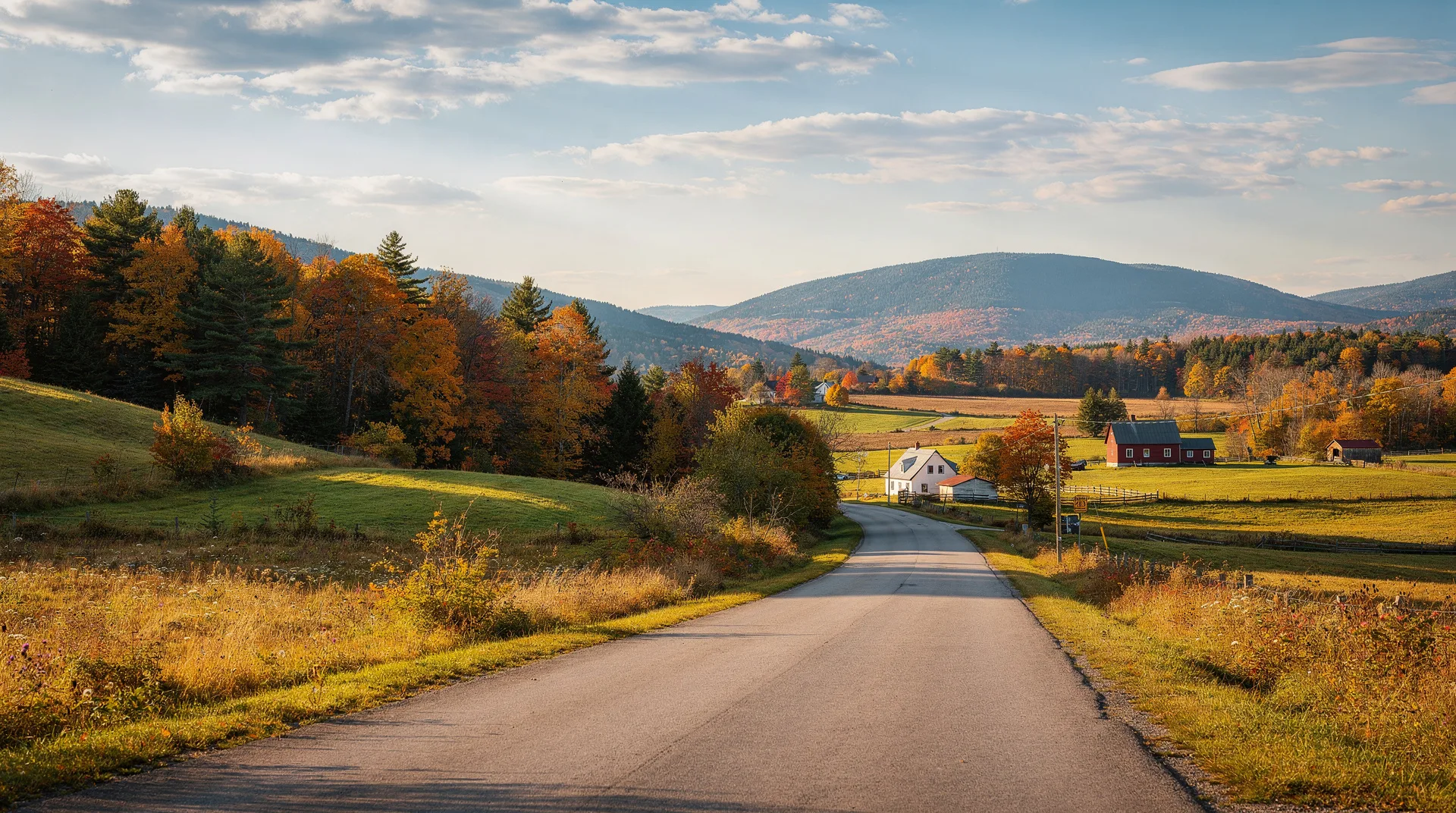
The Eastern Townships — Cantons-de-l’Est in French — occupy a distinctive corner of Quebec that feels unlike anywhere else in the province. Settled largely by United Empire Loyalists in the late 18th and early 19th centuries, the region developed a bilingual English-French culture that persists today: Anglican churches alongside Catholic ones, English-language schools beside French-language collèges, and a culinary tradition that blends Quebec terroir with Anglo-American farming heritage. The landscape is gentle and pastoral — rolling hills, river valleys, orchards, covered bridges, and lakes — a pleasing contrast to the drama of the Laurentians to the north.
From Montreal, the Eastern Townships begin just 100 km southeast on Highway 10, making them the closest genuine wine and rural food destination to the city. The Brome-Missisquoi wine appellation around Dunham produces some of Quebec’s best wines, including the region’s famous ice cider (cidre de glace) — a uniquely local product made from apples concentrated by winter frost. Add the cultural appeal of towns like Knowlton and Magog, the walking trails around Lac Memphremagog, and the autumn apple harvest season, and you have one of the most pleasurable day trips from Montreal.
| At a glance | |
|---|---|
| Where | Brome-Missisquoi wine country and Magog, about 100-130 km southeast of Montreal |
| Cost | Wine tastings around CAD 10-15 per person; free to drive the route and walk villages |
| Time needed | A full day; 2-3 hours for the wine route alone |
| Getting there | Highway 10 East by car (no practical bus/train option) |
| Best time | September-October harvest season |
Overview: what makes the Eastern Townships special
The geography of the Eastern Townships is defined by the Appalachian foothills running northeast from Vermont and New Hampshire into Quebec. The mountains here are low (the highest peak, Mont Sutton, reaches only 968 metres) but the rolling agricultural landscape between them is beautiful, particularly in the valley of the Missisquoi River south of Dunham. Covered wooden bridges — seven surviving examples in Brome County alone — are one of the most characteristic features of the landscape, remnants of 19th-century rural engineering.
The wine culture is the region’s newest and arguably most exciting development. The Brome-Missisquoi appellation now counts over 25 wine estates, mostly concentrated in the Dunham area, producing red wines from cold-hardy grape varieties (Marquette, Frontenac Noir, Sabrevois) alongside white wines from Vidal, Seyval Blanc, and Riesling. The region’s most distinctive contribution to Quebec’s food culture is ice cider — concentrated apple juice left to freeze outdoors through the Quebec winter, then fermented into an amber, intensely sweet dessert beverage. Several producers around Hemmingford and Compton make exceptional examples.
How to get from Montreal to the Eastern Townships
By car: Take Highway 10 East (Autoroute des Cantons-de-l’Est) from Montreal’s south shore. Exit 68 (Route 235 toward Dunham) drops you into the heart of the wine country. Total distance to Dunham is approximately 100 km; journey time is about 1.5 hours. For Magog and Lac Memphremagog, continue on Highway 10 to Exit 115; the drive is about 130 km and takes 1.5-1.75 hours.
Route options: The direct Route 235 south from Cowansville to Dunham is the fastest approach to the wine country. For a more scenic route, take the Chemin des Cantons secondary roads from Saint-Jean-sur-Richelieu south through Dunham to Sutton and Knowlton — a picturesque alternative that passes through rolling farmland and several small villages.
By bus: There is no convenient direct bus service to the wine country around Dunham. Greyhound/Orléans services reach Sherbrooke (the region’s main city) but not the small towns where the wine estates are concentrated. This is primarily a car trip.
Parking: All wine estates and most village centres have free parking. Dunham, Knowlton, and Magog all have street parking.
What to see and do in the Eastern Townships
The Route des vins: Dunham and Brome-Missisquoi wine country
The Route des vins (wine route) is a self-guided driving circuit linking the main wine estates of the Brome-Missisquoi appellation. The circuit is centred on Dunham, a small village 30 km south of Cowansville, and loops through Stanbridge East, Saint-Armand, and Pike River — a total driving distance of about 40 km, not counting vineyard visits.
Several estates stand out:
Vignoble de l’Orpailleur (Dunham): One of the oldest and best-known Quebec wineries, established in 1982. The estate makes consistently excellent Vidal, Seyval, and ice wine. The tasting room and terrace are welcoming.
Vignoble Les Trois Clochers (Dunham): Produces some of the most accomplished red wines in Quebec, particularly the Marquette varietal. The estate has beautiful views over the Appalachian foothills.
Domaine Pinnacle (Frelighsburg): The most celebrated ice cider producer in Quebec, with an international reputation. The estate also makes apple-based eau-de-vie. Tastings are available and the setting — a 200-year-old apple farm in the Pinnacle valley — is beautiful.
Vignoble du Marathonien (Havelock): A family estate known for its Vidal late harvest and ice wine, with a welcoming tasting room.
Allow 2-3 hours for the wine route if you plan to stop at 3-4 estates. Most estates offer 3-5 wines for tasting for $10-15 per person.
Knowlton: heritage village and Brome Lake
Knowlton, 20 minutes north of Dunham, is one of the most charming villages in the Eastern Townships — a small collection of heritage commercial and residential buildings around a central square near the shore of Brome Lake. The main street (Lakeside Road) has bookshops, antique dealers, galleries, clothing boutiques, and a good selection of restaurants. The Brome County Historical Museum, housed in a 19th-century firehall and train station, tells the story of the Loyalist settlement period with genuine depth.
Knowlton is also famous in Quebec for its duck — Brome Lake Duck (canard du lac Brome) is raised on the lake’s farms and sold across the province, making duck dishes on local restaurant menus a genuine regional speciality.
Magog and Lac Memphremagog
Magog is a small city (population 27,000) at the northern end of Lac Memphremagog, a long, narrow lake stretching 50 km south across the US border into Vermont. The lakefront promenade in Magog, the beach, and the pedestrian main street (rue Principale) make it the most complete urban destination in the Townships for a day visit.
The lake itself is excellent for cycling — the Route Verte cycling trail follows the western shore for most of its length — and for kayak and canoe excursions from the town beach. The view south down Memphremagog from Magog’s lakefront, with the Appalachian ridges receding into Vermont, is one of the most picturesque lake panoramas in Quebec. If you would rather not drive, compare guided tours from Montreal before you book.
The Orford Arts Centre (Centre d’arts Orféo), 8 km west of Magog in Orford National Park, hosts the prestigious Orford Music festival each summer and is set in beautiful forest parkland around Lac Stukely.
Orford National Park
Orford National Park, centred on Mont Orford (853 metres), is a four-season provincial park 20 minutes north of Magog. The park offers hiking in summer (the 7 km summit circuit to the top of Mont Orford gives excellent panoramic views), skiing in winter (a modest but enjoyable ski area), and exceptional autumn foliage walks in October. Lac Stukely within the park is one of the most beautiful small lakes in the region.
Apple picking and cider tasting
The eastern Townships are the apple capital of Quebec. September and October are prime season for apple picking (cueillette de pommes) at farms around Rougemont (on the highway north of the Townships) and the estates around Dunham and Hemmingford. Many orchards are family-friendly, offering pick-your-own experiences followed by cider and apple product tastings.
Rougemont, about 60 km southeast of Montreal (technically just north of the Townships on Highway 10), is the most concentrated apple-producing area and the most accessible for a half-day orchard visit before continuing south into the wine country.
Browse Montreal day trip and excursion optionsWhere to eat in the Eastern Townships
Le Bouchon, Knowlton: A welcoming bistro on the main Knowlton street serving regional Quebec cuisine with strong emphasis on local produce. The duck dishes (Brome Lake duck confit, duck terrine) are excellent.
Auberge West Brome, West Brome: Set in a heritage inn near Brome Lake, this restaurant is one of the most accomplished tables in the Brome region, with a seasonal menu and a strong local wine and cider list.
Le Dock Brasserie Artisanale, Magog: A brewpub on the Magog waterfront producing quality local craft beers alongside solid pub food. The lakefront terrace is excellent in summer.
L’Épicurieux, Dunham: A refined bistro in the heart of wine country, serving a market-driven menu that pairs beautifully with wines from surrounding estates. Reservations recommended, particularly in summer and harvest season.
Vignoble de l’Orpailleur restaurant, Dunham: The estate’s restaurant serves light lunches and platters designed around wine pairing. Eating on the vineyard terrace overlooking the vines is a quintessential Townships experience.
Practical tips for the Eastern Townships day trip
Call ahead to wine estates: While most estates welcome walk-in visitors for tastings, some require appointments, particularly in off-season. A quick phone call the day before avoids disappointment.
Designate a driver: The wine route involves multiple tastings at multiple estates. Designate a non-drinking driver in advance, or limit tasting portions and space out visits with food. Quebec has strict impaired driving laws with serious consequences.
Go in September or October: The harvest season is simply the best time for this trip. Apple orchards are in full operation, wine estates are harvesting, cideries are producing new cider, and the fall foliage over the Appalachian hills is spectacular.
Combine Dunham wine country and Magog: These two areas are about 60 km apart and work well in a single day — morning wine route around Dunham, lunch at an estate, afternoon in Magog for the lakefront walk and a late lunch or early dinner.
Check the Orford Music Festival dates: If visiting in summer (late June to mid-August), an evening concert at the Orford Arts Centre adds a memorable cultural dimension to the day — or provides a reason to stay for dinner and drive back to Montreal after dark.
When to visit the Eastern Townships from Montreal
Autumn (September to mid-October): The best season by a significant margin. Apple and grape harvests are in full swing, new ciders and ice wines are being released, and the Appalachian foothills turn brilliant red, orange, and gold. Peak fall colour is typically in the second week of October.
Summer (June to August): All wine estates are open, Lac Memphremagog is warm enough for swimming, and the Orford Music Festival provides cultural programming. Summer is excellent but the wine estates are at their most crowded on summer weekends.
Winter (December to March): Several wine estates and cideries remain open for winter tastings, and ice wine and ice cider production is at its most active in January and February (when apple juice is left in outdoor tanks to freeze). Cross-country skiing in Orford National Park and a warm fireplace lunch at an estate restaurant make for a distinctive winter day.
Spring (April to May): Maple syrup season (late March to April) is celebrated across the Townships with cabane à sucre (sugar shack) experiences — traditional maple meals eaten in the sugar shack as the sap is boiling. Several farms around the region offer these experiences; they are as much cultural performance as meal.
Eastern Townships by season at a glance
| Season | Weather | Crowds | Highlight |
|---|---|---|---|
| Spring (Apr-May) | Cool, thawing | Low | Maple sugar shacks (cabane à sucre) |
| Summer (Jun-Aug) | Warm, 20-28°C | Busy on weekends | Lake swimming, wine estate terraces |
| Autumn (Sep-mid Oct) | Mild, cooling | Moderate-high | Grape/apple harvest, ice cider release, foliage |
| Winter (Dec-Mar) | Cold, snowy | Low | Winter tastings, cross-country skiing at Orford |
The full route des vins in context
For visitors deciding between Quebec’s two main rural wine-and-scenery regions, it’s worth comparing this trip against the Eastern Townships wine route in more depth, and against the alternative to the north: see our Laurentians vs Eastern Townships comparison if you’re deciding which region deserves your one available day from Montreal.
Who is this trip for
The Eastern Townships day trip suits food and drink enthusiasts best — particularly those interested in local wine and cider culture, regional Quebec cuisine, and the distinct culture of a bilingual border region. Couples looking for a relaxed, scenic day with excellent eating and drinking will find it one of the most satisfying trips from Montreal. History and heritage travellers appreciate the Loyalist architecture and the Brome County Museum.
Active visitors can add cycling the Route Verte along Memphremagog or hiking in Orford National Park. Families with children might prefer the apple picking (September-October) and the beach at Magog. Those seeking high-energy adventure or iconic landmarks should consider Quebec City or Mont-Tremblant instead.
See the full Montreal day trips guide for a complete overview of all options.
Frequently asked questions about the Montreal to Eastern Townships day trip
How far is the Eastern Townships from Montreal?
The closest wine estates near Dunham are about 100 km from Montreal, a 1.5-hour drive southeast on Highway 10. Magog and Lac Memphremagog are 130 km from Montreal, about 1.5-1.75 hours. Sherbrooke, the region’s main city, is 155 km and approximately 1.75 hours.
What is ice cider and where can I try it?
Ice cider (cidre de glace) is a Quebec invention — a dessert cider made by leaving apple juice to concentrate in freezing winter temperatures before fermentation. The result is a golden, intensely sweet, complex beverage with high sugar concentration (similar to an ice wine). Domaine Pinnacle in Frelighsburg is the most internationally acclaimed producer; several other estates around Dunham and Hemmingford also make excellent versions. Most estates offer tastings.
Is the Route des vins suitable for cycling?
The Route des vins between the wine estates around Dunham is on secondary roads with moderate traffic, making it suitable for experienced cyclists. The terrain is gently rolling. However, cycling and wine tasting obviously create logistical challenges; a cycling tour of the area without stopping for wine tastings is more practical, or cycling between two or three estates with a designated driver accompanying by car is a reasonable compromise.
What is Knowlton known for?
Knowlton is the most distinctive village in the Eastern Townships — a well-preserved heritage commercial district with an English-French cultural character unlike most of Quebec. It is particularly known for Brome Lake Duck (canard du lac Brome), a locally bred duck raised in the surrounding farms and widely sold across Quebec. Knowlton’s duck farms and the Brome County Historical Museum are its main specific attractions.
Are the Eastern Townships English-speaking?
The Eastern Townships are officially part of French-speaking Quebec, with French as the primary language of public life. However, the region has a larger English-speaking minority than most of Quebec — particularly in the towns of Knowlton, Sutton, Magog, and Sherbrooke. English is widely understood and spoken in tourist contexts, though using basic French courtesies is appreciated and will enhance your experience.
What is the difference between the Eastern Townships and Charlevoix?
Both are celebrated Quebec rural destinations with strong food cultures. Charlevoix (northeast of Quebec City along the St. Lawrence) is more dramatic in landscape — steep river valleys, beluga whale viewing, world-class restaurants in a UNESCO Global Geopark. The Eastern Townships are gentler in landscape, wine-focused, more accessible from Montreal, and have a distinctive bilingual character from their Loyalist history. Charlevoix is better for dramatic scenery and celebrity-chef dining; the Townships are better for wine, cider, and accessible pastoral beauty.
Can I visit the Eastern Townships without a car?
Not practically. Bus services reach Sherbrooke, the region’s main city, but the small towns and wine estates where the actual sights are concentrated have no meaningful transit connection. A rental car or an organised tour from Montreal is required to see the wine route, Knowlton, and Magog in a single day.
How does this compare to a day trip to Mont-Tremblant?
Both are roughly 90-130 km from Montreal and take about the same driving time, but the character is very different. The Mont-Tremblant day trip is built around a mountain resort with skiing or hiking; this trip is built around wine, cider, and pastoral villages. Food and wine travellers should choose the Townships; those wanting a mountain or resort atmosphere should choose Tremblant.