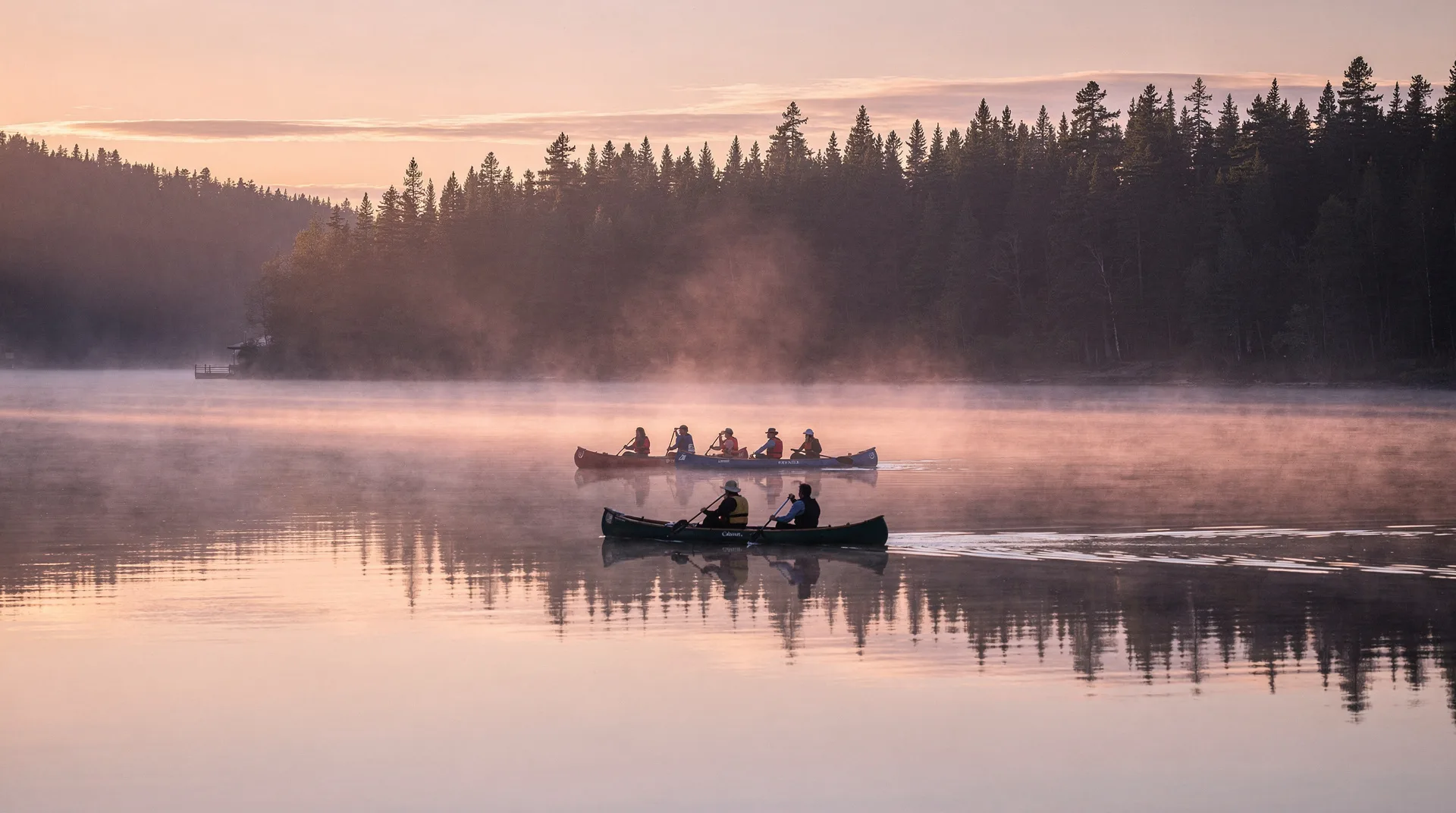
Sea kayaking in Canada: BC Gulf Islands, Johnstone Strait, and Bay of Fundy
Where is the best sea kayaking in Canada?
The BC Gulf Islands offer sheltered, beginner-friendly paddling with marine wildlife. Johnstone Strait on northern Vancouver Island is world-class for kayaking with orca whales. The Bay of Fundy in New Brunswick and Nova Scotia offers dramatic tidal paddling with the highest tides on Earth. All three regions have guided multi-day trips and single-day rentals.
Canada’s coastlines are among the most spectacular sea kayaking environments on Earth.
| At a glance | |
|---|---|
| Where | BC Gulf Islands, Johnstone Strait (northern Vancouver Island), Bay of Fundy |
| Cost | Around CAD 95-160 for a single day guided paddle; multi-day trips from around CAD 350 |
| Time needed | Half a day for a first taste; 3-8 days for a full multi-day expedition |
| Getting there | Gulf Islands by BC Ferries from Vancouver or Victoria; Johnstone Strait via Telegraph Cove, around 8 hours north of Victoria |
| Best time | June-September on the Pacific coast; July-September in the Bay of Fundy |
Sea kayaking requires no prior experience to enjoy as a guided activity. Modern sit-in touring kayaks are stable and forgiving, outfitters provide all equipment and safety gear, and guided tours handle navigation and campsite logistics on multi-day trips. At the same time, experienced paddlers can find technical challenges in tidal races, exposed crossings, and multi-week self-supported expeditions that would satisfy any adventurer.
Why Canada ranks among the world’s top paddling destinations
The Pacific coastline of British Columbia is fragmented into thousands of islands, inlets, and protected channels — geography that creates ideal conditions for sea kayaking. The islands block ocean swell, create predictable currents, and shelter paddlers from the full force of Pacific weather while still providing access to deep-water wildlife habitat. The Gulf Islands and Johnstone Strait are the most accessible expression of this landscape.
On the Atlantic side, the Bay of Fundy operates on an entirely different logic. The bay’s funnel shape concentrates tidal energy to produce the largest tidal range on Earth — up to 16 metres between high and low tide at Burncoat Head, Nova Scotia. This creates a paddling environment unlike anywhere else: kelp forests exposed at low tide, submerged sea caves accessible only at certain stages, and reversing tidal currents that require planning but reward understanding.
Both coasts attract paddlers from around the world, and both have well-developed guiding industries with operators ranging from half-day tours to two-week expeditions.
BC Gulf Islands: sheltered paddling among orca waters
Why the Gulf Islands work for all levels
The Southern Gulf Islands — Saltspring, Galiano, Mayne, Saturna, and the smaller islands around them — sit in the Salish Sea between the BC mainland and Vancouver Island. The islands are close together, the channels between them are sheltered, and the marine life is extraordinary. Harbour porpoises surface constantly. Steller sea lions haul out on rocky ledges. Bald eagles nest in the Douglas fir canopy above the waterline. Orca sightings, while not guaranteed, are common enough that many tours specifically route through the active J, K, and L pods’ territory.
The Gulf Islands are accessible from Vancouver (BC Ferries from Tsawwassen) or Victoria (BC Ferries from Swartz Bay) within an hour or two. Most operators are based on Saltspring Island, Galiano Island, or Sidney on the Saanich Peninsula near Victoria.
The paddling conditions are genuinely manageable for beginners outside the main tidal passes. Porlier Pass between Galiano and Valdes is a different matter — a tidal race running up to 9 knots that even experienced kayakers treat with respect — but the routes between the Southern Gulf Islands largely avoid tidal complexity.
Top Gulf Islands operators
Gulf Islands Kayaking on Galiano Island is one of the longest-running outfitters in the area, offering single-day paddles and 3–5 day camping expeditions among the islands. Their multi-day trips typically camp on Dionisio Point Provincial Park on Galiano or on other island marine parks.
Tofino Sea Kayaking Company operates out of Tofino on Vancouver Island’s west coast and also runs Gulf Islands routes. Their guides are experienced in both the exposed Pacific west coast routes and the sheltered Clayoquot Sound paddles around Tofino.
Ocean River Sports based in Victoria offers guided day paddles in the Gulf Islands as well as kayak rentals for self-guided exploration.
You can also browse Vancouver Island sea kayaking tours on GetYourGuide to compare full-day and multi-day options departing from different bases.
Johnstone Strait: paddling with orca whales
The Northern Resident orca population
Johnstone Strait, the channel separating northern Vancouver Island from the BC mainland, is arguably the single best place on Earth to kayak alongside wild orca whales. The Northern Resident orca community — about 300 whales in multiple family pods — returns to Johnstone Strait and the Broughton Archipelago every summer to feed on returning salmon. The concentration of whales in this relatively confined channel, and the fact that they forage actively around boats and kayaks, creates encounters that are genuinely unlike anything else in the outdoor world.
The strait is not accessible to casual paddlers. The channel sees significant tidal flow, weather can change rapidly, and the distances involved require either multi-day camping or a float-camp base. The town of Telegraph Cove, 8 hours north of Victoria on the Island Highway, is the primary hub for Northern Vancouver Island orca kayaking trips.
Multi-day expedition logistics
Most Johnstone Strait paddling trips are 5–8 days and include kayaking alongside the whales, camping on uninhabited islands in the Broughton Archipelago, and exploring the old-growth forest shorelines. Some operators run float-camp expeditions where a mothership provides food and accommodation while guests paddle from it each day — a good option for those who want the wildlife experience without sleeping on a beach for a week.
North Island Kayak based in Telegraph Cove is one of the premier operators for Johnstone Strait expeditions, with guides who have been paddling the area for decades. Ecosummer Expeditions and Mothership Adventures also run highly regarded multi-day trips.
Bay of Fundy: tidal paddling on the Atlantic coast
Understanding the tides
The Bay of Fundy’s tidal range is so extreme that the ecosystem operates on a schedule unlike any other coastline. At high tide, sea caves are flooded and the water laps the base of 15-metre red sandstone cliffs. At low tide, the same cliffs tower above exposed mudflats, sea stars, and tide pools. Paddling the Bay of Fundy means working with the tides — launching on the incoming tide, riding it into a sea cave or along a cliff face, and returning on the ebb.
The best sea kayaking in the Bay of Fundy is concentrated around the Fundy Isles (Campobello, Grand Manan, Deer Island) in New Brunswick, the Cape Chignecto coast in Nova Scotia, and the tidal bore areas near Moncton. Grand Manan Island offers spectacular sea arch and cliff paddling with seabird colonies numbering in the tens of thousands.
Bay of Fundy operators
Fundy Adventures based in Saint John, New Brunswick runs guided day paddles and multi-day camping trips along the New Brunswick coast. Seascape Kayak Tours on Deer Island specializes in island-hopping multi-day routes. In Nova Scotia, Coastal Adventures Sea Kayaking near Tangier has been running guided trips along the Eastern Shore and Cape Breton since the 1990s.
Find kayaking and paddling tours across Canada on GetYourGuide for options in Atlantic Canada and beyond.
Best time of year for sea kayaking
Gulf Islands (BC): June through September. July and August offer the most stable weather and warmest water temperatures (14–18°C in the surface layer). The orca pods are typically present from June through October. Spring paddles in May offer fewer tourists and green hills, but water temperatures are cold and afternoon winds can be brisk.
Johnstone Strait: July and August. The Northern Resident orca population is most reliably present from late June through October, with July and August being peak whale activity. Weather is most stable in July. Water temperatures in the strait are cold year-round (8–12°C), making a wetsuit or drysuit essential.
Bay of Fundy: July through September. The Bay of Fundy experiences fog at any time of year, but summer typically offers the clearest conditions. August is peak season for seabirds nesting on the Fundy Isles. The shoulder seasons of June and September offer fewer crowds but more variable weather.
How to book and what to bring
Booking: Book multi-day Johnstone Strait trips 3–6 months ahead — these fill quickly and are capacity-limited by permit requirements. Gulf Islands day trips can often be arranged a week in advance. Bay of Fundy trips are less pressured and can sometimes be booked a few days ahead in shoulder season.
Equipment provided by operators: Kayak, paddle, spray skirt, PFD (personal flotation device), bilge pump, wetsuit (for full-day and multi-day trips), dry bags. For multi-day camping trips, tents, sleeping bags, and cooking equipment are typically included.
What to bring personally:
- Wool or synthetic base layers (no cotton)
- Waterproof jacket and pants
- Sun protection: SPF 50+ sunscreen, sun hat, UV-blocking sunglasses
- Secure footwear (neoprene booties or sandals with heel straps)
- Camera in a waterproof case or dry bag
- Seasickness medication if prone to motion sickness in chop
- Prescription medications if applicable
- Water bottle (1.5+ litres)
Costs in Canadian dollars
Single day guided paddle: CAD 95–160 per person, including equipment 2-day overnight kayaking trip (Gulf Islands): CAD 350–500 per person, including equipment and camping fees 5-day Johnstone Strait expedition: CAD 1,400–1,900 per person, fully outfitted 7-day Johnstone Strait float-camp trip: CAD 2,800–3,500 per person Bay of Fundy day paddle: CAD 85–130 per person Kayak rental (self-guided, per day): CAD 60–90 for a single kayak, CAD 80–110 for a double
Check the current Gulf Islands National Park Reserve fees on the Parks Canada website.
Safety and tips
Sea kayaking is a low-risk activity when conducted with a reputable guide and proper equipment. The risks that exist — hypothermia, capsizing in cold water, tidal-race crossings — are manageable with proper preparation.
Cold water awareness: Water temperatures in BC coastal areas are 8–14°C year-round. A capsize without a wetsuit or drysuit can result in cold water shock within minutes. Reputable operators provide appropriate thermal protection; verify this before booking.
Tidal research: Tides govern when crossings and approaches are safe. Your guide handles this, but independent paddlers must consult current tidal tables (available from the Canadian Hydrographic Service website) and understand the difference between slack water and peak flow.
Weather: Marine weather forecasts for BC coastal waters are available from Environment Canada’s MarineWeather website. Fog is common in the Gulf Islands and Bay of Fundy, particularly in morning hours. Afternoon sea breezes in the Gulf Islands can create 15–25 knot winds from the northwest.
Wildlife distance: Federal regulations require kayaks to maintain 100 metres from orca whales (200 metres for endangered Southern Residents). In Johnstone Strait, the whales sometimes approach kayakers — when that happens, stop paddling and wait. This is legal and expected; do not paddle toward whales.
Where to stay nearby
Gulf Islands: Accommodation ranges from wilderness camping in marine provincial parks (CAD 18–26 per site) to bed-and-breakfasts on Saltspring, Galiano, and Mayne islands. Hastings House on Saltspring Island is the luxury benchmark (CAD 400–700/night). Galiano Inn offers mid-range comfort near the Sturdies Bay ferry terminal.
Telegraph Cove (Johnstone Strait): The historic boardwalk village at Telegraph Cove has a resort with cabins and a campground. Telegraph Cove Resort manages most accommodation in the area (cabins from CAD 150–280/night; campground from CAD 38/night).
Bay of Fundy: Saint John has the widest range of hotels. Grand Manan Island has small inns and B&Bs catering to wildlife visitors. Marathon Inn on Grand Manan is a long-standing base for kayakers and birders.
For other BC adventure activities, see the Tofino surfing guide, the whale watching in Canada guide, and the Pacific Rim National Park guide.
Other Canadian paddling worth knowing about
The three regions above are the country’s flagship sea kayaking destinations, but they are not the only option. On BC’s central coast, the Great Bear Rainforest offers remote multi-day paddling among old-growth forest and grizzly territory, typically as an expedition-style trip rather than a casual outing. Closer to Victoria, the Gulf Islands — which one to pick guide breaks down Saltspring, Galiano, and Mayne for paddlers deciding where to base a trip.
On the Atlantic side, the Grand Manan Island coastline is one of the best Bay of Fundy paddling bases for seabird colonies and sea-arch scenery. In Quebec, the Saguenay fjord kayaking guide covers a very different kind of paddling — flat fjord water alongside beluga whales rather than tidal coastline.
Choosing between the three regions
If you want the easiest, most beginner-friendly introduction with the shortest travel time from a major city, the Gulf Islands win. If wildlife is the entire point of the trip and you are willing to commit several days and a higher budget, Johnstone Strait’s orca encounters are close to unmatched anywhere on Earth. If you want a paddling experience unlike anything else — genuinely strange tidal drama, sea caves, and 15-metre cliffs — the Bay of Fundy is the one to choose, and it pairs naturally with a wider Atlantic Canada road trip.
Frequently asked questions about Sea kayaking in Canada: BC Gulf Islands, Johnstone Strait, and Bay of Fundy
Do I need experience to go sea kayaking in Canada?
No. Guided day tours and multi-day beginner expeditions assume no prior experience. Guides provide a pre-launch orientation covering paddle strokes, bracing, and wet exits. If you are physically fit enough to paddle for 3–5 hours, you can participate. Self-guided rentals are different — for these, prior experience or an assessment paddle with the rental shop is appropriate.
What is the minimum age for guided kayaking tours?
Most operators accept children aged 8–10 and up for day tours, usually paddling in a double kayak with a parent. Multi-day wilderness expeditions typically require participants to be 14–16 minimum. Check with the specific operator when booking.
Is sea kayaking physically demanding?
Day paddles covering 10–18 km are well within the capacity of anyone with reasonable fitness. Multi-day trips in Johnstone Strait can involve paddling 20–30 km per day in tidal conditions — these require solid fitness and honest self-assessment before booking.
Are orca sightings guaranteed on Johnstone Strait trips?
No operator can guarantee wildlife sightings. However, the Northern Resident orca population in Johnstone Strait is unusually reliable because the whales follow the salmon run. In July and August, most multi-day trips see whales on multiple days. Operators with years of data know the routes and rubbing beaches the whales frequent.
What is the difference between a sea kayak and a regular kayak?
Sea kayaks are long (4.5–5.5 m), narrow, and designed for efficiency over distance in open water. They have enclosed cockpits with spray skirts to keep water out and bulkheads that create buoyancy in a capsize. Recreational kayaks are shorter, wider, and more stable at rest but slower and less suited to ocean conditions.
Can I go kayaking in winter in Canada?
Winter kayaking is practiced by experienced paddlers in BC, but daylight hours are short, water temperatures are at their coldest, and weather is less predictable. Most guided tours operate May through October. Self-guided winter paddles require full drysuit systems and experience.
What happens if the weather is bad?
Reputable operators cancel or modify tours when conditions are unsafe and offer rescheduling or full refunds. Afternoon winds in the Gulf Islands frequently cause modest chop but rarely prevent paddling entirely. In Johnstone Strait, operators build flexibility into multi-day itineraries to allow for weather delays.
Which region should a first-time sea kayaker choose?
The Gulf Islands. The paddling is sheltered, the travel logistics from Vancouver or Victoria are simple, and single-day guided trips require no prior commitment. Johnstone Strait and multi-day Bay of Fundy expeditions are better suited to paddlers who already know they enjoy several consecutive days on the water.
Do I need my own drysuit or wetsuit?
No — reputable operators supply a wetsuit for full-day and multi-day trips, since BC and Bay of Fundy waters are cold year-round. Confirm this is included before booking, and bring your own thermal base layers to wear underneath.