Joffre Lakes trail: the Pemberton turquoise lake hike
How long does Joffre Lakes take to hike?
Most hikers complete the Joffre Lakes trail in 3.5–5 hours return, covering 5.8 km with 370 m of elevation gain. The trail visits three glacial lakes. Upper Joffre Lake and its glacier backdrop is the destination — allow at least an hour there before turning back.
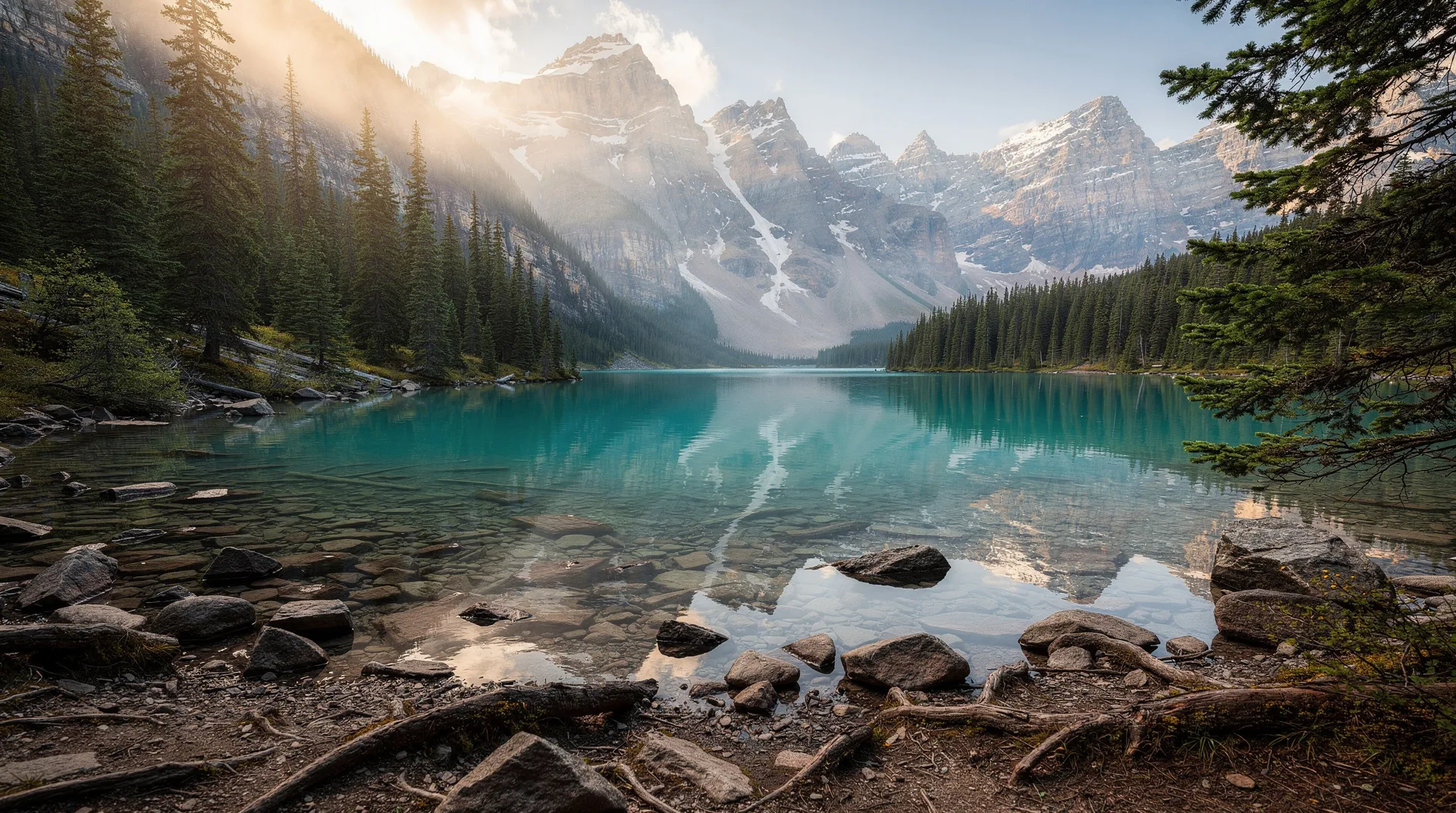
The Joffre Lakes trail packs an extraordinary amount of visual reward into a relatively short distance. Three glacial lakes — each a more intense shade of turquoise than the last — stacked up a mountain valley above Pemberton, with the Matier Glacier visible at the head of the upper basin. The trail is 5.8 km return with 370 metres of elevation gain, making it the most accessible glacial lake experience in the Sea-to-Sky corridor and arguably one of the best short hikes in BC.
That accessibility comes with consequences. Joffre Lakes Provincial Park is one of the most visited provincial parks in British Columbia, and the parking lot fills by 7 am on summer weekends. BC Parks requires a free day-use pass for every hiker throughout the peak season. Planning ahead is not optional — it is the difference between hiking and sitting in a lineup that goes nowhere.
But get the permit, arrive on time, and you will understand immediately why Joffre Lakes has the following it does. The colour of that upper lake, with Matier Glacier reflected across still water on a clear morning, is the kind of image that justifies every logistics headache to get there.
At a glance
| Where | Joffre Lakes Provincial Park, Duffey Lake Road (Highway 99), about 25 km east of Pemberton, BC |
| Cost | Free day-use pass (per person; children 12 and under exempt); no pass needed outside the pass period |
| Time needed | 3.5-5 hours return for the full 5.8 km to Upper Joffre Lake |
| Getting there | Own car (about 2.5 hrs from Vancouver) or a guided day tour from Vancouver/Whistler |
| Best time | July-September for reliable trail conditions; September for fewer crowds |
Trail basics
Trailhead: Joffre Lakes Provincial Park, off Duffey Lake Road (Highway 99), approximately 25 km east of Pemberton. The park is directly on the highway — parking lot and signage are clearly visible.
Distance: 5.8 km return to Upper Joffre Lake
Elevation gain: 370 m
Typical time: 3.5–5 hours return
Difficulty: Moderate. The trail climbs consistently but never steeply, with good footing throughout. A short rocky section and some root-covered terrain near the upper lake requires care when wet.
Trail surface: Well-maintained, mostly dirt trail with some rocky sections near Upper Joffre Lake. Snow is common on the upper portion from November through June.
Getting there
Joffre Lakes is approximately 170 km from Vancouver (2.5 hours) and 35 km east of Whistler via the Duffey Lake Road. From Pemberton, it is a 25 km drive east on Highway 99.
Day-use passes: Each hiker needs a free BC Parks day-use pass during the pass period (May 11 to October 25 in 2026; BC Parks sets the dates each year, so check bcparks.ca). Children 12 and under are exempt when accompanied by an adult. Passes are booked online 2 days before your visit, starting at 7 am Pacific time, and are gone within minutes of opening. Set an alert on your phone and have the BC Parks page loaded at 7 am. Anyone holding a camping reservation does not need a separate day-use pass.
Arriving without a permit during the reservation period will result in being turned away — BC Parks has active enforcement. Outside the pass period (after late October), passes are not required and the lot is first-come, first-served, but check conditions as the road can be icy or snow-covered.
From Vancouver: There is no direct public transit to Joffre Lakes. Options include renting a car, joining an organised day tour from Vancouver or Whistler, or carpooling.
The lakes: what to expect
Lower Joffre Lake
Lower Joffre Lake is approximately 300 metres from the parking lot — a short, flat walk that delivers an immediate reward. The lake is calm, teal-coloured, and framed by steep forested slopes. It is the gentlest of the three and sets the tone for what follows. Many visitors do not realise how quickly the colour intensifies at the upper lakes, so take a moment here but do not linger if time is limited.
Middle Joffre Lake
The trail climbs from Lower Joffre Lake through forest, gaining most of its elevation in the middle section before arriving at Middle Joffre Lake at approximately 2 km. This lake is larger than the lower, with a gravel beach on its near shore and views extending up the valley toward the glacier. A small cascade feeds into the lake from above. This is a common turnaround point for families with young children or less fit hikers, and the views here are already exceptional.
Upper Joffre Lake
The final kilometre to Upper Joffre Lake is the most spectacular section and also the most physically demanding, gaining 80 metres through rocks and roots. The lake appears suddenly — a wide, opaque turquoise sheet at the foot of the Matier Glacier, which flows in seracs and blue ice down from the ridgeline above.
The glacier calves small ice chunks into the lake’s upper end when conditions are right, and you can often hear the low crack of ice movement on quiet mornings. The moraine on the far side of the lake is accessible via a loose scramble for those who want elevation. Do not approach the glacier itself — crevasse terrain exists even on its lower sections.
Allow at least an hour at Upper Joffre Lake. The light and colour change significantly across the day, and it is worth waiting for a break in any cloud cover to see the glacier reflect in the still water.
Camping in Joffre Lakes
The park has a small walk-in campsite near Upper Joffre Lake with 40 camping spots. Overnight camping requires a reservation through BC Parks, which typically opens in January for the following summer season. The sites are basic — tent pads and pit toilets — but the location above the upper lake, with the glacier visible from the tent, is extraordinary.
Camping allows you to experience the lake at dawn and dusk with minimal other visitors — the day-use crowds arrive mid-morning and thin out by late afternoon.
Best time to visit
June–early July: Wildflowers are beginning on the trail margins. Some snow on the upper section is possible into late June. The light is long and the mornings are still.
July–August: Peak season. The trail is snow-free, temperatures are pleasant, and the glacial melt water is at its most vivid turquoise due to peak suspended sediment. Also the busiest period.
September: Highly recommended. Cooler temperatures, significantly fewer people, and the surrounding larch and subalpine vegetation begins to colour. Often the best hiking conditions of the year.
Late October–May: No passes required and the trail can be beautiful in snow, but conditions require microspikes (October–November, March–May) or crampons (December–February). The Duffey Lake Road can close temporarily after heavy snow events.
Wildlife and ecology
The Joffre Lakes valley is prime black bear habitat — bears are regularly seen on and near the trail. Make noise while hiking and follow BC Parks bear encounter guidelines. Marmots are abundant on the rocky terrain above Middle Joffre Lake. The lakes themselves are not stocked and have minimal fish — the glacial flour that colours the water creates low productivity conditions that few species can exploit.
The Matier Glacier has receded significantly over the past three decades, and historical photographs show the glacier’s former extent compared to its current reach. The glacial lake colour itself will gradually diminish as the glacier retreats and sediment input decreases.
Browse guided hiking and outdoor tours from Whistler to the Joffre Lakes areaWhat to pack
- 1.5–2 litres of water (no reliable water sources on lower trail; streams at middle and upper lakes safe with filter)
- Trail snacks and lunch — allow 4–5 hours
- Waterproof jacket (weather changes fast in mountain valleys)
- Warm mid-layer (upper lake is cool even in August)
- Sunscreen and hat — the upper basin is exposed
- Trekking poles (helpful on rocky upper section, especially when wet)
- Microspikes if hiking before June or after October
Costs
| Item | Cost (CAD) |
|---|---|
| Day-use pass | Free |
| Backcountry camping | $10–15/person/night |
| Guided tour from Vancouver/Whistler | $85–150/person |
Photography and trail etiquette
The upper lake’s colour is strongest in direct or soft morning light — harsh midday sun tends to flatten the turquoise into a duller blue-grey in photos. A polarising filter cuts glare on the water surface and is worth carrying if you shoot seriously.
Because the trail is so heavily used, small choices matter: stay on the established path even where it is muddy (braided side-trails accelerate erosion around the lakeshores), pack out all food waste, and give other hikers space at the narrow viewpoints rather than lingering for a long photo session when a queue has formed. Basic wildlife safety practices apply throughout, given the active bear habitat.
If Joffre Lakes is your first BC hike, pack according to the standard mountain checklist in our packing list guide — conditions above 1,600 m change fast regardless of the forecast in Pemberton.
Combining Joffre Lakes with other experiences
Joffre Lakes sits on the Duffey Lake Road (Highway 99), one of the most scenic drives in BC. The road connects Whistler to Lillooet through a landscape of peaks, glaciers, turquoise lakes, and dry canyon country — a dramatic contrast unfolding over 100 km. See the Duffey Lake Road drive guide for the full story.
Pemberton, 25 km west, is a small agricultural town with good coffee and an increasingly active food scene. It makes an excellent lunch stop after the hike. For an extended Sea-to-Sky day, combine Joffre Lakes in the morning with an afternoon in Whistler village.
If you want more glacial lake hiking in the area, the Garibaldi Lake trail guide covers the largest and most famous glacial lake in the region, 40 km south near Squamish. The best hikes in British Columbia guide provides a broader regional overview.
Planning the wider trip around Joffre Lakes
Joffre Lakes works best as one chapter of a longer British Columbia journey rather than a stand-alone stop. If you are still deciding when to travel, the best time to visit BC guide explains how the seasons shape trail conditions across the province, and the BC fall colours guide is worth a look if September is your target month.
Getting to the trailhead is part of the day, so it helps to understand the road. The Vancouver to Whistler guide covers the first stretch of the Sea-to-Sky corridor, and the BC driving distances guide helps you judge how much time to leave for the rest. If you do not own a vehicle, the BC car rental guide lays out the practical choices, and it is worth sorting out before the permit slot opens so that your plans stay realistic.
Base yourself in Whistler if you want evenings with restaurants and a village atmosphere after a long day on the trail, or stay in Vancouver if the hike is a single day out of the city. Both bases make the drive manageable, as long as you start early.
Once the legs have recovered, there are plenty of ways to extend the outing. The Stawamus Chief hike is a rewarding granite climb closer to Squamish, while Garibaldi Provincial Park offers more alpine scenery for those who want to keep exploring. Tired muscles also appreciate the hot springs of BC, a gentle way to end a hiking trip.
If Joffre Lakes is one stop on a longer holiday, the 7-day British Columbia itinerary shows how to fit coastal and mountain highlights into a single week.
Find day trip tours from Vancouver to the Sea-to-Sky corridor including Joffre LakesFrequently asked questions about Joffre Lakes trail: the Pemberton turquoise lake hike
Is the Joffre Lakes trail family-friendly?
The lower and middle lakes are accessible for children aged 6 and up who hike regularly. The upper lake section is rockier and steeper — children aged 10 and above are better suited for the full trail. Allow extra time with children and ensure they have snacks and layers.
Can I visit Joffre Lakes without a permit?
During the pass period (May 11 to October 25 in 2026), every hiker needs a free day-use pass, and this is actively enforced. Without a pass, you will be turned away. Outside this period, no pass is needed.
What is the best time of day to visit?
Early morning — arrive at the trailhead by 8 am or earlier. The light on the glacier is best in morning, the lot fills quickly, and you will have the upper lake largely to yourself if you arrive by 9 am. By 11 am the trail is busy.
Is Joffre Lakes worth it in winter?
In snow conditions with proper equipment (microspikes or crampons), the trail is stunning and rarely visited. The upper lake can freeze. Dress for cold and check road conditions on the Duffey Lake Road, which can be icy and occasionally closed.
How does Joffre Lakes compare to Garibaldi Lake?
Joffre Lakes is shorter (5.8 km vs 18 km), lower elevation gain (370 m vs 820 m), and faster to reach from Vancouver (2.5 hours vs 1.5 hours). Garibaldi Lake is larger, grander in scale, and offers more extension possibilities. Both are outstanding — Joffre Lakes is the better choice for a half-day; Garibaldi is the better choice for a full day or overnight.
What happens if the day-use permit slots are sold out?
Slots for the day you want are frequently gone within minutes of the booking window opening (2 days ahead, 7 am Pacific time). If nothing is available, either try again at 7 am for the next release, visit outside the pass period (late October to May, pass-free but colder and possibly icy), or consider a guided day tour from Vancouver or Whistler, which often has separate operator access.
Is Joffre Lakes suitable for a first BC hike?
Yes — the trail is well-marked and the distance is moderate, which makes it a good introduction to BC mountain hiking. First-timers should still budget the full half-day, bring proper footwear and layers, and treat the permit system as a hard requirement rather than an afterthought.