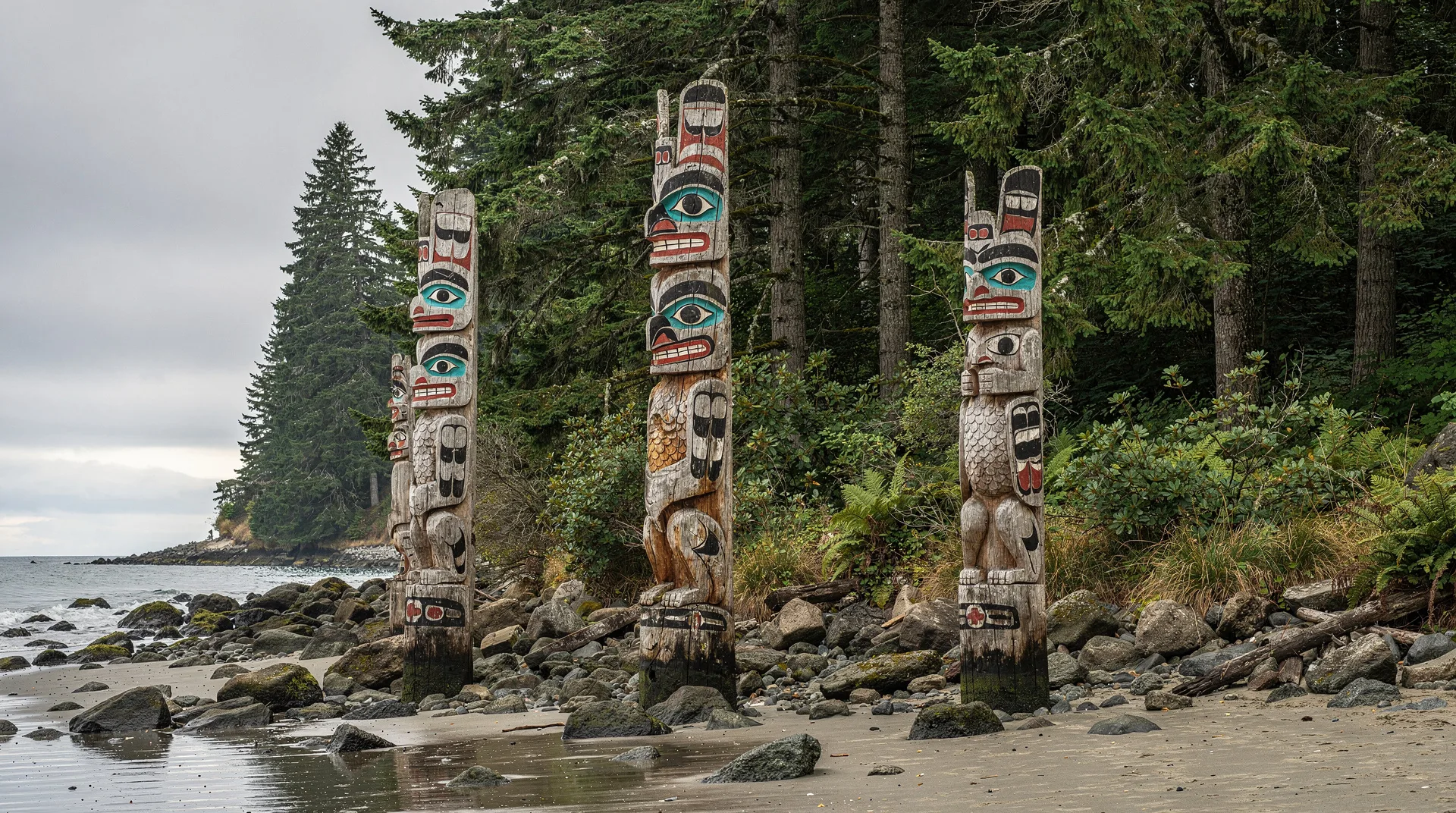
Indigenous tourism in Quebec: a guide to First Nations experiences
Where can I experience Indigenous tourism in Quebec?
Quebec has 11 First Nations with dedicated cultural tourism. Wendake (near Quebec City), Mashteuiatsh (Lac-Saint-Jean), Essipit (Côte-Nord), and Odanak (near Trois-Rivières) offer the most accessible experiences for international visitors.
Quebec is home to 11 First Nations and the Inuit of Nunavik, representing a deep, diverse, and living Indigenous presence that predates European contact by thousands of years and continues today in distinct languages, cultures, and territories. For international visitors, Indigenous tourism in Quebec is increasingly accessible — and the province has made real investments in authentic, nation-led cultural tourism over the last two decades. This guide introduces the major experiences available, the nations behind them, and how to plan an Indigenous-tourism-focused visit respectfully.
The key principle: go to experiences owned and operated by Indigenous nations. Tourism Indigenous Quebec (tourismeautochtone.com) lists certified operators across the province. Using these operators ensures that the economic benefit stays in the communities and that the cultural content is controlled by the nations themselves.
| Where | Wendake (15 min from Quebec City), Mashteuiatsh and Essipit (Lac-Saint-Jean/Côte-Nord), Odanak (near Trois-Rivières), Kahnawà:ke (near Montreal) |
| Cost | Museum entries typically CAD 12-20; Onhwa’ Lumina night walk around CAD 25-35; multi-day Manawan cultural stays cost meaningfully more and need advance booking |
| Time needed | Wendake works as a half-day from Quebec City; a fuller Quebec Indigenous itinerary (Wendake + Mashteuiatsh) is 2-3 days |
| Getting there | Wendake and Kahnawà:ke are short drives from Quebec City and Montreal respectively; Mashteuiatsh and Essipit require a 3-hour drive; Nunavik is fly-in only |
| Best time | May to September for most experiences; Onhwa’ Lumina and cultural centres run in shoulder seasons too; winter experiences (ice fishing, snowshoeing) run December-March |
The 11 nations
Quebec’s First Nations include:
- Abénaquis (Abenaki) — Centre-du-Québec
- Algonquins (Anishinaabe) — Abitibi-Témiscamingue, Outaouais
- Atikamekw — Mauricie, Lanaudière, Haute-Mauricie
- Cris (Cree) — Eeyou Istchee / Baie-James
- Hurons-Wendat — Wendake, near Quebec City
- Innus (Montagnais) — Côte-Nord, Saguenay-Lac-Saint-Jean
- Malécites (Wolastoqiyik) — Bas-Saint-Laurent
- Micmacs (Mi’gmaq) — Gaspésie
- Mohawks (Kanien’kehá:ka) — Kahnawà:ke, Kanesatake (near Montreal)
- Naskapis — Far northern Quebec
- Inuit — Nunavik (northern Quebec, above 55°N)
The most visitor-accessible nations for international travellers are the Huron-Wendat (Wendake), the Innu (multiple communities), the Mohawks (Kahnawà:ke), and the Atikamekw (Manawan).
The major Indigenous tourism experiences
Wendake — Huron-Wendat Nation
15 minutes from Quebec City
The most accessible Indigenous experience in Quebec. Wendake is an urban First Nations community (technically a reserve but with significant infrastructure) just outside Quebec City. Key experiences:
- Hôtel-Musée Premières Nations: a four-star hotel designed as a traditional longhouse, with an excellent adjacent museum on Huron-Wendat history and culture. Excellent restaurant (La Traite) serving contemporary Indigenous cuisine.
- Onhwa’ Lumina: a multimedia night walk through the forest telling Huron-Wendat creation stories and history. Opened 2022, high-quality production, 1-hour experience.
- Traditional Huron site (Ekionkiestha’ Longhouse): a reconstructed longhouse where visitors see how the Huron-Wendat lived pre-contact.
- Craft and food market: in the main village.
Wendake is walkable as a half-day trip from Quebec City. See our Wendake guide.
Mashteuiatsh — Pekuakamiulnuatsh (Innu)
On the shores of Lac-Saint-Jean
The largest Innu community and the most tourism-developed Innu site. Key experiences:
- Musée amérindien de Mashteuiatsh: excellent museum on Innu culture and the Pekuakamiulnuatsh specifically.
- Indigenous outfitters: traditional hunting/fishing camps, canoe expeditions, winter experiences.
- Festival Grand rassemblement des peuples autochtones: annual summer gathering.
Best combined with a Saguenay-Lac-Saint-Jean road trip. See Saguenay destination guide.
Essipit — Innu Nation
Côte-Nord, on the St. Lawrence
Smaller Innu community, famous for whale-watching cooperatives owned and operated by the Innu — one of the most respected operations for zodiac tours of the St. Lawrence. Traditional camps, summer cultural programs.
Odanak — Abénakis
Between Montreal and Trois-Rivières
The Abénakis Museum (Musée des Abénakis) at Odanak is one of Quebec’s oldest Indigenous museums. Smaller experience than Wendake, but authentic and less touristy.
Manawan — Atikamekw
Lanaudière, remote (~3.5 hours north of Montreal)
The Manawan community offers guided traditional cultural stays — forest survival, birch bark canoe building, traditional fishing, shaking tent ceremony demonstrations. Multi-day experiences, remote, requires commitment. This is one of the most authentic cultural immersions available in Quebec.
Kahnawà:ke — Mohawk (Kanien’kehá:ka)
Directly across the St. Lawrence from Montreal
The largest Mohawk community near Montreal. Visitors can see the St. Francis Xavier Mission church, local craft stores, and learn about Mohawk history and the Iroquois Confederacy. Less formally tourism-developed than Wendake but physically very close to Montreal (20 minutes).
Cree tourism in Eeyou Istchee
Northern Quebec, fly-in or long drive
Cree cultural tourism centres in Oujé-Bougoumou (a UNESCO-celebrated village designed by Douglas Cardinal) and the Cree Cultural Institute. Experiences include traditional trapline visits, goose hunt participation (in season, as observers), and winter ice fishing. Requires planning — typically fly-in from Montreal.
Inuit tourism in Nunavik
Far northern Quebec
Nunavik has 14 Inuit communities, four national parks, and some of the most extraordinary Arctic landscapes in Canada. Tourism is specialist and expensive — fly-in access only, few operators, weather-dependent. Recommended only for experienced travellers or through a full tour operator. See Nunavik how-to-visit guide if available.
Cultural experiences by theme
Food
- La Traite restaurant in Wendake: contemporary Indigenous cuisine, three-star quality. Game, fish, native plants.
- Sagamité: traditional Huron-Wendat corn, bean, and meat stew — served in Wendake restaurants.
- Bannock (frybread): widely available at Indigenous sites.
- Smoked fish and game: available in season at many Indigenous-run outfitters.
Accommodations
- Hôtel-Musée Premières Nations (Wendake): high-end, Indigenous-designed
- Club Odanak (Mauricie): Atikamekw-owned wilderness lodge
- Innu outfitter camps (Côte-Nord, Lac-Saint-Jean): traditional tented camps
Festivals and gatherings
- Présence autochtone (Montreal, August): annual Indigenous arts festival in Montreal. Film, music, crafts, storytelling. Free events downtown.
- Festival Grand rassemblement (Mashteuiatsh, July): annual Innu gathering with drumming, dancing, traditional skills.
- Pow-wows: various communities host pow-wows in summer (Kahnawà:ke typically mid-July, Wendake late August).
Winter experiences
- Traditional ice fishing camps (Innu, Cree)
- Dog sledding with Indigenous operators
- Snowshoeing and traditional winter craft (Atikamekw, Innu)
How to plan respectfully
- Book through Indigenous operators. Tourisme Autochtone Québec (tourismeautochtone.com) certifies operators.
- Ask before photographing ceremonies or individuals. Many pow-wows have specific photo rules.
- Don’t touch sacred objects (drums, medicine bundles) without explicit invitation.
- Use the nation’s preferred name where possible (Kanien’kehá:ka rather than Mohawk, if the community prefers; ask and listen).
- Acknowledge the host nation — Quebec encourages visitors to recognise whose traditional territory they’re visiting.
- Support purchases from Indigenous artisans directly where possible — authenticated crafts often carry an “authentic Indigenous” label.
- Understand that some experiences aren’t for tourists. Ceremonies for community members only, certain sacred sites, and some seasonal activities are not open to outside visitors. Respect this.
A suggested 3-day Indigenous-focused Quebec itinerary
Day 1 — Wendake + Quebec City
- Morning: Hôtel-Musée visit + museum
- Afternoon: traditional longhouse and craft shops
- Evening: Onhwa’ Lumina forest walk
- Overnight: Hôtel-Musée Premières Nations
Day 2 — Mashteuiatsh
- Drive Quebec City to Lac-Saint-Jean (3 hrs)
- Musée amérindien de Mashteuiatsh
- Walking tour of the community
- Dinner with local Innu outfitter
- Overnight: local B&B or outfitter camp
Day 3 — Return via Saguenay Fjord
- Optional: stop at Essipit on Côte-Nord for whale watching (Innu-run zodiac)
- Return Quebec City or continue to Montreal
Making the most of a short visit
If you only have a half-day, Wendake is the obvious choice — it is close to Quebec City, fully set up for visitors, and combines a museum, a hotel-restaurant, and the Onhwa’ Lumina night walk in one stop. If you have 2-3 days and a car, add Mashteuiatsh via a loop through Saguenay-Lac-Saint-Jean — it turns a cultural visit into a proper regional road trip with whale watching at Essipit and Innu-run outfitters along the way.
For visitors based in Montreal rather than Quebec City, Kahnawà:ke is the easiest option — 20 minutes across the river, no advance booking needed for a general visit, though it is less formally set up for tourism than Wendake. Manawan, by contrast, is a serious commitment: a 3.5-hour drive each way for a multi-day immersion, best treated as a dedicated trip rather than a day stop.
Reading and resources
- Tourisme Autochtone Québec (tourismeautochtone.com): certified operator list, multilingual
- Indigenous Tourism Association of Canada (indigenoustourism.ca): national resource
- Wendake tourism site (tourismewendake.ca)
- Cree Nation of Eeyou Istchee tourism (creeculture.ca)
Final word
Indigenous tourism in Quebec is not a niche; it’s one of the richest cultural traditions the province offers, and it’s becoming more accessible every year. Going on an Indigenous-led tour, eating at an Indigenous-owned restaurant, or staying at an Indigenous-operated lodge directly supports the communities building this industry. For visitors who care about the depth of the place they’re travelling to, this is essential Quebec content.
See also our Quebec First Nations guide for broader historical context and our Indigenous culture in Canada overview.
Frequently asked questions
Is Wendake worth visiting if I only have one afternoon in Quebec City?
Yes — it is a 15-minute drive and works as a half-day trip covering the museum, the longhouse and, if timed right, the Onhwa’ Lumina evening walk. It is the single most accessible Indigenous experience near Quebec City.
Can I visit Mashteuiatsh or Essipit without a car?
It is difficult. Both are roughly 3 hours from Quebec City with no direct public transit; a rental car or an organised tour is the practical option, ideally combined with a wider Saguenay-Lac-Saint-Jean loop.