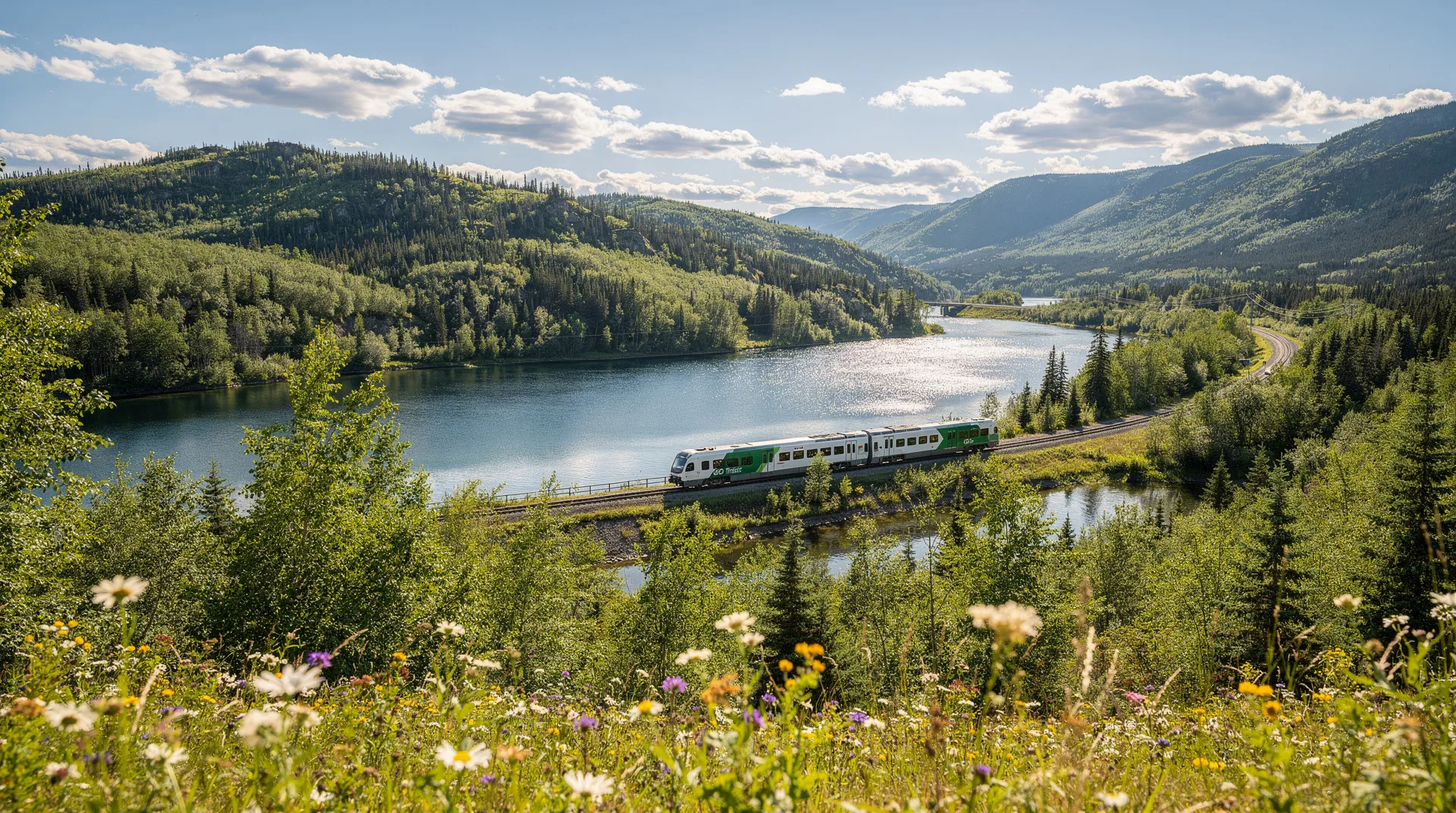
GO Transit Tourist Guide: Trains, Fares & Day Trip Routes
Can tourists use GO Transit in Ontario?
Yes — GO Transit's commuter rail and bus network is easy for tourists to use. The main day-trip routes from Toronto include Niagara Falls, Hamilton, Barrie, and Pickering. A Presto card or single-trip ticket purchased at any GO station is all you need.
GO Transit is the Greater Toronto and Hamilton Area’s regional transit network — a combination of commuter rail lines and bus routes that serves destinations across southern Ontario from its central hub at Toronto’s Union Station. While GO Transit is primarily designed for commuters, its network overlaps significantly with Ontario’s most visited tourist destinations, making it a practical and affordable option for visitors who want to explore beyond Toronto without renting a car.
This guide explains how the system works, what it costs, how to buy tickets, and which routes are most useful for tourists.
At a glance
| Where | Union Station, downtown Toronto, radiating to Hamilton, Barrie, Niagara Falls and Kitchener |
| Cost | Around CAD 3.50-19 per single trip depending on distance |
| Time needed | Around 1-2 hours each way for most day-trip routes |
| Getting there | Any GO station or the Union Station subway/PATH connection |
| Best time | Weekday off-peak trains are quieter; summer weekends add extra Niagara service |
How GO Transit works
GO Transit operates two modes: GO trains (commuter rail on seven lines radiating from Union Station) and GO buses (an extensive regional bus network filling gaps in the rail coverage).
Union Station in downtown Toronto is the central hub for all GO train lines and most GO bus routes. The station is directly beneath the CN Tower, connected to the downtown PATH underground walkway system, and served by Toronto’s subway (Line 1 at Union Station). Everything starts here.
Lines: The seven GO train lines are named for their terminal destinations:
- Lakeshore West: Hamilton and Niagara Falls (seasonal extension)
- Lakeshore East: Oshawa
- Barrie: Bradford and Barrie
- Stouffville: Lincolnville and Unionville
- Richmond Hill: Richmond Hill
- Kitchener: Kitchener (University Avenue corridor)
- Milton: Milton
For tourists, Lakeshore West (for Hamilton and Niagara), Barrie (for points north), and Kitchener lines are the most relevant.
Buying tickets and Presto cards
Presto card: The Presto card is the rechargeable smart card used across GO Transit, Toronto’s TTC, and many other Ontario transit systems. For visitors staying more than a day or two in Toronto, loading a Presto card (CAD 6 deposit) from an automatic machine at any GO station is the most convenient option — just tap when you board. The card works on GO trains, GO buses, Toronto subway, and streetcars.
Single-trip tickets: Available at ticket vending machines in all GO stations. Purchase at the machine before boarding; on GO buses, cash is accepted on board but exact change is required.
Mobile ticketing: The GO Transit app (iOS and Android) allows purchasing mobile tickets for GO trains and buses without a Presto card. A convenient option for occasional users.
Fare structure: GO Transit fares are distance-based — you pay more for longer trips. Fares range from approximately CAD 3.50 for the shortest suburban hops to CAD 16–19 for longer trips to Barrie, Hamilton, or Niagara Falls. Children under 14 ride free with a fare-paying adult on weekends. Weekend GO fares are the same as weekday fares.
GO-TTC integration: A single Presto fare covers a GO train trip plus a connecting TTC trip in Toronto — the two systems are integrated so you do not pay separately for the subway portion at Union Station.
Day trip routes for tourists
Toronto to Niagara Falls
This is the most popular tourist route on GO Transit. GO Bus Route 12 operates from Toronto’s Union Station directly to Niagara Falls, with stops at Oakville, Clarkson, Mississauga, Burlington, Hamilton, and St Catharines. Total journey time: approximately 2 hours.
The bus drops at the Niagara Falls Bus Terminal on Bridge Street, a 15-minute walk from Table Rock (the main falls viewpoint) or a short taxi/rideshare ride. The Clifton Hill tourist zone, Journey Behind the Falls, and the Hornblower Niagara Cruises boat are all accessible without a car from this stop.
Fare: Approximately CAD 16 each way from Union Station (Presto card). Return same day or different day — no reservation required, just purchase a ticket.
Service frequency: GO Bus Route 12 runs multiple times daily, with more frequent departures on weekends and summer service. Check the GO Transit trip planner at gotransit.com for current schedules.
Niagara-on-the-Lake: NOTL is not directly served by GO Transit — the town requires a 20-minute taxi or Niagara Parks bus connection from Niagara Falls. The Niagara Parks transit system (WEGO bus) operates within the Niagara Falls tourist zone and connects to NOTL in summer.
Book a Niagara Falls experience from Toronto including transportToronto to Hamilton
Hamilton — 70 kilometres southwest of Toronto on the western end of Lake Ontario — has emerged as one of Ontario’s most interesting cities for food, arts, and urban exploration. GO’s Lakeshore West train line runs express service to Hamilton’s GO Centre station in approximately 1 hour from Union Station. Multiple trains per hour during peak periods; less frequent off-peak but reliable throughout the day.
What to do in Hamilton: Dundas Peak and Tew’s Falls in the Spencer Gorge Conservation Area (accessible by car from the GO station but awkward without one — rideshare recommended); the Hamilton Farmers’ Market in the historic indoor market building; James Street North’s gallery and restaurant strip; and the Art Gallery of Hamilton (free admission, strong Canadian collection).
Fare: Approximately CAD 10 each way from Union Station.
Toronto to Barrie
The Barrie GO train line runs from Union Station to Barrie’s Allandale Waterfront station — approximately 1.5–2 hours, depending on the train. Service is more frequent on weekdays than weekends; check the schedule, as weekend trains are less frequent.
Barrie as a base for northern Ontario: Barrie is the gateway to Simcoe County, the southern edge of Ontario’s cottage country, and the corridor to ski resorts at Horseshoe Valley (15 minutes by taxi from Barrie GO station) and Blue Mountain (45 minutes by car or taxi from Barrie). For winter ski day trips from Toronto without a car, the Barrie GO train + taxi to Horseshoe Valley is a viable option.
On Barrie itself: The waterfront on Kempenfelt Bay (a deep inlet of Lake Simcoe) is pleasant for walking; the downtown has good independent food options. Barrie is primarily a jumping-off point rather than a destination in its own right for most visitors.
Fare: Approximately CAD 15 each way from Union Station.
Toronto to Oshawa and beyond (Lakeshore East)
The Lakeshore East line runs from Union Station to Oshawa — the eastern end of the Greater Toronto Area’s urban region. For tourists, the most useful stops are:
Pickering: The Pickering waterfront on Lake Ontario has a pleasant lakeside park and is a convenient point for exploring Durham Region’s eastern lakeshore.
Whitby: Similar lakeside setting; the Whitby downtown is walkable from the GO station.
Ajax: Ajax GO station is a connection point for transit to the Duffins Creek wetland area (accessible by transit and trail) — an underrated natural area east of Toronto.
The Oshawa end of the line is primarily useful for Durham Region residents rather than tourists.
Toronto to Kitchener (Waterloo Region)
The Kitchener GO line runs from Union Station through Mississauga, Brampton, Georgetown, and Guelph to Kitchener — approximately 2 hours total to Kitchener.
Guelph: The University of Guelph city has a pleasant downtown with good restaurants and the Guelph Civic Museum. The Arboretum at the University of Guelph is excellent in spring and fall. The train ride from Guelph to Union Station takes approximately 1.5 hours.
Kitchener-Waterloo: The twin cities have a strong technology industry (the “Silicon Valley North” nickname), a major German-heritage population (the original Waterloo County settlement), and excellent food — the St Jacobs Farmer’s Market north of Waterloo is one of the largest farmers markets in Canada, operating year-round on Tuesday and Saturday (Saturday is the major market day; access from Kitchener GO by local transit).
Fare: Approximately CAD 14 to Kitchener from Union Station.
GO Transit vs other ways to reach Niagara Falls
Toronto to Niagara Falls is the single most common tourist trip on GO Transit, but it is not the only option, and it is worth knowing the trade-offs before deciding.
| Option | Time | Approx. cost | Notes |
|---|---|---|---|
| GO Bus Route 12 | ~2 hours | Around CAD 16 each way | Cheapest, no car needed, drops a 15-minute walk from Table Rock |
| Guided day tour | ~10-12 hours round trip | Higher, but includes transport + stops | Best if you also want Niagara-on-the-Lake or a winery stop without extra transfers |
| Rental car | ~1.5 hours | Rental + gas + parking | Most flexible, best for combining with Niagara-on-the-Lake or an overnight |
| VIA Rail | Not applicable | — | VIA does not serve Niagara Falls directly; GO is the rail option for this route |
For a structured day plan built around the GO Bus timing, see our Toronto-Niagara weekend itinerary; for the wider intercity picture, our VIA Rail guide covers the routes GO Transit does not reach.
The Presto card for tourists: practical advice
Where to get one: Presto card vending machines are at every GO station and many TTC subway stations. Union Station has multiple machines in the main concourse.
How much to load: For a Toronto-Niagara Falls day trip, load CAD 35–40 to cover the round trip and have a buffer. For Toronto city transit only, CAD 20–30 covers several days of subway use at CAD 3.30 per single adult fare.
At the end of your trip: Unused Presto balance can be refunded at Presto customer service centres (Union Station has one), minus the CAD 6 card deposit. Alternatively, the card can be used on future visits to Ontario.
Tapping: Always tap ON when boarding and tap OFF when leaving a GO train or bus — the system calculates fares based on your origin and destination. Forgetting to tap off results in being charged the maximum fare for the zone. TTC subway and streetcar tapping is single-tap only (tap ON, no tap-off required).
Book a Toronto day tour including transit guidance for first-time visitorsGO Transit + TTC: getting around Toronto
Within Toronto, the TTC (Toronto Transit Commission) operates the city’s four subway lines, streetcars, and buses. The Presto card works on all TTC services.
The key subway routes for tourists:
- Line 1 (Yonge-University): Union Station → King → Queen → Dundas → Bloor-Yonge → Sheppard. Hits the downtown core, the financial district, and the Yorkville/Bloor shopping area.
- Line 2 (Bloor-Danforth): Kipling → Spadina → Bay → Bloor-Yonge → Danforth. Connects the west-end neighbourhoods (Kensington/Chinatown from Spadina station) to the east end.
- Line 3 (Ontario): Provides north-south service in the Scarborough corridor (useful for exploring east-end food).
Streetcars: The 501 (Queen Street) and 504 (King Street) streetcars connect the waterfront and Entertainment District with the Distillery District and Leslieville in the east. The 506 Carlton covers the Kensington Market and Bloor corridor.
Day pass: The TTC day pass (CAD 13.50 on Presto, or a one-day unlimited pass) covers unlimited subway, streetcar, and bus rides for the calendar day.
What GO Transit cannot easily reach
To set realistic expectations, several major Ontario tourist destinations are not practically accessible by GO Transit:
- Algonquin Provincial Park: No public transit connection. Requires a car or private tour.
- Blue Mountain ski resort: Not directly served. Barrie GO + taxi to Horseshoe Valley is the closest alternative for skiing.
- Muskoka cottage country: No GO service into the Muskoka lakes region. A car is required.
- Prince Edward County: No GO Transit service. Car required.
For destinations requiring a car, see our Ontario 7-day itinerary or Ontario 10-day itinerary for how to structure a car-based trip.
Practical tips
Schedules: GO Transit schedules vary significantly between peak (weekday rush hours) and off-peak service. Check the GO Transit trip planner at gotransit.com or use the GO Transit app before heading to the station.
Train vs bus: GO trains are faster and more comfortable than GO buses for equivalent routes. Where a train option exists (Union Station to Hamilton, for example), use it over the bus.
Luggage: GO trains have luggage racks and reasonable space for rolling bags. GO buses have under-carriage luggage storage. Neither has the restrictions of airline travel — standard tourist luggage is fine.
Accessibility: All GO stations and vehicles are accessible. Elevators are available at most major stations; let GO Transit staff know of any requirements for specific assistance.
Related guides
- Toronto to Ottawa road trip — driving the same corridor covered by GO Transit
- Toronto vs Niagara Falls as a base — transit context for the Niagara day trip question
- Best time to visit Ontario — seasonal planning for Ontario travel
- Ontario 7-day itinerary — full trip planning incorporating transit and driving
Frequently asked questions about GO Transit Tourist Guide: Trains, Fares & Day Trip Routes
Do I need to book GO Transit tickets in advance?
No advance booking is required for GO Transit trains or buses. Tickets are purchased at the station (vending machines) or via the GO Transit app before or at departure. During peak summer travel, GO buses to Niagara Falls can be full — arriving at Union Station 20–30 minutes before departure is wise for popular routes on summer weekends.
Is GO Transit accessible for visitors who do not speak English?
GO Transit’s ticket machines are available in multiple languages. The core information — station names, fare amounts, and route maps — uses clear graphic design that is navigable without strong English. On-board announcements are in English; most staff are helpful with non-English speakers.
Can I take a bicycle on GO Transit?
Bicycles are permitted on GO trains during off-peak hours (not during morning or evening rush hour on weekdays, and not on busy peak weekend trains). Check the GO Transit website for current bike rules. On GO buses, a maximum of two bikes can be carried in the under-carriage luggage area.
What is the difference between GO Transit and VIA Rail?
GO Transit is a regional commuter-focused network serving the Greater Toronto and Hamilton Area. VIA Rail is Canada’s national intercity rail service — it connects Toronto to Ottawa, Montreal, Vancouver, and other major Canadian cities. VIA Rail is the correct service for the Toronto–Ottawa trip (approximately 4.5 hours); GO Transit does not serve Ottawa. Both trains use Toronto’s Union Station.
Is GO Transit cheaper than a guided tour to Niagara Falls?
Yes, significantly. GO Bus Route 12 costs around CAD 16 each way with no tour markup, versus a guided day tour that bundles transport, stops, and commentary at a higher price. The trade-off is flexibility and convenience — a tour handles Niagara-on-the-Lake or winery stops in one booking, while GO requires you to arrange those separately.
Can I use GO Transit to reach Toronto Pearson Airport?
Not directly by train. GO Transit does not have a dedicated Pearson Airport line; the UP Express (a separate service from Union Station) is the direct rail link to the airport, though a Presto card also works on it.