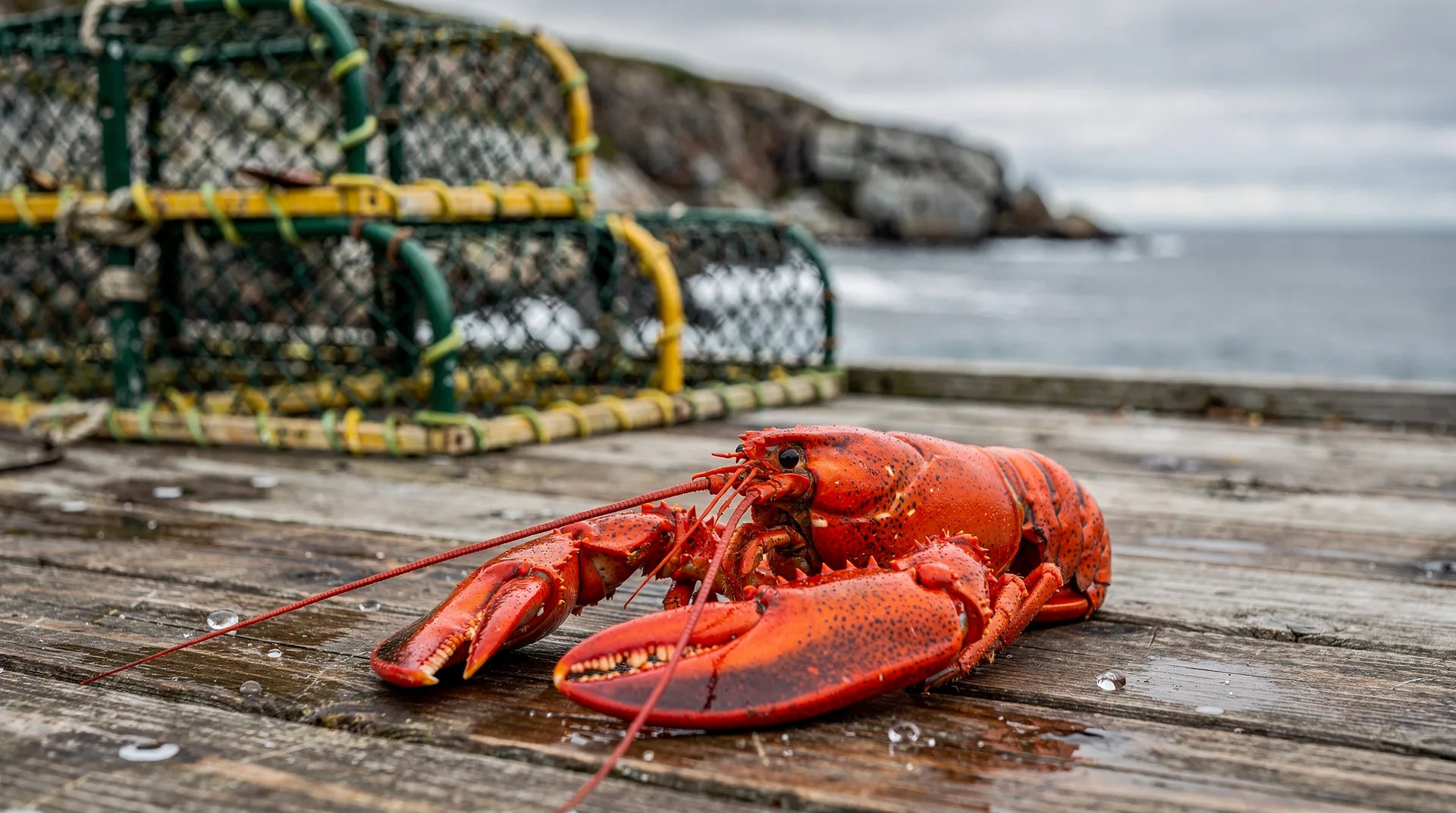
East coast lobster: where and when to eat it in Atlantic Canada
When is lobster season in Atlantic Canada?
Peak season varies by province. PEI runs late June to August, Nova Scotia has two seasons (spring May–June and fall November–December), and New Brunswick harvests mainly May to July. Summer is the easiest time for visitors to find fresh lobster suppers and harbour restaurants serving lobster straight off the boat.
| At a glance | |
|---|---|
| Where | PEI, Nova Scotia, New Brunswick, and Newfoundland — the Atlantic Canada provinces |
| Cost | Around CAD 35-75 for a full lobster meal; CAD 15-25/lb buying direct from a wharf |
| Best time | June-July for the broadest overlap of suppers, seasons and mild weather |
| Getting there | Fly into Halifax, Charlottetown, Moncton or St. John’s; a rental car is close to essential |
| Booking ahead | Recommended for PEI lobster suppers in July-August; not needed at wharf stalls |
The Atlantic Canadian lobster experience
Few meals anywhere in the world match the simple pleasure of cracking open a freshly steamed Maritime lobster at a wooden picnic table, newspaper spread beneath your tray, butter dripping down your fingers, and the smell of salt air rolling in off the harbour. East coast Canada has built an entire food culture around this one magnificent crustacean, and visiting during lobster season is one of the most quintessentially Canadian experiences you can have.
Atlantic Canada — comprising Prince Edward Island, Nova Scotia, New Brunswick, and Newfoundland and Labrador — accounts for a vast share of Canada’s lobster catch, and the industry shapes coastal communities from Cape Breton’s rocky shores to the red-sand beaches of PEI. Here, lobster is not a luxury item reserved for special occasions. It is everyday food, sold fresh from wharves, steamed in church basements, and served at community suppers for a price that would make city diners gasp.
This guide covers the best places to eat lobster in Atlantic Canada, when to go for peak freshness, how much to budget, and the beloved tradition of the lobster supper — a distinctly Maritime institution that every visitor should experience at least once.
Why Atlantic Canada lobster is special
The cold, clean waters of the Gulf of St. Lawrence and the North Atlantic produce lobster that many chefs and seafood lovers consider among the finest in the world. Cold water forces lobsters to grow slowly, developing dense, sweet flesh with a clean, briny flavour that their warm-water counterparts simply cannot replicate.
Atlantic Canadian lobsters are caught using traditional trap methods, which are considered among the most sustainable forms of seafood harvesting. Strict federal size limits ensure juveniles are returned to the water, and trap limits per licence control overall fishing pressure. When you eat a Maritime lobster, you are eating something caught by a small-scale harvester in an industry that has sustained coastal communities for generations.
The other factor is freshness. In coastal Nova Scotia, PEI, or New Brunswick, you are often eating lobster that was alive in a trap that morning. There is no airline journey, no days-long holding tank at a distribution centre. The lobster goes from the ocean to a steaming pot to your plate, sometimes within hours.
PEI lobster suppers: a beloved institution
Prince Edward Island has elevated lobster eating to a communal art form with its iconic lobster suppers. These are not fancy restaurant affairs — they are large-scale, family-style meals served in church halls, community centres, and purpose-built supper houses, typically running from late June through August.
New Glasgow Lobster Suppers in New Glasgow, PEI, is one of the oldest and most beloved, operating since 1958. You pay a set price and receive a full lobster, unlimited chowder, mussels, fresh rolls, and dessert. The atmosphere is convivial and unpretentious. Lineups can stretch out the door, but they move quickly.
Fisherman’s Wharf Lobster Suppers in North Rustico sits right on the harbour and offers a classic supper experience with outstanding views across the bay. The all-you-can-eat chowder and mussels before the main lobster arrive is a highlight that regulars plan for weeks.
St. Ann’s Church Lobster Suppers in Hope River is a community fundraiser that has run for decades. The church hall fills with locals and visitors alike, all united by the shared task of cracking lobster and heaping butter onto everything.
Prices at PEI lobster suppers typically run CAD $35–$55 per adult depending on lobster size, and most venues are cash-only or have limited card facilities, so come prepared. Reservations are strongly recommended in July and August.
Browse PEI food and seafood experiences on GetYourGuideNova Scotia: two seasons and countless ways to eat lobster
Nova Scotia has a unique two-season lobster fishery. The spring season runs roughly May through June in the southwestern counties and along the South Shore, while the fall-winter season runs November through December in Cape Breton and parts of the eastern mainland. This means you can find fresh Nova Scotia lobster during two distinct windows each year.
Lunenburg and the South Shore are prime territory for lobster lovers. The picturesque UNESCO town of Lunenburg is surrounded by fishing communities where lobster is pulled from the water daily during spring season. The South Shore Exhibition in Bridgewater in late July draws crowds for its lobster boils.
Halifax offers the convenience of excellent seafood restaurants year-round, though prices are naturally higher than buying direct from a wharf. The Halifax Seaport Farmers’ Market often features local vendors selling live lobster and freshly prepared seafood.
Cape Breton Island is exceptional during fall season. The Cabot Trail passes through fishing communities like Cheticamp and Ingonish where wharf-side stalls sell lobster directly to passersby. Eating a lobster roll on the hood of your car while looking out over the Cabot Trail is an experience worth the drive alone.
Lobster Barn in Port Mouton and various South Shore shacks sell lobster by weight — typically CAD $10–$18 per pound — and will steam it on the spot. You eat it right there with plastic bibs and tools, cracker and pick, at a basic outdoor table. It is perfect.
Find Halifax food tours and seafood experiencesNew Brunswick lobster: wharves and festivals
New Brunswick’s lobster season peaks in May and June along the Acadian Coast and Bay of Fundy shores. The Shediac Lobster Festival, held annually in late July in Shediac — which proudly calls itself the Lobster Capital of the World — is a five-day celebration with live music, lobster dinners, a parade, and competitive lobster-eating. Entry to the festival grounds is free; meals are purchased separately.
Shediac itself is a charming town with several restaurants specialising in lobster, including the long-running Paturel’s Shore House and Fisherman’s Paradise, where whole steamed lobster platters start around CAD $40.
The Fundy Isles — Campobello, Grand Manan, and Deer Island — have smaller but deeply authentic fishing communities where lobster is part of daily life. Deer Island in particular has a small wharf where you can sometimes buy lobster directly from fishers unloading their traps.
Lobster rolls: the portable format
Not every lobster encounter needs to be a full sit-down affair. The lobster roll — cold or warm lobster meat, minimal dressing, stuffed into a toasted split-top bun — is the fast-food equivalent of Maritime seafood culture, and it is outstanding.
The debate between Nova Scotia style (warm, butter-dressed) and New England style (cold, lightly mayo-dressed with celery) is lively and ongoing in Maritime Canada. Many shops offer both. Look for lobster rolls at:
- Lobster on the Wharf in Halifax
- Bite House in Sydney, Cape Breton
- Various stands along PEI’s Gulf Shore Parkway
- The ferry terminals in Nova Scotia and New Brunswick
Expect to pay CAD $18–$28 for a quality lobster roll. Prices above $28 usually indicate generous meat portions — worth it.
Best time to visit for lobster
Timing your visit to align with lobster season is the key to the best experience.
June and July are the sweet spot for most visitors. PEI lobster suppers are in full swing, Nova Scotia’s spring season is winding down but prices are still excellent, and New Brunswick’s wharf scene is active. Summer weather across Atlantic Canada is mild and pleasant for road trips between fishing communities.
August is peak tourist season in PEI especially, meaning lineups at the famous suppers are longest but the atmosphere is also most festive.
November catches Nova Scotia’s fall season with fewer tourists. Prices drop, the scenery turns dramatic, and you can sometimes get lobster direct from fishers at Cape Breton wharves for under CAD $8 per pound.
May is excellent for New Brunswick and the South Shore of Nova Scotia, with fresh spring lobster and virtually no tourist crowds. The weather can be cool but the seafood is exceptional.
How to plan your lobster road trip
A dedicated Atlantic Canada lobster road trip can be done in 7–10 days. A suggested route:
- Fly into Halifax, spend a day on the South Shore (Lunenburg, Peggy’s Cove)
- Take the Northumberland Ferry from Caribou, NS to Wood Islands, PEI
- Spend 2–3 days in PEI: lobster suppers, red sand beaches, Charlottetown
- Cross the Confederation Bridge to New Brunswick
- Visit Shediac and the Acadian Peninsula
- Loop back via the Bay of Fundy coast
Renting a car is essential — the best lobster eating is in small coastal communities not served by public transport. Book lobster supper reservations in advance during July and August.
For those short on time, explore our Atlantic Canada itineraries for curated multi-day routes, and check the Cabot Trail guide for Cape Breton lobster stops along one of Canada’s most scenic drives.
Discover Cape Breton tours and seafood experiencesNewfoundland: the fifth lobster province
Newfoundland is often left out of “Atlantic Canada lobster” conversations in favour of PEI, Nova Scotia and New Brunswick, but it has its own small commercial fishery, concentrated on the Avalon Peninsula and around the Bonavista Peninsula. The season runs roughly April through June depending on the zone, and lobster shows up on menus in St. John’s alongside cod and other seafood staples. It is a smaller, less tourism-oriented scene than the Maritimes — worth knowing about if your trip already includes a stop for icebergs, puffins or the East Coast Trail, but not a reason on its own to add Newfoundland to a dedicated lobster itinerary.
Pairing lobster with the rest of an Atlantic Canada trip
Lobster country overlaps heavily with Atlantic Canada’s best scenic driving and hiking. Anyone doing the Cabot Trail in Cape Breton is already passing through fall-season lobster territory; the same applies to travellers comparing the Cabot Trail against the Gaspésie as an alternative coastal drive.
Whale watching pairs naturally with lobster stops too — see the whale watching in Atlantic Canada guide for where the two overlap along the Bay of Fundy and Cape Breton coasts. For a broader province-by-province comparison before you book flights, the Nova Scotia vs New Brunswick guide and the Maritimes vs Newfoundland guide both help decide where to spend limited time.
Practical tips: costs, customs and etiquette
Budget per person for a full lobster meal:
- Lobster supper (PEI): CAD $38–$55 including sides
- Restaurant lobster dinner (Halifax, Charlottetown): CAD $45–$75
- Wharf purchase + self-preparation: CAD $15–$25 per pound (a typical 1.5 lb lobster is plenty)
- Lobster roll: CAD $18–$28
Lobster eating equipment: Restaurants and suppers provide crackers, picks, and bibs. At wharf stalls you may need to BYO or ask. A nutcracker from a dollar store works perfectly.
What to do with leftovers: Lobster meat keeps well refrigerated for 24 hours. Many Maritime visitors buy an extra lobster and make a simple pasta or salad the next day.
Live lobster transport: You can buy live lobsters and travel with them in a cooler for up to 24 hours. Airline transport is more complex — check current airline policies if you plan to fly home with your catch.
Allergies: Atlantic Canadian seafood menus are heavily shellfish-forward. If you have allergies, communicate clearly — cross-contamination is common in seafood-focused kitchens.
Where to stay near the best lobster spots
Charlottetown, PEI is the ideal base for the island’s lobster supper circuit. Mid-range hotels cluster around the waterfront; a standard double room runs CAD $120–$180 per night in summer. The PEI destinations page has accommodation options across the island.
Lunenburg, Nova Scotia has excellent B&Bs and inns within the UNESCO heritage district. Staying in Lunenburg puts you within striking distance of South Shore lobster shacks and the beautiful Mahone Bay area.
Sydney or Baddeck, Cape Breton work as bases for the Cabot Trail and fall season lobster. Baddeck is particularly charming with its Victorian inns on Bras d’Or Lake.
Shediac, New Brunswick has motels and cottages perfectly positioned for festival season.
For broader Atlantic Canada planning, the Halifax destination guide and New Brunswick overview are good starting points.
Frequently asked questions about East coast lobster: where and when to eat it in Atlantic Canada
How much lobster should I order?
For a main course, a 1.25 lb to 1.5 lb lobster is standard and filling when accompanied by sides. If you are particularly hungry or love claws, order 1.75 lb. At lobster suppers the size is usually fixed at 1–1.25 lb with unlimited sides, which is ample.
Can I find lobster year-round in Atlantic Canada?
Yes, though it will be frozen or from offshore fisheries outside of local seasons. For the freshest experience, time your visit to coincide with the local season. Halifax restaurants keep live tanks year-round and the quality is still good, just not as remarkable as peak season.
Is PEI lobster better than Nova Scotia lobster?
Both are excellent. PEI lobster tends to be slightly softer-shelled in summer, which some prefer for its sweetness. Nova Scotia spring lobster is known for its firm texture. The difference is subtle — what matters more is freshness and how it is prepared.
What is the difference between a hard-shell and soft-shell lobster?
Lobsters shed their shells (moult) in summer. Soft-shell or “new shell” lobsters have recently moulted; they are easier to crack and many find the meat sweeter, but they contain less meat per pound. Hard-shell lobsters are denser and meatier. In July and August along the Northumberland Strait coast of PEI and NB, expect to encounter more soft-shell lobsters.
Are lobster suppers suitable for children?
Absolutely. The supper format is casual, loud, and fun — perfect for families. Children are welcome everywhere. Most lobster suppers include alternatives like fish and chips or chowder for kids who are not ready to tackle a whole crustacean.
What do I do with the shell?
At lobster suppers, shells go in the provided bins or buckets. At outdoor wharves, there is usually a communal waste area. Never leave shells in public areas — the smell in warm weather is not pleasant for anyone.
Can I visit lobster fishing communities and see the boats?
Yes. Many wharves in PEI, Nova Scotia, and New Brunswick are public and you can watch boats unload early in the morning (typically 6–10am). Communities like Malpeque, PEI, North Rustico, and Lunenburg, NS are particularly welcoming to curious visitors. Simply be respectful and stay out of the way of working equipment.
Is lobster in Newfoundland worth seeking out?
It’s a pleasant addition if you are already there for icebergs, puffins or hiking the East Coast Trail, but Newfoundland’s fishery is smaller and less tourism-focused than PEI, Nova Scotia or New Brunswick. Don’t plan a trip around Newfoundland lobster specifically — plan it around the Maritimes and treat any Newfoundland lobster you find as a bonus.
What’s the difference between a lobster supper and just ordering lobster at a restaurant?
A lobster supper is an all-you-can-eat, fixed-price community event (church hall or purpose-built supper house) that includes unlimited chowder, mussels and sides alongside your lobster — it’s a social, high-volume format. A restaurant lobster dinner is a standard à la carte meal, usually pricier per lobster but with more menu variety and a quieter setting.