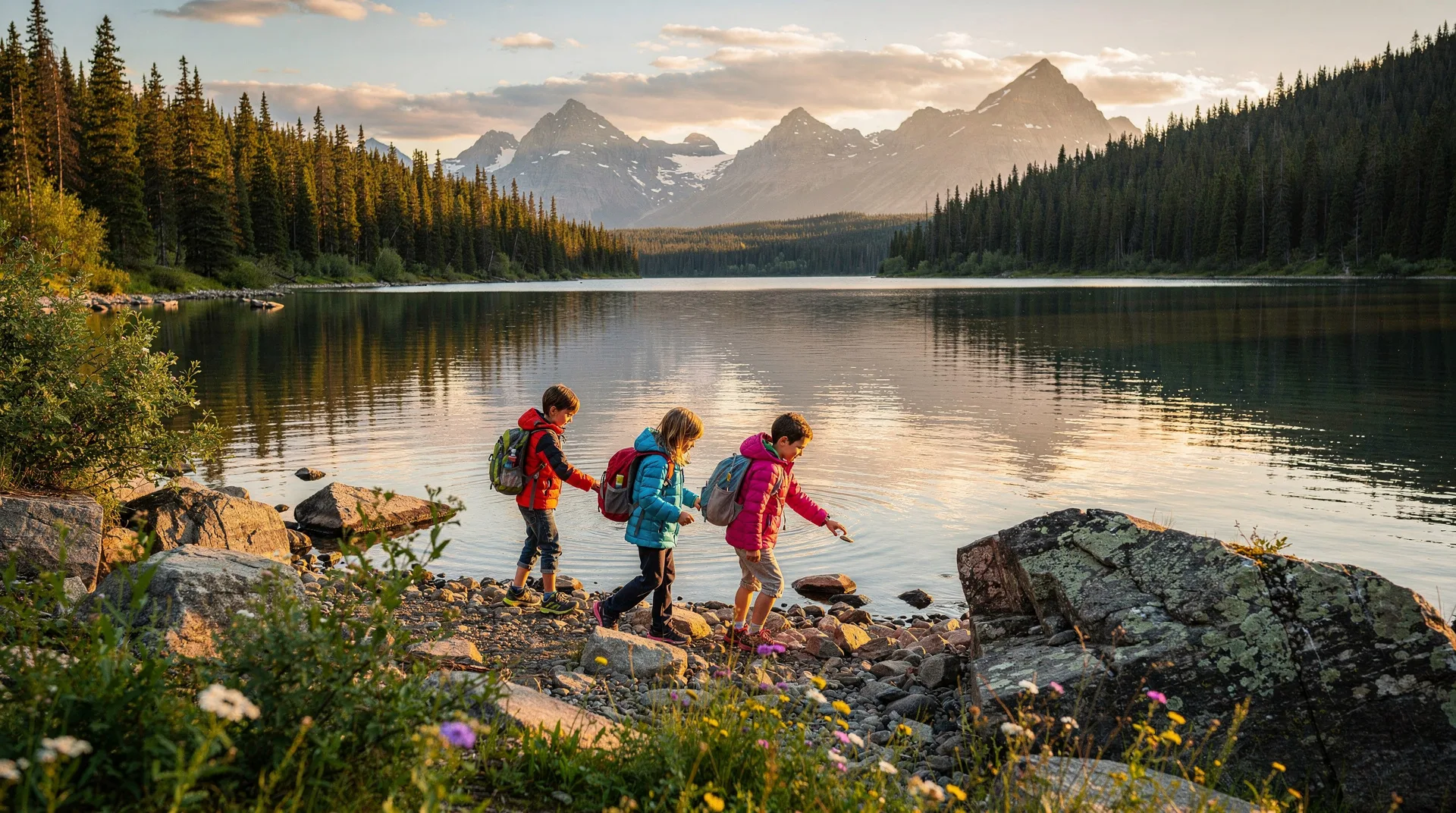
Canada with kids: a family travel guide that actually works
Is Canada a good destination for families with kids?
Canada is one of the most family-friendly countries in the world. Major cities are safe, national parks are accessible, food options accommodate picky eaters, and distances are manageable if you plan routes carefully. The main challenge is cost.
Canada works for families. That is the short answer, and after watching dozens of families move through our favourite destinations over many seasons, we are confident saying it. The country is safe, clean, English-speaking (and French where relevant), well signposted, and built around outdoor spaces that keep kids genuinely engaged. Wildlife turns up on the side of the highway. Lakes are the colour of swimming pool brochures. Pancakes come with real maple syrup.
What Canada is not, however, is cheap, and the logistics of moving a family across a very large country require thought. A badly planned itinerary that looks wonderful on paper can become a daily ordeal of four-hour drives with tired kids and a sticker-shock dinner bill every night. A well-planned one leaves everyone, adults included, asking when they can come back.
Here is how to make it work.
| Best for | Kids roughly 5-16, with 5-12 the sweet spot |
| Typical cost | Around CAD $8,000-16,000 for a family of four on a two-week trip, less with camping or shoulder season |
| Best time | June or September (shoulder season) for lower costs and thinner crowds |
| Getting around | Rental SUV with car seats booked in advance; see the car rental guide |
| Easiest first base | Vancouver or Toronto — city infrastructure plus an easy day trip |
What age range Canada suits best
Canada rewards families with kids roughly aged 5 to 16. Toddlers can enjoy the Rockies and the coasts but the long drives and jet lag across time zones are hard work. Teenagers engage with everything from white-water rafting to urban food markets. The 5-to-12 range is the genuine sweet spot — old enough to hike a few kilometres, young enough to find wildlife spotting thrilling.
Whatever the age, pre-booked outings take the stress out of busy days, and you can compare guided tours across Canada by duration and age suitability before you go.
Babies are absolutely manageable. Every major city has baby-friendly infrastructure, national park campgrounds provide hot water and clean bathrooms, and rental cars can supply car seats (reserve in advance — counter supply is unreliable).
The cost honest conversation
A family of four on a two-week summer trip through Western Canada realistically spends CAD $8,000-16,000 including flights from Europe, mid-range accommodation, a mid-size SUV rental, meals, park fees, and a handful of paid activities. That is a lot. Families who camp for part of the trip, base in one city with day trips rather than moving every two nights, or travel in shoulder season (June or September) routinely cut 30-40% off that range.
Where the money goes:
- Accommodation: CAD $200-400 per night for a family room in cities and gateway towns, CAD $400-700+ in peak-season Banff
- Rental vehicle: CAD $1,500-3,000 for two weeks in peak summer
- Food: CAD $80-150 per day for a family of four at mid-range restaurants plus groceries
- Activities: CAD $50-200 per day on days with paid tours or major attractions
- Park passes: CAD $167.50 for a family Discovery Pass (up to 7 people, valid one year, all national parks)
See our car rental guide for pricing detail on vehicles.
Best cities for families
Vancouver
Easily the most family-friendly major Canadian city. Stanley Park’s seawall is pram-friendly for 10 km. The Vancouver Aquarium, Science World, and Granville Island’s Kids Market each fill half a day. The beaches at English Bay and Kitsilano are safe for paddling. Grouse Mountain’s Skyride is an instant hit with kids of any age. See the Vancouver destination guide.
Toronto
Big, varied, and packed with child-scale attractions. The Royal Ontario Museum has a dinosaur hall that entertains every age. Ripley’s Aquarium is the best rainy-day option. The Toronto Islands are a short ferry ride and essentially a car-free playground. Niagara Falls is 90 minutes away for a classic day trip. See the Toronto destination guide.
Montreal
Francophone culture for kids works differently than for adults. Montreal’s science centre, biodome, and planetarium cluster together in the Old Port area. The Jean-Talon Market is a revelation for kids who like food. The city’s bike paths are genuinely usable with older children. See the Montreal destination guide.
Quebec City
The walled old town feels like a storybook illustration, which is exactly why it works so well with children. The Plains of Abraham offer space to run. Winter visits include the carnival and ice hotel. Summer visits include the Montmorency Falls cable car. See the Quebec City destination guide.
Best outdoor destinations for families
Banff and Lake Louise
The headline scenery of the Rockies is as accessible to a five-year-old as to an adult. Lake Louise’s shoreline walk is flat, short, and ends at a legendary view. Banff’s Sulphur Mountain gondola is a no-effort summit. Johnston Canyon’s catwalks to the Lower Falls cover about 1.1 km one-way on a secure platform system. Bow Valley Parkway drives turn up elk, deer, and occasional bears from the safety of the car.
The trick in Banff with kids is accommodation strategy. Hotel rooms in town are expensive and crowded. A condo or cabin with a kitchen at Canmore (20 minutes east) saves significantly and gives you space to spread out. See the Banff destination guide.
Jasper
Quieter than Banff and better for families who want wildlife and space over crowds and views. The Maligne Lake boat cruise to Spirit Island works for all ages. Athabasca Falls is a five-minute walk from parking to a genuinely dramatic waterfall. Pyramid Lake has canoe rentals on calm water. See the Jasper destination guide.
Prince Edward Island
The Canadian family destination of record. Small scale, short distances, endless beaches, and Anne of Green Gables infrastructure for kids who have read the books. Cavendish Beach is the classic family base.
Tofino
The Pacific coast option. Surfing lessons for kids are widely available, tide pools turn up starfish and sea anemones, and the rainforest trails at Pacific Rim National Park are engineered to keep small children engaged.
Age-appropriate activity ideas
| Age | Signature experiences |
|---|---|
| 3-6 | Lake Louise shoreline walk, Vancouver Aquarium, Toronto Islands ferry, Butchart Gardens, sugar shack visits in Quebec |
| 7-11 | Johnston Canyon catwalks, wildlife drives in Jasper, Maligne Lake cruise, Science World Vancouver, Niagara Falls mist boat |
| 12-15 | White-water rafting on the Kicking Horse, sea kayaking in Tofino, Whistler bike park, Algonquin canoe day trip |
| 16+ | Full-day hikes in Banff, Whistler Peak-to-Peak, Montreal jazz fest, Vancouver urban explorations on transit |
Logistics that actually matter
Drive times matter more than distances. A 400 km day in Canada often means six hours with stops. Plan no more than one travel day per three days of holiday for kids under 10. Break longer drives across two days with a family-friendly overnight stop.
Car seats and boosters are legally required for children under 9 or under 145 cm / 36 kg, depending on province. Rental companies rent them for CAD $10-15 per day; bringing your own is usually cheaper if you can manage the airline baggage.
Medical access is excellent but expensive for visitors. Travel insurance with medical coverage is non-negotiable. A pediatric emergency room visit without insurance starts around CAD $500 and rises quickly. See our travel insurance guide.
Jet lag hits kids hard on the west coast (UK to Vancouver is an 8-hour shift). Plan two low-key recovery days at the start of any westbound trip.
Picky eating is unusually well accommodated. Every major Canadian restaurant has a kids menu. Grocery stores are large, familiar, and sell most European staples. Pack familiar snacks for the first 48 hours and the rest sorts itself.
Wildlife safety is a real rule, not a tourism talking point. Teach kids before arrival: no feeding, no approaching, no running from any wildlife, stay close to adults on all trails in bear country. Bear spray belongs to adults, not kids.
Suggested family itineraries
One-week Rockies loop (Calgary return): Calgary two nights, Banff three nights, Lake Louise or Canmore two nights. Short drives between bases, packed with easy outings.
Two-week Western Canada: Vancouver three nights, ferry to Victoria two nights, Tofino three nights, fly to Calgary, Banff three nights, Jasper three nights, return Calgary. See the Canada 2-week itinerary for a detailed version.
Two-week Eastern Canada: Toronto three nights, Niagara overnight, drive to Ottawa two nights, Montreal three nights, Quebec City three nights, optional Charlevoix extension or fly home from Montreal.
Browse family-friendly tours and experiences across CanadaPacking and health prep that saves the trip
Layers, always. Even July mornings in the Rockies can start near 5°C and climb past 25°C by afternoon. A packable rain jacket per person is non-negotiable — see the packing list for a full checklist.
Sun and bugs. Sunscreen is essential even on overcast days at altitude. East of the Rockies, especially near lakes in June and July, bug repellent matters more than most first-time visitors expect.
Travel insurance with medical coverage is non-negotiable for visiting families — Canadian healthcare is excellent but billed directly to uninsured visitors. Buy it before departure, not after landing. See the travel insurance guide.
Time zones. Canada spans six time zones. A Toronto-to-Vancouver leg alone crosses three hours; factor a low-key recovery day into any itinerary that changes zones mid-trip.
Frequently asked questions about Canada with kids: a family travel guide that actually works
Is Canada safe for families?
Yes — consistently ranked among the safest countries in the world. Violent crime is low, cities are walkable, and emergency services are responsive.
Do kids need a passport for Canada?
Yes. Every child, regardless of age, needs their own valid passport to enter Canada. Children travelling without both parents may need a letter of consent.
What is the best age to take kids to Canada?
Roughly 6-12 is the sweet spot — old enough to engage with hikes and wildlife, young enough to be thrilled by everything. Younger and older ages work with adjustments.
How far in advance should I book for family travel?
For peak season (July-August) in the Rockies, 6-9 months ahead for accommodation. For cities and shoulder season, 2-4 months is fine.
Are Canadian national parks free for kids?
Yes — children under 17 enter Parks Canada sites free. The Discovery Pass for up to 7 family members is the best-value option for multi-park trips.
What should I pack for a summer Canada trip with kids?
Layers always. Even July days in the Rockies can start at 5°C and reach 25°C. Rain jackets are essential. Good walking shoes. Bug repellent east of the Rockies. Sunscreen everywhere.
Can we camp as a family?
Yes, and it is one of the best ways to experience Canada affordably. National park campgrounds are well equipped with bathrooms, firepits, and often playgrounds. Book months in advance on reservation.pc.gc.ca.