Canada in June: travel guide
Is June a good time to visit Canada?
June is one of the best months to visit Canada. Hiking opens fully in the Rockies, days are very long, summer festivals begin, crowds are lighter than July and August, and prices are below peak. Late June is arguably the sweet spot of the Canadian travel calendar.
June is when Canada steps into its full summer self. The snow retreats from mountain trails, and for the first time since autumn, the famous hikes of Banff and Jasper are accessible. Days stretch remarkably long — in the Rockies, it doesn’t get fully dark until after 10pm. Summer festivals begin programming across the country. And the crowds that define July and August haven’t arrived in full force yet.
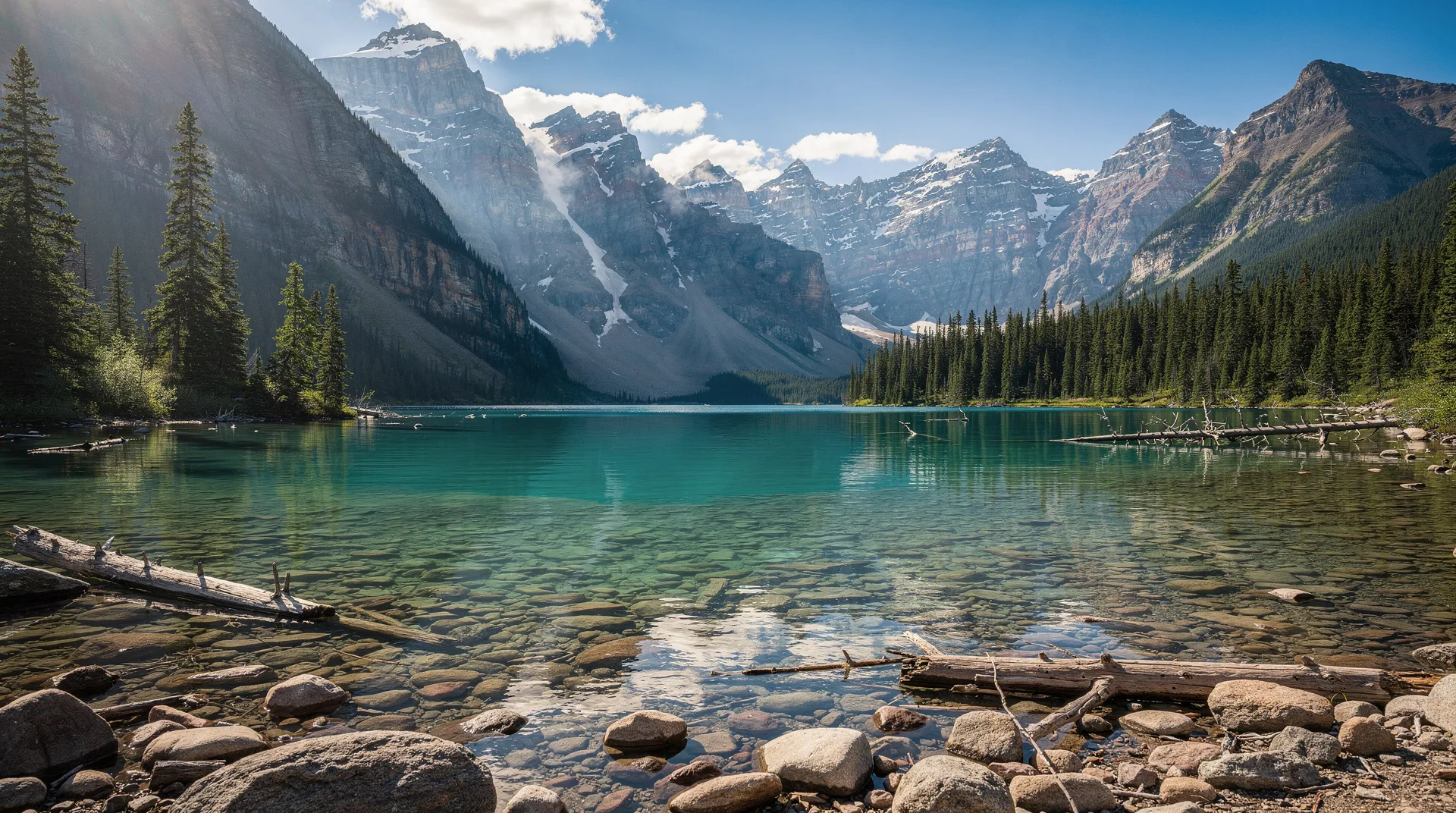
For many seasoned Canada travellers, June — particularly mid-to-late June — is the best month of the year. The Rockies are at their most dramatic with snow still capping the peaks against clear blue skies, wildflowers are blooming on trails, and every campsite and mountain lodge hasn’t yet hit its full summer frenzy.
At a glance
| Where | Banff and Jasper (hiking reopens), Montreal (Jazz Festival late June), Vancouver and Victoria |
| Cost | 10-20% below July/August peak in most regions; still book early for flights |
| Time needed | A week for the Rockies; add 3-4 days for Montreal if timing the Jazz Festival |
| Getting there | Fly into Calgary for the Rockies, Montreal for the Jazz Festival, Vancouver for the coast |
| Best for | Hikers and wildflower-chasers who want July’s open trails without July’s crowds and prices |
Weather in June
June is warm in most of Canada, though the Rockies maintain significant cold at altitude:
| Region | Average low | Average high | What to expect |
|---|---|---|---|
| Vancouver | 12°C | 22°C | Beautiful, warm, some rain |
| Victoria | 11°C | 21°C | Excellent — warm, less rain than Vancouver |
| Banff | 3°C | 18°C | Warm days, cold nights, trails opening fully |
| Jasper | 4°C | 19°C | Similar to Banff, slightly wilder feel |
| Toronto | 13°C | 24°C | Warm, humid begins in late June |
| Montreal | 12°C | 24°C | Warm, festival season beginning |
| Quebec City | 10°C | 22°C | Warm, busy in late June |
| Ottawa | 12°C | 25°C | Hot and pleasant |
| Halifax | 11°C | 21°C | Pleasant, fog possible |
Mountain weather remains changeable. Afternoon thunderstorms in the Rockies can develop quickly — always carry rain gear for hikes, even on cloudless mornings.
Top things to do in June
Hiking in Banff and Jasper National Parks
June is the first month when most of the famous hikes in Banff and Jasper are fully accessible. The combination of clear trails, maximum daylight, and snow still capping surrounding peaks creates some of the most spectacular hiking conditions of the year.
Classic June hikes in Banff:
- Lake Agnes Tea House (7.4km return, 365m gain) — the tea house opens in mid-June
- Plain of Six Glaciers (13.8km return) — wildflowers in bloom in June
- Johnston Canyon (5.1km to Upper Falls) — excellent in June before summer crowds
- Cory Pass loop (13km, 920m gain) — dramatic and wild
Jasper highlights:
- Maligne Canyon (2.4km) — canyon hiking at its most dramatic in June water levels
- Angel Glacier at Mount Edith Cavell — accessible by late June
- Sulphur Skyline (8km, 700m gain) — hot springs waiting at the end
Moraine Lake and Lake Louise (before the July rush)
Moraine Lake opens to vehicle traffic in mid-to-late June (when the access road is ploughed), but the mandatory shuttle system begins with more availability than in July and August. Booking the shuttle in advance is essential — but June gives you more options than the peak summer weeks.
Summer solstice and long days
June 21 is the summer solstice — the longest day of the year. In Banff, sunset is around 10:15pm. In Whitehorse, it barely gets dark at all. This extraordinary length of light transforms the experience of being in Canada in late June — you hike until 8pm and still have light, eat dinner outside at 9pm with the sun on your face.
The solstice is a wonderful reason to be in northern Canada in particular. Indigenous Peoples’ Day (June 21) is a national holiday in Canada since 2021, with events and cultural programming across the country.
National Indigenous Peoples Day (June 21)
June 21 is National Indigenous Peoples Day, celebrating the cultures, histories, and contributions of First Nations, Métis, and Inuit peoples. Major events take place in Ottawa, Vancouver, Winnipeg, and across the country, including powwows, traditional performances, storytelling, and food. It’s a genuinely significant cultural event worth experiencing.
Whale watching in BC (peak beginning)
June marks the beginning of peak whale watching season in BC. Humpback whales are feeding in the nutrient-rich waters of the BC coast from June onwards. Orca sightings around Victoria and in the Johnstone Strait increase significantly. The San Juan Islands (just across the border) and the Gulf Islands of BC have some of the world’s best orca viewing from June through September.
Jazz and summer festivals begin
June marks the start of Canada’s festival season:
- Montreal Jazz Festival (typically late June – early July): One of the world’s largest jazz festivals
- Luminato, Toronto (mid-June): Major arts festival
- Dragon Boat festivals (Vancouver, Toronto, Montreal — various June dates)
- Ottawa Bluesfest (late June/early July)
- Victoria Jazz Fest (late June)
Events and festivals
- National Indigenous Peoples Day (June 21): Cultural events across the country
- Montreal International Jazz Festival (late June – early July): World’s largest jazz festival
- Luminato Toronto (mid-June): International arts festival
- Pride Month (June): Pride celebrations in Toronto, Vancouver, Montreal — Toronto Pride is the largest in the month
- Dragon Boat Festival, Vancouver (mid-June, varies)
- Halifax Busker Festival (late June)
- Victoria Jazz Fest (late June)
- Caribana (Afro-Caribbean Festival, Toronto) begins ramping up for its late July celebration
June versus July: the real trade-off
June’s main appeal is timing: you get most of July’s open trails and long days without July’s peak prices or crowd levels, at the cost of some high-alpine routes still being snow-covered until late in the month. If Canada Day or the Calgary Stampede matter to your trip, only July delivers them — see our Canada in July guide for a direct comparison, and Banff versus Jasper if you’re deciding between the two parks either month.
Wildlife and wildflowers: what June actually delivers
June is prime bear-viewing season as bears become more active after winter, particularly along the Icefields Parkway — see our wildlife watching in Alberta guide and bear watching Canada guide for viewing etiquette and the best known corridors. Wildflowers build through the month: lower meadows bloom early June, with the classic alpine displays (Indian paintbrush, heather) beginning at mid-elevations by late June — full high-alpine bloom actually peaks later, in late July and early August, so temper expectations if wildflowers are the sole reason for the trip.
Planning a Rockies-plus-coast June trip
Because June prices are meaningfully lower than July’s, it’s a good month to combine the Rockies with a Vancouver Island or Okanagan add-on without July’s budget pressure. Our Vancouver to Banff drive itinerary and BC 7-day itinerary both work well starting in June, and driving from Calgary to Banff covers the logistics if you’re flying into Calgary and driving west.
Where to go in June
Banff and Jasper for the best of summer hiking
June is the insider’s choice for the Rockies. The iconic hikes are opening, wildflowers are at their peak (alpine meadows in bloom are extraordinary), crowds are manageable, and accommodation is 15–25% cheaper than July. Early booking is still required for popular sites and tours, but June is definitively more pleasant than July for most experiences. You can compare guided tours in Banff before you lock in dates.
Vancouver for summer warmth and festivals
June Vancouver is excellent — warm, long days, the city’s outdoor culture in full bloom (literally, the gardens are spectacular). The North Shore mountains are accessible for hiking. The seawall is alive with cyclists and walkers. Stanley Park is at its best.
Montreal for the Jazz Festival
Late June in Montreal means the Jazz Festival — one of the world’s best. Outdoor stages throughout the Quartier des Spectacles are free. The restaurant scene is buzzing. The city is warm and the terrasses (outdoor cafés) are packed. Montreal in late June is one of Canada’s great urban experiences.
Quebec City for summer transition
Quebec City in June is beautiful — quiet compared to the summer peak, warm, with the Plains of Abraham green and inviting. The Château Frontenac terrace in June evening light is extraordinary.
What to pack
June packing is lighter than spring but layers remain important for the mountains:
- Light-to-mid jacket (still needed for mountain evenings)
- Rain jacket (essential for BC, useful everywhere)
- Hiking boots or trail runners
- T-shirts and light long-sleeve shirts
- Light trousers and shorts
- Sunscreen SPF 50+ (sun is strong in June, especially at altitude)
- Sunglasses and a sun hat
- Insect repellent (mosquitoes and blackflies, particularly in forests)
- Layers for mountain hikes
See our full packing list guide.
Budget and costs
June is in the shoulder-to-peak transition:
- Accommodation: 10–20% cheaper than July/August in most regions
- Flights: Increasing toward summer peak prices — book early
- Guided tours: Not yet at full capacity — more availability
- National parks: Discovery Pass still the best value
- Moraine Lake shuttle: Book in advance but more availability than July
See our Canada travel budget guide for full cost comparisons.
Pros and cons of visiting in June
Pros:
- Best hiking conditions of the year (wildflowers, deep blue lakes, accessible trails)
- Very long days — extraordinary light
- National Indigenous Peoples Day (June 21)
- Montreal Jazz Festival (late June)
- Below-peak prices in most destinations
- Pride Month celebrations
- Whale watching season in full swing
- Bears and wildlife active in national parks
Cons:
- Mountain weather still unpredictable (afternoon storms)
- Moraine Lake access requires advance reservation
- Mosquitoes and blackflies reach peak in forested areas
- Some high alpine routes not accessible until late June
- Prices increasing toward July — not the cheapest month
Frequently asked questions about Canada in June: travel guide
Is June better than July for Banff?
For most visitors, yes. The main advantages of June over July: meaningfully fewer crowds, cheaper accommodation, more flexibility with bookings, and wildflowers at their peak. The main advantage of July: everything is open and trails at all elevations are accessible. If you can only go in July, you’ll have a wonderful trip — but June is the insider’s choice.
When do the famous hikes in Banff open?
Lower elevation hikes (Johnston Canyon, Banff townsite trails, Lake Minnewanka loop) are typically open from late May. Mid-elevation hikes (Lake Agnes, Plain of Six Glaciers, Cory Pass) open in early-to-mid June. High alpine routes and backcountry trails above 2,000m generally open late June to early July. Check Parks Canada’s trail conditions page for real-time information.
What is the Montreal Jazz Festival like?
The Montreal Jazz Festival is enormous — over 2,000 concerts, many of them free on outdoor stages. The Quartier des Spectacles district is transformed. It draws musicians from around the world and is genuinely one of the world’s great music events. The paid indoor concerts feature world-class headliners; the free outdoor shows are equally high quality. Plan at least 3–4 days in Montreal to do it properly.
Is it warm enough to swim in lakes in June?
In BC’s Okanagan region, lake temperatures reach 20°C+ by late June and swimming is excellent. At higher elevation lakes in the Rockies (Moraine Lake, Lake Louise), the water is glacier-fed and never warmer than 8–10°C even in August — swimming is possible for the hardy, not for the average visitor. Atlantic Canadian lakes and rivers warm up through June and are typically comfortable by mid-June.
Are wildflowers blooming in June in the Rockies?
Early June brings wildflowers to lower elevation meadows. By late June, the famous alpine meadow wildflower displays (Indian paintbrush, heather, columbine, mountain avens) are beginning at mid-elevations. The very best high alpine wildflower displays peak in late July and early August. June marks the beginning of the season.
How long are the days in Canada in June?
Extremely long. In Vancouver, sunrise is around 5am and sunset after 9pm in late June — over 16 hours of daylight. In Whitehorse, the summer solstice produces an essentially white night with only a few hours of twilight. In Banff, expect light until after 10pm. This dramatically extends the usable day for outdoor activities.
Is June busy in Banff?
Busier than May and April, quieter than July and August. Most popular trailheads have some crowd pressure on weekends but nothing like the peak summer situation. Weekday visits in June are very manageable. The Moraine Lake road opens in mid-to-late June and requires a shuttle — book in advance but availability is better than in July.
Can I see bears in June in Banff and Jasper?
Yes — June is one of the best months for bear sightings as bears become highly active after winter, often visible along roadsides and the Icefields Parkway early morning and evening. Always view from a vehicle, never approach, and check current sightings on the Parks Canada app; see our wildlife watching in Alberta guide for full safety guidance.
Is Montreal worth visiting specifically for June?
Late June, in particular, is one of Montreal’s best windows — the Jazz Festival transforms downtown with free outdoor stages, terrasses are in full swing, and the weather is reliably warm without July’s heaviest humidity. Earlier in June is quieter but still pleasant; see our Montreal Jazz Festival guide for exact dates and how to plan around it.