Quick facts
- Located in
- Saguenay Fjord, north shore, Quebec
- Best time
- June–October
- Getting there
- 45 min north of Chicoutimi via Hwy 172; ferry from L'Anse-Saint-Jean
- Days needed
- Half-day to 1 day
Sainte-Rose-du-Nord is one of the smallest and most beautiful communities on the Saguenay Fjord — a village of approximately 400 residents perched on the north shore where a small river valley creates a pocket of habitable land among the cliff faces that otherwise dominate this section of the fjord. The setting has been called one of the most beautiful in Quebec with the particular enthusiasm that tends to accompany places that combine dramatic natural scenery with a human-scale community that fits the landscape rather than imposing on it.
The village is not a resort or a tourist construction. It has the working-Quebec character of a place that was settled because the land was habitable and has continued on its own terms. The houses are painted wood in the tradition of rural Quebec; the church sits at the centre of the community; the roads are narrow and follow the topography rather than imposing a grid. The fjord is always present — visible from the church steps, audible at night, smelled on the wind.
What makes Sainte-Rose-du-Nord worth a specific visit, rather than merely a passing acknowledgment, is the combination of the viewpoints and the fjord museum. The elevated perspectives over the Saguenay available from the hills above the village — looking down the fjord in both directions, with the opposite cliff wall of the south shore at eye level — are among the finest fjord views accessible by road in the entire Saguenay region.
| At a glance | |
|---|---|
| Where | North shore of the Saguenay Fjord, Quebec |
| Cost | Free to walk the village and viewpoints; Musée du Fjord entry is a small ticketed fee, around CAD 10-15 |
| Time needed | Half-day to a full day |
| Getting there | 45 min from Chicoutimi via Route 172; seasonal ferry from Rivière-Éternité near L’Anse-Saint-Jean |
| Best time | June-October, with July-August for full village services |
The views
The village sits at fjord level, but the hills immediately behind it climb rapidly to the plateau above. Two viewpoints accessible by short walks or by car provide perspectives that compress the fjord’s full drama into a single frame.
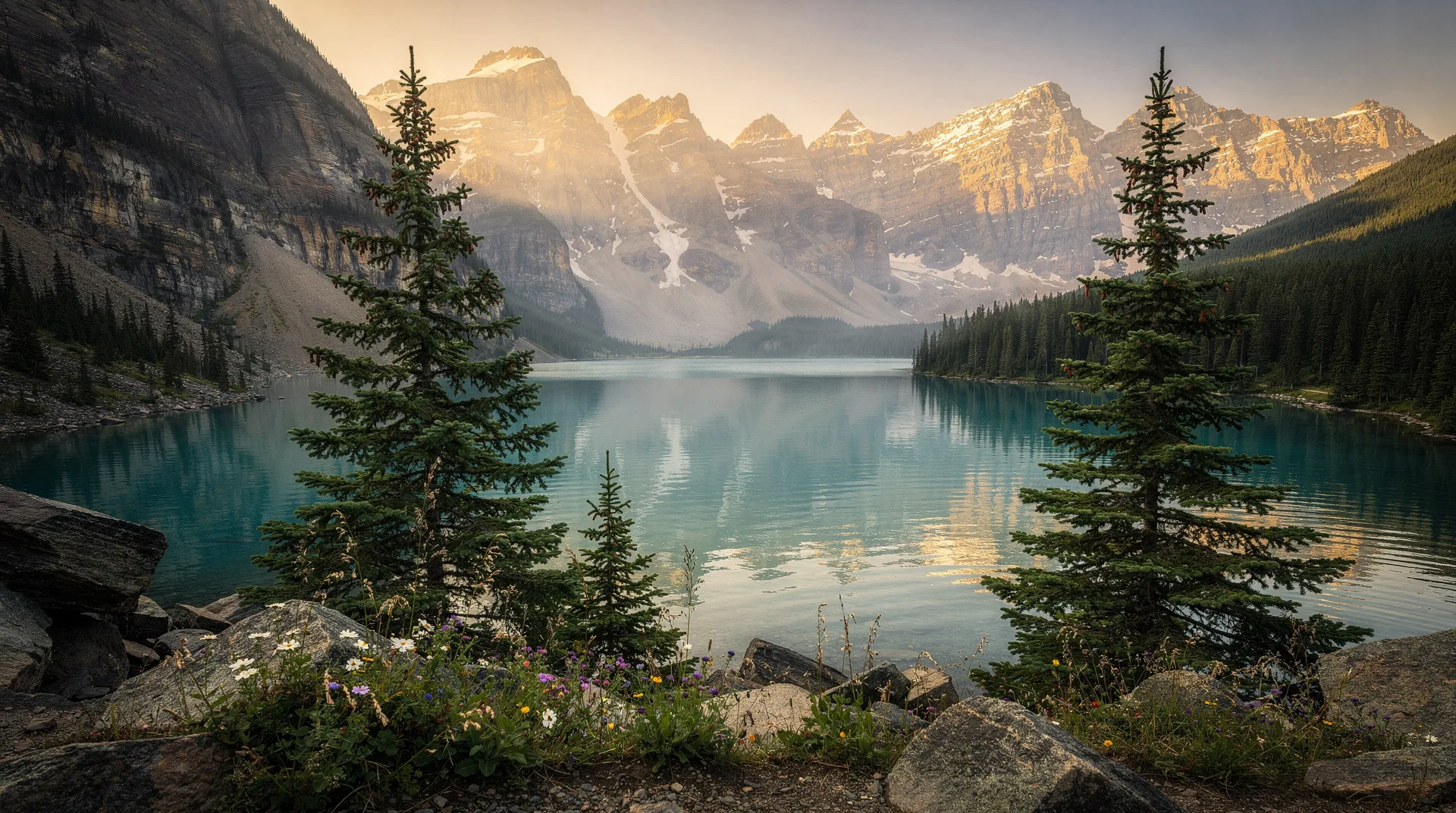
The Belvédère de la Vallée Éternité viewpoint, reached by a trail from the village, looks west and south along the fjord toward the section where Cap-Trinité and Cap-Éternité are visible across the water. On a clear day, the full height of these cliff faces — 300 metres from water to summit — is visible across the dark fjord. The reflection of the cliffs in the water below, in the early morning before the fjord surface is disturbed by wind, is the image that appears on every tourism guide for the region.
The viewpoint above the church is a shorter walk that provides the standard “postcard” view of the village — the painted houses clustered on the valley bottom, the church steeple, the fjord beyond, and the cliff walls on both sides. This is the view that has been photographed tens of thousands of times and remains worth experiencing in person because the scale and depth of the original landscape exceed any photograph.
In autumn, the hardwood trees on the fjord walls turn before the village below — the sequence of colour, from highland plateau to fjord edge to the valley floor, produces layers of gold, orange, and red that the viewpoints capture from above.
Musée du fjord and nature experiences
The Musée du Fjord — a nature interpretation centre in Sainte-Rose-du-Nord — provides context for the geological history of the Saguenay and the ecology of the fjord. The exhibits explain the glacial carving of the fjord, the marine ecology of the cold saline waters, and the beluga population that uses the fjord as part of its St. Lawrence range.
The museum is modest in scale but well curated and provides useful preparation for visitors who plan to spend time at Baie-Sainte-Marguerite or on kayak tours where understanding the ecology adds to the experience.
Adjacent to the museum, the village has established a nature garden that demonstrates the plant communities of the fjord environment — boreal species, cliff face plants, and the riparian vegetation of the small valley streams. Interpretive panels accompany the plantings.
Book Saguenay fjord tours on GetYourGuideGetting to Sainte-Rose-du-Nord
By road from Chicoutimi: Take Route 172 west along the north shore of the fjord. The drive is approximately 45 kilometres (45 minutes). The road follows the fjord edge for much of its length with views across to the south shore cliffs — the drive itself is worth the trip.
By road from Jonquière/Saguenay: Similar distance and time to the Chicoutimi route, following Route 172.
By ferry from L’Anse-Saint-Jean: A seasonal passenger and vehicle ferry connects Rivière-Éternité (near L’Anse-Saint-Jean on the south shore) with the north shore. The ferry crossing is a 20-minute passage across the fjord and provides the most dramatic perspective on the cliff walls — you cross at water level with the full height of the rock faces visible on both sides.
The ferry option allows a south-shore/north-shore day trip without doubling back: drive to L’Anse-Saint-Jean, hike, take the ferry across to the north shore, visit Sainte-Rose-du-Nord, and return to Chicoutimi via Route 172. This is the recommended approach for visitors with a car and a full day.
Things to do
Walk the village
The village is small enough to walk completely in an hour. The route from the dock up through the residential streets to the church and then to the viewpoints above covers the essential territory. The gardens of the village houses — many with perennial plantings suited to the fjord microclimate — are pleasant to observe from the road.
Kayaking from the village
Kayak rentals are available from operators based in the village or nearby on the north shore. The north shore kayak experience is complementary to the south shore tours from L’Anse-Saint-Jean — the view of the south shore cliffs from water level on this side provides a perspective not available from the south shore routes.
Hiking the north shore trails
The Saguenay Fjord park trail network on the north shore includes routes above Sainte-Rose-du-Nord that traverse cliff-top terrain with views across the fjord. The trails are less developed than the south shore network but offer the relative solitude that comes from fewer visitors.
Where to stay and eat
The village has limited accommodation — a small number of gîtes operate in summer, and the municipal campground provides tent and RV sites in a riverside location with fjord access.
The village restaurant serves seasonal regional food in a dining room with fjord views. For a more extended selection, Chicoutimi (45 minutes) has the full range of urban services.
Most visitors treat Sainte-Rose-du-Nord as a half-day to full-day excursion from Chicoutimi, from L’Anse-Saint-Jean, or as part of a south-and-north-shore fjord loop.
Practical information
Services: Very limited — one restaurant, one small store, a museum, and seasonal accommodation. Bring cash.
Photography: The best light for the classic postcard view is early morning, when the fjord is calm and the low sun illuminates the south shore cliffs from the east. Late afternoon provides warmer light on the village itself from the viewpoints.
Winter: Sainte-Rose-du-Nord is accessible year-round by road but most visitor services close after October. The fjord in winter — dark water against snow-covered walls — is a different experience that rewards visitors willing to travel in the off-season.
How much time to allow
A brisk visitor can see the two viewpoints and walk the village in two to three hours, which suits a stop on the way between Chicoutimi and other fjord sites. Visitors doing the full north-south loop via the ferry from L’Anse-Saint-Jean should budget a full day, since the ferry schedule, drive time, and the hike to the Belvédère de la Vallée Éternité viewpoint all add up. Photographers chasing the best morning light often stay the night in one of the village’s small gîtes to be at the viewpoint at sunrise, since driving in from Chicoutimi that early is impractical.
Frequently asked questions
Is Sainte-Rose-du-Nord worth visiting if I’ve already seen L’Anse-Saint-Jean? Yes for most visitors — the two villages sit on opposite shores and offer different perspectives on the fjord. Sainte-Rose-du-Nord’s elevated viewpoints look south across the water toward Cap-Trinité and Cap-Éternité, a vantage point unavailable from the south shore itself.
How do I get between Sainte-Rose-du-Nord and L’Anse-Saint-Jean? A seasonal passenger and vehicle ferry connects Rivière-Éternité (near L’Anse-Saint-Jean) with the north shore, a roughly 20-minute crossing. Outside the ferry season, the drive around via Chicoutimi takes significantly longer.
Related pages
Sainte-Rose-du-Nord is part of the Saguenay–Lac-Saint-Jean destination. The companion south-shore village is L’Anse-Saint-Jean. The Saguenay Fjord park protects the land around both villages. The regional things to do guide integrates the north and south shores into a coherent itinerary.