Quick facts
- Best time
- July to September / late September for fall colours
- Days needed
- 3-5 days
- Languages
- English
- Getting there
- 2 hrs from Toronto by car
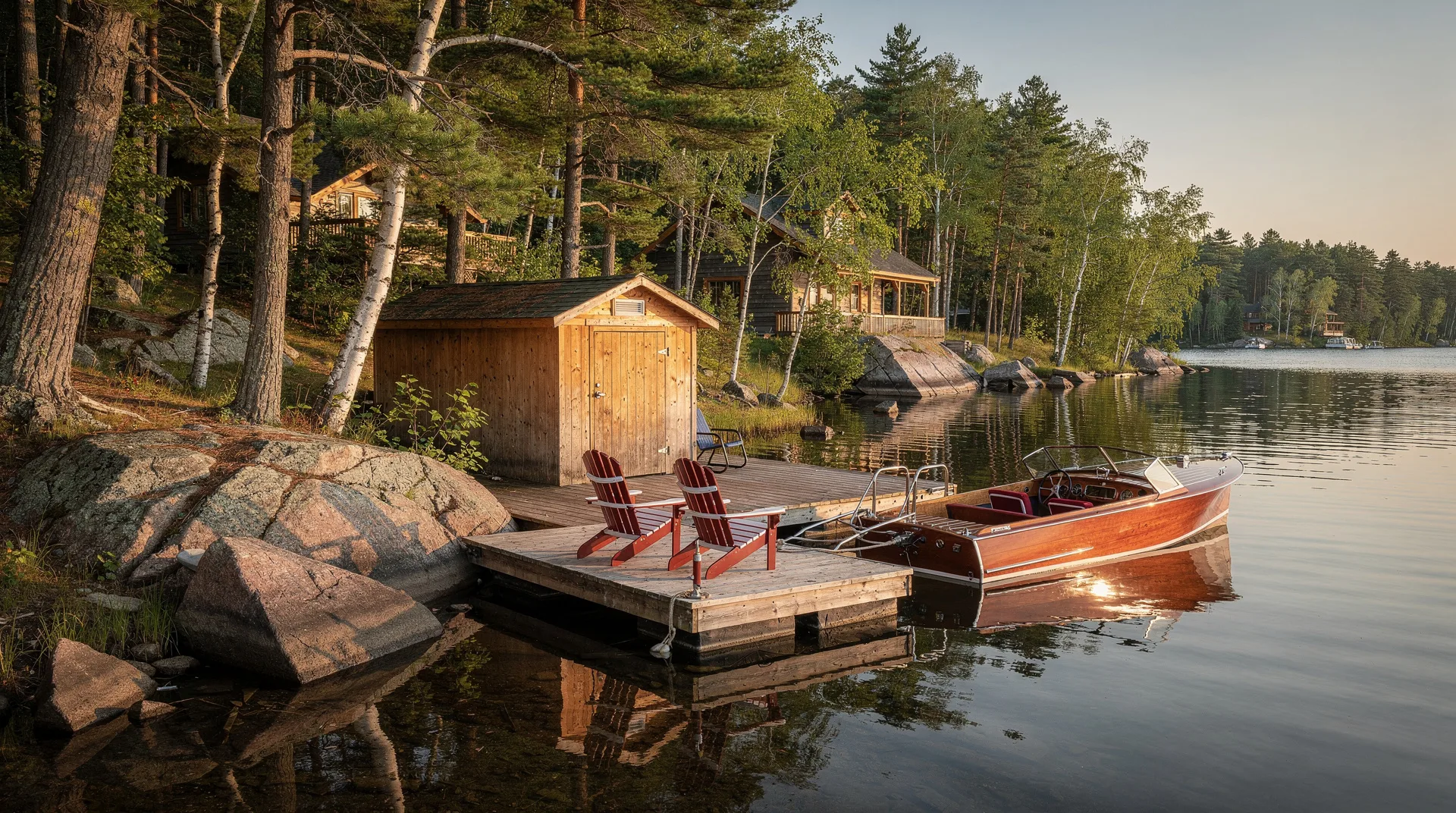
Muskoka is where Ontario goes to relax. A region of more than 1,600 lakes, ancient Canadian Shield granite, mixed hardwood and pine forest, and a cottage culture so deeply embedded in Ontario identity that “going to the cottage” is not merely a vacation description but a statement of where one belongs. For much of the province, Muskoka is not just a destination — it is a recurring anchor in the rhythm of summer.
The region lies roughly 200 kilometres north of Toronto, centred on the three large lakes of Lake Muskoka, Lake Rosseau, and Lake Joseph (locally and inevitably known as “the Big Three”). The Canadian Shield here is near the surface — outcrops of two-billion-year-old pink granite punctuate every shore, worn smooth by glaciers and polished by ten thousand years of wind and wave. The lakes are clear and relatively unpolluted, the forest meets the water at rocky points and pine-shaded shores, and the light on a Muskoka afternoon in July is precisely what the Canadian summer is meant to look like.
| At a glance | |
|---|---|
| Where | Central Ontario, about 200 km / 2 hours north of Toronto |
| Cost | Resort rooms often CAD $250-500+/night in peak summer; cottage rentals vary widely by lake and size |
| Time needed | 3-5 days |
| Getting there | Car via Highway 400 to Highway 11; no meaningful public transit into the region |
| Best time | July-August for swimming and cottage season; late September for fall colours |
The cottage country that defined Canadian summer culture
The cottage tradition in Muskoka dates to the 1870s, when the arrival of the railway from Toronto opened the lakes to urban vacationers. The Edwardian grand hotels — the Windermere House, the Deerhurst, the Sherwood Inn — followed, and the custom of summering in Muskoka became a fixed institution of Ontario middle-class and upper-class life. Today the region contains some of the most valuable cottage real estate in Canada — lakefront properties on Lake Rosseau regularly sell for multi-million dollar amounts.
This economic reality creates a tension that is part of Muskoka’s character. The lakes are simultaneously public waterways and the domain of extremely well-appointed private waterfront properties. Visitors without a cottage of their own access the region through resorts, rental cottages, and the public parks and lakes that are scattered throughout. The experience is worth navigating: the quality of swimming, boating, and natural scenery in Muskoka is exceptional by any standard.
The towns of Gravenhurst, Bracebridge, and Huntsville are the service centres and each has its own character. Gravenhurst, the southernmost and the site of the Muskoka Wharf heritage district, is the gateway. Bracebridge has the waterfalls and the highest density of restaurants. Huntsville, the northernmost and largest, is the gateway to Algonquin Provincial Park.
Top things to do in Muskoka
Lake and water activities
The lakes are the reason for everything. Swimming from granite rock points, taking out a canoe or kayak in the early morning, learning to waterski behind a boat, or simply sitting on a dock watching the afternoon light move across the water — these are the activities that Muskoka has perfected. Most resorts and rental cottages include watercraft. Public boat launches and small town docks provide access for visitors without private cottage access.
Muskoka Lakes Cruise operates historic steamships on Lake Muskoka and Lake Rosseau from the Muskoka Wharf in Gravenhurst — a relaxed way to see the grand old cottages and private islands from the water, and to understand the scale of the lake system.
Browse Ontario tours and Muskoka experiences departing from TorontoAlgonquin Provincial Park day trips
The southern gate of Algonquin Provincial Park is 45 minutes north of Huntsville, making Muskoka an excellent base for day trips into the park — hiking the Lookout Trail, stopping at the park museum, or paddling a day route on one of the lake access points along Highway 60. The Algonquin park corridor is also one of the best places in Ontario to see moose. If you prefer not to drive, compare guided tours across Ontario that cover the park and lake country.
Muskoka Wharf and Gravenhurst
The Muskoka Wharf in Gravenhurst is the best-developed public heritage waterfront in the region — a boardwalk complex with restaurants, galleries, craft shops, and the steamship dock. The Gravenhurst Opera House (1901) is still operating as a performing arts venue and is worth a look for its Victorian theatre interior. The RMS Segwun, a working steamship dating to 1887 and the oldest operating steamship in North America, docks here and operates lake cruises throughout summer.
Hiking and trail walking
Muskoka has an extensive trail network through its forested Canadian Shield landscape. Muskoka Heritage Place in Huntsville operates heritage farm trails and a pioneer village. The Bracebridge Conservation Area has accessible short trails around the Bracebridge Creek falls. The Torrance Barrens Dark Sky Preserve south of Gravenhurst is a rare semi-barren landscape of exposed granite and jack pine that is worth exploring on foot and, after dark, provides exceptional stargazing — it is one of Ontario’s few designated dark sky preserves.
Fall colour viewing
Muskoka’s fall colour season, typically running from late September through mid-October, is among the finest in Canada. The mixed forest of sugar maple, red maple, trembling aspen, white birch, and red oak against the granite lake shores and pine forest produces the definitive Ontario autumn palette. The lakes reflect the colour on calm mornings. Highway 60 through Algonquin Park, accessible from Huntsville, is one of the great fall colour drives in North America.
Muskoka arts and food scene
The summer influx of cottage visitors with disposable income has driven a surprisingly sophisticated food and arts scene in the Muskoka towns. 1844 Muskoka at Windermere House on Lake Rosseau is the region’s fine dining landmark. Moose Café in Huntsville is the beloved local lunch institution. Café Croissant in Bracebridge is the favourite morning pastry stop. The Muskoka Brewery and Sawdust City Brewing from nearby Gravenhurst and Orillia respectively produce well-regarded craft beers distributed beyond the region.
The Muskoka Arts and Crafts festival in late July brings several thousand works for sale to Bracebridge’s Kelvin Grove Park beach in one of Ontario’s oldest outdoor art shows.
Winterlude and winter activities
Muskoka in winter is less visited but has its own appeal. Arrowhead Provincial Park north of Huntsville maintains a skating trail through the forest — one of the few in the world where you skate through mature hardwood forest. Nordic skiing and snowshoeing are available at several area parks. Deerhurst Resort north of Huntsville operates as a full winter destination with ski facilities and ice activities.
Best areas in Muskoka
Lake Rosseau is considered the most prestigious of the Big Three — the showplace of the most elaborate private cottages and the Windermere House resort. Port Sandfield connects Lake Rosseau and Lake Joseph.
Lake Muskoka is the most accessible, with the Muskoka Wharf in Gravenhurst and public boat launches around its perimeter.
Bracebridge has the most active restaurant and café scene of the three main towns, centred around Manitoba Street and the Bracebridge Inn area.
Huntsville is the best base for Algonquin day trips and has a lively downtown core around Main Street.
The Muskokas north of Huntsville transition into true boreal forest and Canadian Shield wilderness, with several smaller lakes offering more affordable and less crowded access.
When to visit
July and August are the traditional cottage season — the lakes are warm for swimming (typically 22–25°C surface temperature), all resorts are fully operational, and the restaurants are at their liveliest. Accommodation fills quickly; book several months in advance for peak summer weekends.
Late September to mid-October is fall colour season — one of the great natural spectacles of eastern Canada. Accommodation is more available than in summer and the days are clear and cool.
June offers full lake and outdoor access with fewer people and lower prices.
Winter (December–March) is primarily for winter sports enthusiasts and those seeking quiet. Arrowhead’s skating trail is the main draw.
Where to stay
Windermere House on Lake Rosseau is the classic Muskoka resort experience — a Victorian lakefront property rebuilt after a fire in the 1990s with a full marina, water sports, dining, and the atmosphere of the grand cottage tradition.
Deerhurst Resort north of Huntsville is the largest full-service resort in the region — 21,000 square metres of facilities including golf, spa, and outdoor activities. Family-oriented and professionally run.
Arowhon Pines inside Algonquin Park, 45 minutes north of Huntsville, is a remote log cabin resort accessible by water or a short trail — a romantic choice for couples seeking genuine wilderness accommodation.
Muskoka cottage rentals through VRBO or Airbnb provide the most authentic experience for those wanting the full cottage country immersion — private waterfront, canoe at the dock, morning swim off the rocks.
Food and drink
Muskoka cuisine is firmly in the tradition of Ontario comfort food elevated by good local ingredients. The Windermere House restaurant (now 1844 Muskoka) is the regional dining landmark. Inn at the Falls in Bracebridge has an excellent patio above the Bracebridge Falls. On the Docks at the Muskoka Wharf in Gravenhurst serves straightforward fish and chips and smoked meats beside the steamship dock.
Muskoka Brewery’s seasonal ales, particularly their Mad Tom IPA, are distributed across Ontario and are best experienced fresh at local restaurants. The Crossroads Restaurant in Bala serves basic diner fare to cottagers since the 1930s, and is the quintessential experience of the simpler, less polished Muskoka.
Getting around
Highway 400 north from Toronto reaches Barrie in approximately 90 minutes, then Highway 11 continues north through Gravenhurst, Bracebridge, and Huntsville. The drive is one of the most traffic-heavy in Ontario on Friday evenings in summer — Thursday departures are advisable. There is no meaningful public transit to Muskoka. A car is essential.
Within Muskoka, distances between attractions are significant and a car remains necessary. Water taxis operate between the larger resorts on the Big Three lakes.
Combining Muskoka with the rest of Ontario
Muskoka fits easily into a longer trip. Many visitors pair it with a few days in Toronto at either end, and the Toronto to Ottawa road trip is a natural way to carry on east once the lake days are done. For a broader plan, the Ontario 7-day itinerary and the Ontario 10-day itinerary both show how a lake stay balances against city and waterfall stops.
If cottage country is the main goal, the Ontario cottage country guide goes further into how renting works and what to expect from different lake districts. Paddlers will find more ideas in the Ontario canoeing routes guide, and anyone planning around the leaves should read the Ontario fall colours guide alongside this page. For timing across the province, see the best time to visit Ontario.
Nearby destinations make good companions too: Georgian Bay shares the granite shoreline, the Haliburton Highlands offer a quieter lake-and-forest alternative, and the Kawarthas are the other great cottage district within reach of Toronto.
Muskoka’s seasons at a glance
| Season | Water temperature | Highlights | Crowds |
|---|---|---|---|
| June | Cool, around 18-20°C | Full access, lower prices, black flies possible | Low |
| July-August | Warm, 22-25°C | Cottage season in full swing, festivals, warmest swimming | Very high |
| Late September-mid October | Cooling fast | Fall colour on the granite lakeshores | High (day-trippers) |
| Winter (Dec-Mar) | Frozen | Arrowhead skating trail, Nordic skiing, quiet | Low |
Day trips from Muskoka
Algonquin Provincial Park (45 minutes from Huntsville) is the obvious extension, covered in detail in the Algonquin Park guide.
Killbear Provincial Park (1 hour west on Georgian Bay) offers spectacular Georgian Bay granite coast hiking and camping at the point where the Muskoka lakes meet the open bay.
Parry Sound (45 minutes northwest) is a working Georgian Bay port town with a famous summer music festival (Festival of the Sound) and boat cruises through the 30,000 Islands UNESCO World Biosphere Reserve.
Orillia (45 minutes south) is the home of novelist Stephen Leacock and has the Leacock Museum in his original summer home.
Frequently asked questions about Muskoka
Do I need to own a cottage to enjoy Muskoka?
Not at all. Vacation rental cottages, resorts, and the public areas of the towns and parks provide full access to the Muskoka experience. Renting a cottage for a week, even from a starting point of non-ownership, is easily organized through VRBO, Airbnb, and dedicated Muskoka cottage rental agencies.
How warm are the lakes for swimming?
Surface temperatures on the Big Three lakes typically reach 22–24°C by mid-July — warm enough for very comfortable swimming. The granitic bottom and relatively clean water give the lakes exceptional clarity. Water temperatures drop quickly in September.
Is Muskoka affordable?
The premium cottage properties and flagship resorts are expensive, but the region is accessible at multiple price points. Camping at provincial parks (Arrowhead, Grundy Lake, Six Mile Lake), smaller motels in the towns, and shoulder-season visits all reduce costs significantly. The main towns’ cafes and restaurants include affordable options alongside the resort dining.
What is the difference between Muskoka and the Kawarthas?
Both are Ontario cottage country lake districts. The Muskoka lakes are on the Canadian Shield with deeper, cleaner water and harder landscape. The Kawarthas, an hour or so east of Muskoka, have more accessible waterways connected by the Trent-Severn Canal, warmer water, and a less rocky landscape. Muskoka has the higher status as Canada’s prime cottage destination; the Kawarthas are generally more affordable.
Do I need a car in Muskoka?
Yes. There is no meaningful public transit within the region, distances between towns and lake access points are significant, and most accommodation and attractions are only practically reachable by car. Water taxis cover some inter-resort trips on the Big Three lakes but do not substitute for a car on land.
Can I visit Muskoka as a day trip from Toronto?
It is possible but tight — the drive alone is around 2 hours each way, and Friday and Sunday traffic on Highway 400/11 is heavy in summer. A day trip works better for Gravenhurst or Bracebridge specifically; the fuller Muskoka experience (a lake, a cottage or resort, an evening on the water) needs at least one overnight.