Quick facts
- Best time
- June to October
- Days needed
- 3-4 days
- Languages
- English
- Getting there
- 4.5 hrs from Vancouver by car or 1 hr flight
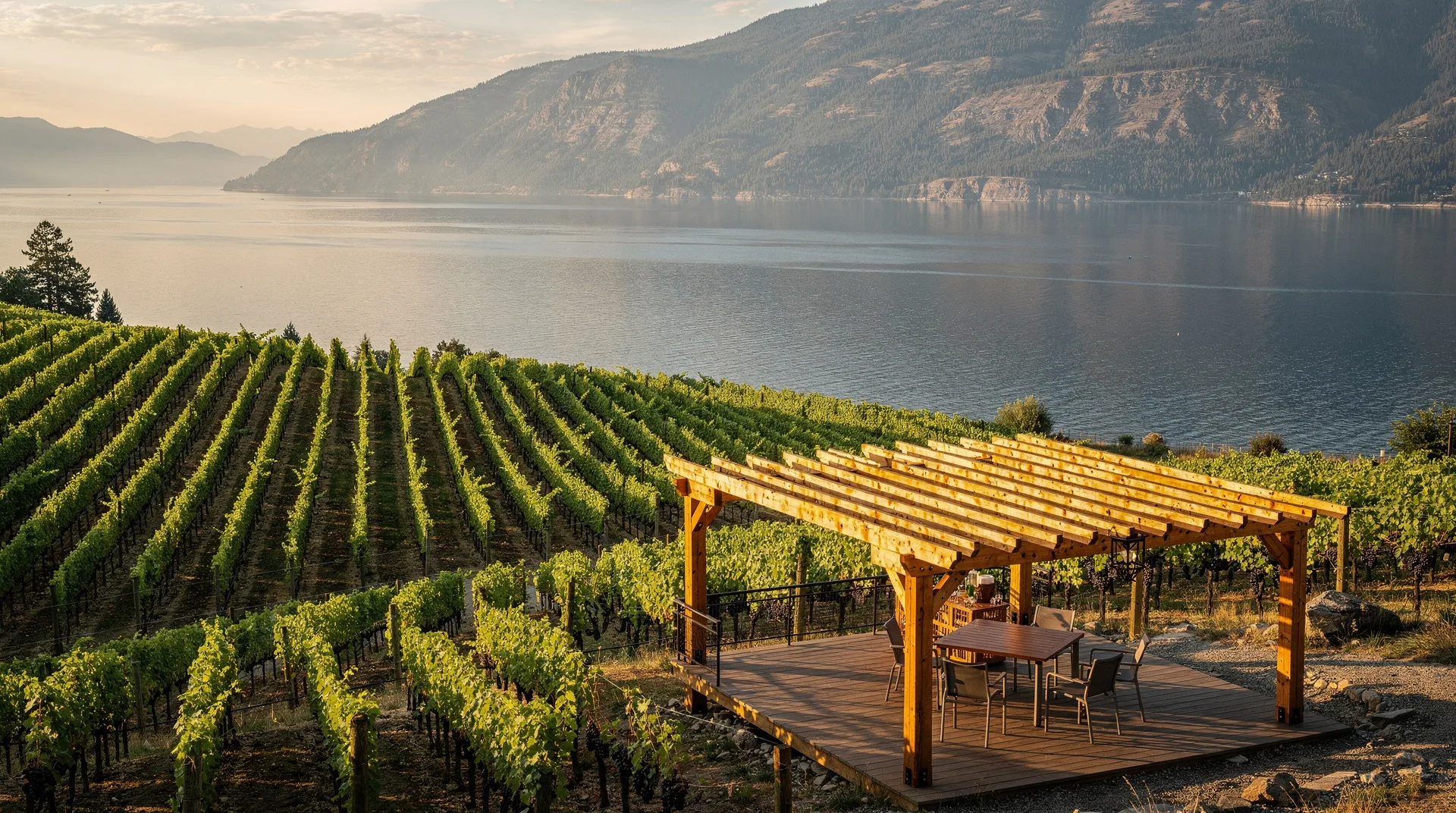
Kelowna sits in the bowl of the Okanagan Valley, straddling the shore of Lake Okanagan at the point where British Columbia’s interior becomes genuinely warm and dry enough to grow vitis vinifera grapes, peaches, cherries, and apricots on an agricultural scale. The result is a destination that simultaneously functions as a beach resort, a wine country hub, an orchard landscape, and a four-season outdoor recreation centre — a combination that has made it the fastest-growing city in Canada for much of the past decade.
The Okanagan Valley’s geography is unusual for Canada: a semi-arid landscape of sage-covered hills and hoodoo rock formations, punctuated by a chain of long narrow lakes carved by glaciers. Lake Okanagan is 120 kilometres long and deep enough, local legend insists, to hide Ogopogo — a lake creature that has been reported for centuries by both Indigenous inhabitants and European settlers. The climate is the warmest in British Columbia, with summer temperatures regularly exceeding 35°C and reliable sunshine from May through October.
| At a glance | |
|---|---|
| Where | Central Okanagan Valley, interior British Columbia |
| Cost | Wine tastings typically a small fee per person, often waived with a bottle purchase; beach access free |
| Time needed | 3-4 days for wine, beaches and a hike; longer to combine with Naramata or Osoyoos |
| Getting there | Around 4.5 hrs from Vancouver by car, or roughly 1 hr by air (YLW) |
| Best time | July-August for beaches; September-October for harvest and fewer crowds |
The Okanagan’s wine revolution
The emergence of the Okanagan as a world-quality wine region is one of the more remarkable stories in Canadian food culture. In the 1980s, the valley produced mainly mediocre table wine from hybrid grapes. The North American Free Trade Agreement in 1989 forced a ripping-out of most existing vines, and replanting with European vinifera varieties transformed the industry within a decade. Today the Okanagan has over 200 wineries producing Pinot Noir, Chardonnay, Riesling, Syrah, and Bordeaux-style reds of genuine international standing.
The wine regions cluster around three main areas: the Kelowna Wine Trail and Lake Country to the north, the Naramata Bench (an hour south near Penticton), and the increasingly celebrated South Okanagan around Oliver and Osoyoos where Canada’s only true desert creates conditions for some of the valley’s most concentrated red wines.
Kelowna itself is the commercial and accommodation hub for wine touring. Mission Hill Family Estate, the most architecturally dramatic winery in Canada with its clifftop Roman-inspired tower overlooking the lake, is 15 minutes from downtown. Cedar Creek, Summerhill Pyramid Winery (which ages wine under a pyramid to test acoustic maturation), and Quails’ Gate are among the other must-visit estates in the immediate Kelowna area.
For a deeper look at grape varieties, tasting etiquette and how the sub-regions differ, read the Okanagan wine guide. If you would rather follow a ready-made route, the Okanagan wine itinerary strings the valley’s best stops into a relaxed loop, and Naramata rewards a slower afternoon on its own.
Browse Okanagan wine tours and winery experiences from KelownaTop things to do in Kelowna
Winery touring on the Kelowna Wine Trail
The Kelowna Wine Trail connects over 40 wineries along two routes on either side of the lake. The West Kelowna side includes Mission Hill, Quails’ Gate, and Frind Estate. The East Kelowna Cider Circuit focuses on orchard operations that have added hard cider to the regional drink portfolio. A dedicated driver or a winery shuttle service makes the most sense for serious tasting — multiple operators run full-day wine tours from downtown Kelowna, and you can compare guided tours in Kelowna before you book.
Beach days on Lake Okanagan
Kelowna’s urban beaches are a genuine asset. City Park Beach is the main public beach, right in the city centre — a wide strip of sand with lifeguards, warm water (typically 21–24°C in July and August), and views across the lake to the dry sage hills on the opposite shore. Boyce-Gyro Beach south of downtown is less crowded and popular with families. Water sports — wakeboarding, paddleboarding, jet skiing, sailing — are available through rental operations on the water.
The Okanagan Rail Trail and cycling
The 50-kilometre Okanagan Rail Trail follows the former CN Rail line along the east shore of Wood Lake and Kalamalka Lake north of Kelowna, through the Lake Country wine region to Armstrong. It is one of the best cycling routes in BC — flat, paved, and passing through orchard and lake scenery throughout. Lake Country wineries have positioned themselves to welcome cyclists. The broader Kelowna area has an extensive cycling network including the Mission Creek Greenway into the city.
Orchard and farm stand touring
The Okanagan harvest season — cherries in June, apricots and peaches in July and August, apples and grapes in September and October — transforms the roadside into a succession of farm stands selling fruit picked that morning. The South East Kelowna area and the Lakeshore Road corridor are both lined with U-pick farms and commercial orchards. The Kelowna Farmers’ and Crafters’ Market (Wednesday and Saturday, May to October) in downtown brings the orchard produce into the city.
Hiking Myra Canyon
The Kettle Valley Railway (KVR) trestle bridges at Myra Canyon, 15 kilometres from downtown Kelowna in the mountains above the valley, are one of BC’s most remarkable engineering heritage sites. A 12-kilometre return cycling and hiking route passes 18 wooden and steel trestle bridges and 2 tunnels as the old railway grade crosses the canyon of Myra Creek. The 1910-era bridges were partially destroyed in the 2003 Okanagan Mountain Park fire and meticulously rebuilt. The views from the trestles down to the lake 600 metres below are spectacular.
The trestles are one section of the wider Kettle Valley Rail Trail, so cyclists who enjoy the outing can look at longer stretches of the old railway grade. For other walks across the province, the best hikes in BC is a good next read.
Knox Mountain Park
Knox Mountain is a large park that rises directly above downtown Kelowna, offering hiking and mountain biking trails with panoramic views over the city, the lake, and the valley. The summit lookout is accessible in 45 minutes on foot from the trailhead on Ellis Street. The park’s lower sections include Rotary Beach, a small beach and picnic area at the mountain’s foot.
Big White Ski Resort
40 kilometres east of Kelowna in the Monashee Mountains, Big White is one of Canada’s major ski resorts — a true ski-in ski-out village at 1,755 metres with excellent dry powder snow. The resort receives over 750 centimetres of snow annually, and the combination of reliable conditions, a genuine village atmosphere, and proximity to the Okanagan makes it a popular winter destination. Tubing, snowshoeing, and ice skating are available for non-skiers. The Big White ski resort guide covers the village in more detail, and the BC ski guide helps you compare it with other resorts in the province.
Best areas in Kelowna
Downtown Kelowna has transformed significantly in the past decade, with the Cultural District on the waterfront anchoring gallery, restaurant, and café activity. Bernard Avenue is the pedestrian-friendly main street. The renovated waterfront boardwalk connects City Park Beach to the art gallery and the Delta Hotels property.
Pandosy Village / South Pandosy is the most interesting neighbourhood beyond downtown — a strip of independent restaurants, coffee shops, and boutiques along Pandosy Street and KLO Road that functions as the city’s non-tourist commercial core.
West Kelowna (formerly Westbank) across the Okanagan Lake Bridge is the main winery side of the lake, with Mission Hill and Quails’ Gate at the heart of the concentration.
Lake Country to the north is technically a separate municipality but forms a continuous winery and orchard landscape leading to the northern end of the Rail Trail.
When to visit
July and August are peak season — beach weather is reliable, all wineries are open, and the full range of outdoor activities is available. Accommodation prices are highest and advance booking is essential for the better properties.
September and October are arguably the best months overall. The grape harvest (vendemio) transforms the vineyards, afternoon light on the hills is warm and golden, and the crowds drop sharply after the Labour Day weekend. Wine tours are at their most atmospheric.
June is warm enough for beach use in most years and offers full winery access without peak-season crowds.
Winter (December through March) is primarily about Big White ski resort. The valley floor in winter is grey and quiet — not a conventional tourism season.
To place Kelowna against the rest of the province’s calendar, see the best time to visit BC, and for autumn colour beyond the vineyards, the BC fall colors guide.
Where to stay
Hotel Eldorado on the lakeshore south of downtown is Kelowna’s most characterful accommodation — a restored 1926 heritage hotel on the water with genuine atmosphere. The restaurant is one of the better spots in the city.
Delta Hotels by Marriott Kelowna is the most reliably positioned downtown property, directly on the waterfront and walkable to City Park Beach.
Manteo Resort on the lakefront south of downtown offers a condo-hotel format with full kitchen suites, a marina, and private beach access — suitable for families and longer stays.
Several large chain hotels cluster on Harvey Avenue near the highway for budget-conscious travellers with cars. Vacation rental properties throughout the Okanagan Mission neighbourhood offer a more residential experience.
Food and drink
Kelowna’s restaurant scene has grown to match its wine reputation. Krafty Kitchen + Bar downtown is consistently one of the best tables in the city — farm-to-table focused, wine-oriented, and unpretentious. Waterfront Wines on Ellis Street pairs a serious wine shop with a restaurant that sources locally and changes its list obsessively. RauDZ Regional Table has been setting the pace for Okanagan seasonal cooking since 2009.
For lunch, the Okanagan staple is a winery patio in the vineyard with charcuterie and local cheese. Quails’ Gate and Cedar Creek both run well-regarded bistros alongside their tasting rooms. The summer fruit stands along the highway remain non-negotiable — a bag of Okanagan peaches in August is one of the great food experiences in Canada.
Local craft beer is also worth noting: Tree Brewing and BNA Brewing are both downtown Kelowna institutions.
Getting around
Kelowna has an airport (YLW) with direct connections to Vancouver, Calgary, Edmonton, Toronto, and several US cities. Driving from Vancouver takes 4.5 hours via the Coquihalla Highway — a spectacular crossing through the Coast Mountains. Driving from Calgary takes approximately 6 hours through the Rockies and the Kootenays.
Within Kelowna, a car is helpful for winery touring and reaching outlying attractions. The city centre and beaches are walkable. Local transit connects the main urban areas. Cycling is genuinely viable for the Cultural District, the waterfront, and the Mission Creek Greenway.
If you plan to drive, the BC driving distances page helps with planning legs, and car rental in BC explains what to sort out before you collect the keys. Travellers coming from the coast can also read Vancouver to Whistler if they want a mountain stop on the way inland.
Day trips from Kelowna
Naramata Bench (1 hour south near Penticton) is the most concentrated wine touring route in the Okanagan — a narrow terrace above Okanagan Lake lined with small artisanal wineries. More intimate than the large estates near Kelowna.
Penticton is a beach town at the southern end of Okanagan Lake with its own good restaurants and a famous Ironman triathlon course. Combined with the Naramata Bench it makes a full day.
Osoyoos and the South Okanagan (2 hours south) is Canada’s desert — officially the northern tip of the Great Basin Desert. The Oliver wine region produces the valley’s most powerful reds, and the Nk’Mip Desert Cultural Centre interprets the semi-arid ecosystem and Syilx Okanagan culture.
Summerland and Giant’s Head offers a volcanic rock mountain above the lake and the Summerland Ornamental Gardens.
Travellers heading west or north after the valley can continue to Kamloops, while those building a longer trip can fold Kelowna into the BC 10-day itinerary.
Kelowna vs Penticton vs Osoyoos: choosing an Okanagan base
The Okanagan Valley runs roughly 250 kilometres north to south, and where you base yourself shapes the trip.
| Base | Character | Best for |
|---|---|---|
| Kelowna | Largest city, most wineries within reach, full range of restaurants and hotels | First-timers, families, anyone wanting a single well-equipped base |
| Penticton | Smaller lakeside town, gateway to the Naramata Bench | Beach-and-wine travellers wanting a quieter town |
| Osoyoos | Canada’s desert, South Okanagan’s most powerful reds | Wine specialists chasing the valley’s warmest microclimate |
Most first-time visitors base in Kelowna and day-trip south; wine-focused travellers with more time sometimes split a week between Kelowna and Penticton to cover both the Kelowna Wine Trail and the Naramata Bench without a long daily drive.
Frequently asked questions about Kelowna
Is Kelowna primarily a wine destination?
Wine is central to the Okanagan identity, but Kelowna functions equally well as a beach destination, a cycling destination, and a ski resort town in winter. Families who have no interest in wine find plenty of activity — watersports, hiking, the orchard landscape, and proximity to Big White.
What is the best way to tour the wineries?
A guided tour with a dedicated driver is the most relaxed approach. Multiple operators run half-day and full-day wine tours from downtown Kelowna, typically visiting three to five wineries. Renting an e-bike is an excellent alternative for the relatively flat west-side winery routes. Some wineries require tasting reservations in advance, especially in summer.
How warm does Lake Okanagan get?
Surface water temperature at the main Kelowna beaches typically reaches 21–24°C in July and August — warm enough for comfortable swimming without a wetsuit, which distinguishes Okanagan lakes from most BC coastal water temperatures.
Can you visit Kelowna without a car?
You can access downtown, the waterfront beaches, and nearby restaurants without a car. Winery touring without a car requires joining a guided tour or hiring transport — the wineries are spread over a wide area and public transit connections are limited outside the city centre.
What is Ogopogo?
Ogopogo is the Okanagan’s legendary lake monster — a serpentine creature reportedly inhabiting the deep waters of Lake Okanagan. Indigenous oral histories of the Syilx Okanagan people predate European contact and describe a similar entity. Sightings continue to be reported. Whether the creature exists or not, it is effectively the Okanagan’s unofficial mascot and appears on merchandise throughout the region.
Should I base in Kelowna or Penticton?
Kelowna is the better single base for most first-time visitors — it has the widest range of wineries within easy reach, the most accommodation and restaurant choice, and the airport. Penticton suits travellers who want a smaller, quieter lakeside town and prioritise the Naramata Bench over the Kelowna Wine Trail.
Is Big White worth combining with a summer Kelowna trip?
No — Big White is a winter ski resort and most of its lifts and village services close outside the snow season. Visit Kelowna in summer for wine and beaches, and treat Big White as a separate winter trip.