Quick facts
- Located in
- Fraser Valley, BC (135 km east of Vancouver)
- Best time
- Year-round; summer for the lake; fall for the sand sculpture competition
- Getting there
- 1.5-hr drive from Vancouver via Highway 1 and Highway 7
- Days needed
- 1-2 days
Harrison Hot Springs is BC’s most accessible hot spring destination — a small resort village at the southern tip of Harrison Lake, set against the forested slopes of the Coast Mountains, where naturally heated mineral water has been attracting visitors since the late 19th century. The journey from Vancouver takes roughly 90 minutes, making it one of the most straightforward escapes from the city: you leave the Lower Mainland traffic, drive along the Fraser River through Agassiz farmland, and arrive at a lakeside village where the biggest questions are which pool to soak in and whether to take a boat on the lake before or after lunch.
The village is modest in scale — a main street of gift shops, restaurants, and the landmark Harrison Hot Springs Resort, the Fairmont-managed property that anchors the local economy and houses the most famous pools. But the surrounding geography — Harrison Lake extending 60 kilometres north into the mountains, the Sasquatch Provincial Park forest on the eastern shore, the Harrison River at the village’s edge — provides enough natural substance to make a two-day visit feel well-occupied rather than padded.
Harrison Hot Springs occupies a particular place in BC folklore as the acknowledged capital of Sasquatch Country. The Stó:lō First Nations, on whose traditional territory the area sits (see the Indigenous experiences in BC guide for respectful ways to learn more), have accounts of large bipedal creatures in these forests that long predate the Western cryptozoological tradition. The town has embraced the mythology enthusiastically — the Sasquatch-named provincial park to the east, the sand sculpture bears and mythical creatures on the beach, and the local souvenir economy all reflect a place comfortable with its reputation for the inexplicable.
At a glance
| Where | Southern tip of Harrison Lake, Fraser Valley, BC |
| Cost | Public pool day admission is affordable; resort pool day access and spa treatments cost significantly more |
| Time needed | 1-2 days; a day trip works, an overnight allows a second soak |
| Getting there | Around 1.5 hours from Vancouver via Highway 1 and Highway 7; no direct public transit, a car or day tour is needed |
| Best time | Year-round for the pools; July-August for the lake; September for the sand sculpture competition |
How the public pool and resort pools compare
For first-time visitors trying to decide where to spend pool time, the practical difference is straightforward: the public pool on the beach promenade is the affordable, family-oriented option with waterslides and a busier atmosphere, while the resort pools are quieter, better maintained, and paired with hotel-level service and a full spa menu. Neither is “better” outright — a family with kids and a tight budget is usually well served by the public pool alone, while a couple on an anniversary trip gets more from a resort day pass or an overnight stay. Combining a morning at the public pool with an afternoon resort spa treatment, as noted above, is a reasonable middle path for visitors who want a taste of both.
Combining Harrison with a wider BC trip
Harrison Hot Springs works well as a detour from a longer British Columbia itinerary rather than a destination visited in isolation. Travellers coming from Vancouver sometimes treat it purely as a day trip, but pairing it with a night in the Fraser Valley makes for a much less rushed pace. For visitors continuing on to the interior or the Rockies, Harrison sits reasonably close to routes that eventually connect toward Banff, though it adds a detour rather than sitting directly on that corridor.
If soaking is the main point of your trip, the BC hot springs guide puts Harrison in context next to the province’s other thermal destinations, and the best time to visit BC page helps you decide which season suits the kind of visit you want. Travellers building a longer loop can slot Harrison into the 7-day British Columbia itinerary as a gentle first or last stop.
The hot springs
History of Harrison’s mineral springs
Hot springs were known to Indigenous peoples in this area long before European contact. The Stó:lō Nation used the springs for their healing properties, and the first non-Indigenous use of the springs began with gold rush prospectors in the 1850s who discovered that the heated water was useful for laundry — an unglamorous origin for what has become BC’s most prominent spa destination.
The Harrison Hot Springs Hotel was established in 1886 and has been the village’s anchor establishment through multiple incarnations. The current Harrison Hot Springs Resort, now managed by Marriott’s Autograph Collection after many years as a Fairmont property, continues the tradition of a grand lakeside hotel centred on the mineral pools.
The spring water emerges at the source at approximately 67°C — too hot to bathe in directly — and is cooled to comfortable bathing temperatures of 36–40°C before entering the pools.
The public pool
The Harrison Hot Springs Public Pool is located on the beach promenade and is the most affordable access point to the mineral water. The facility includes hot mineral pools (approximately 38°C), a cooler pool for active swimming, and waterslide facilities that make it effective for families. Day admission is significantly less expensive than resort access.
The pool is open year-round, and the experience of sitting in a 38°C outdoor pool while looking out over Harrison Lake in the fog of a November morning is genuinely atmospheric — the combination of warmth, mineral water, and mountain scenery is best appreciated in cooler weather when the contrast between pool temperature and ambient air is most dramatic.
The resort pools
The Harrison Hot Springs Resort has private pool facilities for hotel guests and offers day access for non-guests. The resort’s pools are typically quieter than the public facility and better maintained, and the overall experience — hotel setting, lounge chairs, service — is more refined. The resort also operates a full spa with treatments that use the mineral water as a base.
For a day visit, the combination of public pool access in the morning (more affordable, family-friendly) and the resort spa for an afternoon treatment represents the best value approach to the thermal water experience.
Book a Vancouver to Harrison Hot Springs day tour on GetYourGuideHarrison Lake
Overview
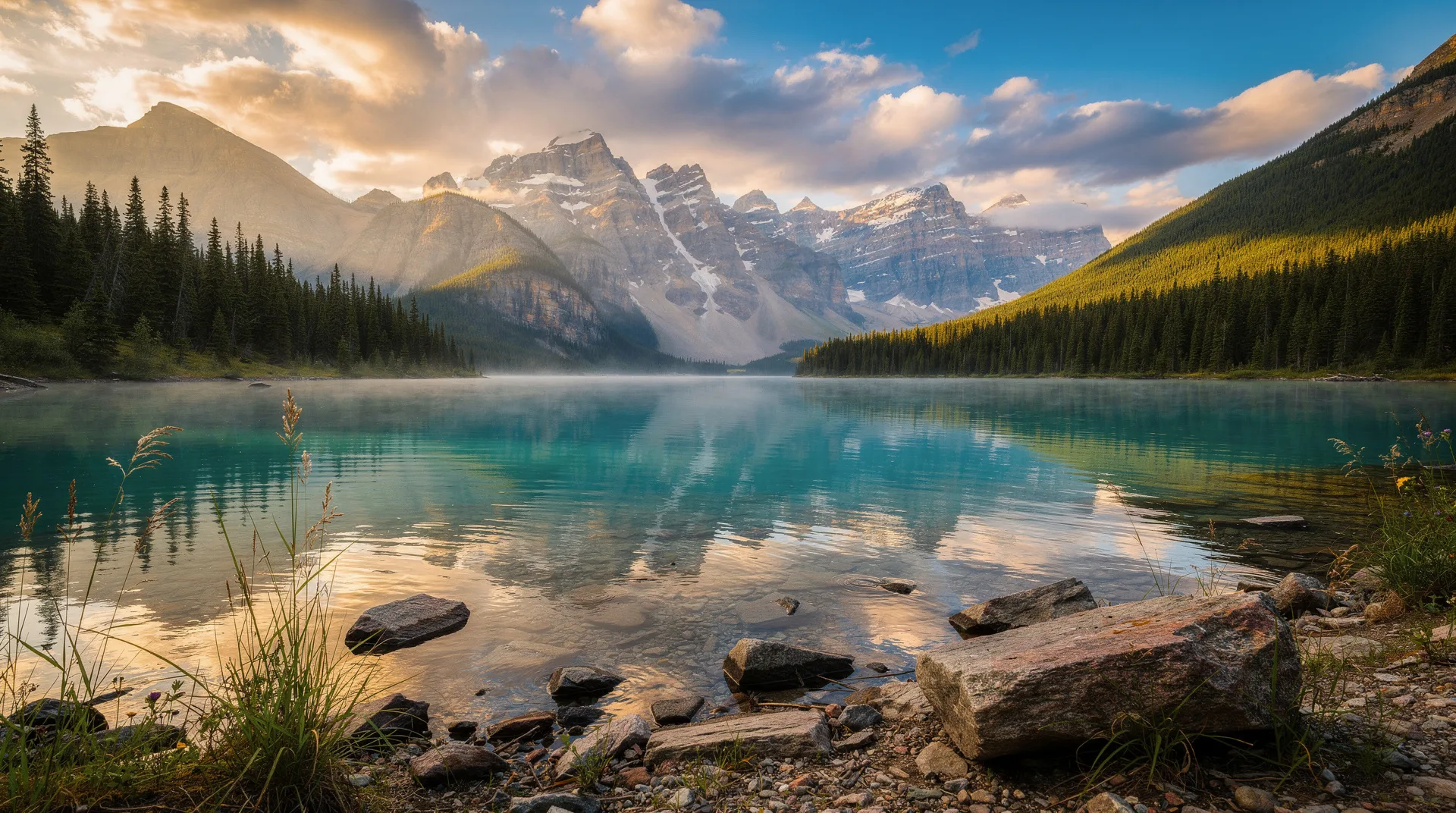
Harrison Lake is one of BC’s largest lakes — approximately 60 kilometres long and 9 kilometres wide — and it has a dramatic relationship with the surrounding mountains that becomes more apparent as you move north from the village. The southern portion, visible from the village beach, is relatively flat and calm; the northern reaches, accessible by boat, become a mountain-rimmed wilderness lake of remarkable scale.
The lake’s water temperature in the bay adjacent to the village reaches 20–22°C in July and August, making it one of the warmest swimmable lakes in the Lower Mainland area. The sandy beach along the village waterfront is well-used in summer and provides a classic BC lake resort experience.
Boat tours and rentals
Several operators at the Harrison Lake marina offer boat rentals and guided tours. The most popular guided tour destination is the hot springs on the far shore — a series of natural hot spring seeps that emerge directly at the lake’s edge on the eastern shore, accessible only by boat. These natural shoreline springs, where hot water mingles with the cold lake, are geologically the same system that feeds the village pools and provide a wilder, less mediated version of the Harrison mineral water experience.
Kayak and canoe rentals are available for self-guided exploration of the southern bay area. The lake can develop significant waves when north winds funnel down from the mountains — get local advice on conditions before paddling far from shore. For a wider look at paddling in the country, the kayaking in Canada guide covers the basics of choosing a route and reading the weather.
Sasquatch Provincial Park
Sasquatch Provincial Park on the eastern shore of Harrison Lake is a 1,217-hectare park named for the mythological creature associated with these Coast Mountain forests. The park encompasses several lakes smaller than Harrison — Hicks Lake, Deer Lake, and Trout Lake — connected by hiking trails that provide a rewarding day of walking through mixed forest, wetland, and lakeside habitat.
The park’s Hicks Lake Campground is one of the Fraser Valley’s most pleasant campgrounds — quiet, forested, and near a warm swimming lake. Deer Lake trail through old-growth Douglas fir is one of the finest short hikes in the area.
Walkers who enjoy the park may want to browse the best hikes in BC for bigger objectives later in the trip. Forest trails here are also bear country, so it is worth reading the Canada wildlife safety advice before heading out, and the Canadian camping rules page if you plan to stay at the campground.
The World Championship of Sand Sculpting
The Harrison Festival of the Arts hosts the World Championship of Sand Sculpting each September on Harrison’s lakefront beach, drawing professional sand sculptors from around the world who compete over three days to create large-scale sand sculptures of extraordinary technical detail. The competition is one of the world’s most significant in the form, and the finished sculptures — typically 15–20 massive pieces covering hundreds of square metres of beach — remain on display for several weeks after the competition.
The event draws tens of thousands of visitors and is genuinely worth scheduling around. The quality of the work is remarkable — features carved in compacted sand that suggest stone or metal, with detail that seems impossible in a medium so impermanent.
Agassiz and the Harrison Valley
The Kent Museum and Agassiz
The small town of Agassiz, 10 kilometres west of Harrison Hot Springs, has a Heritage Corn Maze and the Kent Museum that together provide a good sense of the agricultural history of the Fraser Valley east of Vancouver. The museum’s focus on the area’s Indigenous history and settler farming history is well-curated for a small municipal museum.
Fraser River Heritage Park
The Fraser River Heritage Park in Mission (an hour’s drive west of Harrison) preserves the site of the St. Mary’s Indian Residential School, now transformed into an Indigenous cultural and healing space. The park’s interpretation of this difficult history is handled with sensitivity and seriousness, and the site’s position on the Fraser River bluffs with views across the valley is striking. This is a site of historical significance that deserves unhurried attention.
Eating and drinking in Harrison Hot Springs
The village’s restaurant scene is modest but adequate. The Harrison Hot Springs Resort dining room offers the most ambitious cooking in the village — a menu focused on BC ingredients in straightforward, accessible preparations, with the resort’s lake views adding atmosphere that the cooking alone might not justify.
Black Forest Restaurant on the main promenade is a Harrison institution offering hearty Germanic-influenced food that has proven remarkably durable in a village where restaurants come and go. The sauerbraten and the schnitzel are reliable standards.
Bigfoot Pub (the name is not coincidental) serves the village’s most casual pub food and local beers. The waterfront patio in summer is the most pleasant informal dining spot in the village.
The village’s coffee shop and ice cream scene caters primarily to day visitors — multiple options along the main street provide the casual stops that a resort village requires.
Browse BC hot springs and nature tours on GetYourGuideWhere to stay in Harrison Hot Springs
Harrison Hot Springs Resort is the flagship property — a large lakeside resort hotel with pool access, spa facilities, multiple restaurants, and a heritage atmosphere that goes back over a century. Room rates are significant but the setting and facilities justify the cost for a special occasion or anniversary trip.
Lakeside Lodge and several smaller boutique hotels along the lakeshore offer quieter alternatives at lower price points, most with lake views and walking access to the public pool and village restaurants.
For budget visitors and families, Sasquatch Provincial Park Campground at Hicks Lake is an excellent option — good facilities, a warm swimming lake adjacent, and a natural setting that the village hotels can’t match. The drive to Harrison village is 10 minutes.
Various vacation rental options in the village and surrounding area offer kitchen facilities and more space for families or groups.
Getting to Harrison Hot Springs
The most common route from Vancouver is via Highway 1 (Trans-Canada) east through the Fraser Valley to Agassiz, then north on Highway 9 to Harrison Hot Springs — approximately 135 kilometres and 1.5 hours in normal traffic conditions.
An alternative and more scenic route takes Highway 7 (the Lougheed Highway) east from Vancouver along the north bank of the Fraser River, passing through Mission before turning north at Agassiz. The Lougheed Highway has more character than Highway 1 and provides views of the Fraser River that the freeway misses.
There is no direct public transit from Vancouver to Harrison Hot Springs. Day tour operators from Vancouver offer seasonal return trips.
If you do not own a car, the car rental in BC guide explains what to expect when picking one up in the city, and the BC driving distances page helps you judge how Harrison fits with other stops. Visitors who like to see Vancouver properly before or after the drive can read the Vancouver destination guide or compare it with a quieter base such as Vancouver Island.
Combining Harrison with the Fraser Valley
Harrison Hot Springs makes excellent sense as part of a broader Fraser Valley itinerary. A two-day combination might include Fort Langley’s National Historic Site and village on day one, with a drive east to Harrison for the second day — pools in the morning, a boat tour to the lake-edge hot springs in the afternoon. This provides good geographic coverage of the valley’s main appeal points without retracing routes.
The Othello Tunnels at Hope and Sasquatch Provincial Park both add hiking options to any eastern Fraser Valley itinerary.
Frequently asked questions about Harrison Hot Springs
Are the hot springs natural?
Yes — the mineral springs emerge naturally from the ground at Harrison at approximately 67°C. The source water is geothermally heated and has a distinctive mineral composition including calcium, sodium, and sulphur compounds. The water is cooled to bathing temperature before entering the pools.
Can you visit Harrison Hot Springs in winter?
Absolutely — winter is in some ways the best time to visit. The hot springs experience is most dramatic when the contrast between pool temperature and ambient air is greatest. The lake is beautiful in winter fog, the village is quiet, and accommodation prices are significantly lower than in summer.
Is Harrison Hot Springs worth visiting for a day trip?
Yes, if you have a car. The 1.5-hour drive from Vancouver to 3–4 hours in the pools and on the beach, followed by a 1.5-hour return, is a satisfying and refreshing day that costs little beyond the pool admission and fuel. Staying overnight allows for a more relaxed experience and a second round in the pools the following morning.
What is the Sasquatch connection?
The Stó:lō First Nations have traditional accounts of large, hair-covered bipedal creatures in the forests of the Coast Mountains — creatures that entered Western popular culture as “Sasquatch” (from the Halkomelem word “sasq’ets”). The Harrison Hot Springs area is considered one of the primary territories for reported sightings in the modern era, and the town has embraced the mythology as part of its identity. The Sasquatch Provincial Park, the Bigfoot-named businesses, and the local interpretive displays all reflect this particular piece of BC folklore.
Do you need to book the hot springs in advance?
Generally no for the public pool, though it can get busy on summer weekends and holiday periods. Resort pool day access and spa treatments benefit from advance booking, particularly around the September sand sculpture competition when the village fills up. Accommodation should be booked ahead for that same period and for summer weekends.