Canada ski season: planning your winter trip
Canada’s ski season is a serious proposition — the country has some of the best alpine skiing in the world, a snow culture that runs deep, and resort infrastructure that has been built up over decades to a very high standard. But planning a Canadian ski trip from outside the country requires advance thought: the best accommodation books up months ahead, flight costs are significant, and the experience varies enormously depending on which region you choose.
This is a planning guide that covers the main regions, the timing questions, the cost reality, and the practical decisions that determine whether your trip is brilliant or a logistical slog.
| At a glance | |
|---|---|
| Main regions | Whistler/BC, Banff/Alberta Rockies, Quebec (Tremblant, Mont-Sainte-Anne), Ontario (Blue Mountain) |
| Typical cost | Around CAD $6,000-12,000 for a family week including flights, lodging, lift passes |
| Season length | Roughly late November to April/May (some glaciers into summer) |
| Getting there | Fly into Calgary (Rockies) or Vancouver (Whistler); car or shuttle from there |
| Best value window | January (snow quality) or March (weather, moderating prices) over Christmas/February peak |
The mountain west: Whistler, Banff, and the Rockies
Western Canada is where international ski tourism concentrates, and with good reason. Whistler Blackcomb in British Columbia is the largest ski resort in North America by skiable terrain: 8,171 acres across two mountains, with 200+ named runs and a vertical drop of 1,609 metres. The village at the base — ski-in, ski-out, with an established restaurant and nightlife culture — is one of the world’s best ski resort towns.
Whistler’s snow profile is Pacific Coast maritime: wetter and heavier than Rocky Mountain powder, but producing exceptional base depths and a longer season (sometimes running from November to June at high elevations). Powder days happen, they just have a different character than Alberta powder. The resort is two hours north of Vancouver on the Sea-to-Sky Highway — one of Canada’s most dramatic drives even in winter. Day trips from Vancouver to Whistler are popular for those who want a taste without the full resort stay.
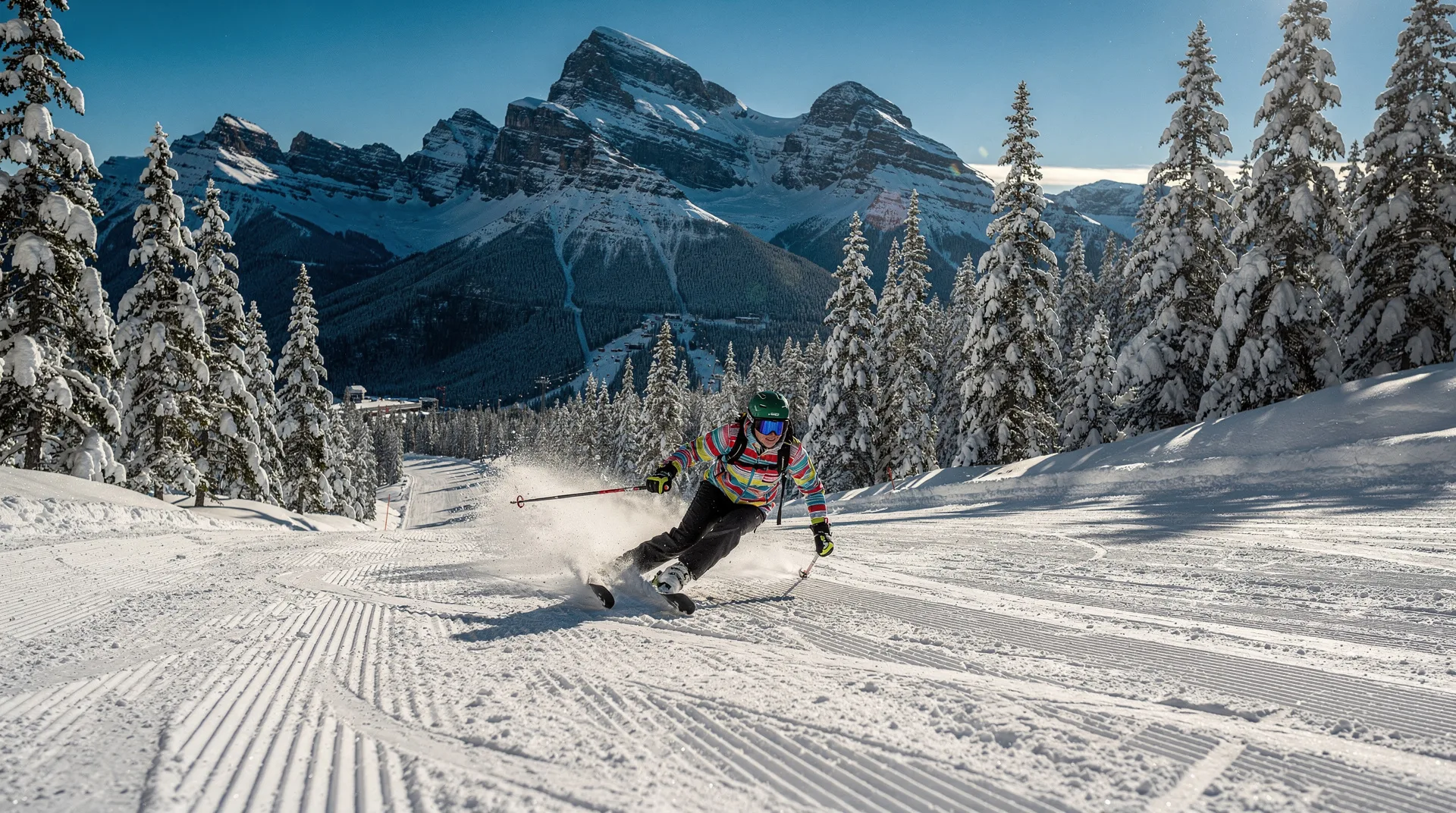
In Alberta, Banff National Park is surrounded by three ski resorts under the SkiBig3 umbrella: Banff Sunshine Village, Lake Louise Ski Resort, and Mt. Norquay. The combined terrain rivals Whistler’s in scale and the Rocky Mountain snow profile is drier and lighter — the legendary “champagne powder” that means steep runs ski fast and wipeouts feel soft.
The Banff ski season typically runs from mid-November to May at Sunshine and Lake Louise (both at high elevations with extensive snowmaking). The town of Banff provides accommodation, and the après-ski culture in the townsite is good. Winter experiences in Banff extend well beyond skiing — ice skating on frozen lakes, snow coach tours, and the Upper Hot Springs are excellent on non-ski days.
Jasper’s Marmot Basin is smaller than the SkiBig3 resorts but has a reputation among knowledgeable skiers for good snow, shorter lift lines, and a lower-key atmosphere. Access requires a drive north on the Icefields Parkway from Banff — itself a winter spectacle.
Quebec: a completely different ski culture
Eastern Canada’s ski culture is distinct from western Canada’s, centred in Quebec and built around the province’s relationship with winter as a civic and cultural identity. Quebec has been skiing since the 1930s and has developed a resort culture that is thoroughly bilingual, strongly focused on families, and deeply integrated with the province’s food and nightlife culture.
Mont-Tremblant, 140 km north of Montreal in the Laurentians, is Quebec’s flagship resort. The pedestrian village at the base is one of Canada’s most charming ski towns — brightly coloured Québécois architecture, good restaurants, and an atmosphere that manages to feel genuinely French-Canadian rather than generic ski-resort international. The skiing itself is excellent by eastern standards: 102 trails, consistent snowmaking that compensates for Quebec’s sometimes variable natural snowfall.
The Quebec City area has several smaller resorts — Mont-Sainte-Anne is the largest, with good intermediate and expert terrain and a convenient location 40 km east of the city. Skiing in Quebec and returning to Quebec City for evenings is a genuinely lovely combination: the old city is spectacular in snow, the food is excellent, and the cultural experience is unlike anything in western Canada.
Quebec’s winter temperatures are colder than BC’s but warmer than Alberta’s with greater variability. Dressing in proper layers is essential; a -20°C day with wind in the Laurentians is a different experience from a -5°C day in Whistler’s coastal climate.
Ontario and the east: accessible regional skiing
Ontario’s ski scene is modest by national standards — the Canadian Shield produces rolling terrain rather than mountains — but it serves the Toronto and Ottawa populations effectively. Blue Mountain near Collingwood is the largest resort, with 42 runs and a vertical drop of 220 metres. It’s genuinely good family skiing and very accessible (two hours from Toronto), but it’s not the same category as western or Quebec skiing.
For international visitors combining skiing with a Toronto or Ottawa visit, Ontario’s resorts are worth knowing about as day-trip options rather than ski-trip destinations in their own right.
When to go: the timing questions
Peak season (Christmas-New Year, Family Week in February): Busy, expensive, well-staffed, fully operational. Christmas week is the most expensive single period of the Canadian ski year. February Family Week (the mid-February school holiday) is almost as busy. Book accommodation six to nine months ahead for these periods.
January: Often the best snow of the year in western Canada, particularly at higher elevations. Quieter than peak holiday periods, with good value accommodation available mid-week. Cold temperatures, especially in Alberta, but powder days are most frequent.
March: The sweet spot for many experienced skiers. The days are getting longer, the weather is often more settled, spring sunshine makes for pleasant on-hill conditions, and the snowpack is usually deep. Prices moderate from peak. The drawback is that spring conditions (ice in the morning, soft in the afternoon) require more technical skiing than January powder.
April-May: End of season, heavily discounted, variable conditions. Some years produce excellent spring skiing at high elevations (Sunshine and Louise often ski into May); other years see ice and bare patches by mid-April. Experienced skiers willing to accept variability can find excellent value.
Cost reality
Canadian ski trips are not cheap. A week at Whistler for a family of four, including flights from Europe, accommodation, lift passes, ski rental, and food, comfortably exceeds CAD $8,000-12,000. Budget for a similar week in Banff runs CAD $6,000-9,000 depending on accommodation choices.
Cost management strategies:
Accommodation: Book early for on-mountain lodging, consider the town of Banff (a short bus ride from the hills) rather than ski-in/ski-out accommodation for significant savings. In Whistler, Whistler Village has everything within walking distance; Upper Village near Blackcomb is slightly quieter and sometimes less expensive.
Lift passes: SkiBig3 multi-day passes are better value than single-day passes. Whistler’s Epic Pass (the resort is part of the Vail Resorts network) rewards advance purchase. Look for early-booking discounts available from September.
Equipment: If you don’t own ski equipment, renting in Canada is not necessarily more expensive than shipping gear internationally. Resort rental is convenient but slightly pricier than shops in nearby towns.
Food: Resort mountain restaurants are expensive everywhere. A packed lunch saves meaningfully over a week of ski days. In the evenings, cooking in an apartment or condo rather than eating out every night saves considerably.
Practical logistics
Flying in: Calgary for the Banff/Rockies area; Vancouver for Whistler. Both airports have good international connections. Calgary to Banff is a 90-minute drive; the shuttle services are excellent if you’re not renting a car. Vancouver to Whistler requires either car or shuttle (2 hours).
Car vs. shuttle: In Banff, a car gives flexibility but parking at the ski hills can be challenging during peak periods. The SkiBig3 shuttle from Banff townsite is reliable and removes the parking problem. In Whistler, you don’t need a car at all if you’re staying in the village.
Mountain safety: If you’re skiing off-piste, carry avalanche safety equipment (beacon, probe, shovel) and know how to use it, or go with a certified guide. Canadian avalanche conditions are genuine and the backcountry is not like European off-piste — it is real wilderness.
Which region matches which trip
| Region | Snow character | Best for | Non-ski days |
|---|---|---|---|
| Whistler, BC | Wetter, heavier, long season | Terrain size, village nightlife | Vancouver day trip, Sea-to-Sky sights |
| Banff/SkiBig3, Alberta | Drier “champagne powder” | Scale plus national park scenery | Ice skating, Upper Hot Springs, wildlife along the Icefields Parkway |
| Jasper (Marmot Basin) | Similar to Banff, quieter | Shorter lift lines, low-key atmosphere | Jasper townsite, stargazing |
| Mont-Tremblant, Quebec | Colder, more variable, heavy snowmaking | Family-friendly, bilingual village charm | Montreal day trips, Laurentians |
| Blue Mountain, Ontario | Modest, groomed | Toronto-area day trips | Toronto itself |
Booking the trip: how far ahead
Because Canadian ski accommodation genuinely sells out, the planning window matters as much as the destination choice. For Christmas-New Year and February Family Week, book flights and lodging six to nine months out — leaving it to three months typically means paying more for a worse location.
For January and March travel, three to four months ahead is usually enough to get a reasonable choice of accommodation at a fair price, and last-minute (four to six weeks) trips can still work in January if you’re flexible on exact dates. If you’re combining skiing with a broader trip, some travellers build a winter itinerary around the Rockies rather than a single-resort stay, adding a day or two of non-ski activity to spread out the cost of flights.
Travelling with kids or as a first-time Canada skier
Whistler and Tremblant both run well-regarded learn-to-ski programmes with English (and in Tremblant’s case, bilingual) instruction, dedicated beginner terrain separated from the main mountain, and childcare options at the base. Banff’s SkiBig3 resorts are more geared toward intermediate-to-advanced terrain overall, though Mt. Norquay has a strong reputation for family and beginner skiing specifically. First-time Canada skiers who are also new to the sport generally have an easier introduction at Tremblant or Whistler than at the more expert-oriented terrain around Lake Louise.
Final thoughts
Canada’s ski options are spread across an extraordinary geographic range, which means that a skiing country broad enough to include Whistler’s Pacific powder, Banff’s champagne snowpack, and Quebec’s cultural winter experience cannot be reduced to a single recommendation. The right choice depends on what you’re skiing for.
Serious powder hunters go west. Families wanting a charming European-style ski town atmosphere should look at Tremblant. Skiers combining mountains with Canadian wilderness culture — aurora borealis possible from Jasper, wolves occasionally crossing the Icefields Parkway — go to Alberta. Each choice is genuinely excellent if it matches your appetite.
Frequently asked questions about Canada ski season: planning your winter trip
When does the Whistler ski season start and end?
Whistler Blackcomb typically opens in late November (sometimes earlier with snowmaking assistance) and runs to late April or early May at lower elevations, with skiing on the Horstman Glacier continuing into June or July in good snow years. The peak season is December through March.
Do I need a car to ski at Banff?
Not necessarily. The SkiBig3 shuttle service operates from Banff townsite to all three mountains, and Banff itself is very walkable. A car is useful for flexibility — driving the Bow Valley Parkway at dusk for wildlife, for example — but the shuttle system is reliable and removes the hassle of mountain driving.
How cold does it get at Canadian ski resorts?
Temperature varies significantly by location and season. Whistler’s coastal climate means temperatures rarely fall below -15°C in the village; it’s often skiing in mild conditions by January. Banff sees regular -20°C to -30°C cold snaps in January and February. Quebec’s Laurentians range from mild to -25°C. Dressing in proper layers is essential; frostbite is a real risk in Alberta at those temperatures.
Is heli-skiing available in Canada?
Yes, and Canada is arguably the world’s best heli-skiing destination. The Cariboo, Selkirk, Purcell, and Coast mountains of BC have operators offering multi-day heli-skiing packages — CMH Heli-Skiing (now owned by Vail) and Mike Wiegele Helicopter Skiing are among the most established. Prices start around CAD $1,500 per day. These are serious expeditions, not day excursions.
Can beginners learn to ski in Canada?
Completely. All major Canadian resorts have excellent ski schools. Whistler and Tremblant have gentle beginner areas and well-regarded learn-to-ski programs. The challenge for beginner-focused ski trips is that the best learning conditions (gentle slopes, good instruction, minimal lift-line chaos) are somewhat in tension with the mountain-scale terrain that makes Canada worth flying to for advanced skiers.
Is it cheaper to ski in Banff or Whistler?
Banff is generally the more affordable of the two once accommodation is included, largely because the townsite offers a wider range of budget-to-mid-range lodging with an easy shuttle to the hills, whereas Whistler’s convenient ski-in/ski-out village accommodation carries a premium. Lift ticket prices are broadly comparable. Flights into Calgary are also often somewhat cheaper than into Vancouver from Europe, though this varies by season.