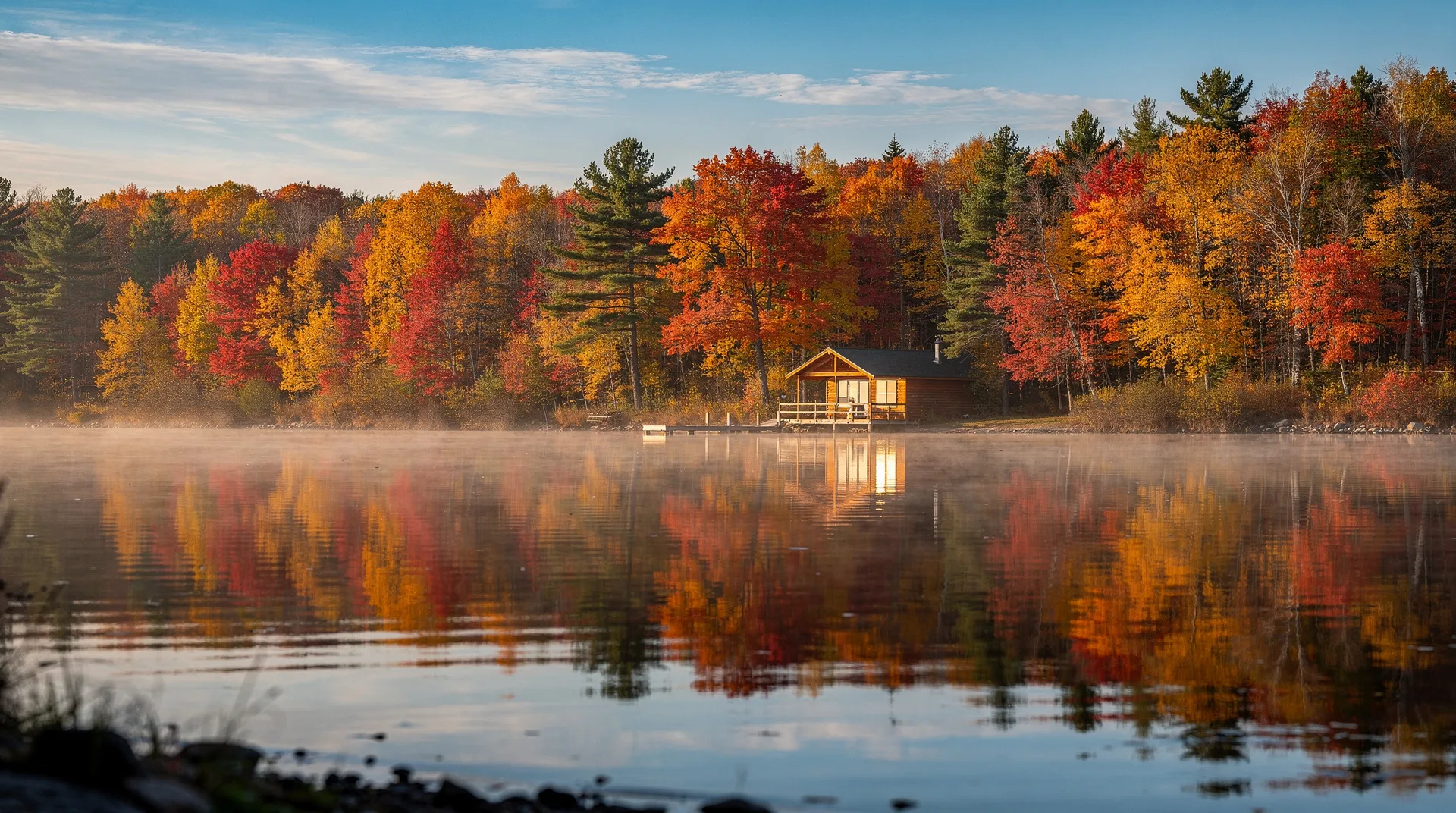
Ontario 10-Day Itinerary: The Best of Southern & Eastern Ontario
Overview
Ten days opens up the best of Ontario in a way that a week cannot — enough time to combine Toronto’s urban energy with Niagara Falls, wine country, the national museums of Ottawa, and a genuine wilderness experience in Algonquin Provincial Park. This is the itinerary for visitors who want more than just the city highlights and the famous waterfall: it includes two nights of canoe country, the Thousand Islands, and the quieter, more intimate pleasures of eastern Ontario’s limestone farmland and lakeside towns.
A car is essential from Day 3 onward. The total driving distance is approximately 1,200 kilometres over the ten days — manageable at an easy pace, with most drives falling under two hours per day.
| Days | Location | Highlights |
|---|---|---|
| 1–2 | Toronto | Distillery District, ROM, St Lawrence Market, sports |
| 3 | Niagara Falls | Falls, boat cruise, Niagara-on-the-Lake |
| 4 | Niagara wine country | Wineries, cycling, NOTL |
| 5 | Prince Edward County | Wellington, wineries, Sandbanks Beach |
| 6 | Kingston + 1000 Islands | Fort Henry, Gananoque cruise |
| 7 | Ottawa arrival | Parliament Hill, Byward Market |
| 8 | Ottawa | Museums, Rideau Canal |
| 9 | Algonquin Park | Drive in, evening wildlife, overnight |
| 10 | Algonquin and return | Morning hike, drive back to Toronto |
Days 1–2: Toronto
Start in Toronto with two days to cover the essential neighbourhoods and at least one major institution.
Day 1: Downtown core and the waterfront
The CN Tower is obligatory — 553 metres, the glass floor, and views over Lake Ontario and the city grid extending to the horizon. Book online to skip queues. From the tower, walk east along the waterfront to the St Lawrence neighbourhood: lunch at St Lawrence Market (peameal bacon sandwich from Carousel Bakery is the essential order), then the Distillery District in the afternoon for galleries, craft beer at the Mill Street Brewery taproom, and cobblestone wandering.
Evening: King Street West or the Entertainment District for dinner and drinks. The neighbourhood is dense with restaurants; Buca (regional Italian, exceptional pastas) or a Korean barbecue spot in Koreatown (Bloor West) are two contrasting options for a first night.
Day 2: Neighbourhoods and culture
The Royal Ontario Museum on Bloor Street takes a solid two hours — the bat cave, the dinosaur gallery, and the Chinese collection are the highlights. Kensington Market in the afternoon for the city’s multicultural food scene at its most spontaneous: Jamaican roti, Portuguese custard tarts, Mexican street tacos, and excellent independent coffee.
If a Leafs, Raptors, or Blue Jays game falls during your visit, this is the evening to go — Scotiabank Arena and Rogers Centre are both within walking distance of most downtown hotels. See the Toronto sports guide for ticket acquisition advice.
Book a Toronto city highlights tour covering the essential neighbourhoods and sightsDay 3: Niagara Falls
Pick up your rental car at Toronto Pearson Airport (most convenient) or from a downtown location on the morning of Day 3. Drive southwest on the QEW — 130 kilometres, approximately 1.5 hours.
Arrive at Niagara Falls before the mid-morning tour bus arrival. The Canadian side walkway from Table Rock gives the direct face-on view of Horseshoe Falls — 57 metres of roaring water spanning nearly a kilometre. The Hornblower Niagara Cruises boat goes into the mist at the base (wear the poncho — you will be genuinely drenched). Journey Behind the Falls lets you access tunnel observation platforms cut through the rock.
Afternoon: drive or take a 15-minute taxi to Niagara-on-the-Lake, the immaculately preserved 19th-century town at the mouth of the Niagara River. Queen Street has good restaurants and the architecture is genuinely beautiful — Federal and Georgian commercial buildings in near-original condition.
Overnight in Niagara-on-the-Lake: the Prince of Wales Hotel or the Oban Inn are both excellent and historic. Alternatively, continue east the 30 minutes to Hamilton for a cheaper overnight.
Book Niagara Falls boat cruise and Journey Behind the FallsDay 4: Niagara wine country
Ontario’s wine country centres on the Niagara Peninsula between Lake Ontario and the Niagara Escarpment. The microclimate — moderated by Lake Ontario — produces conditions suitable for Riesling, Chardonnay, Pinot Noir, and the Vidal Blanc that goes into the famous ice wine.
Spend the day cycling or driving between wineries. The Wine Route (Regional Road 81) passes the main producers:
- Inniskillin Wines: the ice wine pioneer, with an excellent tasting bar and production tour
- Peller Estates: the largest Niagara winery, with restaurant, architecture, and comprehensive tasting options
- Tawse Winery: smaller, organic-certified, consistently excellent Pinot Noir and Chardonnay
- Norman Hardie Winery: Prince Edward County’s standard-bearer for natural wines, though he also produces in Niagara
A hired cycling guide or wine tour from Niagara-on-the-Lake covers three or four wineries in a half-day; most wine tours include transportation so you can taste freely.
Overnight again in NOTL or drive east toward Prince Edward County (1.5 hours).
Day 5: Prince Edward County
The county — a large limestone peninsula jutting into Lake Ontario — is Ontario’s most interesting new food and wine destination, combining 40+ wineries with outstanding farm produce, sandy Lake Ontario beaches, and a landscape of rolling farmland and heritage limestone architecture.
Wellington and Bloomfield are the two main towns on the county’s north shore. Wellington has the best cafés and independent food shops; the Drake Devonshire on Wellington’s main street has a great restaurant and rooms. Bloomfield’s main street has gallery spaces and antique shops.
Sandbanks Provincial Park: The massive sand dunes and shallow Lake Ontario waters of Sandbanks are the county’s most-visited natural attraction. The tombolo dunes are the largest freshwater sand dunes in the world — walking the dune ridges with the lake on both sides is a surprisingly dramatic experience. Crowded in August; genuinely beautiful in June and September.
Lake on the Mountain Provincial Park: A geological curiosity — a freshwater lake sitting 62 metres above Lake Ontario with no visible water source. Good picnic spot with views across the Bay of Quinte.
Overnight in Wellington or Picton.
Day 6: Kingston and the Thousand Islands
Drive east from Prince Edward County to Kingston — 90 minutes. Kingston is Ontario’s most historically dense small city: the first capital of united Canada (1841–1844), home to the Royal Military College, and the junction of Lake Ontario, the St Lawrence River, and the Rideau Canal.
Fort Henry National Historic Site: A restored 19th-century British garrison on the hill east of downtown — excellent costumed interpretation, good views over the city and the St Lawrence. Budget 2 hours.
Confederation Basin and City Hall: Kingston’s Victorian downtown is eminently walkable — the Market Square, City Hall (1843, one of Canada’s finest City Hall buildings), and the shoreline district along Ontario Street give a concentrated sense of the city’s history.
Gananoque and the Thousand Islands: Drive 30 minutes east on Highway 401 to Gananoque, the departure point for Thousand Islands boat tours. The 1,800-island archipelago straddling the US border in the St Lawrence is one of Ontario’s most scenic natural landscapes — a mix of rocky outcrops, summer cottages, American robber-baron estates, and tiny inhabited islands with individual ownership. A 3-hour tour covers the main highlights including Boldt Castle (on Heart Island, New York side) and the island with the literal international border running through its centre.
Book a Thousand Islands boat tour from GananoqueContinue to Ottawa (2.5 hours from Kingston on Highway 401/416) for your overnight.
Days 7–8: Ottawa
Canada’s capital is a museum city of the first order — the federal government has funded the national institutions generously, and the concentration of world-class museums and galleries in a walkable capital district is impressive.
Day 7: Parliament Hill and Byward Market
Parliament Hill occupies a dramatic cliff above the Ottawa River — the gothic revival Centre Block and Peace Tower, the Library of Parliament (still functional and extraordinarily beautiful), and the eternal flame. Tours of the Centre Block (currently undergoing renovation) run from the adjacent East and West Blocks. The changing of the guard runs daily in summer on the front lawn.
The Byward Market neighbourhood east of Parliament Hill is Ottawa’s food and nightlife district — covered market stalls, restaurants on every corner, the famous BeaverTails outlet on George Street (the original location), and an evening energy that sustains well into the night. For dinner: the Whalesbone Oyster House on Bank Street for excellent local seafood, or Supply and Demand further east in Vanier for a more neighbourhood-oriented evening.
Day 8: Museums and the Rideau Canal
The Canadian Museum of History in Gatineau (across the Ottawa River via the Alexandra Bridge — a 20-minute walk or short transit hop) is the first full-morning destination. The Grand Hall’s collection of Pacific Northwest totem poles and the Canada Hall’s walkable Canadian history timeline are the highlights; budget a minimum of two hours, ideally three.
The National Gallery of Canada on Sussex Drive has the definitive Canadian art collection: the Group of Seven galleries, the exceptional Inuit sculpture and contemporary Indigenous art holdings, and a strong international modern art section. The building itself — Moshe Safdie’s glass-and-granite structure — is excellent architecture.
The Rideau Canal in summer is a cyclist and walker’s thoroughfare — bicycle rentals available near the Rideau locks, cycling paths run along both banks from Parliament Hill south to the arboretum. A morning or afternoon on the canal is the ideal way to experience Ottawa’s geography and neighbourhood transitions. In winter (January–February), the canal freezes into the world’s largest skating rink; skate rentals are available at multiple points.
Book an Ottawa city and Parliament Hill guided tourDays 9–10: Algonquin Park
Drive northwest from Ottawa on Highway 17 to Renfrew, then south on Highway 60 into Algonquin Provincial Park — approximately 2.5 hours from Ottawa to the East Gate, with the visitor centre another 30 kilometres west on Highway 60.
Day 9: Enter Algonquin, wildlife evening
Arrive by early afternoon and pay the day-use or camping fee at the gate. The Algonquin Visitor Centre (km 43 on Highway 60) is the first stop — interactive natural history exhibits, a viewing window over a pond that is reliably visited by moose at dawn and dusk, and resident naturalists who can advise on current wildlife sightings and fall colour status.
Afternoon hike: the Lookout Trail (1.9 km return, steep finish) gives the park’s best panoramic view over the hardwood forest. In October, this viewpoint during peak fall colour is extraordinary.
Evening: drive the Highway 60 corridor at dusk. Moose are most commonly seen at twilight, particularly at roadside ponds and beaver flowages. Bring binoculars. Common loons begin their evening calling; the experience of hearing loons on a still Algonquin lake at dusk is one of Canada’s iconic wildlife encounters.
Overnight: campgrounds along Highway 60 (Pog Lake is the most convenient) or in the town of Huntsville (45 minutes to the West Gate) if camping is not part of the plan.
Day 10: Morning hike and return to Toronto
Rise early for the wildlife drive before 8:00am — this is the best moose-spotting window of the day. The Mizzy Lake Trail (11 km, 3–4 hours) is the park’s best morning hike for wildlife: nine lakes and ponds, reliable moose habitat, and good birding throughout.
After the hike, drive west on Highway 60 to Highway 11 south, then Highway 400 back to Toronto — approximately 3.5 hours from the park’s West Gate to downtown, without major stops. Alternatively, break the return journey in Huntsville for lunch (the town has good cafés on Main Street) or detour through Muskoka cottage country for the lake scenery on the way south.
Return car at Toronto Pearson Airport if flying home, or in downtown Toronto.
At a glance
| Category | Details |
|---|---|
| Total distance | ~1,200 km |
| Driving days | 5 moderate drive days |
| Best months | May–October; October for fall colour in Algonquin |
| Physical demand | Low to moderate — no strenuous hiking required |
| Car required | Yes, from Day 3 |
Budget
Per person, two sharing, in Canadian dollars:
| Category | Estimate |
|---|---|
| Accommodation (10 nights) | CAD 2,000–3,500 |
| Food and drink | CAD 800–1,200 |
| Car rental + fuel | CAD 700–1,000 |
| Attractions + activities | CAD 400–600 |
| Total per person | ~CAD 3,900–6,300 |
Cost-saving strategies: Book accommodations 2–3 months ahead to secure best rates; camp two nights in Algonquin (CAD 28–42/night instead of CAD 180–280 for a hotel); buy Ontario Parks Season Pass if visiting multiple parks; use VIA Rail for Kingston–Ottawa leg to avoid car rental cost extension.
Practical tips
When to book: Toronto hotels require the most advance planning for summer. Niagara-on-the-Lake accommodation books out for summer weekends by February; book early. Algonquin Park campground reservations open in January — the Pog Lake campground on Highway 60 books quickly.
Day 9–10 flexibility: If Algonquin is a priority (especially for October fall colour), consider rearranging to place the park earlier in the itinerary and returning through the Muskoka lakes on the way back to Toronto. This keeps the driving distances similar but avoids backtracking.
Border crossings: This itinerary stays within Canada. The Thousand Islands area on Day 6 includes boat tours that pass near the US border; you do not cross into the US unless you extend to Boldt Castle (which requires crossing to New York State and returning — bring your passport if you want this option).
Variations
Shorter version (7 days): Eliminate Prince Edward County (Day 5) and compress Niagara to one day. The 7-day version covers Toronto, Niagara, Kingston/1000 Islands, and Ottawa without Algonquin. See the Ontario 7-day itinerary.
Add northern Ontario: From Algonquin, instead of returning to Toronto, continue north via Highway 11 to North Bay and Sudbury for the Science North museum and genuine northern Ontario character. This extends the trip to 12–14 days.
Focus on nature: Replace Ottawa days with a longer Algonquin stay (3 nights interior camping) and add Killarney Provincial Park as a detour. For canoe route details see our Ontario canoeing routes guide.
Frequently asked questions about Ontario 10-Day Itinerary: The Best of Southern & Eastern Ontario
Is a car necessary for the full 10 days?
Yes, a car is required for Prince Edward County and Algonquin and strongly recommended for Niagara wine country. The Toronto and Ottawa portions are easily navigated by transit. A practical approach: use transit in Toronto (Days 1–2), rent a car from Day 3 through Day 10, returning at Pearson Airport.
Can I do the Algonquin section without camping?
Yes. Huntsville (45 minutes from the West Gate) and Barry’s Bay (on the east side of the park) have comfortable hotels and B&Bs. The park can be visited as day trips from either town. Inside the park, Killarney Lodge and Arowhon Pines are two excellent lodge options within the park boundaries — both require advance booking months ahead for peak season.
Is this itinerary suitable for families with children?
Yes — the itinerary is very family-friendly. The Niagara boat cruise is excellent for children; the Canadian Museum of History in Ottawa has excellent children’s programming; Fort Henry in Kingston has costumed demonstrations that engage children well. The Algonquin visitor centre is specifically well-designed for families. Sandbanks beach in Prince Edward County is one of the safest and most enjoyable beaches in Ontario for families.