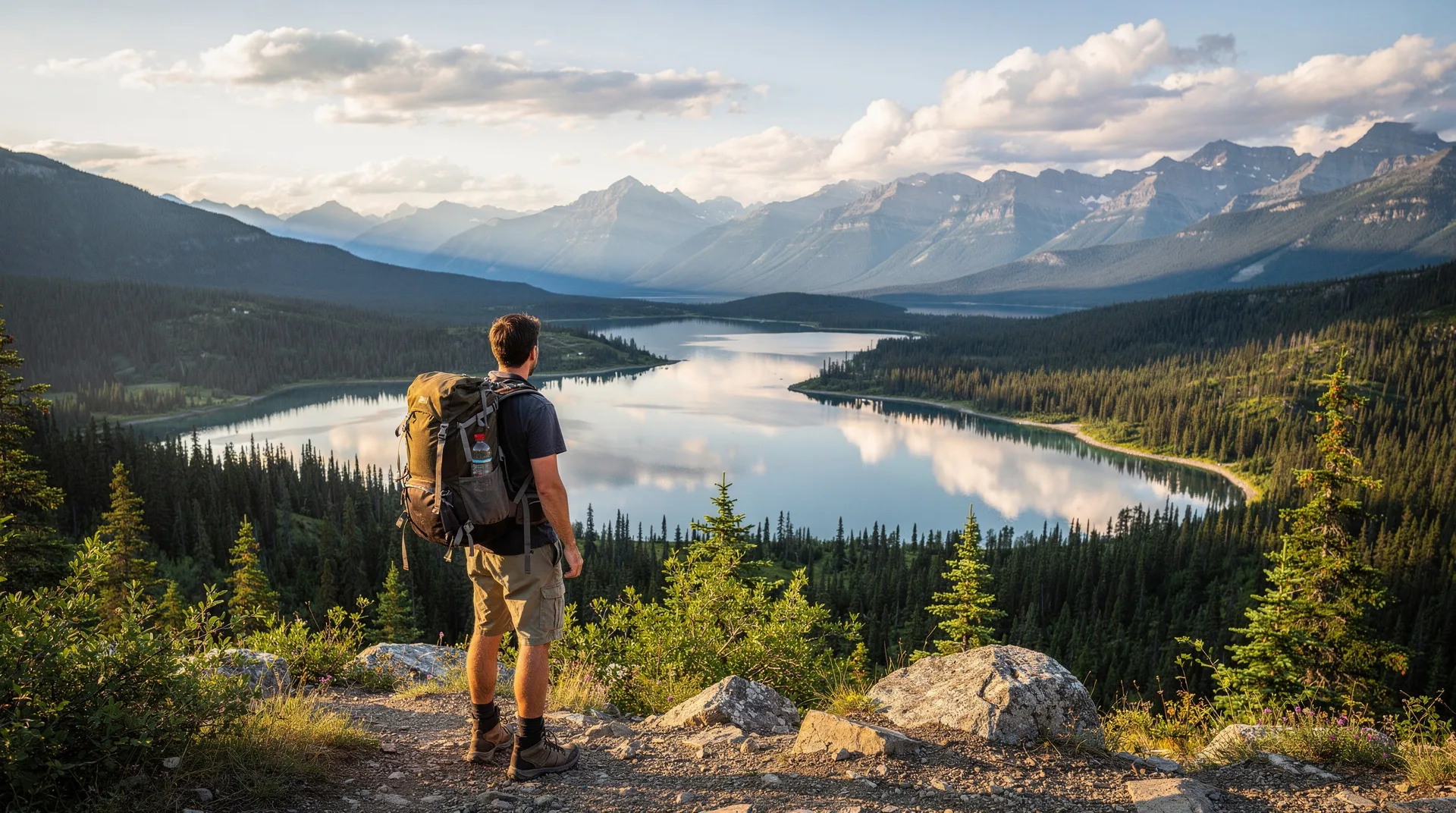
Budget Canada: 10 days backpacking the best of the West
Canada is one of the more expensive countries in the world to travel. The distances are vast, the accommodation can be pricey, and certain attractions — helicopter flights over glaciers, whale watching charters, upscale lodge dinners — target a market with money to spend. None of this means budget travel is impossible in Canada. It means you need a plan.
This 10-day itinerary is built for travellers with real budget constraints: people staying in hostels, eating from supermarkets and occasional cheap restaurants, using buses and trains rather than rental cars, and choosing free and low-cost activities over paid attractions. It covers the western Canada circuit that every backpacker who arrives in Vancouver eventually contemplates — the city, the Rockies, and back — and shows how to do it well on a realistic daily spend of CAD 80–120 per person.
The philosophy is simple: the best things Canada has to offer are overwhelmingly free. Hiking in Banff costs nothing beyond the park entry fee. Watching sunrise over the Rocky Mountains from a ridgeline costs nothing. Swimming in glacial lakes costs nothing. The expensive version and the budget version of the Canadian Rockies walk the same trails.
At a glance
- Total estimated cost: CAD 1,200–1,800 per person for 10 days (excluding international flights)
- Daily budget target: CAD 120–180 per day (accommodation, food, local transport, activities)
- Transport: SkyTrain, BC Ferries (foot passenger), Greyhound/Rider/Pacific Coach buses, Parks Canada shuttle buses
- Accommodation: Hostelling International hostels and national park campgrounds throughout
- Key savings: cook your own meals, Parks Canada Discovery Pass, walk or use shuttle buses instead of taxis, free hiking
- Best season: June to September for comfortable camping; shoulder season (May, late September) for cheaper beds
Day-by-day itinerary
Day 1: Vancouver — arrival and first impressions
Fly into Vancouver International Airport. Take the Canada Line SkyTrain from the airport to downtown (26 minutes, approximately CAD 9) — there is no reason to take a taxi or rideshare for this journey. Check in to HI Vancouver Downtown or HI Vancouver Central, both excellent Hostelling International properties with a social atmosphere, kitchen facilities, and central locations. A dorm bed costs approximately CAD 45–55 per night.
Afternoon: Orientation walk. The SkyTrain drops you at Waterfront or Vancouver City Centre stations; both are within walking distance of the waterfront. Walk the False Creek seawall from the Convention Centre to Granville Island (approximately 3 km), crossing the Granville Street Bridge on foot. Stop at the Granville Island Public Market for food stall browsing — eating from the market stalls is not the budget option, but picking up bread, cheese, and fruit from the market vendors costs little more than a supermarket.
Evening: Cook in the hostel kitchen (grocery stores near both HI properties are well-stocked), eat in the hostel common area, and get an early night. The first full day in Vancouver deserves full energy.
Free and cheap today: The seawall walk is free. English Bay beach is free. The market is free to enter.
Day 2: Vancouver — Stanley Park and local neighbourhoods
Stanley Park is one of the great urban parks in the world, and it is free. The 8.8-kilometre seawall loop takes 2–3 hours at a walking pace and passes beaches, forest, the totem poles at Brockton Point, and views over Burrard Inlet to the North Shore mountains. Rent a bike from the HUB Cycling cooperative near the park entrance (approximately CAD 10/hour) for a faster circuit.
Budget lunch: Pick up a banh mi sandwich from one of the Vietnamese delis on Robson Street (CAD 5–7 each) or assemble a lunch from a grocery store. The Robson Street Safeway and nearby T&T Supermarket (for excellent Asian grocery staples) are within easy walking distance of Stanley Park.
Afternoon: The Lynn Canyon Suspension Bridge is free — unlike the commercial Capilano Suspension Bridge, which charges CAD 65+. Take the SeaBus from Waterfront station to North Vancouver (included in a Compass Card transit day pass at CAD 12.25), then bus 229 to Lynn Valley Road. The suspension bridge is a proper engineering structure over a canyon; the surrounding trails through second-growth temperate rainforest are excellent. Allow 2–3 hours.
Evening: Commercial Drive in East Vancouver is the city’s cheapest and most authentic neighbourhood for dinner. Ethiopian restaurants, Italian delis, and Latin American kitchens cluster along the Drive with main courses CAD 12–18.
Day 3: Vancouver — museums and departure preparation
Vancouver’s museums are not cheap, but the Museum of Anthropology at the University of British Columbia charges CAD 23 per adult and is worth every dollar — it holds one of the finest collections of Northwest Coast Indigenous art and cultural objects in the world, and Arthur Erickson’s architecture (the Great Hall is lit entirely by natural light, sheltering towering totem poles) is itself extraordinary. The UBC campus is served by bus from downtown.
Free alternative: The Vancouver Art Gallery’s lower-level permanent collection is free on Tuesday evenings after 5pm. Gastown and Chinatown are free to walk through and genuinely atmospheric.
Afternoon: Buy a Greyhound or Rider Express bus ticket online for tomorrow’s Calgary or Banff run. The Vancouver-to-Banff bus journey takes approximately 13–15 hours with stops; overnight buses are the budget traveller’s solution, turning the transit cost into an accommodation cost saving. Alternatively, book the Rocky Mountaineer if budget allows (expensive but genuinely extraordinary — a daylight rail journey through the Fraser Canyon and Rockies), or book a seat on the Brewster/Pursuit shuttle bus that runs directly Vancouver to Banff (approximately 14 hours, CAD 120–150).
Pack your gear efficiently. Banff requires layers even in summer — mornings are cold, afternoons can be warm, and rain is always possible.
Day 4: Banff National Park — arrival and town lake
Arrive in Banff (by bus; dorm at HI Banff Alpine Centre, which is the best-positioned hostel in the Rockies — dorm beds CAD 45–60). The HI Banff hostel is excellent: well-maintained, social, with a kitchen, and within walking distance of the townsite and several trailheads.
Afternoon: Rest after the overnight journey, then walk to Bow River Falls (free, 15-minute walk from town) and along the Bow River trail. Banff’s townsite is compact and walkable. Pick up groceries from the IGA or Nesters Market for the week’s cooking.
Buy a Parks Canada Discovery Pass at the park gate or online (CAD 83.50 per adult, annual pass covering all Parks Canada sites). Over a 7-day visit to Banff and Jasper, you will roughly break even versus paying daily entry fees (CAD 12.25 per adult per day).
Evening: Cook in the hostel kitchen. The HI Banff hostel common room is invariably lively — this is where backpackers doing the western Canada circuit meet and compare notes.
Day 5: Banff — Lake Louise and hiking
Rise early. The Parks Canada shuttle bus from the park visitor centre in Banff to Lake Louise runs in summer (approximately CAD 8 return) and reduces the impossible parking situation at Lake Louise to a non-issue. Take the first shuttle.
Morning — Lakeshore Trail and Plain of Six Glaciers approach: Walk the Lake Louise lakeshore from the Chateau Lake Louise hotel (the hotel itself is extremely expensive; the lake is free). The Plain of Six Glaciers Trail extends 5.5 km from the lake’s far end into the moraines below the Victoria Glacier. The teahouse at the end (13 km return from the Chateau, 365m gain) serves soup and scones in a stone building built in 1924 — prices are not cheap (it’s a helicopter-supplied backcountry teahouse) but splitting a bowl of soup is a reasonable halfway option.
Afternoon — Lake Agnes Tea House: On the return from the Plain of Six Glaciers, take the Lake Agnes loop. The teahouse at Lake Agnes (above Lake Louise, 6 km return, 385m gain) is the most popular hike at Lake Louise for good reason — the alpine lake setting and the wooden teahouse above it are genuinely lovely.
Total distance: 12–18 km depending on route. This is a full day of active hiking.
Budget note: Neither the Plain of Six Glaciers nor Lake Agnes teahouses are included in the Parks Canada pass — they are privately operated. Bring packed lunch to skip the cost.
Day 6: Banff — Sulphur Mountain and budget day
A shorter day allowing for exploration of the townsite and surrounding easier terrain.
Morning — Sulphur Mountain hike: The gondola up Sulphur Mountain costs approximately CAD 50. The trail is free. The hike is 5.5 km one way and 655m elevation gain — genuinely demanding but achievable. The summit boardwalk connects to the Sanson Peak meteorological station at 2,451 metres. The views over the Bow Valley and the mountain ranges to the west are among the finest easily accessible in the Rockies. Take the gondola down if the legs are done (pay the descent-only ticket, approximately CAD 25).
Afternoon: Johnston Canyon is 24 km west of Banff (accessible by rental bike or hitch if you are comfortable with that; alternatively, several hostellers typically form ad-hoc carpools). The canyon hike on fixed walkways to the Upper and Lower Falls (2.7 km to Upper Falls, relatively flat) is free with the Discovery Pass. The Upper Falls viewpoint, inside a small cave with the falls visible through a rock window, is excellent.
Evening: Banff Brewing Company has a happy hour. A pint costs less than a cocktail. The hostel kitchen is always cheaper.
Day 7: Icefields Parkway — Banff to Jasper by shuttle
This is one of the highlights of the whole trip. The Brewster/Pursuit shuttle bus runs the Icefields Parkway (Highway 93) from Banff or Lake Louise to Jasper daily in summer, with stops at the Columbia Icefield. A one-way seat costs approximately CAD 85–100 (book online in advance).
The 230-kilometre route passes Peyto Lake (one of the most astonishing turquoise lakes in the Rockies — the shuttle stops here), Mistaya Canyon, the Saskatchewan River Crossing, and the Columbia Icefield Discovery Centre, where the Athabasca Glacier descends to within 1.5 km of the highway.
At the Icefield: The shuttle stops allow time at the Columbia Icefield Discovery Centre. The ice explorer tour onto the glacier costs approximately CAD 60 per person — significant for a budget trip, but a once-in-a-lifetime glacier access opportunity. The free option is the public moraine path to the glacier toe (1 km return, free with Discovery Pass entry), which provides a close view of the glacier’s terminus and interpretive panels about its retreat.
Arrive Jasper by evening: Check in to HI Jasper Hostel (dorm beds CAD 40–55, good kitchen, excellent common areas). The hostel is well-located and reliably social — the kind of place where conversations start over the stove.
Day 8: Jasper — Maligne Canyon and Jasper townsite
A day to explore Jasper’s surroundings using the free and cheap options.
Morning — Maligne Canyon: The Public Works bus (Jasper Transit, CAD 5 each way) or a hostel carpool covers the 8 km to Maligne Canyon. The canyon hike is free with the Discovery Pass. Trails follow the canyon via six bridges over a 4.5-kilometre route, reaching the deepest point (50 metres) where the Maligne River disappears underground. The second and fourth bridge viewpoints are the most dramatic.
Afternoon — Pyramid Lake Road: The Pyramid Lake Road is cyclable from the townsite (14 km return) or walkable along sections. The lakes (Pyramid, Patricia) reflect the mountain backdrop and are less visited than Maligne Lake. Bring lunch from the hostel kitchen.
Browse affordable guided experiences in Banff and JasperWildlife in Jasper: Jasper townsite is considerably less crowded than Banff and wildlife is commonly encountered on roads and trails near town. Elk wander through the townsite; bears are regularly seen on the Icefields Parkway; wolves have been spotted near the Athabasca River. Move quietly and keep eyes open.
Evening: Jasper has a small but quality food scene even at budget prices. The Jasper Pizza Place has been serving the hostel crowd for decades and is reliably good value.
Day 9: Jasper to Calgary — transit day
Take the bus from Jasper to Banff (Brewster/Pursuit, CAD 65–80) and connect to Calgary (Greyhound or Rider, CAD 30–50 from Banff). Alternatively, the entire Jasper-to-Calgary journey on Rider Express runs direct in approximately 5 hours (CAD 75–90).
Calgary is not a primary destination on this itinerary, but it is the likely departure airport. The city’s downtown is worth an afternoon — Stephen Avenue Walk, the National Music Centre, the Bow River pathway, and the Inglewood neighbourhood’s independent businesses are all worthwhile.
Budget accommodation in Calgary: HI Calgary City Centre (dorm beds CAD 40–50) is well-positioned in the downtown core.
Alternative — extend in the Rockies: If the bus schedule allows and you want another day of hiking, consider an extra night in Banff or Canmore before continuing to Calgary.
Day 10: Calgary — departure
Calgary International Airport is well-served by transit (the CTrain Red Line runs to the airport — note: this requires a bus connection and is not direct; allow 45 minutes minimum from downtown). Taxis and rideshares from the downtown core cost approximately CAD 35–45.
If your flight is afternoon or evening: the Chinook Centre or CrossIron Mills mall near the airport are standard last-stop options; more interestingly, the East Village neighbourhood along the Bow River in downtown Calgary has good coffee and views of the Rockies on clear days.
Budget breakdown
All costs are per person in Canadian dollars:
| Category | 10 days total (CAD) |
|---|---|
| Accommodation (hostels, dorms) — approx. CAD 45-55/night | 450–550 |
| Food (grocery + occasional cafe/restaurant) | 250–350 |
| Transport (airport SkyTrain, shuttles, buses) | 350–500 |
| Activities (Discovery Pass + 1-2 paid activities) | 150–250 |
| Miscellaneous (SIM card, laundry, sundries) | 50–100 |
| Total | 1,200–1,750 |
International flights are excluded. The Discovery Pass (CAD 83.50 per adult) is the most important single purchase for this itinerary — it eliminates national park entry fees entirely and pays for itself after about seven days of daily admission.
Where the money goes: Transport is the biggest variable. The Vancouver-to-Banff bus costs less than a quarter of a rental car for the same journey. Food is the easiest category to control with hostel kitchen cooking. Accommodation in hostels is non-negotiable for this budget level.
Booking tips and logistics
Hostels: Hostelling International (HI) properties in Vancouver, Banff, and Jasper are the backbone of this itinerary. All three are well-run, well-located, and have kitchen facilities. HI membership (approximately CAD 35/year) saves CAD 3–5 per night at each property. Book dorm beds at least 2–3 weeks ahead for July and August — HI Banff in particular fills fast.
National park camping: If you prefer camping to hostels, Parks Canada campgrounds in Banff and Jasper accept reservations through the Parks Canada website (open in spring for summer bookings). Camping costs CAD 20–30 per night for a non-serviced site — cheaper than a hostel dorm and dramatically more atmospheric. Bring a tent, sleeping bag rated to 5°C, and a basic camp cooking kit.
Shuttles: Book all intercity shuttle seats online in advance. Brewster/Pursuit runs the Banff-Jasper-Lake Louise network. Rider Express and Greyhound cover Vancouver-Banff. The Rocky Mountaineer train is not in scope for this budget but worth researching if you want to splurge once.
Groceries: Supermarkets in Banff (IGA, Nesters Market) are expensive by city standards — the remote-location premium is real. Stock up in Vancouver if you are driving, or accept that Banff grocery prices are what they are. A hostel kitchen dinner of pasta and sauce costs CAD 4–6 regardless.
Phone and data: A local prepaid SIM (Freedom Mobile or Public Mobile) with a data plan costs approximately CAD 30–40 for 30 days. Far cheaper than roaming on a home plan. Coverage in the national parks is limited — offline maps (Maps.me or Google Maps offline) are essential.
Variations and alternatives
Add Victoria: If you have flexibility on Day 1-2, take the BC Ferries crossing from Tsawwassen (south Vancouver) to Swartz Bay and spend 1-2 nights in Victoria before returning for the Vancouver exploration. BC Ferries foot-passenger fares are approximately CAD 18 each way — one of the great travel bargains in Canada for the quality of the experience.
Skip the Jasper overnight: If 10 days feels tight, the Icefields Parkway can be done as a one-day transit (take the shuttle from Banff, stop at major viewpoints, arrive in Calgary the same evening) rather than the two-day version with an overnight in Jasper. You lose the Jasper hiking day but save accommodation costs.
Camping version: Replace all hostel nights with Parks Canada campground stays (where available and in season) and reduce accommodation costs to CAD 20–30 per night. The camping experience in both Banff and Jasper is excellent — waking up in a mountain campground beats any hostel dorm.
Add the Okanagan: A side trip from Vancouver through the Fraser Canyon to the Okanagan wine country (Kelowna, Oliver, Osoyoos) adds 2–3 days and showcases a completely different Canada — semi-desert landscapes, orchards, and roadside fruit stands where a bag of cherries in July costs CAD 3.
Reading to do before you book
A budget trip rewards preparation more than any other kind, because every avoidable mistake is paid for out of a small margin. Start with the save money guide and the budget travel tips for the habits that apply across the whole country, then check tipping in Canada so the bill at a cheap restaurant does not come as a surprise.
For the transport side, the getting around guide explains how intercity buses, trains and flights fit together, and the Banff Park Pass guide and the Parks Canada Discovery Pass guide cover the entry fees mentioned on Day 4. Visitors from abroad should also read the Canada eTA and visa guide well before departure, and the travel insurance guide before buying cover.
If you only have a few days in the mountains, the Banff 3-day itinerary shows how to fit the best of the park into a shorter stay. Those who want to understand the timing of the shoulder seasons can compare the best time to visit Canada with the Banff versus Jasper comparison when deciding where to spend the extra nights.
Hostel dorm versus campground: which saves more?
Both options appear throughout this itinerary, and which one saves more money depends on how you value comfort and flexibility.
| Factor | HI hostel dorm | Parks Canada campground |
|---|---|---|
| Typical cost/night | CAD 40–60 | CAD 20–30 (non-serviced site) |
| Gear needed | None | Tent, sleeping bag (rated to 5°C), cook kit |
| Kitchen access | Shared kitchen included | Bring your own stove |
| Weather risk | None — indoors | Real — mountain weather changes fast |
| Booking window | 2–3 weeks ahead for summer | Opens in spring, books out fast for July–August |
| Social factor | High — communal kitchens and lounges | Lower, more self-directed |
For a first budget trip through the Rockies, hostels are the more forgiving choice: no gear to carry, no weather risk, and the social side of HI Banff and HI Jasper is genuinely part of the experience. Camping saves real money over a longer trip and suits travellers who already have gear and are comfortable with variable mountain weather.
Stretching the itinerary or tightening it further
If 10 days is more than you have, the Icefields Parkway can be compressed into a single transit day (shuttle straight through with viewpoint stops, no Jasper overnight) — see the notes above under “Skip the Jasper overnight.” If you have extra time and want a fuller Rockies experience without adding much cost, the Rockies 7-day itinerary and the Banff and Jasper 7-day itinerary both cover the same core hikes in more depth and can be spliced onto this route by simply adding hostel nights rather than new logistics.
Solo travellers doing this loop consistently report that the hostel network is what makes it feel social rather than lonely — see the solo travel in Canada guide for more on that side of independent budget travel.
Frequently asked questions about Budget Canada
Is CAD 1,200-1,800 realistic for 10 days, or does it always run higher? It is realistic for travellers who commit to hostel kitchens and free hiking as described here; the number rises quickly if you add the Columbia Icefield ice explorer tour, extra restaurant meals, or private accommodation instead of dorms.
Do I need a car at any point on this route? No — the itinerary is deliberately built around SkyTrain, BC Ferries as a foot passenger, intercity buses, and Parks Canada shuttle buses. A rental car would add cost without adding access to anything covered here.
Where to go next
Once the budget loop is done, the destination pages for Vancouver, Banff, Jasper and Calgary go deeper on each stop. The Icefields Parkway guide is especially useful for Day 7, since the shuttle stops are only a fraction of what the road offers.
Is this itinerary right for you?
This itinerary works if you are comfortable in hostel dorm environments, enjoy hiking and outdoor activity, and are prepared to cook the majority of your own meals. The pace is moderate — 10 days covers a lot of ground, but the transport connections are manageable and the daily activity level is not extreme.
Browse affordable Vancouver and BC guided experiencesIt is not the right fit if you are travelling with young children (hostel dorms and long bus journeys are challenging), if you need private accommodation for health or privacy reasons, or if you prefer a pre-packaged tour to independent travel logistics.
The fundamental reality of this itinerary is that it trades money for time and independence. The bus takes longer than the rental car; the hostel dorm has none of the comfort of a hotel room; cooking pasta in a communal kitchen is not the same as eating at a mountain lodge. But the hiking is identical. The mountains are identical. The sunrises from a lake shore at 6am are identical. Canada’s wilderness does not charge admission.
For travellers who understand this trade-off and embrace it, western Canada on a real budget is not a compromise. It is, in many ways, the most rewarding way to travel the country.