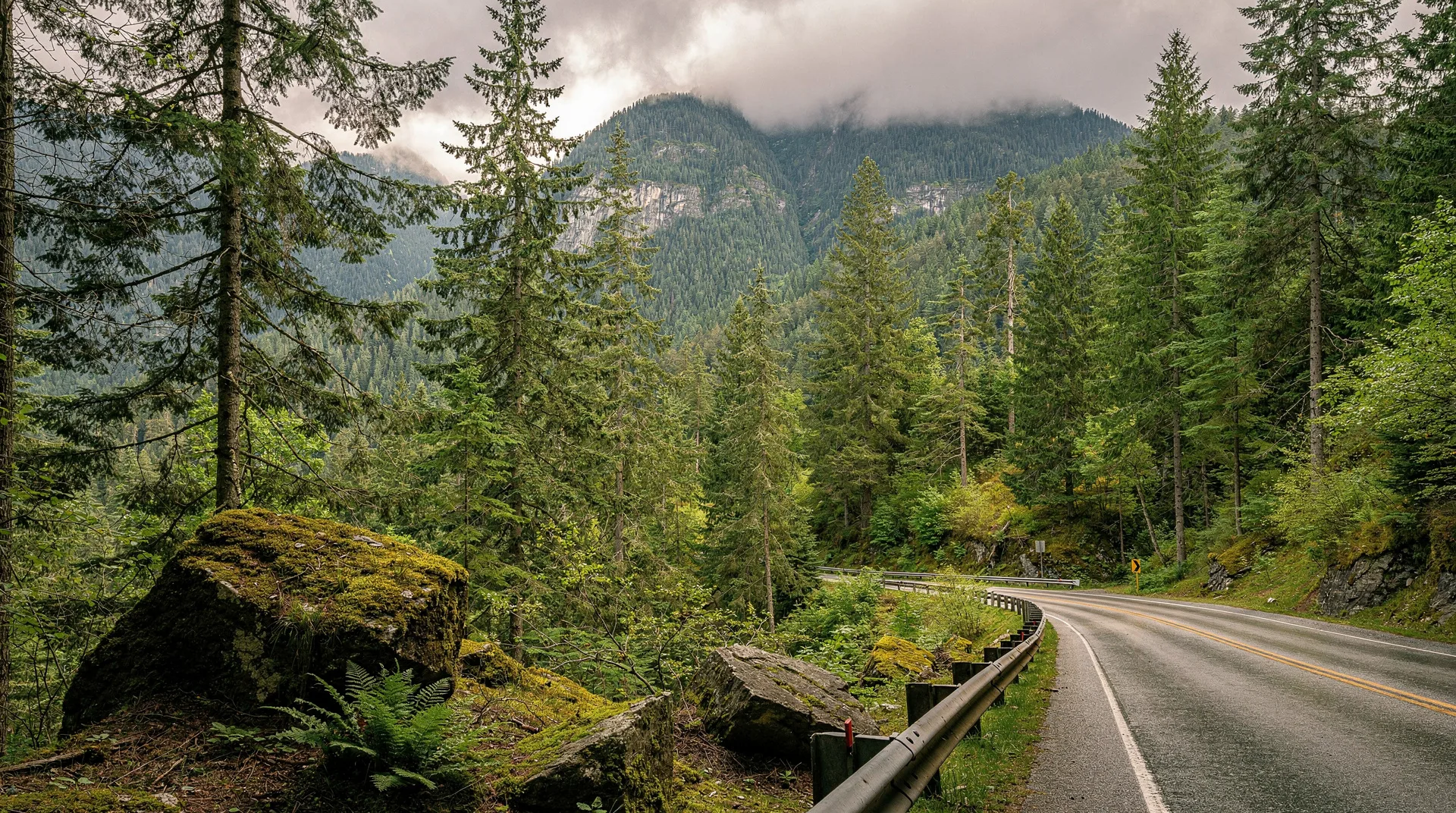
Vancouver to Capilano and Grouse Mountain: the North Shore in a day
How do I do Capilano and Grouse Mountain from Vancouver in one day?
Spend the morning at Capilano Suspension Bridge Park (Cliffwalk and Treetops Adventure take 2-3 hours), then drive or take a short bus to Grouse Mountain for afternoon views, the resident grizzly bears, and an optional gondola summit. Both are 30 minutes from downtown.
The North Shore — North Vancouver and West Vancouver, just across Burrard Inlet from downtown — packs more outdoor spectacle per square kilometre than almost any urban fringe in the world. Within 30 minutes of Vancouver’s downtown, the North Shore delivers a 137-metre suspension bridge swaying above a deep rainforest gorge, glass-and-steel walkways cantilevered over a granite canyon, a mountain 1,231 metres above sea level reachable by gondola in eight minutes, and a pair of resident grizzly bears.
Add the option of hiking trails through old-growth Douglas fir, a free alternative suspension bridge in the next valley, and views over the Vancouver skyline that rank among the best urban panoramas in Canada, and you understand why the North Shore is the most visited day destination directly accessible from Vancouver.
Capilano Suspension Bridge Park and Grouse Mountain are the two headline attractions. Together they form a natural full-day itinerary that suits a wide range of visitors — families, outdoor enthusiasts, photographers, and those who simply want to understand the extraordinary landscape that Vancouver is built within. Both are accessible by public transit from downtown Vancouver, making this one of the few Vancouver day trips that works entirely without a car.
| At a glance | |
|---|---|
| Where | North Vancouver and West Vancouver, across Burrard Inlet from Vancouver |
| Cost | Capilano is around $69 CAD adult admission; the Grouse Mountain gondola is separately ticketed; Lynn Canyon is free |
| Time needed | A full day for both; a half day if choosing just one |
| Getting there | SeaBus + bus from downtown (about 45 minutes), or a 20–30 minute drive |
| Best time | Late spring through fall for full activities; year-round for the gondola and bears once active |
Overview: the North Shore landscape
The North Shore sits at the foot of the Coast Mountains, where the Burrard Inlet meets the mountain front. The mountains rise dramatically from the inlet — Grouse Mountain, Seymour Mountain, and Cypress Mountain form a continuous wall of forested peaks immediately above the suburban streets of North and West Vancouver. The Capilano River, draining from the Coast Mountains, cuts a deep gorge through the granite as it descends to the inlet, creating the dramatic canyon that the suspension bridge crosses.
The temperate rainforest that covers the North Shore mountains — primarily western red cedar, western hemlock, Douglas fir, and red alder — is one of the most biologically productive forest ecosystems on Earth. Trees several hundred years old are common in the preserved areas; some of the Douglas firs in Lynn Canyon and Capilano are over 60 metres tall. The moisture-laden Pacific air, the sheltered fjord environment, and the complex mountain topography create a lushness that feels almost tropical in summer and otherworldly in winter fog.
How to get from Vancouver to the North Shore
By public transit (recommended): The SeaBus ferry runs from Waterfront Station (downtown Vancouver) to Lonsdale Quay in North Vancouver in 12 minutes — a pleasant harbour crossing. From Lonsdale Quay, TransLink bus 236 runs to Capilano Suspension Bridge Park, and separate buses run to Grouse Mountain (the Grouse Mountain shuttle from the bus exchange). No car required.
By car: Cross Burrard Inlet via the Lions Gate Bridge (from Stanley Park, recommended for the views) or the Second Narrows/Ironworkers Memorial Bridge from East Vancouver. From the north end of Lions Gate Bridge, Capilano Road runs north for 4 km to the Capilano Suspension Bridge Park parking lot. Grouse Mountain is a further 4 km north on the same road. Both have paid parking on site.
Free Capilano shuttle: A free red shuttle bus runs from Canada Place and various downtown hotels to Capilano Suspension Bridge Park in summer. Check the Capilano website for current schedule and pickup points.
Driving time: 20-30 minutes from downtown Vancouver to either attraction in normal conditions. The Lions Gate Bridge can be congested on weekday mornings and holiday weekends; the Second Narrows route is an alternative that avoids this.
Capilano Suspension Bridge Park
The suspension bridge
The Capilano Suspension Bridge is the original and iconic attraction — a 137-metre pedestrian bridge suspended 70 metres above the Capilano River, bouncing gently with every footfall. It was originally built in 1889 (in hemp rope and cedar planks) by Scottish civil engineer George Grant MacKay, making it one of the oldest tourist attractions in British Columbia. The current steel cable bridge, upgraded multiple times, accommodates 100 people at once.
Walking across the bridge, particularly in the middle, with the forest canopy above and the gorge below, is a surprisingly physical experience — the sway and the height trigger a mild vertigo that makes it genuinely exciting rather than merely visual. The river 70 metres below can usually be heard but is largely obscured by the forest until you look directly down.
Cliffwalk
The Cliffwalk is a series of glass-floored and steel-mesh walkways cantilevered out from the face of the Capilano Gorge wall, 90 metres above the river. Running for 213 metres along the canyon cliff, it is more vertigo-inducing than the main bridge — the transparent sections of the floor leave nothing between you and the gorge far below. The views along the canyon and across to the opposite wall’s old-growth trees are exceptional. Built in 2011, the Cliffwalk uses minimal fixing points in the granite to minimise environmental impact.
Treetops Adventure
The Treetops Adventure consists of seven suspension bridges connecting ancient Douglas firs 30 metres above the forest floor. The bridges, attached to the trees with non-damaging platforms, allow visitors to walk through the forest canopy at height, with the ground visible below through the canopy. The experience is gentler than the main bridge but gives a genuine perspective on the scale of the old-growth trees — many of these firs are 250-300 years old and 50+ metres tall.
The park grounds
The park grounds below the bridge include a First Nations cultural area with totem poles, longhouse architecture, and carving demonstrations, plus a nature exhibit explaining the temperate rainforest ecosystem. The Capilano River runs below, visible from various points along the park’s perimeter trail. The whole park covers 27 acres and takes 2-3 hours to explore properly.
Book a guided Capilano and Grouse Mountain tour from VancouverLynn Canyon: the free alternative
Lynn Canyon Park in North Vancouver, 15 minutes east of Capilano by car, has its own suspension bridge crossing a narrow gorge — free of charge, as part of a provincial park. The bridge is shorter and narrower than Capilano’s, and the surrounding infrastructure is minimal, but the rainforest setting and the gorge itself are beautiful. The swimming hole downstream of the bridge is a popular summer destination. Lynn Canyon is the best option for those who want the rainforest gorge experience without the Capilano admission price.
Capilano vs Grouse Mountain vs Lynn Canyon
| Cost | Time | Best for | |
|---|---|---|---|
| Capilano Suspension Bridge Park | Around $69 CAD adult | 2–3 hours | Cliffwalk, Treetops Adventure, families wanting a polished commercial experience |
| Grouse Mountain | Gondola ticketed separately | 3–4 hours | Grizzly bears, city panorama, skiing in winter, the Grouse Grind |
| Lynn Canyon | Free | 1–2 hours | Budget travellers, a wilder unstaffed rainforest gorge experience |
Most first-time visitors do Capilano and Grouse Mountain together as described in this guide. Those on a tighter budget or short on time often swap Capilano for Lynn Canyon and put the savings toward the Grouse Mountain gondola instead.
Grouse Mountain
The Skyride gondola
The Grouse Mountain Skyride is a large aerial tramway ascending 1,200 metres in eight minutes from the base of the North Shore (100 metres elevation) to the Grouse Mountain plateau (1,231 metres). The views during the ascent — over the rooftops of North Vancouver, across Burrard Inlet, and into the Vancouver skyline beyond — are exceptional. On clear days, you can see the Gulf Islands and the mountains of Vancouver Island across the Strait of Georgia.
The gondola operates year-round. In winter, it carries skiers and snowboarders to the mountain’s ski runs; in summer, it serves as a scenic lift to the summit and hiking terrain.
Grizzly bears: Grinder and Coola
Grouse Mountain’s two resident grizzly bears — Grinder and Coola — were rescued as orphaned cubs from the BC wilderness in 2001 and have lived on the mountain ever since. Their outdoor habitat covers several hectares on the summit plateau, and viewing platforms allow close observation at various points around the enclosure. Watching these large, powerful animals moving through their naturalistic habitat while knowing they are within minutes of one of Canada’s largest cities is a genuinely incongruous and memorable experience.
The bears are most active in morning and early afternoon; they typically begin their winter denning in November and emerge in late March or April.
Skiing and snowboarding at Grouse Mountain
Grouse Mountain’s ski terrain is modest — 26 runs, 401-metre vertical — but the proximity to downtown Vancouver (the only major ski area in the world visible from a major city’s downtown core) and the exceptional night skiing (until 10:00 PM most evenings) make it unique. Night skiing under floodlights with the Vancouver skyline glittering below is one of the most atmospheric experiences in BC skiing.
The mountain also has a terrain park, snowshoe trails, and a skating rink on the summit plateau.
Summer activities
In summer, Grouse Mountain offers:
Eye of the Wind turbine: A working wind turbine on the summit with a glass observation pod at the nacelle level — a unique vantage point above the treeline.
Zip Lines: Three zip lines and an aerial challenge course operate on the mountain in summer.
Hiking: The BCMC Trail and Grouse Grind (see below) offer routes up the mountain. The Baden-Powell Trail runs along the North Shore mountains, with the Grouse Mountain section offering excellent ridge hiking with views.
Lumberjack show: A live demonstration of historical BC logging techniques (log rolling, axe throwing, speed climbing) that is both skilled and entertaining, particularly for families.
Grouse Grind
The Grouse Grind is a 2.9-km trail ascending 853 metres of vertical — straight up the face of Grouse Mountain through forest and rocky terrain. It is the most popular hiking trail in Canada (with over 100,000 completions per season), and completing it is a point of pride for Vancouver fitness enthusiasts. Average time is approximately 1.5 hours; elite hikers do it in under 30 minutes. The Grind is open May to November; the gondola descends for those who prefer not to walk down.
Where to eat on the North Shore
Observatory Restaurant, Grouse Mountain: At the summit, the Observatory Restaurant serves West Coast cuisine with panoramic mountain and city views. A special meal in an exceptional setting.
Chief’s Buffet, Grouse Mountain: The summit’s casual cafeteria-style option for a quick, affordable lunch after skiing or hiking.
Capilano Bridge Café: The park’s café serves pastries, sandwiches, and hot drinks. Functional for a quick bite between the bridge and Cliffwalk, but not a culinary destination.
Burgoo Bistro, North Vancouver: A comfort food restaurant in the Lonsdale neighbourhood of North Vancouver (10 minutes south of Capilano), serving excellent soup, stew, and hearty mains in a warm, casual setting. One of the North Shore’s best casual restaurants.
Tap and Barrel, Lonsdale Quay: A pleasant waterfront brewpub at Lonsdale Quay (where the SeaBus docks), good for lunch or dinner before or after the SeaBus crossing back to downtown Vancouver.
Practical tips for the Capilano and Grouse Mountain day trip
Buy a Capilano annual pass: The single-visit admission to Capilano Suspension Bridge Park is approximately $69 CAD for adults, which many find steep. An annual pass is available for a modest premium and pays for itself on a second visit. If you are spending more than a day in Vancouver, it is worth considering.
Go early to Capilano: The park gets crowded, particularly in summer. Arriving when it opens (8:00 AM or 9:00 AM depending on season) gives you the best part of the park with smaller crowds and better photography conditions.
Combine Capilano with Lynn Canyon: For a fuller north shore nature experience, spend the morning at Capilano then drive 15 minutes to Lynn Canyon for the free bridge crossing and the swimming hole in summer. The contrast between the commercial park and the wild provincial park is interesting in itself.
Check Grouse Mountain grizzly activity: The bears’ outdoor habitat hours are posted on the Grouse Mountain website and at the summit. Morning visits are generally more likely to find the bears active.
The Grouse Grind is one way: The Grouse Grind trail goes up only; you descend by gondola (a small fee applies). Do not attempt the Grind without appropriate footwear and hydration.
Planning the rest of your Vancouver stay around the North Shore
The North Shore works best as one chapter in a longer visit. If this is your first time in the region, the first-time visitors guide and the best time to visit British Columbia help you place the day in the right season. Visitors building a longer route can slot it into the 7-day British Columbia itinerary, which treats Vancouver as the starting point for the rest of the province.
Getting around without a car is easier than most people expect. The public transport guide and the GO Transit tourist guide explain how fares and connections work in Canadian cities, and the same habits apply on the TransLink buses and SeaBus that serve the North Shore. Since the weather on the coast changes quickly, glance at the packing list before you leave: layers and proper footwear matter more here than anywhere else on a city break.
If the grizzly bears at Grouse Mountain whet your appetite, the grizzly bear viewing guide for British Columbia and the wider bear watching in Canada guide cover the wild alternatives, and the wildlife safety guide is worth reading before any hike in the mountains above the city.
More mountain and forest days near Vancouver
Once you have seen the North Shore, there are several natural follow-ups. The Grouse Mountain guide goes deeper on the summit if you want a second visit with more time for the plateau. Hikers who found the Grind appealing can look at the best hikes in British Columbia, the Stawamus Chief hike near Squamish, or the Garibaldi Lake trail in Garibaldi Provincial Park.
For a gentler change of scene, the Bowen Island ferry hop is a quiet contrast to the commercial attractions on the North Shore. If you are weighing a longer trip and cannot decide between the coast and the mountains, the Vancouver versus Victoria comparison and the Whistler destination page help you choose. A guided option for those who prefer not to organise transport themselves is described in the best tours in Vancouver roundup.
When to visit Capilano and Grouse Mountain
Summer (June to September): Peak season and the most enjoyable time at Capilano — the rainforest is lush, the river is audible below the bridge, and evening visits in long summer light are beautiful. Grouse Mountain’s summer activities are at full operation, and the bears are most visible.
Autumn (October to November): The alder and maple forest around Capilano turns golden in October. Crowds are lower than summer, and the misty, moody quality of autumn light in a temperate rainforest is photogenic. Grouse Mountain’s first snow can appear in late October.
Winter (December to March): Grouse Mountain in winter — with snow on the summit, night skiing, and city lights below — is unique. Capilano in winter has a different atmosphere: icicles on the cliff walls, lower visitor numbers, and a dramatic grey-green quality to the forest that photographs beautifully.
Spring (April to May): The forest is bright with new growth. Capilano is rarely crowded in spring, and Grouse Mountain’s bears emerge from denning in late March or April, making bear viewing good in spring. The Grouse Grind typically opens in May.
Who is this trip for
The Capilano and Grouse Mountain day trip is the most accessible major outdoor experience from Vancouver — no ferry required, public transit works, and the combined half-day from each attraction adds up to a full and varied day. Families with children find it one of the best Vancouver day options (bears, suspension bridge, gondola, lumberjack show all appeal). Photographers will find exceptional material from the rainforest gorge to the city panorama. Active visitors can add the Grouse Grind. First-time Vancouver visitors who want to understand the mountain backdrop to the city will find this the most efficient and spectacular way to do so. If the North Shore leaves you wanting more, you can browse guided tours across Canada for your next stop.
For more ambitious mountain experiences requiring a full day and longer drive, see the Whistler day trip guide. For the quintessential BC cultural and heritage experience, see the Victoria by ferry guide. All options are detailed in the complete Vancouver day trips guide.
Frequently asked questions about Capilano and Grouse Mountain
How much does Capilano Suspension Bridge cost?
Adult admission to Capilano Suspension Bridge Park is approximately $69 CAD (prices may vary by season). The admission includes the main suspension bridge, Cliffwalk, Treetops Adventure, and access to all park areas. An annual pass is available at a premium of around $20 over the day admission. Children’s prices are lower; children under 6 are free.
Is Capilano Suspension Bridge scary?
The bridge sways noticeably with foot traffic and is 70 metres above the river. Many visitors find this exhilarating rather than frightening, but those with significant fear of heights or phobias around suspension should be aware before visiting. The Cliffwalk’s glass-floor sections are more overtly vertiginous. Neither presents any physical danger — the bridge and walkways have extensive safety certifications.
Can I see the grizzly bears at Grouse Mountain year-round?
Grinder and Coola enter winter denning in November and typically emerge in late March or April. From late April to November, the bears are active in their outdoor habitat and are visible from the mountain’s viewing platforms. Hours of bear activity are posted on the Grouse Mountain website.
Is the Grouse Grind suitable for beginners?
The Grouse Grind is steep, sustained, and demanding — not suitable for those who are not reasonably fit and accustomed to hiking. It gains 853 metres in under 3 km, entirely uphill. Appropriate footwear (hiking shoes or trail runners, not sandals or flat shoes) is essential. The trail is open May to November and takes most hikers 1.5-2 hours.
What is the difference between Capilano Suspension Bridge and Lynn Canyon?
Capilano is a commercial park with a much larger bridge, extensive additional attractions (Cliffwalk, Treetops Adventure, First Nations cultural area, café and shops) and paid admission of approximately $69. Lynn Canyon is a free provincial park with a shorter suspension bridge over a narrower gorge and minimal infrastructure. Both offer excellent rainforest and gorge experiences. Capilano delivers more value as a half-day destination; Lynn Canyon is the better choice for those on a budget or those who prefer the natural, undeveloped experience.
How do I get to Grouse Mountain without a car?
TransLink buses connect Lonsdale Quay (SeaBus from downtown Vancouver) to the base of Grouse Mountain. The Grouse Mountain shuttle bus also runs from various downtown Vancouver points. Check the current schedule on the TransLink and Grouse Mountain websites. The SeaBus + bus combination is entirely practical and avoids the Lions Gate Bridge traffic.
Can I do Capilano and Grouse Mountain in half a day?
It’s tight but possible if you focus on one headline attraction at each — the bridge and Cliffwalk at Capilano, and the gondola plus grizzly viewing at Grouse — and skip the Treetops Adventure, zip lines and lumberjack show. Most visitors find a full day gives a much more relaxed pace, especially if using public transit.
Is Capilano or Lynn Canyon better for a first visit?
Capilano delivers more in a single stop — the bigger bridge, the Cliffwalk, Treetops Adventure and cultural exhibits — and is the better choice if it’s your only North Shore stop. Lynn Canyon is the better pick if budget matters more than polish, or if you’re already doing Grouse Mountain and want a free, quieter add-on rather than a second paid attraction.