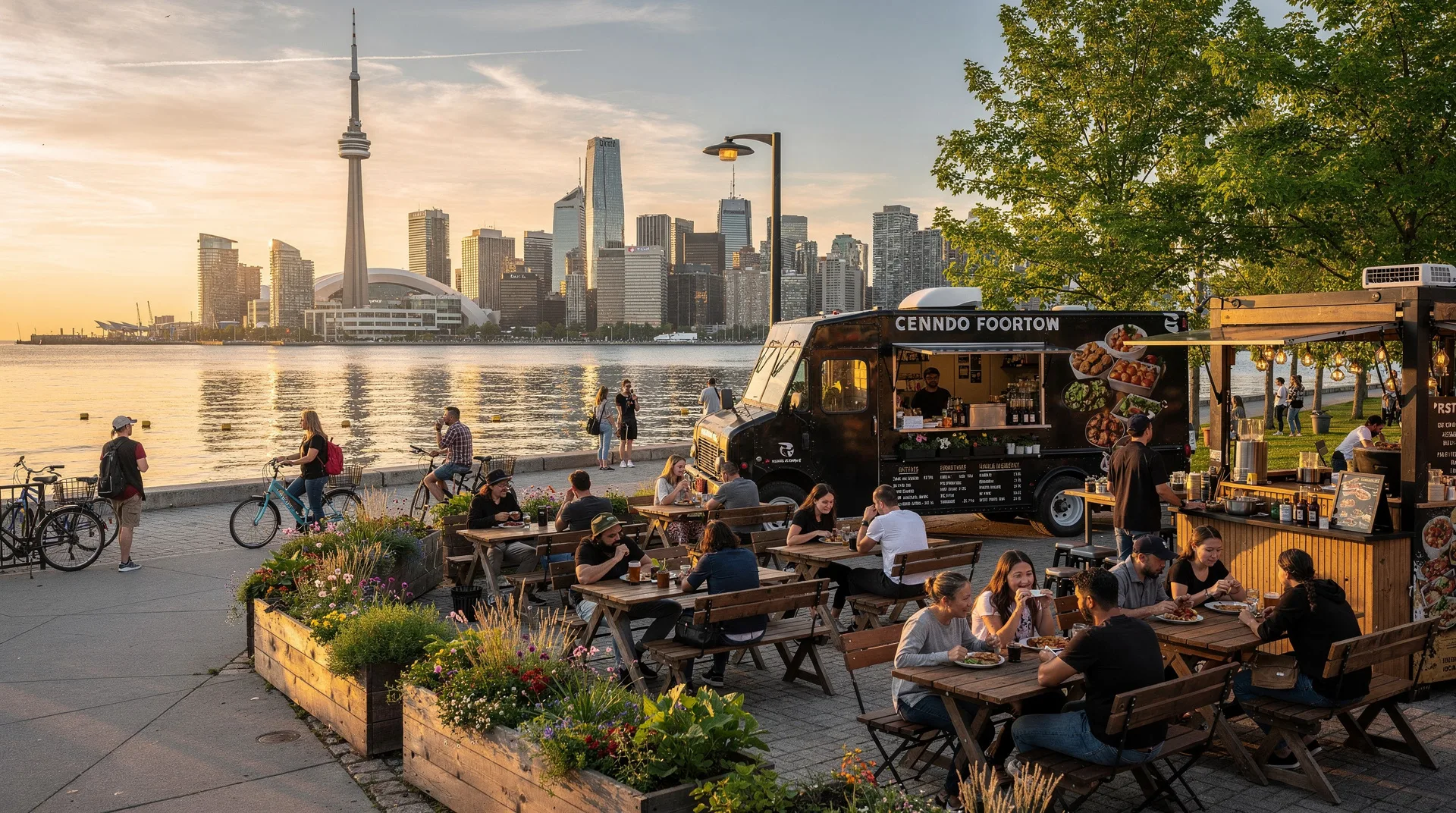
Toronto Food Scene: Markets, Restaurants & Must-Try Dishes
What food is Toronto known for?
Toronto is one of the world's most diverse food cities. Local icons include peameal bacon sandwiches from St Lawrence Market, Scarborough's Tamil and Chinese cuisine, Kensington Market street food, and the city's extraordinary range of restaurants across 200-plus cultures.
At a glance
| Where to start | St Lawrence Market (mornings) and Kensington Market/Chinatown (afternoons) |
| Cost | Street food and market bites around CAD 8-15; mid-range meal around CAD 25-45 per person; fine dining CAD 80-150+ |
| Time needed | A full day covers the markets well; 3-4 days to eat across most neighbourhoods |
| Getting around | TTC subway and streetcars connect all the neighbourhoods below; a day pass runs around CAD 13.50 |
| Best time | Year-round, but Pedestrian Sundays in Kensington (May-October) and the Saturday St Lawrence farmer’s market add extra reasons to visit |
Toronto has quietly become one of North America’s most interesting food cities. The combination of the world’s most diverse urban population — residents from over 200 countries — and a thriving local food culture has produced something genuinely difficult to find elsewhere: a city where you can eat authentically across dozens of culinary traditions within a few kilometres, in neighbourhoods that have been cooking those foods for generations rather than imitating them for tourists.
This guide covers the essential markets, the best food neighbourhoods, the dishes that define the city, and the restaurants worth booking well in advance.
St Lawrence Market: Toronto’s food cathedral
St Lawrence Market, in the historic St Lawrence neighbourhood east of the downtown core, is one of the finest food markets in North America. The main South Market building (open Tuesday to Sunday) is a Victorian-era hall housing over 120 vendors — butchers, fishmongers, cheese counters, specialty grocers, pasta makers, and prepared food stalls.
The peameal bacon sandwich is the market’s signature offering, and Toronto’s most iconic street food. Peameal bacon — back bacon rolled in cornmeal, a Toronto invention — is grilled on a flat-top and served in a kaiser roll with mustard. Carousel Bakery on the main floor has served this sandwich since 1974 and typically runs a queue, but it moves fast. Order it with a fried egg if you want the full version.
Beyond the sandwich: The cheese counter at Alex Farms carries an exceptional Ontario cheese selection alongside European imports. Witteveen Cheese is another standout. The fish stalls sell local Lake Superior whitefish and pickerel alongside Atlantic salmon and shellfish. The butcher stalls are among the best in the city for Ontario-raised meat.
The Saturday farmer’s market (North Market building, Saturday only) is the complement to the main hall — local farmers from across Ontario selling heritage produce, eggs, honey, maple products, and seasonal vegetables. At its best in summer and fall, this is one of the most authentic farm-to-market experiences in the province.
The market is busiest Saturday morning; a Tuesday or Wednesday visit gives a more relaxed experience with equal quality.
Kensington Market: multicultural and eclectic
Kensington Market, west of Chinatown on the edge of the downtown core, operates less like a conventional market and more like a neighbourhood that happens to sell food from every corner of the world. The narrow streets are lined with independent shops: Jamaican roti houses, Portuguese fishmongers, Middle Eastern grocery stores, Mexican taquerias, vintage clothing shops, and coffee roasters.
What to eat here: The Portuguese custard tarts from the Portuguese bakeries on Augusta Avenue are exceptional. El Gordo Latino has some of the most authentic South American empanadas in the city. The Perola Supermarket on Augusta is a destination for Brazilian and South American ingredients. Wanda’s Pie in the Sky is a neighbourhood institution for homemade pies.
Pedestrian Sundays: From May to October, Kensington closes its main streets to cars on Sundays — an outdoor street party atmosphere with food vendors, live music, and the neighbourhood’s anarchic energy at its best.
The vibe: Kensington rewards slow wandering. It is not a manicured experience — some corners are rough around the edges — but it feels genuinely alive in a way that many curated food halls do not. Come hungry and curious.
Book a Toronto food tour covering the markets and best neighbourhood bitesChinatown and Spadina Avenue
Toronto’s Chinatown is one of the largest Chinese communities in North America — dense, authentic, and constantly evolving as new waves of immigration from different regions of China and Southeast Asia reshape the restaurant landscape.
Dim sum: Weekend dim sum is a Toronto institution. Rol San on Spadina, Pearl Harbourfront, and Ambassador Chinese Cuisine all serve cart-style dim sum (the carts loaded with har gow, siu mai, cheung fun, turnip cake, and dozens of other items) on weekend mornings. Arrive before 11:00am or expect a queue.
Night market food: Spadina Avenue at night has excellent Sichuan restaurants, Cantonese seafood houses, hot pot, and bubble tea chains. The intersection at Dundas and Spadina is the hub.
Newer arrivals: The Scarborough district in eastern Toronto — particularly Finch Avenue East and Kennedy Road — has some of the best Tamil, Sri Lankan, and newer Chinese (particularly Fujianese and Wenzhounese) food in the city. This is where the city’s newest immigrants tend to cluster, and the food is correspondingly immediate and authentic. The Scarborough Town Centre area has excellent South Asian, Vietnamese, and Chinese options.
The Distillery District and King West
The Distillery District — a preserved Victorian industrial complex in the east end — has transformed from artists’ studios into a dining and shopping destination with higher ambitions. The architecture (red brick warehouses, cobblestone lanes) is exceptional, and the food and drink options have grown significantly.
Mill Street Brewery in the Distillery is Toronto’s pioneer craft brewery — the Tank House Ale and Organic Lager remain solid, and the brewery-pub setting is hard to beat on a cold day.
King Street West is Toronto’s most concentrated stretch of destination restaurants. Canoe (atop the TD Tower, with views over Lake Ontario) remains the gold standard for modern Canadian cuisine — the menu emphasises Ontario and Canadian ingredients with genuinely sophisticated cooking. Buca does exceptional regional Italian. Jacobs & Co. Steakhouse is the city’s best for dry-aged beef.
The Entertainment District (around King and John) has dozens of restaurant options; quality is variable, so rely on specific recommendations rather than walking in blind.
Little Italy and Little Portugal
College Street west of Bathurst is Toronto’s Little Italy — gelato shops, espresso bars, pasta restaurants, and grocery stores with imported Italian products. Bar Raval on College is one of the most visually extraordinary restaurant spaces in the city (a sinuous carved-wood Art Nouveau interior) and serves exceptional Spanish-influenced pintxos and cocktails. Tacos El Asador nearby does some of the city’s best street tacos.
Little Portugal, a few blocks further west, is home to excellent Portuguese restaurants: Adega on Elm Street downtown is the fine-dining standard; Manuel’s on Dundas West does simple, honest grilled fish and chicken piri piri.
What to eat: Toronto’s must-try dishes
Peameal bacon sandwich: Already mentioned — the definitive Toronto street food. St Lawrence Market, Carousel Bakery.
Butter tart: Ontario’s signature baked good — a small pastry shell filled with a gooey mixture of butter, sugar, eggs, and sometimes raisins or pecans. Debate rages about whether raisins belong. The right answer is that both versions are excellent. St Lawrence Market and most bakeries sell them.
Beaver tails: A Canadian chain, but the Yonge Street location is as authentic as it gets — fried dough stretched into a flat oval and topped with cinnamon sugar, Nutella, or lemon. Best eaten immediately.
Roti: Toronto has a large Caribbean population, and the roti (particularly the Trinidadian dhalpuri roti with curried potato and goat or chicken filling) at spots like Ali’s Trinidad Roti in Kensington is exceptional.
Pizza al taglio: A newer arrival but now established — Roman-style pizza sold by weight, baked in rectangular trays. Pi Co. and Descendant Detroit Style Pizza are local favourites.
Ontario cheese: The province produces excellent cheeses — particularly aged cheddars from the Prince Edward County dairy region, goat cheese from rural operators, and artisan blue cheeses. Alex Farms at St Lawrence Market carries the definitive selection.
Craft beer and cocktails
Toronto’s craft beer scene has matured into one of Canada’s best. Beyond Mill Street’s original Distillery location:
Bellwoods Brewery (Ossington Avenue) is the city’s cult favourite — small-batch saisons, IPAs, and wild fermentation ales that sell out within hours of release. Their taproom is busy most evenings.
Left Field Brewery (Gerrard East) is a baseball-themed brewery in the east end with excellent lagers and pale ales — accessible, quality-focused, and family-friendly.
Great Lakes Brewery (Etobicoke, west end) is one of the larger craft operations with an excellent taproom and food menu — the Thrust! craft lager is one of the city’s best sessionable beers.
For cocktails, Bar Neon in Kensington and Civil Liberties on Bloor West are respected destinations; the latter focuses on obscure spirits and meticulous cocktail construction.
Brunch culture
Toronto takes brunch seriously. Reservations are essential at popular brunch spots on weekends:
Eggspectation is a chain but a reliable one. Aunties and Uncles in Kensington is a cramped, eccentric institution beloved for big portions and long queues. Saving Grace on Dundas West is the Gold standard in the Parkdale neighbourhood — creative seasonal menus, local ingredients, and always a queue by 10:00am.
Riverside, Leslieville and the east end
East of the Distillery District, Riverside and Leslieville have become two of Toronto’s most food-focused residential neighbourhoods without the downtown price premium. Queen Street East through both neighbourhoods is lined with independent coffee shops, brunch spots, and a growing number of destination restaurants that locals reach by streetcar rather than tourists reach by guidebook. This is a good area to eat like a Torontonian rather than a visitor — reservations are easier and the pace is calmer than King West or the Entertainment District.
Combining food with the rest of a Toronto trip
Food is easy to weave into a broader Ontario visit rather than treating it as a separate day. If you’re combining a game at the Toronto sports guide venues with dinner, the Distillery District and King West sit within a short walk or streetcar ride of both Scotiabank Arena and Rogers Centre.
Visitors basing themselves in Toronto for a wider Ontario 7-day itinerary can treat the city as the culinary bookend of the trip — eat well on arrival and departure, then head out to Niagara-on-the-Lake for the wine region’s own food and wineries, or to Prince Edward County for its cheese and wine trail. Anyone visiting specifically in warmer months should also see Toronto in summer, which covers the patio season and outdoor food festivals that don’t run the rest of the year. If you are extending the trip beyond Ontario, you can compare tours and activities across Canada before you book.
Planning a food trip to Toronto
The city’s food scene is restaurant-dense but also exhausting to navigate without a plan. A few structural suggestions:
Start with the markets: St Lawrence Market on a Saturday morning (farmer’s market) and main South Market gives the most immediate sense of the city’s food identity.
Eat by neighbourhood: Pick one or two neighbourhoods per day and eat your way through them rather than ranging widely. Kensington/Chinatown can fill a full afternoon and evening. The Distillery/King West is an easy evening-into-night progression.
Book in advance for destination restaurants: Canoe, Buca, Bar Raval, and other top spots fill weeks ahead, particularly Friday and Saturday evenings.
Use transit: Toronto’s subway, streetcars, and buses connect most food neighbourhoods efficiently. A day pass (CAD 13.50) gives unlimited rides. See our Toronto to Ottawa road trip guide for transport context if you are combining city eating with regional travel.
Related guides
- Toronto sports guide — combining dining with a game at the Scotiabank Arena or Rogers Centre
- Ontario 7-day itinerary — building Toronto food stops into a wider Ontario trip
- Toronto vs Ottawa — comparing the two cities for food and culture
- Toronto in summer — patio season, food festivals, and outdoor markets
- Niagara-on-the-Lake — the wine region an hour and a half from Toronto
- Prince Edward County — Ontario’s cheese and wine trail
Frequently asked questions about Toronto Food Scene: Markets, Restaurants & Must-Try Dishes
Is Toronto food expensive?
Toronto restaurants span every price point. A good meal at a mid-range restaurant runs CAD 25–45 per person before drinks; fine dining (Canoe, Buca) is CAD 80–150+ per person. Markets and street food (Kensington roti, St Lawrence peameal sandwich) cost CAD 8–15 per item. The city is less expensive than New York or London for equivalent quality.
Where is the best cheap food in Toronto?
Kensington Market and Chinatown/Spadina are the best areas for excellent cheap food. A roti at a good Trinidadian spot costs under CAD 12. Dim sum for two at a Chinatown restaurant runs CAD 25–40. The Scarborough suburbs have the cheapest and most authentic international food in the city, though they require a transit trip of 40–60 minutes from downtown.
What is Toronto’s most iconic food?
The peameal bacon sandwich from St Lawrence Market is the city’s most distinctive local food — genuinely Toronto and not found in quite the same form anywhere else in Canada. Butter tarts are Ontario’s broader regional icon.
Can I do a food tour of Toronto?
Yes — guided food tours are a good introduction to the market and neighbourhood scene, particularly for first-time visitors who want context alongside the food. Toronto tours typically cover St Lawrence Market, Kensington, and sometimes Chinatown, with stops at key vendors. Half-day tours (3–4 hours) are the most common format.
How many days do I need to properly explore Toronto’s food scene?
Two to three days lets you cover the essentials without rushing: a morning at St Lawrence Market, an afternoon/evening in Kensington and Chinatown, and a night out in the Distillery District or King West for a destination dinner. A single day is enough for the highlights if you focus on just the markets and one neighbourhood.
Is Toronto’s food scene good for vegetarians and vegans?
Very good. The city’s diversity means South Asian, Middle Eastern, and Ethiopian restaurants (all strongly represented in Toronto) offer extensive naturally vegetarian and vegan options, and most modern restaurants across neighbourhoods list dedicated plant-based dishes.