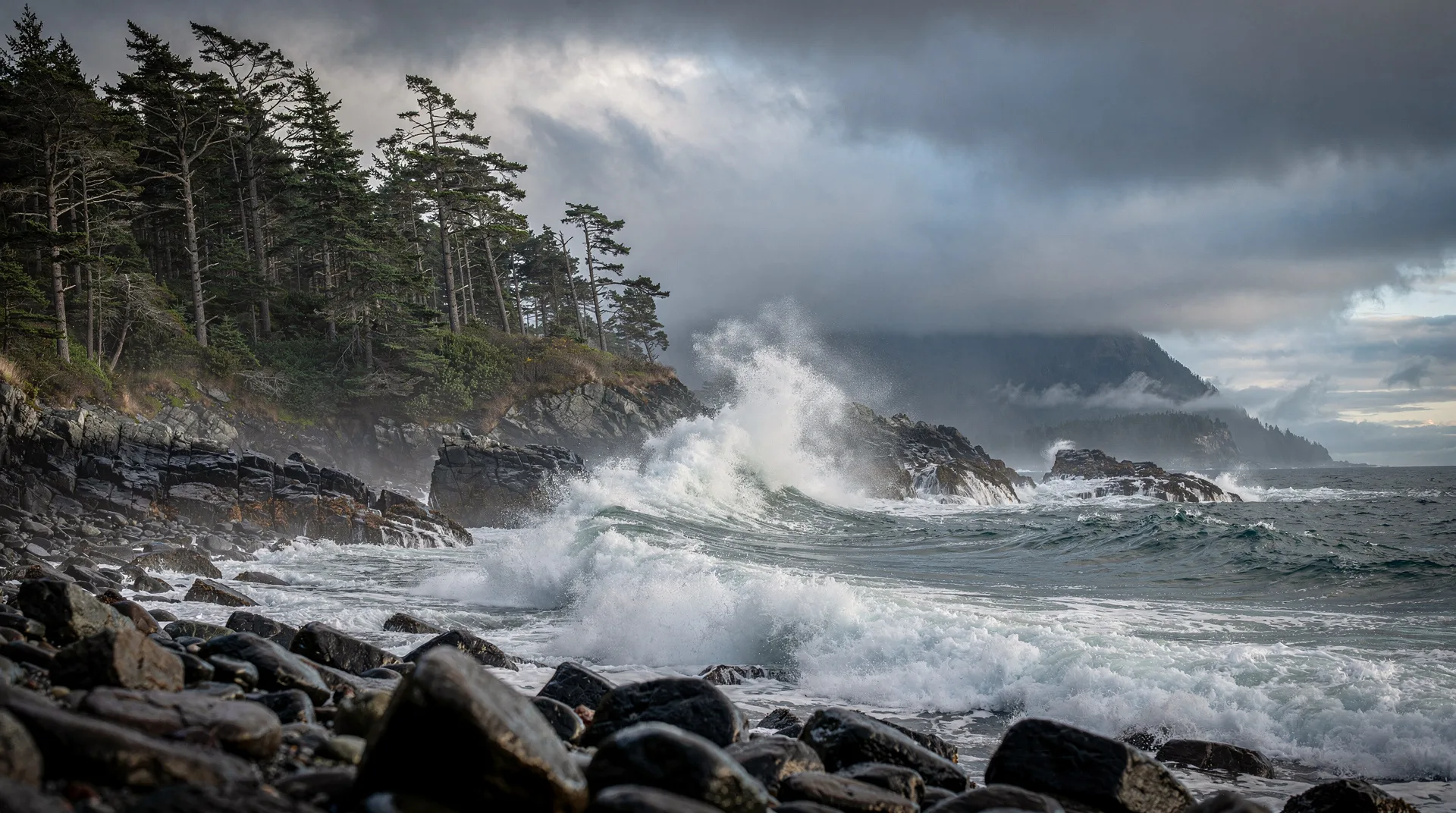
Storm watching in BC: Tofino, Ucluelet and the Wild Pacific guide
When is storm watching season in Tofino?
Storm watching season in Tofino and Ucluelet runs from November through February, with November and January typically offering the most dramatic storms. Pacific storms bring waves of 5–10+ metres to Long Beach. The best strategy is to monitor Environment Canada weather forecasts for 'large Pacific swell advisory' or 'storm surge warning' and book accommodation for those windows.
Storm watching is a distinctly BC invention — the idea that driving to the far west coast of Vancouver Island in November to watch Pacific storms arrive is not lunacy but one of the finest things you can do in winter. The first time you stand on Long Beach or Wickaninnish Beach as a 7-metre swell rolls in from thousands of kilometres of open Pacific and meets the shore, all sound replaced by the concussive impact of water on rock and sand, you understand immediately why this has become one of BC’s most popular winter tourism activities.
Tofino is ground zero. The small surf town on the western shoulder of Vancouver Island sits directly in the path of the winter storm track that sweeps off the North Pacific, and the combination of old-growth rainforest, surf beaches, and luxurious accommodations that have developed here over the past 30 years has created a storm watching tourism infrastructure that is genuinely exceptional — warm beds and outstanding food, 200 metres from waves that would be dangerous to enter.
What is storm watching?
Storm watching in BC means exactly what it says — observing major Pacific storms from the shore. The storms that arrive on the west coast of Vancouver Island between November and February are the same systems that cross the North Pacific from Asia and the Aleutian Islands, gathering energy and moisture over thousands of kilometres of open ocean before striking the Vancouver Island coast.
The result at Long Beach and Wickaninnish Beach: waves of 5–12 metres, crashing on 24-kilometre stretches of open beach with winds of 80–120 km/h. Rainforest trees bend. Spray flies 20 metres above the wave break. The sound is physical rather than merely heard — you feel the wave impacts in your chest.
This is not a spectator sport from a safe glass box. You are outside, in the storm, watching. The experience is wet, cold, sometimes frightening, and completely electrifying.
Tofino and Ucluelet
Tofino is the northern anchor of Pacific Rim National Park Reserve and the more developed of the two storm watching towns. It has a range of restaurants, a surf culture, significant luxury accommodation, and the Clayoquot Sound UNESCO Biosphere Reserve as its ecological backdrop. Tofino draws visitors year-round but its winter identity — warm spa, fireplace, storm outside — is fully formed.
Ucluelet (“The Hive” in the Nuu-chah-nulth language) is 40 km south of Tofino at the south end of Long Beach Peninsula. It is more working-fishing-town than tourist destination, less polished, and currently undergoing a wave of development that is gradually changing its character. Some visitors prefer Ucluelet specifically for its relative lack of Tofino-style tourism infrastructure — it feels rawer. The Wild Pacific Trail at Ucluelet gives direct access to storm watching from elevated headland positions.
Pacific Rim National Park Reserve: The 24 km of Long Beach between Tofino and Ucluelet is managed by Parks Canada. The beach is open year-round; storms make it the most dramatic and the park the least crowded simultaneously.
Best beaches for storm watching
Long Beach (Pacific Rim National Park)
The main attraction. Twenty-four kilometres of open Pacific-facing sand beach, backed by old-growth rainforest, with no barriers between you and whatever the ocean delivers. Multiple parking and access points along Pacific Rim Highway allow you to find your position.
Safety: Stay behind the tide line. Sneaker waves (waves that come further up the beach than anticipated without warning) are a serious and occasionally fatal hazard on Long Beach. The park’s rule of thumb is to stay at least 30 metres above the tide line during storm conditions. Never turn your back on the ocean.
Wickaninnish Beach
A cove-shaped beach at the south end of Long Beach, with the Wickaninnish Interpretive Centre (Parks Canada facility with storm viewing through massive windows — warm, dry, informative) directly on the beach. This is the safest storm watching location with an alternative shelter option.
The Wickaninnish Inn (the luxury resort, not the Parks Canada centre) sits on a headland above this beach and is the definitive Tofino storm watching accommodation — rooms with private balconies facing directly into the Pacific storm.
Wild Pacific Trail (Ucluelet)
The 2.6 km Lighthouse Loop section of the Wild Pacific Trail follows the storm-exposed headlands of Ucluelet Peninsula, with elevated viewpoints above the wave-battered rocks. This is the finest storm watching position in the area for elevated views — you are above the wave break looking down at the impact, rather than at eye level on the beach. Wind exposure is total.
Additional sections of the Wild Pacific Trail (total 9 km) extend north along the peninsula with further viewpoints and varying degrees of exposure.
Radar Hill (Pacific Rim National Park)
The viewpoint at Radar Hill, a 15-minute walk from the parking area, gives a panoramic view over the entire Long Beach area and Clayoquot Sound — excellent for seeing the full storm approach from offshore before it arrives on the beach.
When to go
November
The first serious winter storms of the season arrive in November. Early November can produce extraordinary storms after a quiet October. Hotel availability is better early in the month, and storm sizes are unpredictable but can be exceptional. Tofino is significantly quieter than in summer — restaurants still open, but atmosphere is local rather than tourist-season.
December
A continuation of prime storm season, interrupted by the Christmas period when Tofino hotels fill with Vancouverites escaping the city. The Christmas–New Year window (Dec 24–Jan 2) is typically fully booked at premium properties 3–4 months in advance. Book early or avoid this window.
January
Often the finest month for storm watching. Post-Christmas quiet, maximum storm frequency and intensity, and the satisfaction of being somewhere extraordinary in the deepest of winter. Tofino’s off-season means restaurants are less crowded and accommodations more available.
February
Storm season begins to ease, though significant storms continue through the month. Some visitors prefer February for the daylight improvement (sunrise by 7:30 am vs 8:15 am in December) and continuing storm presence.
Monitoring storm conditions
The best storm watching requires a bit of weather intelligence. Not every November day delivers a major event — BC’s coast has calm periods even in winter.
Environment Canada marine forecast: The West Coast Vancouver Island marine forecast at weather.gc.ca provides swell height and wind speed predictions. Look for swell of 4+ metres for good conditions; 6+ metres for spectacular conditions.
Surfline.com: The surf forecasting site tracks Pacific swells far more granularly than Environment Canada, including wave height, period, and swell direction for Long Beach specifically. “Swell period” matters — a 16–20 second swell period is big-ocean energy; a 10–12 second period is local chop. Long-period swells produce the most dramatic shore break.
The Wickaninnish Inn’s storm reports: The resort posts storm condition reports and photos that are accurate and useful for planning.
Browse Vancouver Island winter tours and experiences on GetYourGuideAccommodation
Tofino luxury
The Wickaninnish Inn: The best storm watching hotel in BC, arguably in Canada. Built directly on the headland above Chesterman Beach, every room has an ocean-facing perspective. Storm watching rooms come with fireplaces, soaking tubs, and private balconies. Rates in storm season: CAD 400–900/night depending on room type and date. Book 2–3 months ahead for peak storm periods.
Clayoquot Wilderness Resort: A tented resort in Clayoquot Sound, accessible by water taxi. Open in a limited storm-season format; luxury approach to wilderness accommodation.
Middle Beach Lodge: Adults-only, two separate lodges above the beach with a range of room types. Forest and ocean character. Less expensive than Wickaninnish but similarly positioned. From CAD 200–450/night.
Mid-range and budget Tofino
Tofino Resort + Marina: Downtown Tofino location with marina views rather than open beach. Practical and central. From CAD 150–250/night.
Various rental cottages and vacation homes: Available through VRBO and Airbnb in the Tofino and Ucluelet area. Often better value than hotels for groups.
Ucluelet
Black Rock Oceanfront Resort: The best storm watching accommodation in Ucluelet, built into the Wild Pacific Trail headlands. Rooms face directly into Pacific storms. From CAD 200–400/night.
A Snug Harbour Inn: A smaller B&B option in Ucluelet with ocean-facing rooms.
What to do when it is not storming
Storm watching trips inevitably include weather windows — periods between storms when conditions are calm. Tofino and Ucluelet have plenty of options:
Surfing: Tofino has a year-round surf culture and Long Beach produces beginner-friendly waves even in off-season. Wet suit rentals available; lessons available for beginners.
Hot springs: Hot Springs Cove, accessible by water taxi from Tofino (approximately 1.5-hour journey each way), has natural hot springs that can be visited year-round. The combination of a storm-season water taxi journey and a geothermal soak is a specifically Tofino experience.
Old-growth forest walks: The temperate rainforest around Tofino — including the Ancient Cedars Grove trail and Rainforest Trail within Pacific Rim National Park — is at its most atmospheric in rain and mist. The Meares Island Tribal Park (accessible by water taxi from Tofino) has large old-growth cedar trees including the “Hanging Garden Tree” (estimated 2,000 years old).
Whale watching: Grey whales begin their northward migration in March and some individuals remain feeding in Clayoquot Sound through summer. Storm-season whale watching tours are run by local operators when weather permits.
Food: Tofino’s restaurant scene punches significantly above the town’s size. Sobo, Wolf in the Fog, and Tacofino (the original food truck that launched a BC restaurant chain) are the signature names. Wolf in the Fog in particular has been BC’s most-awarded restaurant in its category.
Browse Vancouver Island outdoor tours year-round on GetYourGuideGetting there
Tofino is 315 km from Victoria and 315 km from Nanaimo by road. From Nanaimo (ferry arrival point), drive north on the Island Highway to Parksville, then west on Highway 4 through Coombs, Port Alberni, and the Kennedy Lake corridor to the coast — approximately 3 hours of driving.
Floatplane: Harbour Air and Tofino Air operate floatplane services from Vancouver Harbour to Tofino Harbour — approximately 45 minutes of flying, significantly faster than the drive + ferry combination. Floatplane seats sell out during peak storm periods; book early.
No direct bus service: Public transit does not reach Tofino. A car, rental car, or floatplane is required.
Safety
Pacific storm watching can be genuinely dangerous. The statistics on coastal casualties in BC consistently include visitors who underestimated waves or ventured too close to the waterline during storm conditions.
Absolute rules:
- Stay behind the designated safe zone (30+ metres above tide line on beaches; on elevated viewpoints, behind barrier railings)
- Never turn your back on the ocean
- “Sneaker waves” — waves significantly larger than the preceding set — occur without warning; maintain your distance at all times
- If you get wet from a wave, move further back immediately rather than staying to see the next one
- Children and pets should be on short leashes (literally, in the case of dogs) near the water during storms
The Wickaninnish Interpretive Centre’s indoor viewing area is specifically designed for safe storm watching from inside — an excellent option for families, those with mobility limitations, or anyone who wants dramatic views without the weather exposure.
Frequently asked questions about Storm watching in BC: Tofino, Ucluelet and the Wild Pacific guide
How do I know when a good storm is coming?
Check Environment Canada’s marine forecast (weather.gc.ca) and Surfline.com 3–5 days ahead. Swell height above 4 metres + strong winds = good conditions. The Pacific storm track produces systems regularly from November through February; you will rarely visit Tofino in winter without at least one significant event.
Is storm watching family-friendly?
Yes, with supervision and caution. The indoor viewing at the Wickaninnish Interpretive Centre is ideal for young children and guarantees safety. Older children (10+) with responsible adult supervision can view from the beach safely behind the recommended distance. Children should not be taken to exposed headland viewpoints in high winds.
Can I swim during storm season?
No. The Pacific Ocean off Tofino is cold (8–12°C year-round) and surf during storms is dangerous. Storm-season activities are observation, surfing (for experienced surfers with proper gear), and kayaking (guided, in sheltered inlets only). Long Beach swimming is a summer activity.
Is Tofino worth visiting in summer?
Absolutely — the summer character (surf, kayaking, whale watching, hiking, food scene) is completely different from storm season. Summer is the most popular season overall. Storm watching specifically is a winter activity; wildlife and recreation tourism is better in June–September.