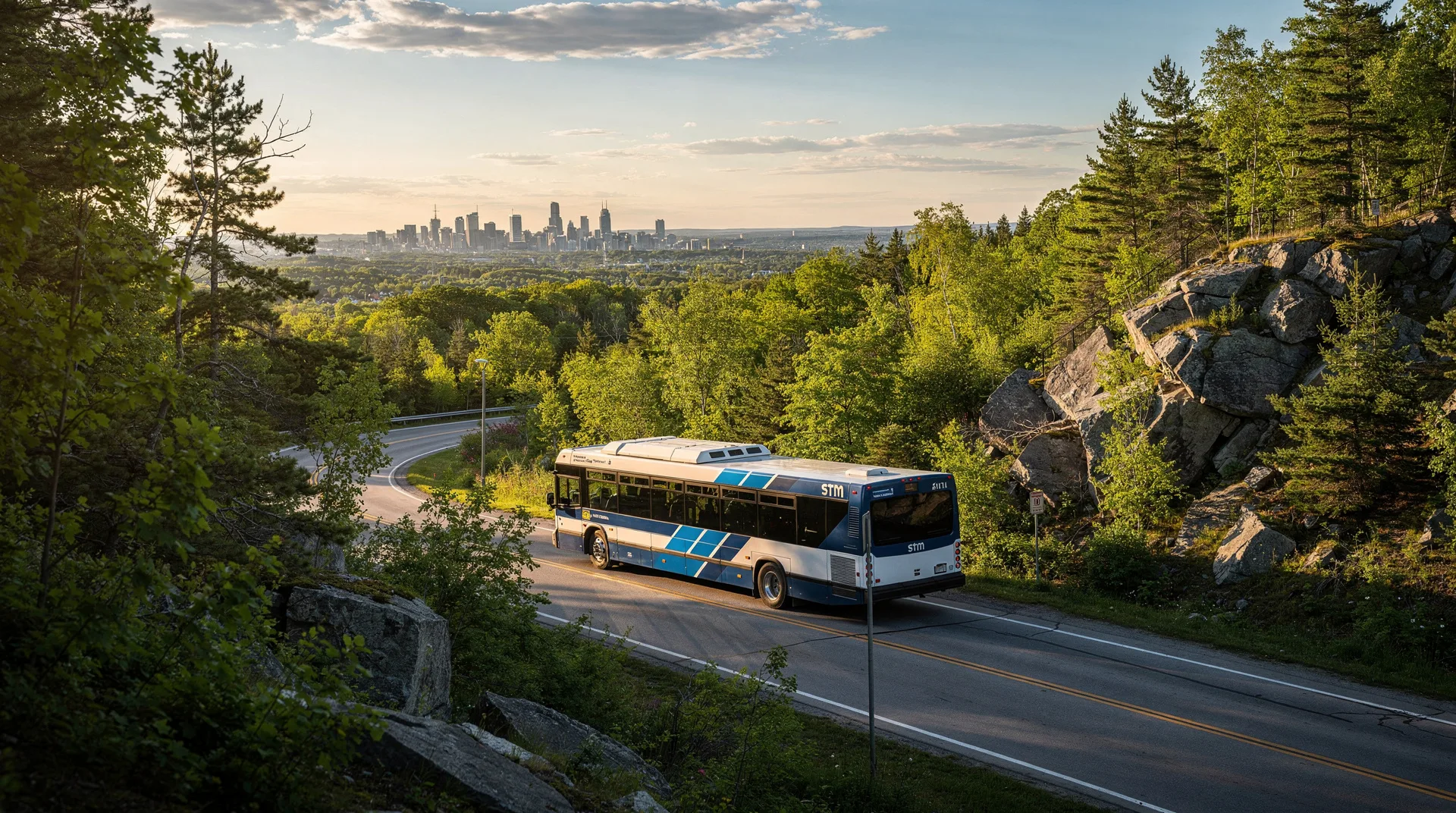
Montreal public transit (STM): the complete metro and bus guide
How do I use Montreal's metro?
Buy a 1-day ($12) or 3-day ($22) tourist pass or single tickets ($3.75) at any station. The STM metro has 4 colour-coded lines and runs from 5:30 am to 1 am. Tap your ticket at turnstiles. Use the Chrono app to plan trips.
Montreal has one of the best public transit systems in North America — four metro lines, an extensive bus network, a clean fleet of rubber-tired trains, and fares cheap enough that most visitors never need a taxi or rideshare. The Société de transport de Montréal (STM) runs it all, and learning the basics takes about 15 minutes.
This guide covers exactly how to use Montreal’s metro and bus system as a visitor — which ticket to buy, how the lines connect, where the useful stations are, and the quirks that aren’t obvious from a map.
At a glance
| Where | 4 metro lines + bus network across greater Montreal |
| Cost | Around $3.75 single fare; $12 day pass; $22 3-day pass |
| Time needed | About 15 minutes to learn the system |
| Getting there | Airport: 747 Express bus, around 45-60 minutes to downtown |
| Best time | Off-peak (mid-morning, early afternoon) for the least crowded rides |
The basics
- Four metro lines: Green, Orange, Yellow, Blue
- Hours: 5:30 am to 1:00 am most days (12:30 am on Sundays; 1:30 am Fri/Sat)
- Frequency: 3-5 minutes peak, 8-10 minutes off-peak
- Fare: $3.75 single, $12 one-day unlimited, $22 three-day unlimited
- Stations: 68 metro stations, plus extensive bus network
The four metro lines
Green Line (1)
Runs east-west. Connects downtown to Old Montreal to the eastern neighborhoods and Olympic Park. Major stations for visitors:
- Atwater: Atwater Market, Canal de Lachine
- Lionel-Groulx: bus transfer hub; Crescent Street area
- Peel / McGill: downtown shopping (underground city), Sainte-Catherine St
- Place-des-Arts: Jazz Fest, museums, theatres
- Berri-UQAM: major transfer station (Green + Orange + Yellow), Quartier Latin
- Beaudry: The Village
- Papineau: Old Port eastern end
- Pie-IX / Viau: Olympic Park, Botanical Garden, Biodome
Orange Line (2)
Runs north-south in a U shape. Connects downtown to Plateau, Mile End, and western suburbs. Major stations for visitors:
- Bonaventure: downtown, Bell Centre, Central Station
- Place-d’Armes: Old Montreal, Notre-Dame Basilica
- Champ-de-Mars: Old Montreal, City Hall, Old Port
- Sherbrooke: Latin Quarter, Carré Saint-Louis
- Mont-Royal: Plateau-Mont-Royal (the neighbourhood), the Plateau’s restaurant district
- Laurier: Plateau, Mile End southern edge
- Rosemont: Little Italy southern edge
- Jean-Talon: Little Italy, Jean-Talon Market (major visitor stop)
- Snowdon / Côte-des-Neiges: ethnic neighbourhoods, Oratoire Saint-Joseph
Yellow Line (4)
Short line, 3 stations, connecting downtown to Île Sainte-Hélène (Parc Jean-Drapeau) and Longueuil:
- Berri-UQAM (downtown)
- Jean-Drapeau: the island, Biosphère, La Ronde amusement park, F1 circuit, Igloofest site
- Longueuil-Université-de-Sherbrooke: South Shore
Essential for F1 weekend, Osheaga, Igloofest, and summer island visits.
Blue Line (5)
Runs east-west on the northern side of Mount Royal. Less useful for most visitors but connects to Jean-Talon and Snowdon. Not a tourist-priority line.
Transfers
All three main intersections allow free transfers:
- Berri-UQAM: Green + Orange + Yellow
- Lionel-Groulx: Green + Orange (and major bus hub)
- Jean-Talon: Orange + Blue
- Snowdon: Orange + Blue
When you enter a metro station with a valid ticket/pass, you can transfer between lines and to STM buses within 2 hours using the same fare.
Fares and passes
Single-ride ticket — $3.75
Paper ticket from station machines. Valid for 120 minutes including transfers. Works on both metro and bus.
2-ride ticket — $7
Two single rides on one paper card. Small savings.
1-day unlimited — $12
Unlimited rides for 24 hours from first tap. Ideal if you’re doing 4+ rides in a day.
3-day unlimited — $22
3 consecutive days. Ideal for a weekend visitor. Best value for most tourists.
Weekly unlimited — $30 (Monday-Sunday)
Mid-length stays.
OPUS card (reloadable) — $6 for the card + loaded value
The local’s card. Worth it if you’re staying more than a week, otherwise the paper tourist passes are easier.
Airport access — 747 bus
YUL Airport to downtown is served by the 747 Express bus — a dedicated, 24/7, express service. Fare: $11 (includes a 1-day metro pass for same day). Trip takes 45-60 minutes. Catch at Level of Arrivals, platform 10 (international arrivals) or platform 14 (domestic).
How to use the system
At the station
- Buy ticket/pass at vending machine (credit card, debit, or cash)
- Tap or insert ticket at turnstile
- Follow signs for your line direction (usually named by the line’s terminus — e.g., “Direction Côte-Vertu” = Orange line northbound)
On the train
- Platform side where train doors will open is marked overhead
- No assigned seats
- Last train is clearly announced in stations after ~midnight
On buses
- Enter at front, tap OPUS or insert ticket
- Buses often require exact change if paying cash
- Pull the cord or push the red button to request your stop
Apps and tools
Chrono (STM app)
Official app. Trip planner, real-time bus arrivals, metro status. Works offline. Free.
Google Maps
Excellent for Montreal transit directions — often better interface than Chrono.
Transit app
Third-party app. Very popular locally. Real-time bus tracking.
Night and late service
- Metro runs until 1:00 am Mon-Thu, 1:30 am Fri-Sat, 12:30 am Sun
- Night buses: 20+ “night routes” (route numbers starting with “3” for night equivalents) run when metro is closed. Fares same as regular.
- Rideshare and taxi easily available for post-metro hours
The Underground City (RÉSO)
Montreal’s downtown is connected by 32 km of underground tunnels linking the metro, shopping centres, hotels, office towers, and universities. Especially useful in winter. Access from Peel, McGill, Place-des-Arts, Bonaventure stations among others.
Practical tips
- Metro is clean and safe. No pickpocket problem of European-city scale, though normal big-city awareness applies.
- Ticket machines accept cards in multiple languages (English is a button choice).
- Metro stations have exit signs with nearby street names — the exit name (Sainte-Catherine St. Nord exit, for example) matters if you’re trying to pop out close to your destination.
- Metro smells different. Rubber-tired trains, humid tunnels — distinctive. Once you’ve been to Montreal, the smell is memory.
- Underground art — many stations feature significant public art. Berri-UQAM has the largest collection.
- Elevators at most stations; check STM website for accessible route planning if needed (older stations are not fully accessible).
Which pass fits your trip
| Visit length | Best option | Why |
|---|---|---|
| A handful of rides | Single or 2-ride ticket | Cheapest below roughly 3-4 trips |
| One full day | 1-day unlimited ($12) | Pays off after about 3 rides |
| Weekend visit | 3-day unlimited ($22) | Best value for most tourists |
| A week or more | Weekly pass ($30) or OPUS card | Cheaper per day for longer stays, though OPUS needs registration |
Beyond the metro map
Montreal’s transit unlocks a lot more than downtown sightseeing. Pair a metro day with the Montreal food guide for smoked meat, bagels, and market stops near Green and Orange Line stations, or head to Vieux-Montreal for the cobblestone core reachable from Place-d’Armes or Champ-de-Mars.
If you’re timing a visit around the Montreal Jazz Festival or the Montreal F1 Grand Prix, expect heavier crowding at Place-des-Arts and Jean-Drapeau stations respectively — leave extra time. For day trips out of the city, see Montreal to Mont-Tremblant or the Montreal to Quebec City guide.
Planning a first day on the metro
The easiest way to get comfortable with the system is to build one loop and ride it. Start at a downtown station such as Peel or McGill, head to Berri-UQAM for the Latin Quarter, then switch to the Orange Line toward Place-d’Armes and the cobblestone streets described in the Vieux-Montreal guide. By the end of that loop you will have used a transfer, read the direction signs and tapped through a turnstile, which covers nearly everything the system asks of a visitor.
If this is your first time in the city, the first-time visitors guide and the Montreal destination page help you decide which neighbourhoods deserve a metro hop and which are better on foot. Travellers who are still choosing between cities can compare options in Quebec City vs Montreal, where the transit question is part of the answer.
Language and signage
Station names, announcements and signs are in French, and the logic is simple once you know it. Lines are identified by colour and number, and trains by the name of the last station on the line. Staff and ticket machines handle English without trouble, but a few French phrases make the day smoother. The speaking French in Quebec guide lists useful ones, and the English in Quebec guide explains what to expect when you ask for help in English.
Riding in winter and summer
The metro changes character with the seasons. In winter, the underground city and the heated stations let you cross a large part of downtown without putting on a coat, which is why many visitors treat the metro as a shelter as much as a ride. The Quebec in winter guide and the Quebec winter activities guide give context for planning around the cold. In summer, the trains are a cool refuge from the heat, and the festival season brings extra riders to the central stations, so the Quebec festivals calendar is worth checking before you pick your travel times.
Pairing transit with other ways of getting around
A pass covers the metro and the buses, but most trips in Montreal mix several modes. Visitors arriving by train or planning to leave the island can read the public transport overview and the getting around Canada guide to see how local transit fits into a longer route. If you also plan to rent a vehicle for day trips, the Canada car rental guide explains the basics, and many travellers keep the car for excursions only and use the metro inside the city. If you prefer not to drive at all, organized tours across Canada handle the transport for you.
For a longer stay, the Quebec 7-day itinerary shows how a few days in Montreal can combine with the rest of the province, and the Montreal to Quebec City guide covers the next leg once you leave the island behind.
Good habits that save time
- Decide your pass before you reach the machine, so the queue does not catch you undecided.
- Keep your ticket or card handy until the end of the ride, since you may need it again for a transfer.
- Check which exit you want before leaving the platform, because the wrong exit can add a long walk above ground.
- Travel outside the busiest hours when you can, especially with luggage or a stroller.
- Let people leave the car before you board, and stand to the side of the doors.
- When a line is interrupted, ask a staff member or check the app rather than guessing, since a bus bridge often replaces the missing section.
Transit alternatives
BIXI (bike share)
Montreal’s bike share. 600+ stations. $5-7 day pass. Great alternative in summer; dedicated cycling infrastructure excellent in central neighborhoods.
Walking
Montreal is walkable — downtown + Old Montreal + Plateau can be done on foot. Mount Royal is a climb. If you would rather have a local explain the history as you go, you can book guided walking tours in Montreal ahead of time.
Taxis and rideshare
Uber, Lyft, Eva (local rideshare), and taxis all operate. Typical downtown ride $10-15, airport $45-55.
Combining with other Montreal practical content
See getting around Montreal destination guide for a broader practical overview, and Montreal things to do for what to do once you’re moving.
For interprovincial practical planning, see VIA Rail in Quebec and Montreal to Quebec City.
Frequently asked questions about Montreal public transit (STM)
Is the OPUS card worth it for a short visit?
Usually not. The OPUS card costs $6 plus loaded value and requires photo registration, which is more hassle than it’s worth for a trip under a week. The paper 1-day or 3-day tourist passes cover the same routes without registration.
Can I use the same ticket on the metro and the bus?
Yes. All STM fares — single tickets, day passes, and multi-day passes — work interchangeably on the metro and bus network, and a free transfer between the two is included within the fare’s validity window.
Final word
Montreal’s metro is genuinely one of the best transit experiences in North America for tourists — clean, frequent, well-signed, cheap. Buy a 3-day pass, learn the four lines, and the city opens up with no driving required.