Poutine guide: where to eat the best in Canada
Where can I eat the best poutine in Canada?
Quebec is poutine's home, and Montreal has the best concentration of top spots. La Banquise in the Plateau-Mont-Royal neighbourhood is the classic 24-hour poutinerie. For traditional Quebec-style poutine, head to Chez Ashton in Quebec City. Both cities offer countless variations from classic to gourmet.
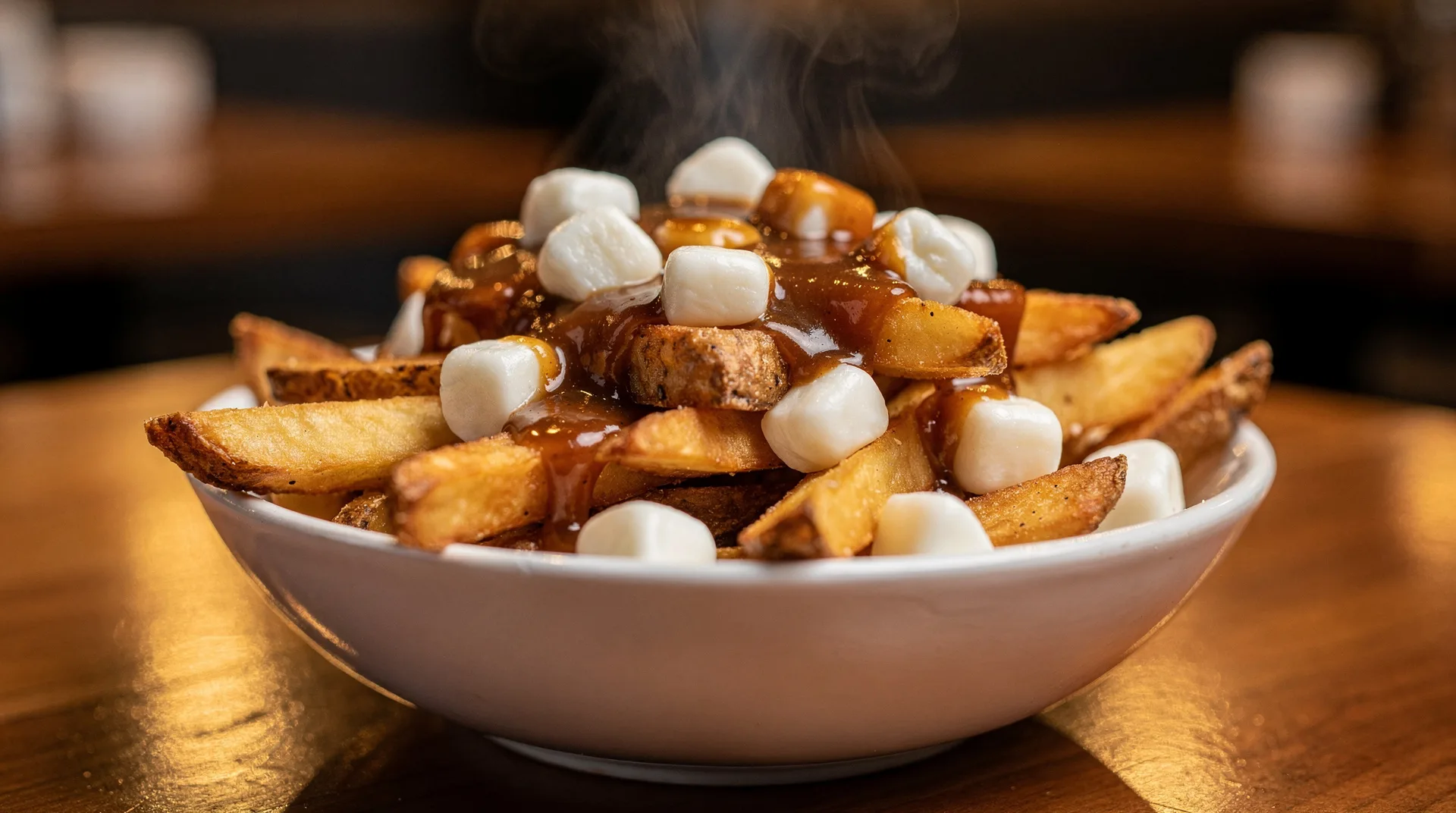
Poutine is Canada’s most famous and debated dish — beloved by Canadians, mysterious to uninitiated foreigners, and the subject of passionate arguments about where to find the best version. The combination is simple: french fries, fresh cheese curds, and hot gravy. The execution is everything. When the fries are properly double-fried and still crisp, the curds are fresh enough to squeak and resist the heat before melting, and the gravy is a complex, slightly brown chicken-veal sauce with just enough body to coat everything without drowning it — this is one of the most satisfying things you can eat anywhere.
Poutine is incontrovertibly Québécois in origin, likely emerging from rural Quebec in the 1950s, and it remains most beloved and most seriously approached in that province. But it has spread across Canada and, increasingly, internationally — with consequences for quality and authenticity that range from excellent to genuinely offensive. This guide focuses on finding the real thing.
| Where | Best experienced in Quebec — Montreal and Quebec City specifically |
| Cost | Around CAD $8-$24 for classic sizes; CAD $20-$50 for gourmet and foie gras versions |
| Time needed | 30-60 minutes for a sit-down or takeout poutine stop |
| Getting there | Easy to find in most Montreal and Quebec City neighbourhoods; less consistent outside Quebec |
| Best time | Year-round; La Poutine Week in February is a good excuse to sample widely |
Poutine versus other Canadian and regional comparisons in Quebec
If poutine is one stop on a wider Quebec food itinerary, our Montreal food guide and Montreal smoked meat guide cover the city’s other signature dishes, and Montreal versus New York bagels is a fun detour for visitors comparing Montreal’s food culture more broadly. Planning a trip between the two poutine capitals is covered in our Montreal to Quebec City guide, and Quebec City versus Montreal for first-timers helps decide where to base a short trip. For the dish’s Quebec roots specifically, see our Quebec poutine origin guide.
The history and origin of poutine
The dish’s origin is disputed between several towns in Quebec’s Centre-du-Québec region, but the story most often credited involves Fernand Lachance of Warwick, Quebec, who in 1957 allegedly combined fries and cheese curds at a customer’s request, remarking that the combination would make a “maudit mélange” (a damn mess). The gravy was added later, probably in the early 1960s, as the dish spread from rural snack bars to urban fast food chains.
The name itself is obscure in origin. Most linguists believe it derives from a Quebec slang word meaning “mess” or “confused mixture.” Others have argued for British slang connections. The debate is energetic and unresolved.
Poutine was initially a working-class snack food — cheap, fast, high-calorie, eaten after late shifts or late nights. Its rise to national symbol status (and the subject of ironic marketing campaigns during Canadian elections) happened gradually through the 1980s and 1990s as Quebec’s cultural self-confidence grew and the dish spread beyond the province.
What makes a great poutine
Three elements, each with its own criteria:
The fries: Double-frying is traditional and correct. The first fry (at lower temperature, around 150–160°C) cooks the interior; the second (at high temperature, around 190°C) creates the exterior crust. The result is a fry that maintains structural integrity under the hot gravy rather than collapsing into mush. Thick-cut or medium-cut fries handle this better than thin. Freshly cut potatoes are superior to frozen.
The cheese curds: Fresh, day-of, salt-free cheese curds from Quebec dairy farms — ideally from the Centre-du-Québec or Chaudière-Appalaches regions — are non-negotiable for proper poutine. When fresh, the curds squeak against your teeth when bitten; this is the indicator of freshness and an important quality marker. The curds should be white (not aged or coloured), relatively mild in flavour, with a rubbery-elastic texture. They should soften slightly but not fully melt under the hot gravy. Using aged cheddar or any substitute is a fundamental departure from the authentic dish.
The gravy: A subject of passionate disagreement. The standard is a brown chicken-veal sauce (sauce brune) with a particular consistency — thick enough to coat and cling to the fries but thin enough to pool around the curds. Some restaurants add butter, others use a lighter version. Beef-only gravy, turkey gravy, or commercial packet gravy are considered compromises. Some of the best spots use house-made stock reductions; others use commercial bases.
La Banquise, Montreal — the institution
No serious poutine guide can begin anywhere other than La Banquise on Rue Rachel Est in the Plateau-Mont-Royal neighbourhood. Open 24 hours a day, seven days a week, La Banquise serves over 30 varieties of poutine alongside a remarkable social atmosphere — after midnight on weekends the queue extends down the block, with the clientele ranging from families finishing a late Saturday dinner to bar-goers eating the wisest possible breakfast.
The classic poutine at La Banquise is excellent — not necessarily the absolute best in Montreal, depending on whom you ask, but consistent, reliable, and served with speed in portions large enough to restore any level of energy deficit. The specialty varieties are genuinely inventive without being gimmicky: the T-Rex (beef, smoked sausage, bacon), the Elvis (ground beef, bacon, onions), and the Kamikaze (pepperoni, mushrooms, green peppers) are all tested and refined over decades.
The institution status is earned. La Banquise has been serving poutine since 1968. The neon sign, the packed room, the plastic chairs, and the laminated menu are all correct.
Explore Montreal by hop-on hop-off bus and discover its food cultureTop poutine spots in Montreal
Chez Ma Tante (various locations): One of the most argued-about poutineries in Montreal for the quality of its fries — perfectly executed double-fried, crisp, and remarkably good at holding up under gravy. The sauce is a house-made chicken base. No gimmicks; exceptional execution.
Frite Alors! (multiple locations): A reliable Belgian-inspired frites chain with excellent poutine as a secondary specialty. The frites themselves are superb; the poutine benefits accordingly.
Ma Poule Mouillée (Centre-Sud): Primarily a Portuguese chicken restaurant, but its poutine made with roast chicken drippings gravy is exceptional and genuinely different from the standard. A local favourite that rarely appears on tourist itineraries.
Casse-Croûte Chez Denise (Plateau): A classic Québécois snack bar that has survived the neighbourhood’s gentrification. The poutine is traditional, affordable, and made without any concession to food trend.
La Poutine Week: In February, Montreal (and increasingly other Canadian cities) hosts La Poutine Week, during which restaurants create competition poutines judged by the public. This is an excellent way to survey Montreal’s poutine creativity across a week.
Quebec City: Chez Ashton and the traditional style
Quebec City has a strong claim to producing some of the most traditional and well-executed poutine in Canada. The city’s snack bar culture is less influenced by gastronomy trends than Montreal, and the basic execution is often more consistent.
Chez Ashton is the poutine equivalent of a Quebec City institution. With multiple locations across the city, Chez Ashton has been serving poutine since 1969. The format is straightforward: multiple sizes, fresh curds sourced from local dairy, house-made sauce brune. No gimmicks, no variations. The large poutine is abundantly portioned. For a visitor wanting to understand classic Quebec poutine without variation, Chez Ashton is the reference point.
Buffet de l’Antiquaire (Lower Town): A classic Lower Town diner that has operated for decades in the heart of Old Quebec. The poutine benefits from being made in a kitchen focused on traditional Quebec cuisine. The setting — an old-school diner with counter service in the shadow of the Château Frontenac neighbourhood — is itself an experience.
Browse Quebec City food tours and culinary experiencesGourmet poutine: the upmarket evolution
As poutine’s profile has risen nationally and internationally, a generation of chefs has applied fine dining technique to the format. Opinions differ on whether this represents evolution or betrayal; the best versions demonstrate that it is possible to refine the dish without losing its character.
Au Pied de Cochon (Montreal): Chef Martin Picard’s “Poutine Foie Gras” — standard poutine components plus a slab of seared foie gras on top — is either the finest or most excessive poutine variation in existence, depending on your perspective. It has been on the menu since 2001 and shows no signs of leaving. The restaurant is reservation-only, expensive, and worth it for the experience.
Joe Beef (Montreal): The influential Montreal restaurant serves a house-made poutine that uses exceptional frites, daily-fresh curds, and a deeply flavoured sauce. It is excellent. It costs more than Chez Ashton.
Garde-Manger (Old Montreal): Chuck Hughes’ flagship restaurant offers a refined take on poutine that has become a signature dish for Montreal’s gastronomic scene.
Browse Old Montreal food and guided walking toursPoutine across the rest of Canada
Poutine exists in every province and territory of Canada, with varying degrees of authenticity and quality.
Toronto: The city has genuine poutine culture, though curds are harder to source fresh than in Quebec. Poutinerie locations across the city, Smoke’s Poutinerie (a chain founded in Toronto), and restaurant poutines at Quebec-influenced spots like Chantecler and Thompson Landry Gallery offer good options.
Ottawa: Proximity to Quebec means Ottawa has excellent access to fresh curds and a strong poutine culture. Elgin Street Diner (24-hour, central) and Lauriault restaurant in Gatineau (Quebec side of the Ottawa River, technically) are consistently recommended.
Alberta and BC: Fast food chains (Harvey’s, New York Fries, Burger King Canada) serve mass-market poutine. Dedicated poutineries are less common; quality is variable. Fresh Quebec curds rarely make it this far west; local substitutes are used.
Fast food poutine: McDonald’s Canada, Harvey’s, and New York Fries all serve poutine. McDonald’s Canada poutine uses fresh curds from a Quebec supplier (in Quebec and Ontario locations at least). It is not the real thing, but it is genuinely far better than anything McDonald’s serves in the United States and functions as a reasonable introduction to the dish’s structure.
How to eat poutine
There is no formal etiquette. Eat it hot — poutine is at its best in the first five minutes, before the fries have fully softened under the gravy and the curds have completely melted. The ideal eating temperature creates a contrast: crisp fry exterior, yielding fry interior, slightly soft but still squeaky curds, warm gravy.
Fork is standard; some eat it with a fork and knife. Do not ask for ketchup unless you are prepared for mild disapproval in Quebec.
Poutine is emphatically not diet food. A standard restaurant portion (medium) contains approximately 800–1,200 calories depending on the recipe. La Banquise’s large T-Rex has been estimated at over 1,800 calories. Approach accordingly.
Costs (in CAD)
| Size/type | Typical price range |
|---|---|
| Small poutine (snack bar) | $8–$12 |
| Medium poutine (restaurant) | $13–$18 |
| Large poutine (restaurant) | $16–$24 |
| Gourmet/specialty poutine | $20–$35 |
| Foie gras poutine (Au Pied de Cochon) | $40–$50 |
Frequently asked questions about Poutine guide: where to eat the best in Canada
Is poutine available across Canada year-round?
Yes. Unlike maple syrup, which has a seasonal production window, poutine is available year-round wherever the ingredients are sourced. In Quebec, fresh curds are produced daily; in other provinces the freshness varies.
What is a poutine “galvaude”?
A galvaude is a poutine variation with chicken and green peas added to the classic three-ingredient combination. It is a Quebec original, found primarily in Eastern Quebec snack bars. The combination sounds unlikely; it is actually excellent.
Can vegetarians eat poutine?
Traditional poutine gravy is chicken or chicken-veal based. Vegetarian poutine exists — mushroom broth gravy or brown vegetarian sauce — but is a departure from the traditional recipe. Many restaurants offer it; ask when ordering.
What’s the difference between cheese curds and mozzarella?
Fresh cheese curds are a byproduct of the cheddar-making process — milk coagulated and cut but not yet pressed, aged, or salted. They have a mild milky flavour and characteristically squeak when fresh. Mozzarella is a different cheese entirely (stretched-curd method, different culture). Using mozzarella in poutine is considered a substitution of last resort.
Is poutine popular internationally?
Growing presence in the United States (particularly the Northeast), the UK, France, and Australia. However, sourcing fresh Quebec cheese curds internationally is difficult, and most international poutines use substitutes that affect the texture fundamentally. The authentic version remains best experienced in Quebec.
What to drink with poutine?
Beer is traditional and correct — a Quebec craft beer pairs well with poutine’s richness. A dry cider also works well. Traditional accompaniment in Quebec snack bars is a can of Pepsi or Coke, which cuts through the gravy effectively. Avoid wine; poutine is deliberately unpretentious food and responds accordingly.
Is Montreal or Quebec City better for poutine?
Both are excellent for different reasons. Montreal has more variety, more gourmet interpretations, and the institution status of La Banquise; Quebec City offers a more traditional, less trend-driven style, best represented by Chez Ashton. See our Quebec City versus Montreal guide for a broader comparison of the two cities.
Can I find good poutine outside Quebec and Ontario?
Yes, though quality and authenticity vary more the further you travel from Quebec. Fresh curds are harder to source, and many western Canadian restaurants use local substitutes. Fast-food chains like McDonald’s Canada, Harvey’s and New York Fries offer a consistent, if not authentic, baseline almost everywhere in the country.