Ontario Provincial Parks: Complete Visitor Guide & Top Parks
What is the best provincial park in Ontario?
Algonquin Provincial Park is Ontario's most iconic and most visited park — vast canoe routes, exceptional fall colours, and strong wildlife viewing. For wilderness beauty with less traffic, Killarney Provincial Park is the standout alternative.
Ontario has the largest provincial park system in Canada — 340 parks protecting more than 9.4 million hectares of boreal forest, Canadian Shield, Great Lakes coastline, and wetland. From the world-famous canoe routes of Algonquin to the white quartzite ridges of Killarney, the diversity is staggering. This guide covers the parks worth building a trip around, what to expect in each season, and the practical details that make the difference between a smooth visit and a frustrating one.
| At a glance | |
|---|---|
| Where | 340 parks across six zones, from Point Pelee in the south to far-northern wilderness reserves |
| Cost | Day-use vehicle permit around CAD 20-22; camping around CAD 12-52/night depending on site type |
| Time needed | A day trip for accessible parks like Bruce Peninsula; several days to a week-plus for interior canoe trips |
| Getting there | Self-drive for nearly all parks; some interior access is by canoe/portage only |
| Best time | Late September-early October for fall colour; late August-September to avoid bugs and crowds |
The Ontario provincial parks system: how it works
Ontario’s parks are managed by Ontario Parks, a branch of the provincial Ministry of the Environment, Conservation and Parks. The system spans six zones across the province, from the southern tip of Point Pelee (Canada’s southernmost mainland point) to vast wilderness reserves in the far north.
Parks fall into several classification types. Natural environment parks — Algonquin, Killarney, Quetico — are the flagship wilderness destinations, featuring interior camping, extensive trail networks, and largely undisturbed ecosystems. Waterway parks protect specific rivers and their corridors. Nature reserve parks are primarily for scientific research and passive recreation. For most visitors, natural environment parks are the target.
Reservations: Ontario Parks uses an online reservation system at ontarioparks.com. Campsite bookings open in January for the upcoming season; interior canoe permits for popular routes in Algonquin and Killarney book out within hours of opening. If you are planning a summer canoe trip in a popular park, set an alarm for the January reservation window.
Fees: A day-use vehicle permit ($20–22 per day) is required for most parks. Annual passes (Ontario Parks Season Pass) cover unlimited day-use at all Ontario parks and pay for themselves in four or five visits.
Algonquin Provincial Park
Algonquin is the jewel of Ontario’s park system and one of the most significant wilderness parks in eastern North America. Established in 1893, the park covers 7,630 square kilometres of mixed forest, lakes, rivers, and wetland in the transition zone between the northern boreal forest and the southern hardwood forest.
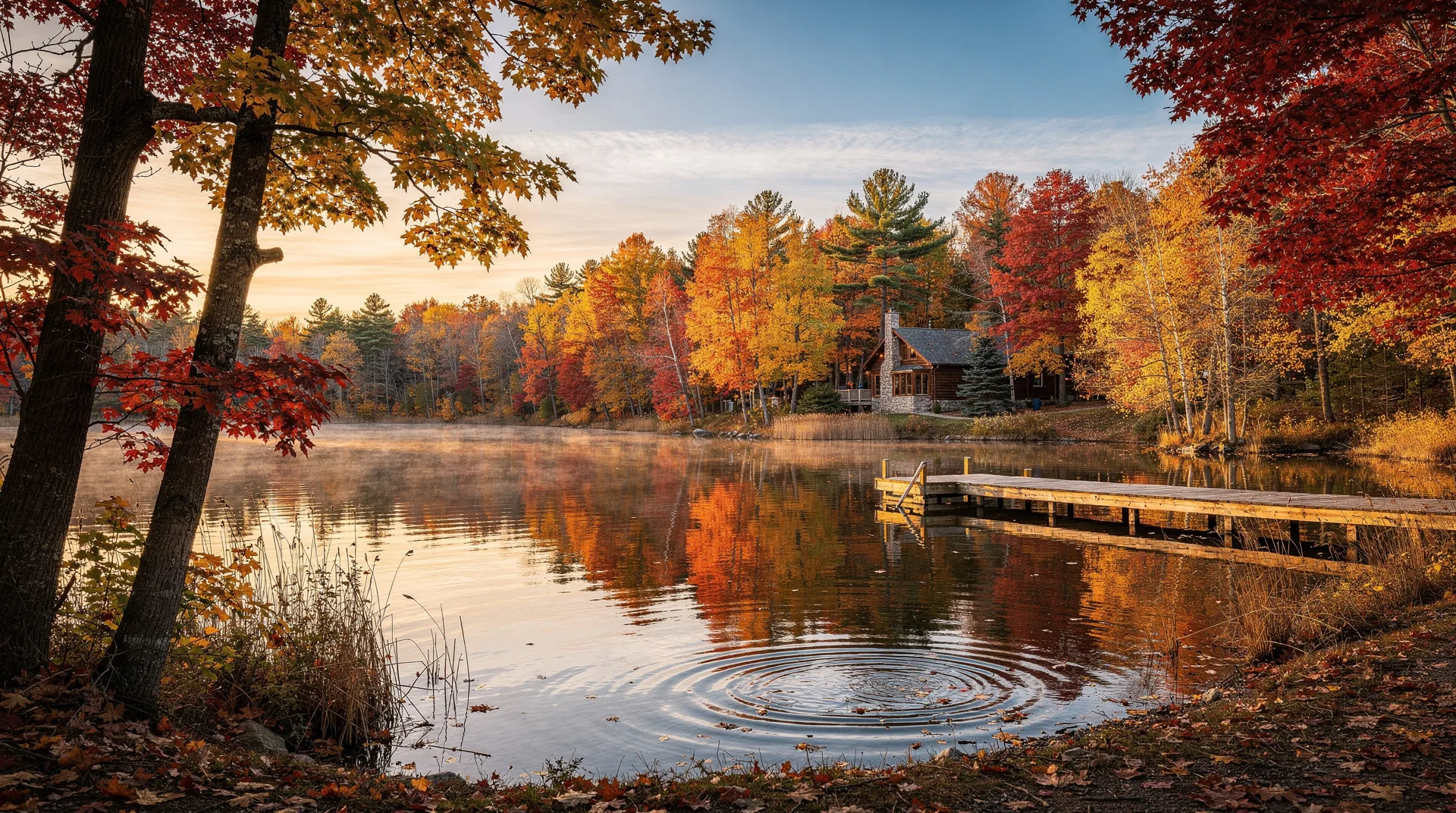
The result of this ecological position is what makes Algonquin exceptional: the park holds both northern species (moose, wolves, loons) and southern species (white-tailed deer, wild turkey), and its forests display some of the finest fall colour in Canada as the hardwood zones ignite in October.
The Highway 60 corridor runs east–west through the southern portion of the park and provides the most accessible introduction. Day hikes from this corridor include the Lookout Trail (an easy 2-km loop to a granite ridge with panoramic forest views), the Track and Tower Trail (7.5 km, following a historic railway grade), and the Hardwood Lookout Trail (0.8 km to a particularly fine fall-colour viewpoint).
Interior camping and canoeing is Algonquin’s defining experience. The park contains over 1,500 kilometres of canoe routes, ranging from beginner-friendly day paddles to multi-week expeditions into the remote north. Portages range from a few metres to over 5 kilometres; most interior trippers combine routes of 5–10 days with 10–30 portages. See our dedicated guide to canoeing Ontario’s best routes for specific route recommendations.
Wildlife: Algonquin holds approximately 2,400 moose — one of the highest densities in Ontario. Moose are most reliably seen at dawn and dusk along the Highway 60 corridor, especially in spring and early fall. The park’s timber wolves are present but rarely seen; the wolf howl interpretive evenings (held on selected summer evenings when wolves are howling nearby) are extraordinary. Common loons, bald eagles, beaver, and black bears round out the wildlife list.
When to go: Peak fall colours (first two weeks of October) are spectacular and the park is at its most beautiful. Summer (July–August) offers warm paddling weather but crowded campgrounds. Late May and June bring blackflies — manageable with bug clothing but worth knowing about. Winter is increasingly popular for cross-country skiing and snowshoeing.
Book a guided Algonquin Park wilderness day trip from TorontoKillarney Provincial Park
Killarney is the park that turns first-time visitors into lifelong devotees. Smaller than Algonquin (48,500 hectares), it is far more visually dramatic — white quartzite ridges of the La Cloche Mountains rise steeply above a series of crystal-clear, aquamarine lakes. The water in Killarney’s interior lakes is genuinely turquoise, a result of the silica-rich quartzite bedrock and the park’s exceptional air quality.
The Group of Seven artists — A.Y. Jackson in particular — painted Killarney extensively in the 1930s, and the park’s wild landscapes have a particular pull on painters and photographers.
The La Cloche Silhouette Trail is one of Ontario’s most celebrated long-distance hikes: 100 kilometres of rugged Canadian Shield terrain with significant elevation change, multiple backcountry campsites, and sustained ridge walking with views over the La Cloche range. It typically takes 5–10 days. Day sections of the trail are accessible for shorter trips.
Canoe routes in Killarney are more intimate than Algonquin — the park’s 50-plus lakes offer quieter, more remote experiences, with many routes seeing little traffic compared to Algonquin’s crowded weekend routes. Portages tend to be rocky and demanding; this is not a park for beginner canoeists without solid experience.
The town of Killarney on Georgian Bay, just outside the park, is a classic Ontario fishing village with excellent restaurants (Herbert Fisheries for smoked fish, The Killarney Mountain Lodge for a splurge) and an authentic Great Lakes atmosphere.
Access: Killarney is approximately 4.5 hours from Toronto via Highway 69 north. The park’s interior has no vehicle access — all interior travel is by foot or canoe.
Quetico Provincial Park
Quetico is Ontario’s canoe wilderness destination for serious paddlers. Located in northwestern Ontario near the Minnesota border, Quetico protects 4,760 square kilometres of interconnected lakes and rivers — a roadless wilderness traversable only by canoe and portage.
The park shares a border with Minnesota’s Boundary Waters Canoe Area Wilderness, forming one of the largest canoe-accessible wilderness areas in the world. Routes can extend into weeks; paddlers regularly travel hundreds of kilometres through Quetico’s interior without seeing another person for days.
Permits: Quetico’s interior requires both a camping permit and a Quetico interior fee, available through Ontario Parks. The park limits daily entries to protect the wilderness character — book early. Non-Ontario residents pay a higher fee for interior travel.
Wildlife in Quetico includes moose, wolves, black bears, osprey, bald eagles, and loons. Fishing is exceptional — lake trout, walleye, and smallmouth bass are abundant in the relatively unfished interior lakes. Fishing licences are required (Ontario Sport Fishing Licence).
Access: The main access point is the Dawson Trail Campground near Atikokan, about 5 hours west of Thunder Bay. Fly-in access to interior base lakes is available through local outfitters for those who want to reduce paddling time or reach more remote areas.
Georgian Bay Islands and Bruce Peninsula
These two parks protect very different aspects of Ontario’s Great Lakes shoreline.
Georgian Bay Islands National Park (a federal park administered by Parks Canada) protects 63 islands in Georgian Bay — a world of pink granite shoreline, windswept pines, and extraordinarily clear freshwater. Beausoleil Island, the largest and most accessible, is reached by ferry from Honey Harbour and offers camping, hiking, and some of the best Georgian Bay swimming.
Bruce Peninsula National Park guards the tip of the Bruce Peninsula between Georgian Bay and Lake Huron. The park’s Grotto — a sea cave at the base of the Niagara Escarpment, accessible via the Georgian Bay Trail — is one of Ontario’s most photographed natural features. The turquoise water inside the Grotto is genuinely Caribbean-coloured. The Cyprus Lake trail system provides the main day-hiking network; Flowerpot Island, accessible by ferry from Tobermory, has distinctive sea stacks and superb snorkelling.
The Fathom Five National Marine Park surrounds Tobermory and protects 20 shipwrecks in some of the clearest freshwater in the world — visibility can exceed 20 metres. Glass-bottom boat tours and scuba diving are the main draws.
Bon Echo Provincial Park
Bon Echo, 3 hours northeast of Toronto, is built around Mazinaw Lake and the famous Mazinaw Rock — a massive cliff face 100 metres tall and 1.5 kilometres long, bearing the largest concentration of Indigenous pictographs in eastern Canada. Canoe or kayak to the base of the cliff to see the red ochre paintings; the park offers guided interpretive programs explaining their history and meaning.
The park offers excellent car camping with good facilities, making it ideal for families and first-time campers. Canoe and kayak rentals are available at the park. The main beach on the smaller Mazinaw Lake is safe for swimming and well supervised in summer. If you would rather not plan everything yourself, you can compare guided tours across Ontario that include parks and nature outings.
Algonquin vs Killarney vs Quetico
| Park | Best for | Crowd level | Distance from Toronto |
|---|---|---|---|
| Algonquin | First-time visitors, wildlife, extensive trail network | High, especially Highway 60 corridor | 3-3.5 hours |
| Killarney | Dramatic scenery, quieter canoe routes, photographers | Moderate | 4.5 hours |
| Quetico | Serious multi-day wilderness paddling | Low | 5+ hours to Atikokan via Thunder Bay |
Algonquin is the right choice for a first Ontario park trip — the Highway 60 corridor gives easy access to trails and viewpoints without a canoe, and it pairs naturally with the Ontario canoeing routes guide or the Algonquin fall colors guide for autumn timing. Killarney suits a second visit once you know you enjoy the Shield landscape and want fewer other visitors; the Georgian Bay shoreline nearby extends the trip naturally. Quetico is a specialist destination — plan on it only if you already have solid canoe-tripping experience.
Practical information for visiting Ontario parks
Reservations open: First Sunday in January for the upcoming season. Set an alarm — interior permits for Killarney and Algonquin’s popular routes disappear in under an hour.
Camping fees: Electrical sites CAD 42–52/night; unserviced sites CAD 28–42/night; interior sites CAD 12–14/night per person.
What to bring: For any backcountry trip, the ten essentials apply — navigation tools, sun protection, insulation layers, illumination, first-aid supplies, fire starting equipment, repair tools, nutrition, hydration, and emergency shelter. Ontario’s black flies (late May–June) and mosquitoes (July–August) require effective insect repellent (DEET 30%+) and bug clothing in warm months.
Bear safety: All Ontario parks with black bears require proper food storage. Use park-provided bear boxes at interior campsites, or hang food at least 4 metres high and 1 metre from the trunk. Carry a bear bell on trails.
Firewood: Do not bring firewood from home — emerald ash borer and other invasive species spread through firewood. Purchase certified firewood at the park gate.
Related guides
If you are planning a trip around Ontario’s parks, these guides complement this one:
- Our Ontario canoeing routes guide covers specific routes in Algonquin, Killarney, and Quetico with portage maps and outfitter recommendations.
- The Algonquin fall colors guide gives timing, viewing spots, and photography tips for the October colour peak.
- For multi-day park trips without a car, see the GO Transit tourist guide for train-accessible day trip options from Toronto.
- The Ontario 7-day itinerary includes a two-day Algonquin section with day-by-day planning.
Frequently asked questions about Ontario Provincial Parks: Complete Visitor Guide & Top Parks
Do I need a reservation to visit Ontario provincial parks?
Day-use visits to most parks do not require advance booking — you pay at the gate. Campsite reservations are strongly recommended for summer (June–September) at popular parks like Algonquin, Killarney, and Bon Echo. Interior canoe permits for Algonquin and Killarney require advance booking; these sell out rapidly in January when reservations open.
What is the difference between Ontario provincial parks and national parks?
Ontario provincial parks are managed by the provincial government (Ontario Parks) and use Ontario’s reservation system. National parks in Ontario (Bruce Peninsula, Georgian Bay Islands, Point Pelee, Pukaskwa) are managed by Parks Canada and use a separate reservation platform. Entry fees, rules, and camping systems differ between the two. This guide focuses on provincial parks.
When should I go to avoid bugs?
Blackflies are heaviest from mid-May to late June; mosquitoes peak July to early August. Late August, September, and October are genuinely pleasant with minimal biting insects — this is one of the best-kept secrets of Ontario park timing. Spring (April to mid-May) is largely bug-free but weather is unpredictable.
Can I bring my dog to Ontario provincial parks?
Dogs are permitted in most Ontario provincial parks on leash (2-metre maximum). They are not permitted on some beaches and nature reserve areas. Check the specific park’s website for pet regulations before visiting. Dogs are allowed in the backcountry of most parks but must remain leashed.
Which Ontario park is best for a first-timer with no canoe experience?
Algonquin’s Highway 60 corridor is the easiest introduction — day hikes, viewpoints, and interpretive programs are all accessible by car, and canoe rentals with basic instruction are available at outfitters along the corridor if you want to try paddling without committing to an interior trip. See the Algonquin fall colors guide for the best October timing.
Is Algonquin Park free to visit?
No. Algonquin, like all Ontario provincial parks, requires a day-use vehicle permit (around CAD 20-22) or a Season Pass; there is no free general admission.