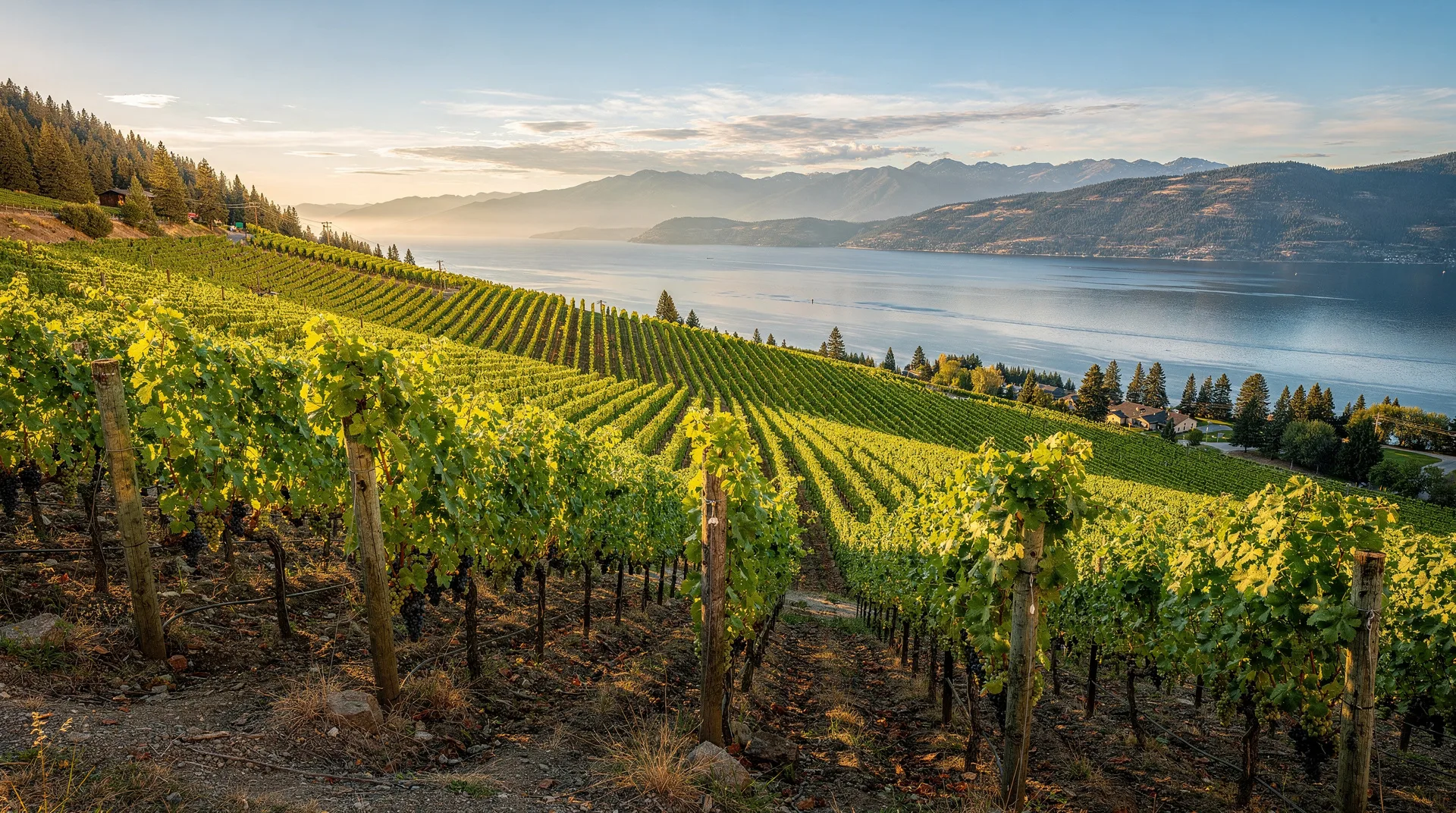
Okanagan wine country: BC's world-class wine region
When is the best time to visit Okanagan wine country?
Late August through October is peak harvest season, with vendange festivals, crush events, and maximum ripeness in the vineyards. June and July offer warm weather and full tasting room hours with smaller crowds. Icewine harvest brings visitors in January and February for a completely different experience.
Canada’s wine capital in the desert north
The Okanagan Valley surprises people. Drive four hours east of Vancouver, cross the Coast Mountains, and the landscape transforms entirely — pine forests give way to brown hills, sagebrush scrub, and long glacier-carved lakes glittering in near-constant sunshine. This semi-arid landscape, with hot summers and cold winters, turns out to be ideal wine country.
British Columbia’s Okanagan Valley is now home to more than 200 wineries and has earned a serious international reputation for Pinot Noir, Chardonnay, Riesling, Merlot, and Syrah. Wine writers who once dismissed Canadian wine as an oddity now routinely place Okanagan bottles among the world’s finest. A wine trip through this valley — tasting Pinot Gris at a lakeside terrace, walking through rows of Cabernet Franc as the September light turns golden, eating farm-fresh food at a winery restaurant with views down to the lake — ranks among Canada’s finest travel experiences.
This guide covers the main wine sub-regions, standout wineries to visit, how to structure a wine tour, the best time to go, and everything practical you need to know.
At a glance
| Where | Okanagan Valley, British Columbia, Kelowna to Osoyoos |
| Getting there | Kelowna Airport (YLW), around 50 minutes from Vancouver; or drive around 4-4.5 hours from Vancouver |
| Time needed | A weekend covers one subregion well; 3-4 days for Kelowna, Naramata and the south together |
| Cost | Tasting fees around CAD 10-20; guided tours roughly CAD 85-175 per person |
| Best time | August-September for harvest atmosphere; June-July for warm weather and lighter crowds |
The Okanagan wine regions explained
The valley runs roughly 200 kilometres from north to south, and conditions vary considerably. Understanding the sub-regions helps you choose what to focus on.
Kelowna and Lake Country (Central Okanagan) is the heart of the industry and the most accessible part of the valley from Vancouver. The area around Kelowna has the highest concentration of wineries, many of them large estate operations with impressive architecture, restaurants, and accommodation. Mission Hill Family Estate, Cedar Creek Estate Winery, and Summerhill Pyramid Winery are the landmark names. Pinot Noir and Chardonnay thrive here.
Naramata Bench is the beloved compact wine corridor on the east side of Okanagan Lake near Penticton. A narrow road winds along the bench for about 10 kilometres, passing 40-plus small estate wineries. This is the area beloved by wine enthusiasts — wineries here are artisan-scale, many with spectacular lake views from their tasting terraces. Names to seek out include Poplar Grove, Laughing Stock, Upper Bench, and Therapy Vineyards.
South Okanagan: Penticton to Osoyoos is the warmest section of the valley and produces BC’s most powerful red wines. The sub-region around Oliver and Osoyoos — Canada’s only true desert — is perfect for Syrah, Merlot, Cabernet Sauvignon, and Viognier. Road 13 Vineyards, Burrowing Owl, Nk’Mip Cellars (North America’s first Indigenous-owned winery), and Tinhorn Creek operate here.
Similkameen Valley lies just west of the South Okanagan and is a smaller, less visited region known for organic and biodynamic farming. Clos du Soleil, Orofino Vineyards, and Blind Creek Winery are worth the detour.
Standout wineries to visit
Mission Hill Family Estate near West Kelowna is the Okanagan’s most architecturally striking winery — a stone bell tower, arched amphitheatre, and immaculate grounds recall a European estate. The estate wines are consistently excellent, particularly their Reserve and Oculus tiers. Guided architecture and wine tours run daily in summer.
Burrowing Owl Estate Winery near Oliver is the South Okanagan’s prestige address for red wine. The Syrah and Merlot here regularly appear on wine competition podiums. The guesthouse has some of the best vineyard-view rooms in BC.
Nk’Mip (pronounced Inkameep) Cellars in Osoyoos is a landmark not only for wine quality but for cultural significance — operated by the Osoyoos Indian Band, it offers a unique perspective on Indigenous wine-growing in Canada. The Qwam Qwmt (highest achievement) reds are exceptional.
Laughing Stock Vineyards on the Naramata Bench has a devoted following for its Portfolio red blend, which is allocated by mailing list. The tasting room overlooking the lake is one of the most pleasant spots in wine country.
Summerhill Pyramid Winery near Kelowna is organic and biodynamic, certified and committed. The pyramid-shaped aging cave is a quirky Okanagan landmark. Their sparkling wines, particularly the Cipes Brut, are excellent.
Tantalus Vineyards near Kelowna makes outstanding Old Vines Riesling from vines planted in the 1970s. This is benchmark BC Riesling that ages beautifully.
Wine tours: the best ways to explore
Self-drive tours are popular but require a committed designated driver or strategic use of spit buckets and small pours. The Naramata Bench is ideal for self-drive — park at one end and walk between wineries, many within a few minutes of each other on foot. Rent bikes at Penticton for the full Naramata Bench cycling experience.
Guided wine tours from Kelowna pick you up from your accommodation and drive to three to five wineries, with a guide providing context on varietals, winemaking, and the region’s history. Full-day tours typically run CAD $120–$175 per person excluding wine purchases.
Wine tour vans and shuttles from Penticton serve the Naramata Bench, typically running afternoon departure tours to four or five wineries for CAD $85–$120 including tastings at some stops.
E-bike tours on the Naramata Bench have become one of the best ways to cover the corridor. Several operators in Penticton rent e-bikes for CAD $80–$100 per day with suggested vineyard routes.
Browse BC wine and food tour experiences on GetYourGuideBest time to visit Okanagan wine country
August and September are the prime harvest months. Harvest (vendange) typically begins in late August for early whites and extends to October for late-harvest reds. This is when the valley is most atmospheric — grapes on the vine, harvest crews working, winery restaurants at their most creative. The Okanagan Wine Festival in early October is the region’s signature annual event, with hundreds of ticketed dinners, tastings, and cellar tours across the valley. Book well in advance.
June and July offer reliably warm weather (often 35°C+), long days, full tasting room hours, and fewer crowds than peak harvest. Beach weather combines well with wine touring — Okanagan Lake is perfect for swimming.
January–February is icewine harvest season. Some wineries open for icewine tastings and special winter events. Visitor numbers are minimal and prices can be lower, though some tasting rooms have reduced hours.
Spring (April–May) sees wineries reopening after winter and releasing new vintages. The valley is green and uncrowded. Many wineries host spring release events.
Kelowna as your base
Kelowna is the Okanagan’s largest city and the natural base for wine touring. It has a compact, walkable downtown with excellent restaurants, a waterfront boardwalk, and good accommodation at all price points.
Dining to accompany your wine:
- RauDZ Regional Table — one of BC’s best farm-to-table restaurants, outstanding Okanagan wine list
- Waterfront Wines Restaurant — excellent for a wine-focused lunch
- The Curious Cafe — beloved local brunch spot before heading out to wineries
From Kelowna, Mission Hill and Cedar Creek are 15–20 minutes’ drive. The full Naramata Bench corridor is about 50 minutes south in Penticton.
Penticton and the Naramata Bench
Penticton sits at the southern end of Okanagan Lake and is the gateway to the celebrated Naramata Bench. The town itself has a fun craft beer and food scene that complements the wine circuit.
Allocate at least a full day to the Bench — preferably two. The road winds along the hillside for 10 kilometres with wineries, art galleries, and farm stands dotting the route. Pack a picnic from Penticton’s Farmers’ Market (Saturday mornings in summer) and find a winery lawn with a view.
Penticton Lakeside Resort is the go-to hotel for wine country visitors — right on the lake, convenient to the Bench. Vineyard B&Bs on the Naramata Bench itself offer total immersion; book months ahead for summer.
See also the British Columbia destinations guide for broader BC travel planning and the Vancouver to Kelowna road trip itinerary for getting there in style.
South Okanagan: Oliver and Osoyoos
Oliver bills itself as the Wine Capital of Canada — a bold claim, but the density of wineries along a short stretch of Highway 97 makes it defensible. The area around Oliver and Osoyoos has the most intense heat accumulation in the valley, and this shows in the wines: bigger, richer, more structured reds.
Osoyoos Lake is Canada’s warmest freshwater lake and the town of Osoyoos has a distinctly desert-vacation feel — sandy beaches, palm trees (sort of), and intense sun. Nk’Mip Desert Cultural Centre adjacent to Nk’Mip Cellars provides fascinating context on desert ecology and Indigenous land stewardship.
Pairing wine with Okanagan food
The valley’s food culture has grown alongside the wine, and the two are best experienced together rather than separately. South Okanagan reds pair naturally with lamb and grilled meats from Similkameen farms; the cooler-climate Pinot Noir around Kelowna and Naramata suits BC salmon and mushroom dishes; icewine is the classic match for blue cheese or a dessert built around local stone fruit.
Farm stands along Highway 97 sell peaches, cherries and apricots through summer, and picking up a picnic to eat on a winery lawn is often better value than a sit-down winery lunch. If you would rather leave the planning to someone else, you can compare guided food and wine tours in Canada before you book. Anyone extending the trip toward the coast can compare this inland wine-and-food culture with the seafood-driven scene covered in the British Columbia destinations guide.
Practical tips: costs, logistics and planning
Tasting fees: Most Okanagan wineries charge CAD $10–$20 for a flight of 4–6 wines. Fees are often waived with a purchase. Budget CAD $15 per winery for tastings; more if you are buying.
Driving distances: Kelowna to Penticton is 60 km (about 50 minutes on Highway 97). Penticton to Osoyoos is 60 km (another 50 minutes). The full valley from Vernon to Osoyoos is about 200 km.
Getting there: Kelowna Airport (YLW) receives direct flights from Vancouver (50 min), Calgary (1 hr), and Toronto (4.5 hrs). Car rental at the airport is essential.
Accommodation: Book early for July–October. Winery guesthouses (Burrowing Owl, Summerhill, Hillside Estate) book out months ahead for peak season. Kelowna and Penticton both have broad hotel choices.
Wine shipping: BC wine cannot be shipped to all provinces due to interprovincial regulations, though rules are evolving. Many wineries ship within BC. For other provinces, carry wines in checked luggage using wine skin bags (available at wineries and travel stores).
Where to stay in wine country
Kelowna: Hotel Eldorado is a heritage lakefront property with character and style. Manteo Resort offers full waterfront amenities. Downtown Kelowna has several boutique hotels within walking distance of restaurants.
Naramata: The Naramata Inn is the Bench’s only dedicated boutique hotel, with exceptional food and outstanding wine program. Booking 6–8 months ahead for summer is standard.
Oliver/Osoyoos: Burrowing Owl Estate Winery guesthouse is the prestige option. Spirit Ridge Resort at Nk’Mip is a larger Marriott-affiliated property with full amenities and Indigenous cultural programming.
Planning the trip around the tasting rooms
A wine trip works best when the rest of the plan is simple. If you want a ready-made structure, the Okanagan wine itinerary lays out a relaxed pace that leaves time for lunches and lake swims between tastings. The Okanagan Valley destination page gives the wider picture of the towns along the way.
Because the valley is spread out and public transport is thin, think early about how you will move. The Canada car rental guide covers the practicalities of picking up a vehicle, and the BC driving distances guide helps you judge how much road each day will involve. Anyone choosing a base in the south can look at the Penticton and Naramata pages to compare the two for atmosphere and convenience.
If the season is still undecided, the best time to visit BC guide puts the valley’s weather in the context of the whole province. For a cultural layer on top of the tastings, the Indigenous experiences in BC guide points to other ways to learn about the land you are drinking from.
Curious how this region compares with Canada’s other major wine area? The Niagara wine guide covers the Ontario side, and the contrast in climate, scale and style is part of what makes a two-region wine tour of the country so rewarding.
Frequently asked questions about Okanagan wine country: BC’s world-class wine region
Do I need to know much about wine to enjoy Okanagan wine country?
Not at all. Winery staff across the valley are welcoming and patient with beginners. Simply taste what interests you, ask questions freely, and let tasting room teams guide you. Many visitors discover new favourite varietals they had never tried before.
How many wineries can I realistically visit in a day?
Three to five is the comfortable range for a full day, depending on how long you linger at each. Allow 45–60 minutes per winery if you want to taste, chat with staff, enjoy the setting, and possibly eat. Rushing through eight wineries means missing the whole point.
Is the Okanagan expensive?
Wine country travel has a reputation for being pricey, but it is adjustable. Tasting fees run CAD $10–$20 per person. Lunch at a winery restaurant runs CAD $25–$45 per person. Many wineries have beautiful picnic areas where you can bring your own food and purchase a single bottle to enjoy.
Can I visit Okanagan wineries without a car?
It is difficult. Cycling the Naramata Bench is genuinely feasible (flat to gently rolling). Kelowna has several wineries accessible by taxi or rideshare. But for exploring the full valley, a car (and a designated driver) is the most practical approach.
What grapes grow best in the Okanagan?
White wines excel in the north: Riesling, Chardonnay, Pinot Gris, Gewurztraminer. The south produces serious red wines: Syrah, Merlot, Cabernet Franc, Cabernet Sauvignon. Pinot Noir works across the valley. Rosé has exploded in popularity.
Is BC wine available outside the province?
Increasingly yes, though interprovincial alcohol regulations remain complex. In BC, wineries sell direct. LCBO in Ontario and SAQ in Quebec carry some BC selections. The best way to try Okanagan wine is always to visit and buy at source.
What is the Okanagan Wine Festival?
Held across two weekends in early October, the Fall Okanagan Wine Festival is BC’s largest wine event. It comprises hundreds of individual events — winery dinners, tastings, tours, and harvest celebrations — spread across the valley. Tickets to individual events sell out quickly; book months in advance at the official website.
Related guides
- Okanagan wine guide: 200+ wineries and how to taste them — the fuller subregion-by-subregion breakdown
- Kettle Valley Rail Trail guide — cycling the corridor above the Naramata Bench
- Big White ski resort guide — combine icewine season with skiing
- Kelowna travel guide