Montreal Jazz Festival: free shows, big acts and how to visit
Is the Montreal Jazz Festival really free?
Yes and no. Hundreds of outdoor performances on the festival's Quartier des spectacles stages are completely free — no ticket required. Premium indoor concerts and headline shows require paid tickets. A full experience mixing free outdoor sets and one or two ticketed shows is available for well under CAD 100.
The Festival International de Jazz de Montréal is one of those events that defies easy description. It has held the Guinness World Record for the world’s largest jazz festival since 2004. It runs for 10 days across the downtown Quartier des spectacles. It presents over 3,000 concerts. More than two million people attend.
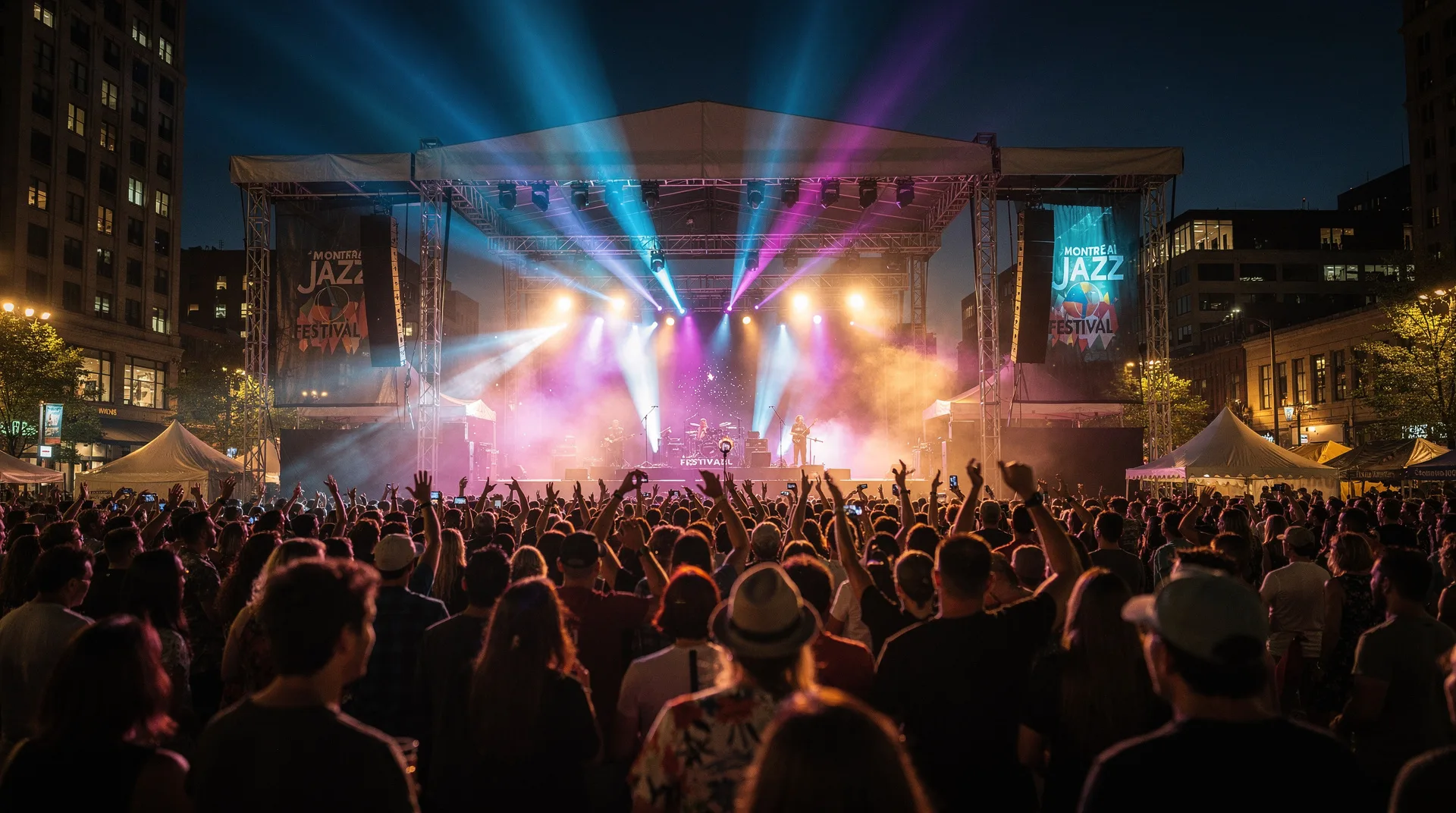
And yet, if you walk into the Quartier des spectacles on a warm June or July evening with no ticket, no plan, and ten dollars in your pocket, you will find world-class music on multiple outdoor stages, a crowd of hundreds of thousands of people from every imaginable background, and an atmosphere that is distinctly Montréal — multilingual, festive, slightly chaotic, and deeply alive. The genius of the festival is that it is both enormous and accessible; one of the world’s great cultural events that simultaneously functions as a free neighbourhood party.
The “jazz” in the name is interpreted generously. While the festival has traditional jazz at its core — from New Orleans brass to bebop to contemporary jazz — it has always encompassed blues, soul, R&B, Afrobeat, electronic music, and world music. Headliners have ranged from Herbie Hancock to Sting to Stevie Wonder to Norah Jones. The common thread is musical excellence rather than genre purity.
| At a glance | |
|---|---|
| Where | Quartier des spectacles, downtown Montreal, Montreal |
| Cost | Free outdoor stages; indoor shows around CAD 35-150+ |
| Time needed | A single evening works; festival regulars give it 2-4 days |
| Getting there | Place-des-Arts or Berri-UQAM metro stations |
| Best time | Late June to early July, evenings from around 6-7pm |
History and context
The festival was founded in 1980 by Alain Simard and André Ménard, who had seen similar events in other cities and believed Montréal could create something exceptional. The first festival in 1980 had 12 shows and 12,000 attendees. By the late 1990s it had become a global institution.
The festival was instrumental in the transformation of downtown Montréal. The Quartier des spectacles — the cultural district centred on Place des Arts, Rue Sainte-Catherine, and the surrounding streets — was essentially redesigned to accommodate the festival and the year-round cultural programming it inspired. The Place des Arts esplanade (the main outdoor festival hub) is one of the best designed urban festival spaces in North America.
The free outdoor stages
The free outdoor stages are the beating heart of the festival and its most distinctive feature. Multiple stages in the Quartier des spectacles host free concerts from late afternoon through late evening — no ticket, no wristband, no reservation. You walk up, find a spot, and watch.
TD main stage (Place des Arts esplanade): The largest outdoor stage, hosting major free concerts including internationally known artists. Concerts typically begin at 7–8pm and attract crowds of 10,000–40,000.
Place des Arts esplanade stages: Multiple smaller stages adjacent to the main stage host continuous programming from afternoon through late evening.
Rue Sainte-Catherine pedestrianized section: During the festival, a long stretch of Sainte-Catherine is closed to vehicles and becomes a walking street lined with smaller stages, food vendors, and street performers. This is the festival’s social spine — the place to wander, eat, drink, and listen.
Outdoor stage variety: The programming across free stages covers the full festival breadth — traditional jazz ensembles, blues bands, funk and soul acts, world music, and emerging artists. On any given evening, you can move between stages hearing different genres in the same session.
The free outdoor programming is published in advance on the festival website and is the primary thing to plan around.
Browse Montreal city tours and experiences to complement your Jazz Festival visitThe paid indoor concerts
The festival’s premium programming takes place in indoor venues across the Quartier des spectacles, primarily the Salle Wilfrid-Pelletier (the main hall of Place des Arts, capacity 2,982), Théâtre Maisonneuve, Studio TD, and Club Soda.
Indoor concerts feature the festival’s most significant international headliners and more intimate club-style performances by major jazz artists. Ticket prices range from CAD 40 for club-style shows to CAD 150+ for major headliner events in the main hall.
The combination of strategy that most experienced festival-goers use: a few targeted indoor concerts (the acts you specifically want to see in a proper seated or club setting), supplemented by free outdoor programming to fill the rest of the days and evenings.
2026 dates and booking
The festival runs for 10 days ending on the first Sunday of July — typically late June through early July (exact 2026 dates at montrealjazzfest.com when announced, expected approximately June 26 – July 5, 2026).
Indoor concert tickets: Available through the festival website and Admission.com. Popular shows (major international headliners) sell out weeks or months before the festival. Check the lineup announcement (typically April–May) and book promptly for specific shows.
Free events: No booking required. Programming published approximately 2 weeks before the festival.
Getting around the festival
The Quartier des spectacles is a walkable area of roughly 10 square blocks. The metro (Place-des-Arts station on the Green line, Sherbrooke station) puts you at the festival’s edge. The festival strongly recommends public transit — parking in this area is limited and expensive.
Berri-UQAM metro hub: One stop east of Place-des-Arts, this major transfer point serves multiple lines and connects all Montreal neighbourhoods to the festival within 15–20 minutes.
Walking from Old Montreal: About 20 minutes from the cobblestone streets of Vieux-Montréal to the Quartier des spectacles — a pleasant walk through downtown in summer.
Book guided Old Montreal walking tours and city experiencesWhat else to do in Montreal during festival week
The Jazz Festival falls during what is Montreal’s best time to be in the city — late June and early July, with long warm days, outdoor restaurant terrasses in full operation, and the city’s distinctive summer energy.
Terrasse dining: Every restaurant in the Quartier des spectacles and neighbouring Plateau-Mont-Royal has its outdoor terrace open during festival week. Book restaurants near the festival grounds in advance for evenings — demand is high.
Le Plateau-Mont-Royal: A 15-minute walk northeast, this neighbourhood is the cultural heart of modern Montréal — independent cafés, bookshops, the restaurants of Rue Saint-Denis and Rue Mont-Royal, and the park of Parc La Fontaine. The contrast between the Plateau’s quiet streets and the festival intensity downtown is part of the Montreal summer experience.
Vieux-Montréal: Old Montreal’s cobblestone streets, historic architecture, and waterfront (the Old Port) are a 20-minute walk from the festival grounds. The contrast between 17th-century stone buildings and an international jazz festival happening a few blocks away captures what makes Montréal unusual.
Parc Jean-Drapeau: The island park in the St. Lawrence is a 15-minute metro ride from downtown and a good daytime escape from the festival crowds. The Formula 1 Canadian Grand Prix takes place here in June (check if dates overlap with your visit).
See our best time to visit Canada guide for broader summer trip planning.
Costs in CAD
| Item | Estimated cost (CAD) |
|---|---|
| Outdoor free concerts | Free |
| Indoor club show (Studio TD, Club Soda) | 35–75 |
| Major indoor concert (Salle Wilfrid-Pelletier) | 60–150+ |
| Beer at outdoor festival vendor | 9–12 |
| Restaurant dinner (Quartier des spectacles) | 35–65/person |
| Metro day pass | 11 |
| Hotel (downtown, festival week) | 180–450/night |
Where to stay in Montreal
Quartier des spectacles and downtown: Stay in or immediately adjacent to the festival for maximum convenience. The Hotel Monville, Marriott Chateau Champlain, and Le Centre Sheraton are all within easy walking distance of the main stages. Expect higher rates during festival week.
Plateau-Mont-Royal: A more residential and local neighbourhood with a mix of hotels, B&Bs, and apartment rentals. A 15-minute walk from the stages — enjoyably walkable on warm evenings.
Old Montreal (Vieux-Montréal): Beautiful location in historic buildings, 20–25 minute walk to the main festival stages. Options include Hôtel Nelligan and Le St-Martin Montréal. Slightly removed from the festival’s energy but an excellent base for exploring the city.
What to wear and bring
Montreal in late June and early July is warm (average highs 25–28°C) but evenings can cool to 15–18°C. Rain is possible at any time — the festival has had memorable outdoor concerts interrupted by thunderstorms.
Light layers: A light jacket or cardigan for evening outdoor concerts. Packing a compact rain jacket is sensible — thunderstorms can arrive quickly.
Comfortable footwear: You will walk significant distances and stand for extended periods. Comfortable shoes matter significantly more than at a seated indoor concert.
Cash and cards: Most vendors accept cards. Some smaller food vendors and street artists prefer cash. Bring a moderate amount of both.
Earplugs: Useful at outdoor stages when positioning close to speaker stacks. Indoor venues at festival shows can be very loud.
Pairing the festival with the rest of Montreal
Festival week is also a good excuse to see Montreal properly rather than staying inside the Quartier des spectacles bubble. The public transit network (the STM metro system) makes it easy to base yourself anywhere on the island and reach the festival within 20-30 minutes, which matters if downtown hotel rates spike during the festival.
Old Montreal detour: A proper walk through Vieux-Montréal before an evening of music gives a useful contrast — cobblestone streets and 17th-century stone buildings a 20-minute walk from an international music festival is a distinctly Montreal juxtaposition.
Eat well between sets: The festival crowds are hungry, and the smart move is to eat away from the immediate festival footprint where prices spike. A short detour to the Plateau for a smoked meat sandwich or a wider tour through the Montreal food guide beats festival food-truck prices most nights.
If you only have one non-festival day: Consider whether that day is better spent in the city itself with one of the best Montreal tours, or as a half-day trip to Quebec City if the festival dates overlap with a longer Quebec trip.
Frequently asked questions about Montreal Jazz Festival: free shows, big acts and how to visit
How big is the Montreal Jazz Festival compared to other music festivals?
The festival claims the Guinness record for world’s largest jazz festival with over 3,000 concerts and 2 million+ attendees across the 10 days. By attendee count it is among the largest urban music festivals in the world. The specific claim is that no other jazz festival on earth matches its scale — this is credible. For context, the festival’s attendance exceeds that of Glastonbury, Coachella, and most other major music festivals that are measured in terms of paid single-event attendance.
Do I need to speak French to enjoy the festival?
No. Montreal is officially bilingual, and the festival operates in French and English. Most stage announcements have bilingual elements. The music, obviously, speaks without language. That said, immersing in Montréal’s French-language culture — menus, street signs, neighbourhood atmosphere — is part of what makes the city distinct.
What is the best way to experience the festival without spending much money?
The free outdoor stage programming is genuinely world-class — not a consolation prize. Arrive at the Place des Arts esplanade by 6pm, secure a good viewing position for the 7:30–8pm main free concert, and then wander the pedestrianized Sainte-Catherine Street before and after. This approach costs nothing beyond metro fare and whatever you spend on food and drinks.
Is the festival safe and family-friendly?
Yes. The Quartier des spectacles is a well-policed, well-lit urban festival space. The atmosphere is celebratory rather than rowdy. Families with children attend the evening outdoor concerts. Alcohol is sold at designated vendors; open-container laws apply to the designated festival zones.
What genres are represented beyond jazz?
The festival has always taken a broad view of jazz — blues, soul, R&B, funk, world music (African, Latin, Caribbean), electronic music, and pop acts with jazz connections all appear. In recent years, headliners have included artists from contemporary R&B, hip-hop-adjacent genres, and world music traditions from Senegal, Cuba, and Brazil.
How far in advance should I book hotels?
For festival week (especially peak weekend dates), book hotels 2–4 months in advance. The festival draws 2 million visitors to a city that fills up quickly. Hotel prices increase significantly during the festival — booking early locks in better rates.
Can I combine the Jazz Festival with a day trip out of Montreal?
Yes, though it is best treated as an add-on to an evening festival plan rather than a substitute for a day. Quebec City is roughly 2.5-3 hours away by car or train and works as a full-day trip if the festival dates span more than a few days — see the Montreal to Quebec City guide. A quieter option is a half-day in Old Montreal before heading to the evening stages.
Where should I stay if I want to walk to the festival every evening?
Downtown and the Quartier des spectacles itself put you within a 5-15 minute walk of the main stages, at a premium price during festival week. Plateau-Mont-Royal is a 15-minute walk and generally better value, while Old Montreal is 20-25 minutes but a more atmospheric base outside festival hours.