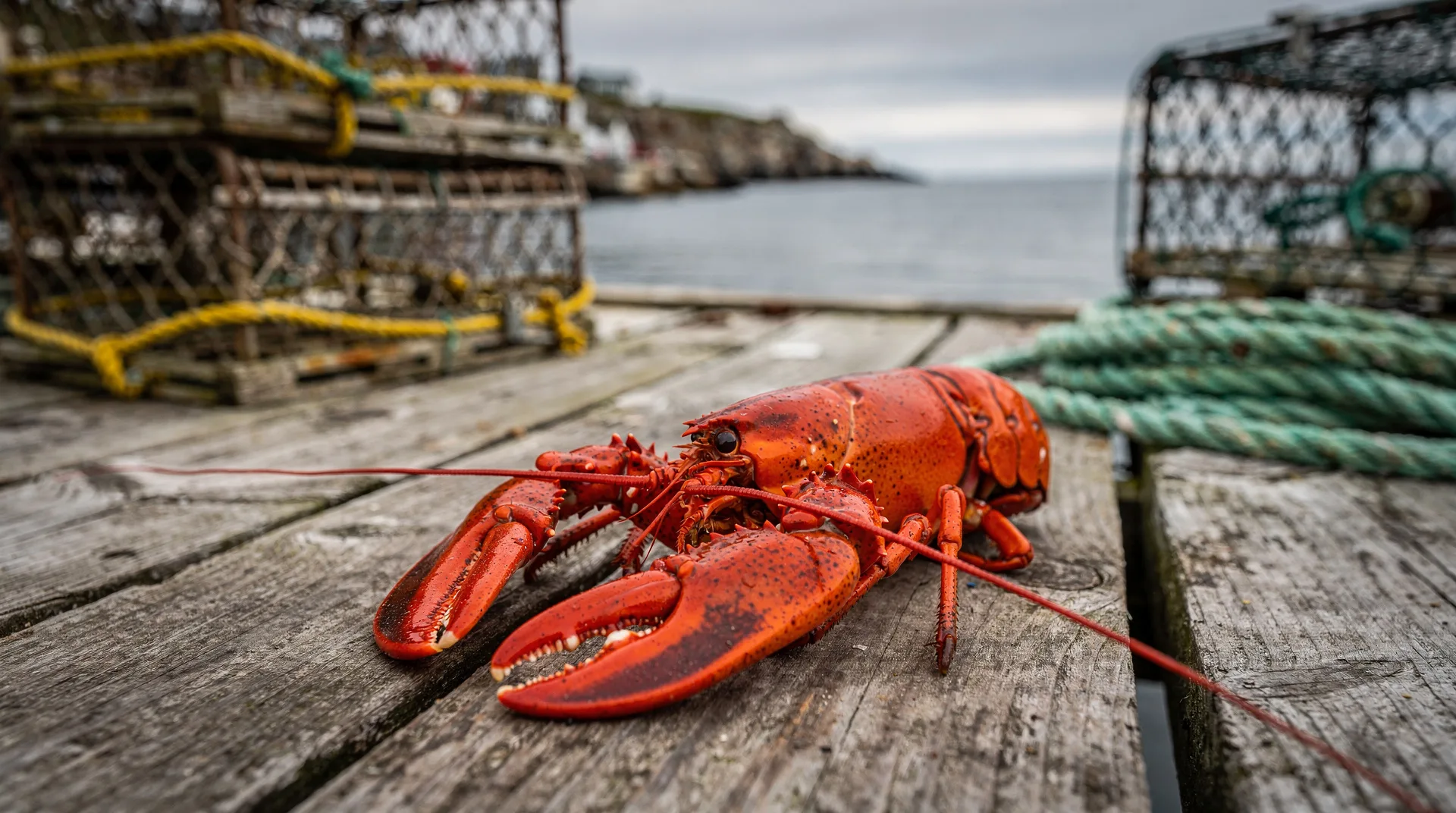
Lobster season in Atlantic Canada: province by province
When is lobster season in Atlantic Canada?
Different provinces fish at different times. Southern Nova Scotia: late November to May. PEI and Gulf: May 1 to late June, and August to October. Northern NB: May to June. Newfoundland: April to July. Most tourists find excellent lobster May through October.
Lobster is the iconic seafood of Atlantic Canada and the most important single species for the region’s fishing economy. For visitors, the key question is simple: when is the lobster I’m eating actually freshest, and where should I eat it for the best experience? The answer requires understanding that “lobster season” in Atlantic Canada is not a single thing — it’s a patchwork of fishing zones, each with its own opening and closing dates, staggered across the year so that live lobster supply is continuous but local peak seasons shift by region.
This guide explains the seasons by province and fishing zone, what “fresh” means in the lobster context, and where and when to eat the best lobster on an Atlantic Canada trip.
| At a glance | Details |
|---|---|
| Where | Nova Scotia, PEI, New Brunswick, Newfoundland |
| Cost | Around CAD 35-65 per whole lobster at a restaurant; CAD 18-28 for a roll |
| Best season overall | Late May to late June (PEI, northern NB, Cape Breton peak) |
| Getting there | Rental car recommended — most dockside spots are outside city centres |
| Booking | Popular lobster suppers benefit from a reservation in July-August |
How lobster fishing actually works in Atlantic Canada
Atlantic lobster fishing is organised into 43 Lobster Fishing Areas (LFAs) across the region. Each LFA has its own opening and closing dates set annually by the Department of Fisheries and Oceans. These dates are designed to protect reproducing populations (by closing during peak moulting and egg-carrying seasons) while providing economic stability for fishing communities.
Fishermen have limited licensed traps per vessel — typically 250-400 depending on the LFA. Traps are checked daily during the season.
Lobster is held live in onshore pounds or shipped live to market. Unlike most seafood, lobster is almost always sold alive and cooked to order or minutes before purchase.
“Fresh lobster” means different things: lobster that is just off the boat (most flavourful), lobster held alive in a tank for hours or days (still alive and high quality but slowly losing weight), or lobster cooked and frozen (common for export, significantly inferior). The best experiences are on-the-dock restaurants within hours of the catch.
Nova Scotia
Nova Scotia has the longest and most complex lobster calendar in Atlantic Canada, with different LFAs opening and closing at different times of year.
Southern Nova Scotia (LFAs 33, 34)
Season: the last Monday of November to May 31st. This is the largest and most economically important lobster fishing area in the world.
Where to eat: Shelburne, Barrington, Yarmouth, Digby, Lunenburg, Halifax (supplied from the southern fleet).
Peak quality: March-May. By the end of the season, lobsters are heavier and have regrown shell meat after winter moulting.
What’s special: winter lobster season is a distinctively Nova Scotian phenomenon. The cold water (0-4°C) produces hardy lobsters with dense, sweet meat.
Visitor access: limited in winter (most tourism infrastructure closed), but restaurants in Halifax serve southern Nova Scotia lobster year-round. Winter/spring visitors to Halifax get the best Nova Scotia lobster directly.
Cape Breton (LFAs 27, 29)
Season: roughly May 15 to mid-July, with some variation.
Where to eat: Cheticamp, Pleasant Bay, Baddeck, Ingonish, Sydney. Dockside restaurants along the Cabot Trail serve direct-from-boat lobster during the season.
Eastern Shore / Halifax Regional Municipality (LFAs 31A, 31B, 32)
Season: mid-April to the end of June.
Where to eat: Halifax, the Eastern Shore fishing villages.
Best for tourists: May and June visitors to Halifax get excellent local lobster.
North Shore Nova Scotia / Gulf of St. Lawrence (LFAs 25, 26A, 26B)
Season: August to early October (the “Gulf summer season”).
Where to eat: Pictou, Antigonish, Cape Breton’s western shore.
Prince Edward Island
PEI has a unique double-season structure for lobster fishing.
Spring Season (LFAs 24, 25, 26A)
Season: May 1 to late June (approximately).
Where to eat: everywhere on the island. PEI’s restaurant culture is tightly tied to the spring lobster season. Lobster suppers operate from May through early July at their peak quality.
Peak quality: May through mid-June — new-season lobsters with firm meat.
Tourist value: excellent. PEI in June is the ideal combination of good weather and peak local lobster.
Fall Season (some LFAs)
Season: mid-August to mid-October (limited areas).
Where to eat: the lobster suppers at New Glasgow and St. Ann’s operate into September with lobster from the short fall season.
PEI lobster supper timing: the traditional lobster supper institutions operate from late May through early October, with the best quality in June and September.
New Brunswick
Bay of Fundy (LFAs 36, 38)
Season: mid-November to late June, with a variable summer closure.
Where to eat: Saint John, St. Andrews, Campobello Island, Grand Manan.
Peak quality: late fall through early spring.
Northern New Brunswick / Acadian Coast (LFAs 23, 25, 26B)
Season: May through late June.
Where to eat: Shediac, Moncton, Caraquet, Bouctouche, Kouchibouguac.
What’s special: Shediac calls itself the “Lobster Capital of the World” (a claim disputed by several other towns) and hosts the Shediac Lobster Festival in July. Peak season here is May-June.
Visitor value: strong for May-June travellers. The Acadian Coast has excellent seafood restaurants and the Shediac/Parlee Beach area is a compact tourist zone with quick access to fresh lobster.
Newfoundland
Most of Newfoundland (various LFAs)
Season: April through July, depending on zone.
Where to eat: St. John’s, Bonavista, Trinity, Twillingate, Gros Morne area restaurants.
What’s distinctive: Newfoundland lobsters tend to be smaller than PEI or New Brunswick lobsters on average — the cold water keeps them that way. Many visitors prefer the smaller sizes for sweeter meat. Newfoundland lobster is shipped south in substantial quantities but is also widely available in local restaurants.
Peak quality: May and June.
Species and sizes
Species: all Atlantic Canadian lobster is Homarus americanus, the North American lobster. The species is distinct from the European lobster and from spiny lobsters of warmer waters.
Sizes: commercial lobsters range from 0.9 to 2+ pounds. Canadian regulations set minimum carapace sizes (not total weight) that vary by LFA but generally require roughly a 1-pound minimum. Larger lobsters (2-4 pounds) are sometimes available seasonally and cost substantially more.
Hard-shell vs soft-shell: hard-shell lobsters (harvested before or well after moulting) have denser, firmer meat and travel better. Soft-shell lobsters (shortly after moulting) have sweeter, softer meat but less of it. PEI spring lobsters are often soft-shell; Nova Scotia winter lobsters are hard-shell.
Where to eat the best lobster
Dockside restaurants
The top experience. Restaurants where the lobster comes off the boat that day and is held briefly in a tank before cooking. Examples:
- Fisherman’s Wharf (North Rustico, PEI) — lobster suppers and dockside dining during the PEI spring season
- The Chowder House (Neils Harbour, NS) — Cabot Trail dockside
- Dancing Goat Café (Margaree Valley, NS) — inland but sources locally
- The Coast restaurant (Trinity, NL) — coastal dining
Classic lobster suppers
A uniquely PEI institution. All-you-can-eat lobster, mussels, rolls, chowder, and dessert in a community-hall format:
- New Glasgow Lobster Suppers (PEI, since 1958) — the original
- St. Ann’s Lobster Supper (PEI) — similar format
- Fisherman’s Wharf Lobster Suppers (North Rustico, PEI)
See the dedicated guide on PEI lobster suppers for the complete breakdown.
Urban seafood restaurants
The broader experience. Halifax, St. John’s, Moncton, and Charlottetown all have excellent restaurants serving lobster year-round through the live pound supply chain. The lobster is high quality but is one step removed from dockside:
- The Five Fishermen, Halifax — classic seafood restaurant
- The Merchantman Pub, Charlottetown — reliable PEI seafood
- Mallard Cottage, St. John’s — high-end lobster with Newfoundland preparation
Roadside shacks and lobster rolls
The casual option. Summer roadside stands and quick-service shacks offering lobster rolls (lobster meat in a soft bun, typically with butter or light mayo):
- Ben’s Lobster Shack, PEI
- Hall’s Harbour Lobster Pound, Nova Scotia
- Dave’s Famous Lobster Shack, New Brunswick
Prices at roadside shacks are typically $18-28 for a solid lobster roll — significantly less than sit-down restaurants.
Pricing
Live lobster (to cook yourself): $10-15 per pound at a working lobster pound; $15-22 per pound at most retail. Prices fluctuate seasonally — peak-season prices are often lower (supply up).
Whole lobster at a restaurant: $35-65 per lobster depending on size and restaurant. Some high-end urban restaurants charge $80+ for large lobsters.
Lobster rolls: $18-28 at most places; $30+ at high-end restaurants.
Lobster suppers (all-you-can-eat): $50-70 per adult including dessert, side dishes, and drinks.
Seasonal variation: PEI in June is the best combination of peak quality and reasonable prices. Halifax in winter has excellent lobster at fair prices. Summer tourist zones charge the most.
How to order and eat it
Whole lobster: typically served boiled or steamed with drawn butter. Restaurants provide shell crackers and picks. Plan 30-45 minutes per lobster — it is a project meal.
Lobster roll: fork-and-fingers food. Easier.
Chowder vs bisque: chowder is cream-based with chunks of lobster and potatoes; bisque is smoother, more refined, usually more expensive. Both are excellent ways to taste lobster without the whole-lobster commitment.
Tipping: standard Canadian tipping (15-20%) applies. Lobster suppers often include an automatic service charge.
Trip planning around lobster
If lobster is central to your Atlantic Canada trip, the following windows optimise the experience:
Late May to late June: peak for PEI, northern New Brunswick, and Cape Breton. The lobster supper season is in full swing. This is the single best tourist window for Atlantic lobster.
Mid-August to early October: fall season on PEI and Nova Scotia’s Gulf coast. Peak quality returns with reopened fisheries. Cooler weather and fall colour begin to emerge.
March to May: winter-spring season in southern Nova Scotia. Best available in Halifax and Yarmouth. Less scenic tourist conditions but excellent lobster.
Year-round: major city restaurants (Halifax, St. John’s, Charlottetown) can serve good lobster any time of year through the live pound supply chain, but the best experience is in-season at source.
What to expect
Flavour: Atlantic Canadian lobster is sweeter, denser, and firmer than warm-water lobsters. The cold-water environment produces the distinctive quality.
Mess: eating whole lobster is messy. Bibs are often provided. Wear clothing that forgives stains.
Volume: a 1.25-pound lobster yields about 4-5 oz of meat. Most adults eat 1-1.5 lobsters comfortably at a sitting.
Accompaniments: corn on the cob, potatoes, coleslaw, biscuits, and mussels or clams are traditional sides. White wine (PEI or Nova Scotia wines work well), beer, or fresh lemonade are typical drinks.
Combining lobster with Atlantic Canada destinations
A lobster-focused Atlantic Canada trip naturally includes:
- PEI (the lobster supper anchor) — see Cavendish and Charlottetown
- Cabot Trail (dockside restaurants along the coast) — see Cape Breton
- Halifax (urban seafood scene) — see Halifax
- Shediac (the New Brunswick lobster capital) — see Shediac
A 7-day Atlantic itinerary can comfortably include lobster experiences at three or four different sources.
Book PEI food experiences and lobster-focused tours Browse Nova Scotia culinary experiencesSeasonality at a glance
| Window | Region | Crowds | Notes |
|---|---|---|---|
| March-May | Southern Nova Scotia | Low | Hard-shell winter lobster, few tourists around |
| May-June | PEI, northern NB, Cape Breton | High | Peak tourist season, best all-round window |
| July-August | PEI, Cabot Trail, Newfoundland | Very high | Full programming everywhere, book ahead |
| August-October | PEI Gulf, NS Gulf coast | Moderate | Fall reopening, cooler weather, fall colour begins |
| November-February | Southern Nova Scotia | Low | Season opens but tourism infrastructure mostly closed |
Buying lobster to cook yourself
Many visitors want to buy live lobster directly rather than eat at a restaurant, especially if renting a cottage or Airbnb with a kitchen. Working wharves and lobster pounds in fishing communities sell live lobster to the public, usually at the lowest prices available (around CAD 10-15 per pound versus CAD 15-22 at retail seafood counters).
Ask locally for the nearest pound — Shediac, Digby, and North Rustico all have well-known public-facing pounds. Bring a cooler with ice if you’re transporting lobster any distance, and note that live lobster generally survives 24-48 hours out of water if kept cool and damp. Most accommodations with kitchens have (or can lend) a large enough pot; boiling a 1.25-pound lobster takes roughly 8-10 minutes in vigorously boiling salted water.
What to do if lobster is out of season where you are
If you’re travelling outside the peak local season for your destination — say, visiting Cape Breton in April before the Cape Breton fishery opens — the reliable fallback is a restaurant in Halifax or another major hub that draws on the live pound supply chain from whichever LFA is currently open elsewhere in the region. This is a normal way to eat excellent lobster outside the immediate local season, though dockside enthusiasts will note it’s one step removed from the freshest possible experience. See the Nova Scotia vs New Brunswick guide for help deciding which province to prioritise if timing is a factor in your itinerary.
Frequently asked questions about Lobster season in Atlantic Canada
Can I eat good lobster in Atlantic Canada outside the May-October tourist season?
Yes, particularly in Halifax and Yarmouth, where southern Nova Scotia’s winter-spring season (late November to May) supplies excellent hard-shell lobster through the coldest months. Most other regional tourism infrastructure is reduced or closed in winter, so this works best as a Halifax-based trip rather than a rural Atlantic road trip.
Is farmed or frozen lobster ever served in Atlantic Canada restaurants?
Lobster is not commercially farmed in Canada — all Atlantic Canadian lobster is wild-caught. Frozen lobster does exist (mostly for export or off-season urban supply) but is considered noticeably inferior; reputable restaurants and all dockside operations serve live-to-cooked lobster, and menus or staff will confirm this if asked.
Bottom line
Atlantic Canada produces some of the best lobster in the world, and visitors eating in-season at source get an experience that is difficult to replicate elsewhere. The key is understanding that “lobster season” means different things in different provinces, and planning your trip to hit at least one peak local season rather than relying on year-round pound-supply restaurants.
For most visitors, PEI in late May-June or Cape Breton in June-July offers the best combination of peak quality, reasonable prices, and good tourist infrastructure. Combined with dockside dining, a lobster supper, and a lobster roll along the way, a well-planned Atlantic trip provides a food experience that justifies the journey on its own.