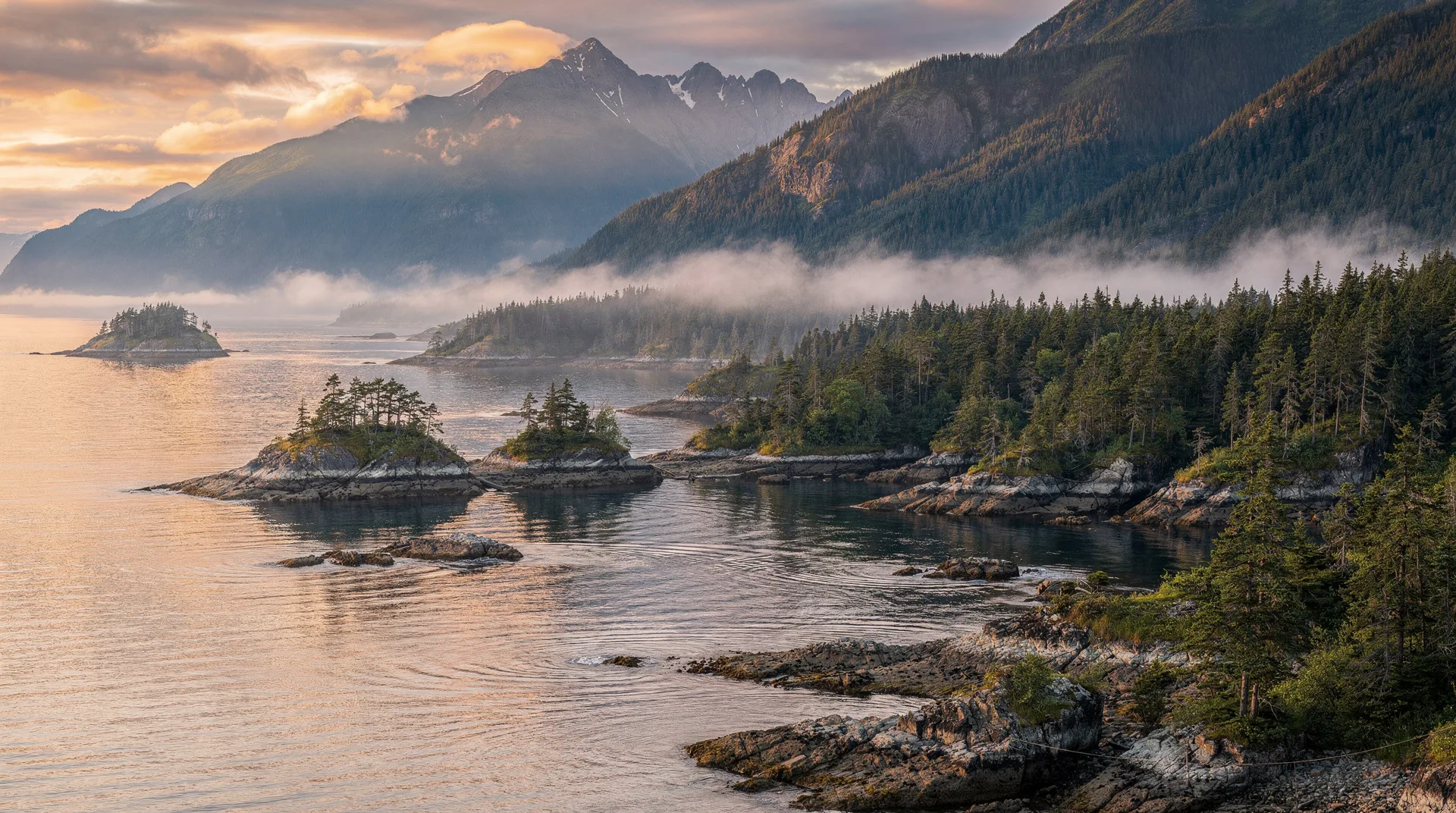
Inside Passage BC ferry: the ultimate northern coastal voyage
How long is the Inside Passage ferry from Port Hardy to Prince Rupert?
The Inside Passage sailing takes approximately 15 hours from Port Hardy to Prince Rupert (or the reverse). The BC Ferries vessel departs Port Hardy at approximately 7:30 am and arrives Prince Rupert around 10:30 pm. The route operates every 2 days in summer; less frequently in winter.
There are boat journeys that are transportation, and there are boat journeys that are the point. The BC Ferries Inside Passage sailing, from Port Hardy at the north end of Vancouver Island to Prince Rupert at the gateway to Alaska, is definitively the latter. Fifteen hours along one of the most spectacular and least visited coastlines in North America — threading through channels between forested islands, crossing open reaches of the Pacific, passing through areas accessible only by sea where the wilderness extends uninterrupted for hundreds of kilometres in every direction.
The Inside Passage is the protected coastal route between the BC mainland and the island chain that parallels it. Cruise ships use the northern extension of this route to reach Alaska; BC Ferries uses the BC segment, passing through the Great Bear Rainforest territory from Port Hardy to Prince Rupert. You are not on a cruise ship. You are on a provincial ferry — functional, unpretentious, and significantly more interesting for it.
The route
Port Hardy → Prince Rupert (or reverse)
Distance: 503 km
Sailing time: Approximately 15 hours
Frequency: Every 2 days in summer (typically departing alternate days from each end)
The ferry departs Port Hardy at approximately 7:30 am and arrives Prince Rupert at approximately 10:30 pm (check the BC Ferries schedule for the specific year, as times adjust slightly by season). The reverse sailing (Prince Rupert to Port Hardy) departs early morning and arrives in the evening.
The route runs primarily through sheltered inland waters with one section of open Pacific crossing (Queen Charlotte Sound, approximately 100 km). This open section is the only part of the voyage with significant wave action; if you are prone to seasickness, take medication before departure and have your sea legs prepared.
What you see
The coastal ecosystem
The Inside Passage threads through the Great Bear Rainforest — the world’s largest remaining temperate rainforest, an ecosystem of extraordinary biological richness. Old-growth Sitka spruce, western red cedar, and hemlock trees grow to the water’s edge on every island. The channels are narrow enough in places that you can see individual trees on the shoreline from the upper deck.
Wildlife you may see from the ferry deck:
- Humpback whales: Common in summer — expect multiple sightings on most summer sailings. They breach, lunge-feed, and blow within clear viewing range.
- Orcas: Less predictable but possible, particularly Bigg’s (transient) orcas in the channels.
- Pacific white-sided dolphins and Dall’s porpoise: Regularly bow-ride ahead of the ferry.
- Steller sea lions: On rocky haulouts, particularly at Bull Harbour and other traditional sites.
- Bald eagles: Constant presence along the entire route — you will lose count.
- Harbour porpoises: In the narrower channels.
- Rhinoceros auklets, common murres, marbled murrelets: The seabird diversity is exceptional.
Key geographical features
Queen Charlotte Sound: The open-ocean crossing, approximately 2–4 hours into the voyage from Port Hardy. No islands, full Pacific horizon. Weather-dependent — beautiful on a clear day, rough and grey in a storm.
Milbanke Sound: A wider expanse after re-entering the Inside Passage from the open ocean. Humpback whales are particularly common here in summer.
Laredo Channel: The mid-voyage section through narrower channels with the highest wildlife density.
Grenville Channel: One of the most dramatic sections — a narrow fjord, sometimes only 500 metres wide, with walls rising hundreds of metres on both sides. The ferry passes within a few hundred metres of the shore. The silence when the engine tone changes in the channel is remarkable.
Prince Rupert approach: The final hours of the sailing bring you into the approach to Prince Rupert — BC’s northernmost major city and the wettest city in Canada — through more island-studded waters.
Planning the sailing
Booking
The Inside Passage sailing requires advance reservations for vehicles, and these are mandatory. Reservations open 3 months in advance through BC Ferries (bcferries.com). Summer sailings (July–August) sell out weeks to months in advance. Book as early as the system allows.
Walk-on passengers can typically board more easily, but cabins sell out in advance. If you want a cabin, book it when reservations open.
Vehicle reservations: CAD 250–350 for a standard vehicle plus passengers. This is one of the highest-cost BC Ferries routes.
Cabin reservations: Private cabins with beds, a window, and basic facilities are available. A 2-person cabin is approximately CAD 80–120 additional. Cabins are worth the cost for the comfort of a 15-hour voyage — being able to rest, change clothes, and have a private space mid-journey is significant.
Alternative without a cabin: Day seats (reclining chairs in a dedicated lounge), included with your passenger fare, are functional for the full voyage. Bring a travel pillow and a good book.
Passenger-only travel
For those without a vehicle, the Inside Passage is accessible at the passenger fare only (approximately CAD 160–200 per person one-way). This is significantly cheaper and sidesteps the vehicle reservation challenge. You still need a reservation and still should book a cabin for comfort.
The one-way logistics question
The Inside Passage sailing is linear — you end up in a very different place from where you started. The most common travel patterns are:
Vehicle circuit: Drive up Vancouver Island to Port Hardy, take the Inside Passage to Prince Rupert, explore Prince Rupert and Haida Gwaii, then either return south by the Inside Passage (same route) or continue into the Yukon and Alaska, returning home a different way.
Fly one way: Fly to Prince Rupert (regular flights from Vancouver), sail the Inside Passage to Port Hardy as a southbound journey, then drive back to Vancouver. This eliminates the drive to Port Hardy.
Passenger-only: Take the ferry as a day voyage (or with cabin), disembark at Prince Rupert, fly back to Vancouver the next day. The lowest-cost full-experience option.
Explore Vancouver Island and BC coastal experiences on GetYourGuideGetting to Port Hardy
Port Hardy is at the north end of Vancouver Island — 505 km from Victoria via the Island Highway (Highway 19). From Victoria, allow 5.5–6.5 hours of driving. The highway passes through Nanaimo, Courtenay, and Campbell River — all worth stop breaks on a multi-day Vancouver Island road trip.
BC Ferries also connects with Vancouver Island via the Tsawwassen–Swartz Bay and Horseshoe Bay–Departure Bay routes. See the BC Ferries complete guide for those connection details.
Port Hardy itself
Port Hardy is a small working fishing and forestry town with modest visitor infrastructure. Spend the night before your sailing at the Quarterdeck Inn (standard but functional) or the Cape Scott Inn. The ferry terminal is at Bear Cove, 5 km from town — confirm your terminal address when booking.
Worth doing on the day before or after your sailing:
- Cape Scott Provincial Park: The northernmost tip of Vancouver Island, with the Cape Scott Trail (48 km return, 2–4 days) leading to a lighthouse and wild Pacific beaches. Day hikers can reach the first beaches (San Josef Bay) in a 2.5-hour return walk.
- Quatsino Sound: A dramatic fjord accessible by small boat from Port Hardy. Harbour tours available.
Prince Rupert
Prince Rupert is the destination city at the north end of the Inside Passage. It is a significantly more interesting city than its modest reputation suggests.
Museum of Northern BC: A well-curated museum covering the Tsimshian and other Northwest Coast peoples’ history and the region’s natural history. Salmon, bears, and coastal cultures are the themes.
Cow Bay: The historic waterfront district with cafes, galleries, and a fishing-community atmosphere. The seafood here (halibut, spot prawns, crab) is among the freshest available in BC.
Khutzeymateen Grizzly Bear Sanctuary: Accessible by floatplane from Prince Rupert. See the grizzly bear viewing guide for details.
Haida Gwaii connection: BC Ferries connects Prince Rupert to Skidegate on Haida Gwaii (7.5-hour sailing) — the logical starting point for a Haida Gwaii exploration if you have arrived via the Inside Passage.
What to bring on the sailing
Essential:
- Warm clothing and waterproof jacket for deck time
- Sunglasses and sunscreen (deck UV on open water is intense)
- Binoculars (7×35 or 10×42 — excellent for whale and bird watching from the deck)
- Camera with zoom lens (wildlife is visible from the ferry but may be 100–300 m away)
- Snacks and water for the journey (ferry cafeteria is functional but limited selection)
- Entertainment for sea crossings (books, downloaded content for areas without cell)
If staying overnight (cabin):
- Toiletries and change of clothes
- Travel pillow and eye mask (even with a cabin, the bed is basic)
Cell coverage: Limited for most of the voyage — the Inside Passage coastal communities have spotty coverage. Download maps, music, and content before boarding. The ferry has Wi-Fi (quality varies; do not depend on it for video streaming).
Wildlife watching tips from the ferry deck
Position yourself on the upper outer deck (port or starboard depending on direction of travel) for best wildlife observation. The bow area tends to attract cetaceans that bow-ride and is often the first point of whale sighting. The upper observation lounge at the stern also has good views.
The naturalist interpreter (not all vessels have one, but summer sailings often do) will announce wildlife sightings over the PA system. Listen for the announcement and go to the deck — whales move and opportunities pass quickly.
Best times for wildlife: Dawn and dusk are peak whale activity times, but humpbacks are seen throughout the day on summer sailings. Dolphins and porpoises appear most often as the vessel increases speed through open water.
Browse BC coastal wildlife and nature tours on GetYourGuideCosts summary
| Item | Cost (CAD approximate) |
|---|---|
| Standard vehicle one-way | $250–350 |
| Foot passenger one-way | $160–220 |
| 2-person cabin | $80–120 additional |
| Vehicle reservation fee | $18 |
| Meals on board (cafeteria) | $15–40/person |
| Port Hardy overnight accommodation | $100–180/night |
| Prince Rupert overnight accommodation | $120–200/night |
Related guides
- BC Ferries complete guide — the full ferry network explained, including how to reach Port Hardy
- Spirit bear tours guide — Great Bear Rainforest territory accessed from Prince Rupert
- Grizzly bear viewing guide — Khutzeymateen sanctuary accessible from Prince Rupert
Frequently asked questions about Inside Passage BC ferry: the ultimate northern coastal voyage
Is the Inside Passage rough?
Queen Charlotte Sound, the open Pacific crossing, can be rough in any season but particularly in autumn and winter. The sheltered Inside Passage sections (the majority of the voyage) are calm. Summer sailings are generally manageable; take medication if you have any history of seasickness.
Can I disembark at intermediate stops?
No — there are no intermediate public stops on the Port Hardy to Prince Rupert Inside Passage. The northern communities along the route (Bella Bella, Klemtu, Prince Rupert area) are accessible by the Discovery Coast Passage, which is a separate BC Ferries route.
Is there a Discovery Coast Passage route?
Yes. The Discovery Coast Passage (Port Hardy to Bella Coola via mid-coast communities) is a separate BC Ferries summer route that stops at McLoughlin Bay, Shearwater, Klemtu, Ocean Falls, and Bella Coola. This route accesses the Great Bear Rainforest communities directly, including Klemtu (Spirit Bear Lodge). It runs less frequently and requires careful scheduling.
Is the Inside Passage accessible in winter?
Yes, but with reduced frequency (approximately 4–6 sailings per month in winter versus every 2 days in summer). Winter conditions can be rough in Queen Charlotte Sound. The experience is dramatically different from summer — fewer wildlife sightings, fewer passengers, dramatic winter weather and lighting conditions. Some visitors prefer it for exactly that reason.