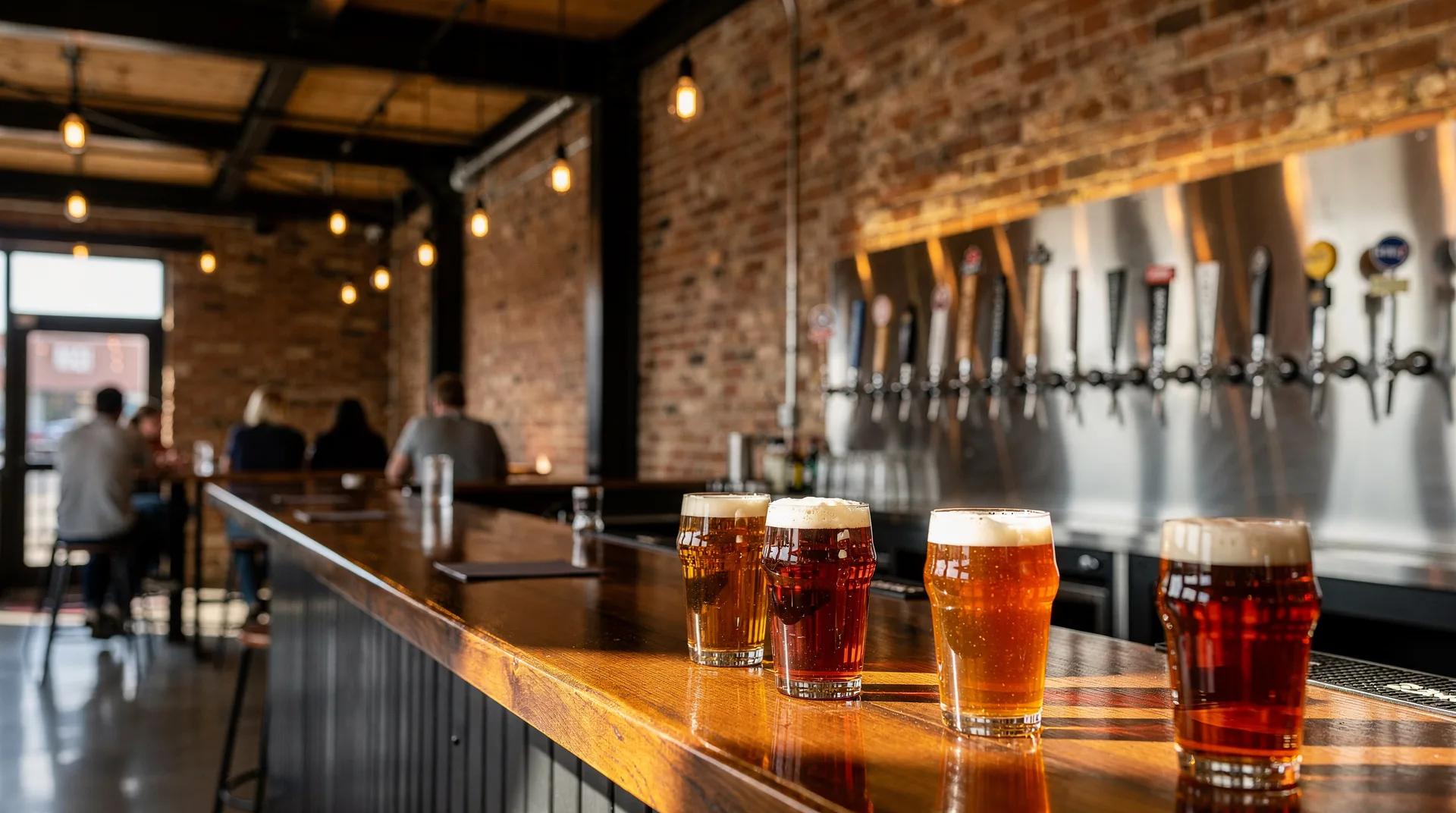
Craft beer in Canada: top breweries by city
Which Canadian city has the best craft beer scene?
Vancouver and Victoria (BC) consistently rank among North America's top craft beer destinations, with hundreds of breweries in a compact geography. Montreal's distinct Belgian-influenced scene and Toronto's rapidly evolving urban brewery culture are also exceptional. Canada as a whole has seen craft brewery numbers explode over the past decade.
At a glance
| Where | Strongest scenes in Vancouver, Victoria, Montreal and Toronto, with dynamic pockets in Halifax, Calgary and Fredericton |
| Cost | Around CAD $7-10 per pint in taprooms; guided brewery tours typically CAD $60-100 |
| Time needed | A half-day covers 3-4 breweries in one neighbourhood; a beer-focused trip can easily fill 2-3 days per city |
| Getting there | Transit works well in Vancouver and Montreal; a designated driver or rideshare is needed for spread-out suburban breweries |
| Best time | Year-round, but beer festivals cluster in late spring through summer (Vancouver Craft Beer Week, Mondial de la Bière, Toronto’s Festival of Beer) |
Canada’s craft beer revolution
Canada was once known internationally for its large, bland lager brands. That reputation is now thoroughly obsolete. Over the past two decades, the craft beer movement has swept the country with remarkable intensity, and today Canada is home to more than 1,200 craft breweries — more per capita than almost anywhere in the world.
What makes Canadian craft beer distinctive? Geography plays a role. BC’s proximity to the Pacific Northwest’s hop-growing regions (Yakima Valley, Willamette Valley) gives Vancouver brewers access to the freshest hops on the continent. Quebec’s French cultural DNA has produced a Belgian-influenced tradition of complex farmhouse ales and experimental sours. Ontario’s urban density has fuelled rapid diversification — Toronto alone has dozens of neighbourhood breweries competing on quality and creativity.
Add to this a national penchant for the outdoors (IPAs and trail hikes pair beautifully), a long-standing tradition of quality malting in the Prairie provinces, and a burgeoning appreciation for locally sourced ingredients, and you have the ingredients for a world-class beer culture.
This guide covers the best craft beer destinations in Canada’s major cities, key breweries to visit, the styles to look for, and how to build a memorable beer-focused trip.
Vancouver: Canada’s craft beer capital
Vancouver and the surrounding region (the Lower Mainland and Vancouver Island) contain more than 200 craft breweries and taprooms. The city’s density of excellent beer is extraordinary — you can spend a week working through Vancouver’s beer neighbourhoods without ever leaving the transit network.
East Vancouver (East Van) is the epicentre. The stretch of Industrial Avenue and surrounding streets in East Van is sometimes called “Brewery Creek” — though the original Brewery Creek neighbourhood (around Main and Kingsway) was historically the brewing heart of the city. Today’s key areas include:
- Parallel 49 Brewing — large, well-established, consistently excellent. The Tricycle Grapefruit Radler is a BC summer institution.
- Strange Fellows Brewing — Belgian-influenced, sophisticated, excellent saisons and barrel-aged ales.
- Andina Brewing — South American-inspired recipes using quinoa and other Andean ingredients. Unique in North America.
- Brassneck Brewery — small, popular taproom on Main Street, rotating taps of highly creative small-batch beers. Consistently listed among Canada’s best.
Yaletown and Downtown:
- Steamworks Brewing — large brewpub in a converted warehouse, excellent beer and food alongside scenic False Creek views.
North Shore and Lonsdale:
- Beere Brewing — notable for quality lagers and session beers in an accessible North Van taproom.
The Ale Trail: Tourism Vancouver has developed a formal “Vancouver Ale Trail” covering dozens of breweries across the city with a passport-style guide. Collecting stamps from different breweries is a popular local activity.
Find Vancouver food and beer experiences on GetYourGuideVictoria: a beer lover’s island paradise
Victoria, BC may be small but it punches extraordinarily hard on craft beer. The compact downtown has multiple excellent breweries within walking distance, and the broader Victoria area — Langford, Saanich, Sidney — has dozens more.
Phillips Brewing & Malting is Victoria’s founding craft brewer — established in 2001 and now occupying a large production facility and taproom that has become a community hub. Their Blue Buck pale ale is a BC classic.
Driftwood Brewery in Victoria makes Fat Tug IPA — routinely named one of Canada’s best craft beers. The West Coast IPA style at its most polished.
Lighthouse Brewing Company offers solid session beers and a pleasant tasting room.
Category 12 Brewing in Saanich specialises in Belgian-style and wild/sour ales, with a sophisticated approach that appeals to enthusiasts.
Hoyne Brewing is beloved locally for their Dark Matter (a dark lager) and consistently approachable quality.
A walking tour through Victoria’s beer scene in the afternoon, followed by dinner in the city’s excellent restaurant scene, is one of the great pleasures of visiting Vancouver Island.
Montreal: where Belgium meets Quebec
Montreal’s craft beer scene is distinct from anything else in Canada — shaped by Quebec’s French heritage, proximity to Belgian beer culture, and a city-wide embrace of creativity and experimentation.
Dieu du Ciel! on Avenue Laurier is perhaps Quebec’s most celebrated craft brewery. The taproom is always packed; the beers are extraordinary — Péché Mortel (imperial coffee stout), Rosée d’Hibiscus (wheat beer with hibiscus), and a rotating cast of seasonal specialties. A pilgrimage to Dieu du Ciel! is obligatory for any beer lover visiting Montreal.
Le Cheval Blanc on Ontario Street is one of Quebec’s oldest and most influential craft bars and breweries — operating since 1986. The space is funky and welcoming, the beer selection excellent.
Benelux has multiple locations across Montreal and brews Belgian-inspired beers with a Quebec sensibility. The food menu is also strong, making it an ideal lunch or dinner spot.
Brasserie Harricana is notable for using foraged Quebec ingredients — spruce tips, blueberries, wild herbs — to create genuinely distinctive terroir-driven beers.
Vices & Versa on Saint-Laurent is a beloved bottle shop and bar rather than a brewery, but its selection of Quebec and Belgian craft beers is unparalleled for those wanting to sample broadly in one sitting.
The Mile End and Plateau-Mont-Royal neighbourhoods are the epicentre of Montreal’s beer culture, though excellent breweries and bars are scattered across the city.
Explore Montreal neighbourhoods and food experiencesToronto: urban brewery boom
Toronto’s craft beer scene exploded in the 2010s and shows no sign of slowing. The city now has dozens of breweries spread across its diverse neighbourhoods, from the gentrified Distillery District to the industrial strips of Etobicoke and Scarborough.
Bellwoods Brewery in Ossington Village is perhaps Toronto’s most talked-about craft brewery. Their sour ales, barrel-aged beers, and creative seasonal releases draw lineups on release days. The taproom has a relaxed, neighbourhood bar quality that Toronto beer lovers cherish.
Left Field Brewery in East Toronto combines two of Canada’s great passions — baseball and craft beer — with an excellent range of accessible and creative brews.
Bandit Brewing and Saulter Street Brewery in the east end represent the neighbourhood microbrewery format that Toronto has embraced.
Amsterdam Brewery near the waterfront is Toronto’s largest craft producer, with a large taproom and patio that become packed in summer.
Great Lakes Brewery in Etobicoke is an Ontario institution, known for their Canuck Pale Ale and a long track record of quality.
The Junction neighbourhood in the west end has become a craft beer hub with several taprooms within walking distance. Junction Craft Brewing anchors the area.
Craft beer beyond the big cities
Halifax, Nova Scotia has a dynamic craft scene, with Propeller Brewing and Good Robot Brewing leading the way. The latter has a particularly fun taproom culture.
Calgary, Alberta has evolved rapidly. Village Brewing and Tool Shed Brewing are local favourites. The Calgary Stampede (July) sees craft breweries offering limited festival releases.
Edmonton has Alley Kat Brewing — one of Western Canada’s oldest craft breweries — and a growing list of newer producers.
Fredericton, New Brunswick is a surprisingly vibrant craft beer city relative to its size. Picaroon’s Brewing has been central to the Atlantic Canadian craft movement for decades. The annual Fredericton Craft Beer Festival in spring is a highlight.
Winnipeg, Manitoba has seen rapid growth in its craft scene, with Half Pints Brewing and Nonsuch Brewing gaining national attention.
Comparing Canada’s four major beer cities
| City | Signature style | Best for | Getting around |
|---|---|---|---|
| Vancouver | West Coast IPA | Sheer density of breweries, East Van brewery crawl | SkyTrain reaches most brewery neighbourhoods |
| Victoria | West Coast IPA, session lagers | Compact, walkable downtown brewery scene | Walkable downtown; car for outlying areas |
| Montreal | Belgian-influenced saisons and sours | Distinctive terroir-driven brewing, food pairing | Metro is excellent for Mile End and Plateau |
| Toronto | Hazy IPAs, barrel-aged sours | Fast-evolving neighbourhood taproom culture | Transit plus rideshare for Etobicoke/Junction |
Canadian beer styles to know
West Coast IPA — BC’s dominant style. Intensely hoppy, pine and citrus-forward, dry and bitter. Driftwood’s Fat Tug is the archetype.
Quebec farmhouse ales / saisons — Light, yeast-forward, often spiced or using local ingredients. Complex and food-friendly.
Imperial stouts — Canadian winters inspire big, rich, warming stouts. Often barrel-aged in whisky or bourbon barrels.
Lagers — Underrated in craft contexts but several Canadian producers make outstanding craft lagers. German-influenced, clean, and intensely sessionable.
Sour ales and wild fermentation — Growing across the country. Quebec leads in this area, with several breweries using traditional Quebec terroir ingredients.
How to plan a beer-focused trip
Brewery tours: Many large breweries offer free or low-cost tours (typically CAD $10–$15 including a tasting). Check individual brewery websites for tour schedules.
Beer festivals: The Vancouver Craft Beer Week (May–June), Toronto’s Festival of Beer (July), Montreal’s Mondial de la Bière (June), and Victoria Beer Week (February) are major annual events.
Guided beer tours: Several cities offer guided walking or van tours of local breweries. These typically run CAD $60–$100 per person for 3–4 hours and include multiple brewery visits with tasting samples at each.
Craft beer bars: For sampling broadly without committing to a single brewery, multi-tap bars carry dozens of local and national taps. In Vancouver, St. Augustine’s and Tap & Barrel are good examples. In Toronto, Bar Hop has one of the city’s widest tap selections.
Practical tips for craft beer visitors
Legal drinking age: 19 across most of Canada (18 in Alberta, Manitoba, and Quebec).
Growlers and crowlers: Many BC and Ontario breweries sell 1L or 2L fills to take away. Requirements vary by province; BC is the most permissive.
Prices: Pints in brewery taprooms typically run CAD $7–$10. Craft beer bars and restaurants charge CAD $8–$14 depending on the city.
Getting around: Designated driver or transit is essential for serious brewery touring. In Vancouver, the SkyTrain reaches most brewery neighbourhoods. In Montreal, the Metro is excellent.
For broader city travel, see the Vancouver destination guide, Montreal travel guide, and Toronto destination overview. For a beer and nature combination, the Vancouver Island guide pairs craft beer with extraordinary wilderness, and Victoria makes a compact base for a walkable brewery crawl.
Pairing a brewery visit with food is easy almost anywhere — see the Canadian cuisine guide and, in Quebec specifically, the Montreal food guide for what to eat alongside your pint.
Building beer stops into a wider trip
You do not need to organise a whole holiday around hops. The easiest approach is to treat a taproom as a relaxed end to a day of sightseeing, then let the neighbourhood decide where you drink. In Quebec, the Quebec microbreweries guide goes deeper into the province’s brewing culture, and the Montreal travel guide helps you slot a brewery afternoon between museums and markets.
If you are heading east, Halifax makes a friendly base for sampling Atlantic Canadian beer, while Fredericton rewards a short detour for anyone curious about the region’s early craft pioneers. On the Prairies and in the Rockies, Calgary, Edmonton and Winnipeg all pair well with a larger itinerary, and a taproom stop is a good way to ease into a new city after a long drive.
Beer is only one part of Canada’s drinks culture. If you enjoy spirits as well, the Canadian whisky guide is a natural companion read, and the food tours guide covers organised ways to eat and drink your way through a city with a local to steer you. For a broader view of how the country’s flavours fit together, the first-time visitors guide helps you decide which cities deserve your limited time.
Frequently asked questions about Craft beer in Canada: top breweries by city
Do Canadian craft breweries accept walk-ins?
Almost all brewery taprooms welcome walk-ins during operating hours. Only a few exclusive sour beer releases or limited events require advance tickets. Taproom hours vary — always check the brewery’s website or social media before visiting.
What is the difference between a taproom and a brewpub?
A taproom sells the brewery’s own beers for on-site consumption and often off-sales. A brewpub is a restaurant that brews its own beer on site. Both exist across Canada; brewpubs offer more complete food menus while taprooms often allow outside food or have food trucks.
Can I tour Canadian craft breweries without drinking?
Yes. Most brewery tours welcome non-drinkers and offer soft drinks or non-alcoholic options. The tour experience itself — seeing the brew kettles, fermentation tanks, and barrel rooms — is interesting regardless of whether you drink.
Is Canadian craft beer exported?
Some Canadian craft brands are available in the US and internationally (Brasserie Dieu du Ciel!, for example), but most craft beer is local by nature. The best place to try it is at the source.
What souvenirs can I bring home from Canadian craft breweries?
Branded merchandise (hats, shirts, glassware), canned or bottled beer, and gift sets. Most provinces allow carrying a reasonable quantity of alcohol when crossing provincial borders for personal use. Check current rules for quantities.
Are there craft cider and non-alcoholic options at Canadian craft breweries?
Increasingly yes. Many BC breweries in particular produce craft cider alongside beer. Non-alcoholic craft beer has also become a serious category in Canada, with several producers making genuinely good alcohol-free IPAs and lagers.
Is craft beer cheaper in Canada than in the US?
Canadian craft beer pricing is broadly comparable to the US in taprooms. Provincial alcohol taxes mean retail and bar prices can be slightly higher than US equivalents, but taproom prices at the brewery itself are usually reasonable.
Which city should I pick if I only have time for one craft beer stop?
Vancouver offers the widest selection and easiest transit access for a single-city focus; Victoria suits travellers who want a compact, walkable scene without a car; Montreal is the best choice for those who also want distinctive food pairing alongside the beer.