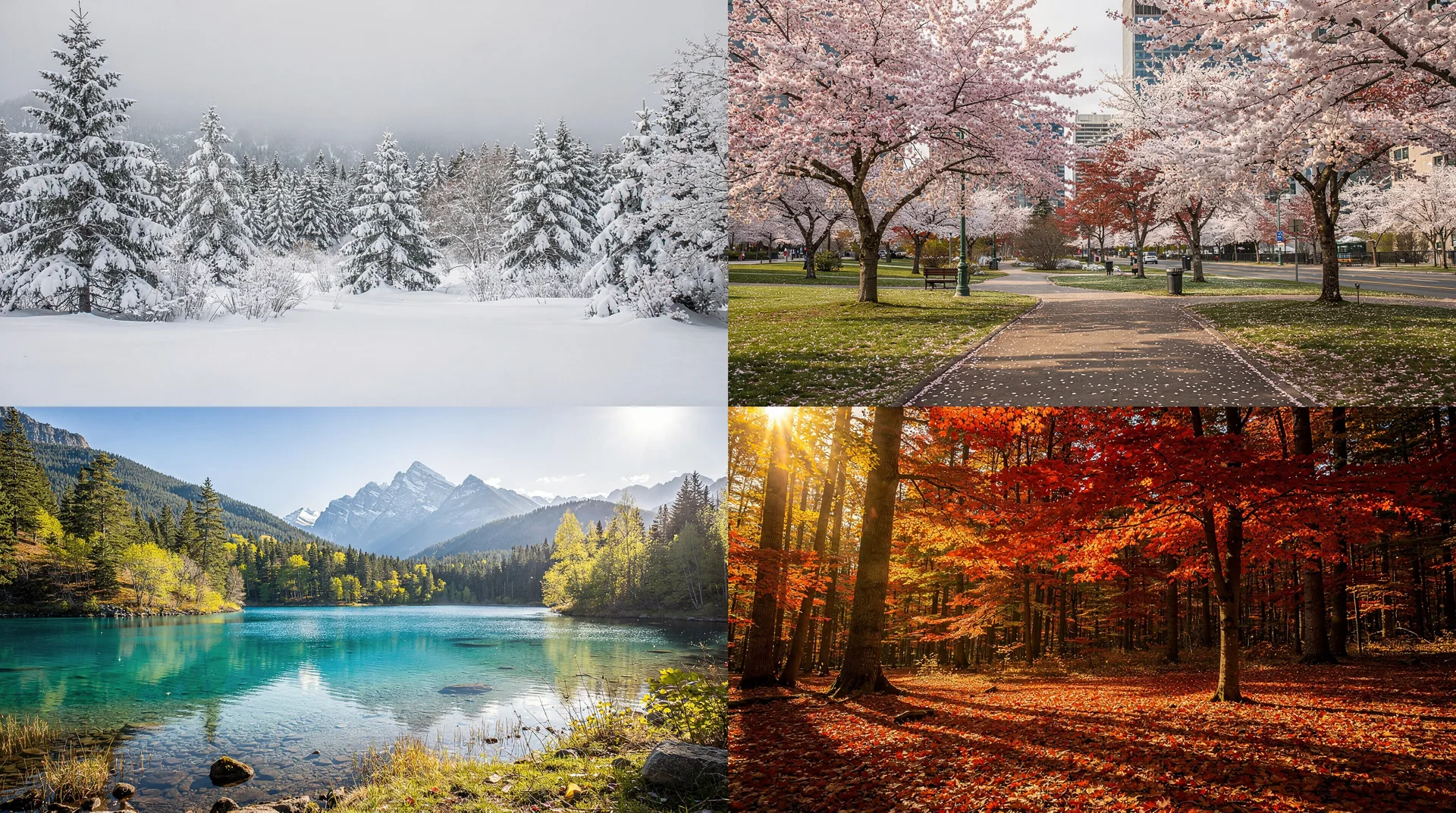
Canadian weather by region: what to expect
What is the weather like across Canada?
Canada spans seven distinct climate zones. The BC coast is mild year-round. The Prairies have extreme temperature swings (-30°C winter to +30°C summer). The Rockies are cold and dry. Ontario and Quebec have humid continental weather. The Maritimes are cool and foggy. The Arctic is polar. Newfoundland is oceanic and often grey.
Canada spans more latitude than any country except Russia, and its weather varies enormously from region to region. What you pack for Vancouver in April is nearly the opposite of what you’d need in Yellowknife the same week. Understanding Canada’s regional climates is the single most important step in planning a trip that feels comfortable rather than a survival exercise.
This guide breaks Canada into eight climate zones with real monthly expectations, packing notes, and when each region is at its best and worst.
| At a glance | |
|---|---|
| Best single-region months | June-September for most of the country |
| Widest temperature swing | Prairies: around -40°C winter lows to +30°C-plus summer highs |
| Wettest region | Newfoundland / Tofino area (BC coast), well over 1,500 mm a year |
| Driest region | The North (Yukon/NWT/Nunavut), around 200-300 mm a year |
| What to pack for a multi-region trip | Layers plus a waterproof shell, year-round |
| Related planning | See best time to visit Canada and month guides like Canada in September |
The big picture
Canada’s weather is shaped by three forces:
- Latitude: Windsor (Ontario) is at the same latitude as northern California. Iqaluit is at the same latitude as northern Scandinavia.
- Distance from oceans: coastal BC and the Atlantic Maritimes are mild and wet. Interior regions swing hard hot and cold.
- Mountains: the Rockies divert moisture and create rain shadow regions in the interior.
Result: a country that can be 40°C in Kamloops while Churchill is experiencing summer flurries on the same day.
Pacific coast (Vancouver, Victoria, Tofino)
Mediterranean-ish maritime climate. Mild winters, cool dry summers.
- Winter: 3-9°C, rain dominant, rare snow at sea level
- Spring: 8-15°C, cool and wet
- Summer: 15-25°C, dry and sunny July-August
- Fall: 10-15°C, rain returns
- Annual rainfall: 1,200 mm (Vancouver), up to 3,300 mm (Tofino)
Best months: June-September for reliable weather; November-February for storm watching on the west coast of Vancouver Island.
Canadian Rockies (Banff, Jasper, Canmore)
Continental with significant altitude effect. Cold winters, mild short summers.
- Winter: -15 to -5°C, heavy snow, dry air
- Spring: -5 to 10°C, unpredictable, lakes still frozen until June
- Summer: 10-23°C, cool nights even in July (4-10°C)
- Fall: 0-12°C, larch season late September, snow returns October
- Annual precipitation: 500-700 mm
Best months: June-September for hiking; December-March for skiing.
Prairie provinces (Calgary, Edmonton, Regina, Winnipeg)
The most extreme weather in populated Canada. Enormous seasonal swings.
- Winter: -25 to -10°C average, with cold snaps hitting -40°C
- Spring: 0-15°C, unpredictable
- Summer: 18-30°C, with thunderstorms and occasional tornadoes
- Fall: 0-15°C, often the most pleasant season
- Annual precipitation: 400-500 mm, mostly summer rain
Winnipeg is colder on average than Moscow. Calgary gets chinooks — warm winter winds that can raise temperatures 20°C in hours.
Best months: June-September.
Ontario (Toronto, Ottawa, Algonquin)
Humid continental. Four clear seasons.
- Winter: -10 to -2°C, snowy, with occasional deep cold to -20°C
- Spring: 0-15°C, muddy and unpredictable
- Summer: 18-30°C, humid, thunderstorms, heat waves to 35°C+
- Fall: 5-20°C, famous fall colour mid-October
- Annual precipitation: 800-900 mm
Toronto is moderated by the Great Lakes. Ottawa is colder in winter (-15°C average lows). Algonquin and the north are colder still.
Best months: late September-October (foliage), June-August (warm).
Quebec (Montreal, Quebec City, Charlevoix)
Humid continental, more extreme than Ontario. Longer and colder winters.
- Winter: -15 to -5°C, heavy snow, cold snaps to -30°C
- Spring: 0-15°C, slow to arrive
- Summer: 18-28°C, humid, occasional heat waves
- Fall: 5-20°C, exceptional fall colour late September-mid October
- Annual precipitation: 1,000-1,200 mm (including heavy snow)
Quebec City averages over 300 cm of snow a year — more than most European ski resorts.
Best months: September-October for colour, December-February for winter experience, June-August for festivals.
Maritimes (Halifax, Cape Breton, PEI, New Brunswick)
Maritime continental. Moderated by ocean, often foggy, four seasons.
- Winter: -8 to -2°C, snow mixed with rain, icy
- Spring: 2-12°C, cool and slow
- Summer: 15-25°C, warmer inland, cool near coast, foggy mornings
- Fall: 5-17°C, excellent and extended, foliage mid-to-late October
- Annual precipitation: 1,200-1,500 mm
Hurricanes and tropical storms can reach the Maritimes August-October (usually weakened).
Best months: July-October.
Newfoundland and Labrador
Cool, oceanic, famously changeable. Much colder than the Maritimes despite being further south than Paris.
- Winter: -10 to 0°C (St. John’s), colder in Labrador, heavy snow and wind
- Spring: -2 to 8°C, cold, icebergs arrive
- Summer: 10-20°C, cool, foggy, wet
- Fall: 2-12°C, windy
- Annual precipitation: 1,500 mm (St. John’s is one of Canada’s wettest, cloudiest cities)
St. John’s averages 124 foggy days per year.
Best months: June-September for icebergs, whales, and relatively warm weather.
The North (Yukon, NWT, Nunavut)
Subarctic to Arctic. Extreme cold in winter, mild short summers, long daylight swings.
- Winter (October-April): -25 to -45°C, rare to see above freezing
- Summer (June-August): 10-20°C, occasional warm spells to 25°C+
- Daylight: 4 hours in December, 20+ hours in June (24-hour sun above the Arctic Circle)
- Annual precipitation: 200-300 mm (among the driest regions in Canada)
Yellowknife sees -40°C as routine in January. Iqaluit is colder still.
Best months: March for aurora with manageable cold; June-August for summer; September for aurora plus fall colour.
Regional quick comparison
| Region | Coldest month | Warmest month | Best time overall |
|---|---|---|---|
| Pacific coast | January (3-6°C) | July (22-25°C) | June-September |
| Rockies | January (-15°C) | July (23°C) | July-September |
| Prairies | January (-15 to -25°C) | July (25-30°C) | June-September |
| Ontario | January (-5 to -10°C) | July (25-28°C) | June + October |
| Quebec | January (-10 to -15°C) | July (25-27°C) | September + February |
| Maritimes | January (-3 to -8°C) | July (22-25°C) | July-October |
| Newfoundland | January (-5 to -10°C) | July (16-20°C) | June-September |
| North | January (-30°C) | July (15-20°C) | March + July |
Packing principles by region
- Pacific coast: waterproof shell essential; warm layers in winter.
- Rockies: warm layers year-round; nights always cool.
- Prairies: extreme gear for winter; light breathable for summer.
- Ontario/Quebec: full four-season wardrobe if visiting year-round.
- Maritimes: waterproof layers always; warm layers even in summer.
- Newfoundland: rain gear and warm layers even in July.
- The North: extreme cold gear October-April; summer layers for June-August.
Weather-related hazards
- Rockies summer: sudden snow possible in June and September at elevation.
- Prairie winter: windchill can reach -50°C; frostbite in minutes.
- Ontario summer: thunderstorms and high humidity; heat warnings.
- Maritime hurricanes: August-October tropical systems.
- BC atmospheric rivers: November-February intense rain events causing floods and landslides.
Choosing a season once you know the region
Knowing the climate zone is only half the decision. The other half is what you want to do there, because the same weather can be a gift or a nuisance depending on the activity.
- Summer in the mountains. Long daylight and open trails make July and August the natural window for the best hikes in Canada, but expect cold mornings and the odd afternoon storm. The Banff National Park and Jasper National Park guides explain how conditions shift from valley floor to high pass.
- Winter on purpose. Cold is much easier to enjoy when you plan for it. Canada in winter covers what a proper cold-weather trip looks like, and Quebec in winter shows how a city can be built around the season rather than in spite of it.
- Shoulder seasons. Spring and fall are the least predictable months almost everywhere, but they reward flexible travellers with fewer crowds. Read Canada in spring and Canada in fall before committing, and treat any fixed outdoor plan as provisional.
- Coastal trips. On the Atlantic side, fog and wind are part of the character of the place. The Atlantic Canada weather guide goes deeper on what that means day to day, and whale watching in Atlantic Canada is a good example of an activity that works best with a flexible schedule. If you prefer a set plan, you can browse guided tours in Canada and pick a date that suits the forecast.
How to read a forecast in Canada
Regional averages describe a typical day, not the day you will actually have. A few habits make forecasts far more useful on the ground.
Look at the overnight low as well as the daytime high, especially in the mountains and the North, where the gap between the two can be wide. Check the windchill figure in winter, since it is the number that decides how long you can comfortably stay outside. In coastal regions, read the rain probability by the hour rather than by the day: a wet forecast often means a few squalls with clear spells between them, not a washout.
Remember too that a city forecast can be misleading for a day trip. The weather in Calgary says little about conditions at a high mountain pass, and the forecast for Vancouver says little about the exposed west coast of Vancouver Island. Look up the forecast for the exact place you are going, and for the route you will drive to reach it.
Weather and your route
Weather also shapes how you move between regions. If you are driving, the driving Banff to Jasper and driving in Quebec in winter guides show how much road conditions change the plan, and the Canada road trip permits page is worth a look before a long drive. If you would rather let someone else handle the conditions, you can book Canada day tours and excursions, and the best scenic train routes in Canada guide covers rail options that run through several climate zones in a single trip.
For a trip that crosses the country, the how long to spend in Canada guide helps you decide how many regions are realistic, and the packing list turns the regional advice above into a concrete bag. If this is your first visit, first-time visitors brings the weather questions together with the rest of the practical planning.
Planning a multi-region trip around weather
Most first-time visitors underestimate how much weather changes when moving between regions on the same trip. A Canadian rockies leg in June can still have snow at higher elevations while Toronto is already in a summer heatwave the same week. A few planning principles:
- Build in buffer days for mountain regions. Weather at altitude (Banff, Jasper, Yoho) is far less predictable than lowland weather, and a rained-out or snowed-out day is common even in July. See the icefields parkway stops guide for a route that works around this.
- Move west to east or east to west, not zig-zagging. Following the general direction of Canada’s prevailing weather systems (west to east) means you are usually only adjusting gradually rather than swinging between climate zones repeatedly.
- Check road and park conditions, not just the forecast. Parks Canada and provincial park sites post seasonal closures (Icefields Parkway sections, some Yukon and Quebec routes) separately from weather forecasts — a sunny forecast does not guarantee an open road in shoulder season.
- Coastal BC and the Maritimes need a shell jacket even in “good” weather. Both regions get sudden rain squalls on otherwise sunny days.
How Canadian weather compares by trip type
| Trip type | Best-matched regions | Why |
|---|---|---|
| Hiking and mountains | Rockies, BC interior | Long dry summer window, predictable July-August |
| City break, shoulder-season friendly | Toronto, Montreal, Vancouver | Humid continental / maritime climates stay mild into fall |
| Fall foliage | Ontario, Quebec, Maritimes | Reliable, extended colour season late September-October |
| Winter sports | Rockies, Quebec, Ontario ski country | Consistent snowpack December-March |
| Wildlife and aurora | The North, Churchill | Weather is secondary to season-specific wildlife windows |
Frequently asked questions about Canadian weather by region
Does it rain a lot in Vancouver?
Yes in the cooler months — Vancouver gets roughly 1,200 mm of rain a year, concentrated October through March, with a noticeably drier and sunnier stretch from July to September. Pack a waterproof shell if you are visiting outside summer.
Is Canada colder than people expect in summer?
Not usually in the south — Toronto, Montreal, and the Prairies regularly hit 25-30°C in July and August, sometimes higher during heat waves. It is the Rockies and the North where summer nights stay cool even when days are warm, so a light layer is still worth packing.
The takeaway
Canadian weather rewards preparation. Choose your region based on the weather you want, pack for the season, and always carry layers. In a country that runs from rainforest to tundra, getting the weather right is the difference between a trip that feels epic and one that feels endured.