Canada solo travel guide: routes, safety, costs
Is Canada good for solo travellers?
Yes. Canada ranks among the safest destinations for solo travellers, with excellent infrastructure, English-friendly (outside parts of Quebec), reliable public transit in cities, and a social hostel and guided-tour scene. Solo travellers fit in easily on the Rocky Mountaineer, VIA Rail Canadian, hostel lodges, and group hikes.
| At a glance | |
|---|---|
| Safety | Among the safest countries for solo travel; standard urban awareness plus wildlife/winter precautions |
| Cost | Roughly CAD $110-500 per day depending on style; solo travel skews pricier than paired travel |
| Best regions solo | Western Canada classic (Vancouver-Rockies-Calgary), Eastern corridor by VIA Rail |
| Getting around | Trains and hostels are naturally social; car rental is expensive and less necessary in cities |
| Best time | Shoulder seasons (May, late September) for better prices and lighter crowds |
Canada is one of the easier countries in the world for solo travellers. Violent crime is low. English is widely spoken. Infrastructure is excellent. The hostel network is serviceable, organized tours are common, and national parks are set up for independent visitors who prefer to hike alone or join group activities.
This guide covers what solo travellers actually need to know — routes that work solo, safety realities, costs, how to meet people, and where Canada occasionally frustrates.
Why Canada works for solo travellers
- Very low violent crime rates in cities and rural areas
- English-speaking everywhere except parts of rural Quebec
- Reliable intercity trains and buses in the populous corridors
- Strong hostel presence in major tourist hubs
- National parks with clear trail systems and shuttle services
- Easy to join day trips and multi-day tours
- Canadians are friendly and approachable, especially outside big cities
Safety: the honest picture
Canada is safe by international standards, but not risk-free. Solo travellers should know a few specifics.
Cities: Toronto, Vancouver, Montreal, Calgary, Halifax, Ottawa are safe for walking at night in central districts. Use normal urban awareness. Downtown East Side Vancouver and parts of Hastings Street have visible homelessness and open drug use; tourists are rarely targeted but the area is unsettling.
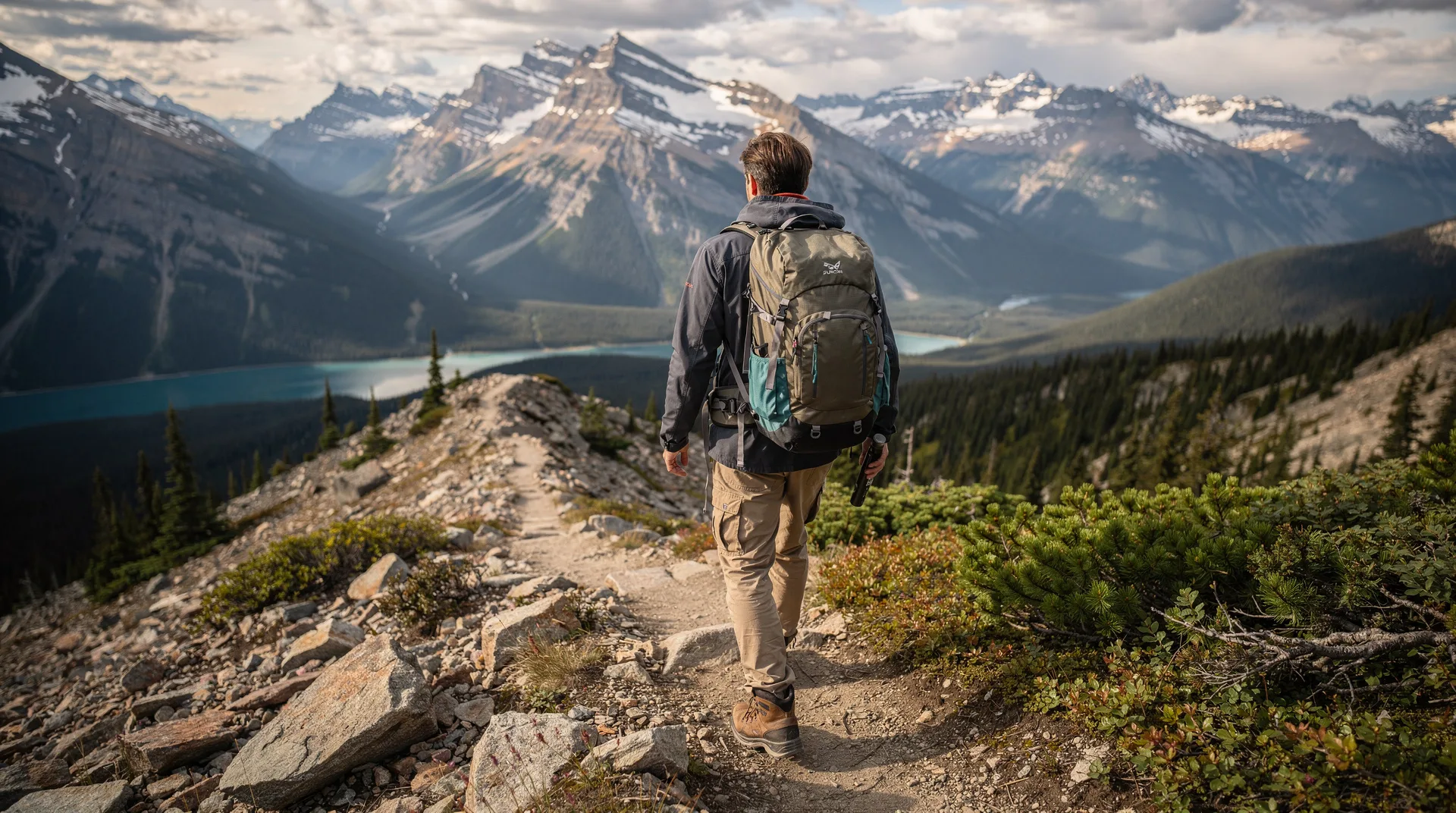
Wilderness: bears, moose, and cougars are genuine hazards. Solo hiking is common and generally safe if you carry bear spray, know how to use it, and make noise on the trail. Avoid remote backcountry trails solo if you’re inexperienced.
Winter: the real hazard. Cold can kill. If you’re driving rural areas in winter, carry food, a blanket, a phone charger, and tell someone your route.
Scams: minimal. Taxi scams occasionally in Toronto and Montreal. Use Uber/Lyft or marked taxis.
Best solo routes
First-time solo: the Western Canada classic
Vancouver → Rockies → Calgary. Fly into Vancouver, spend 3 days exploring the city and North Shore. Take the Rocky Mountaineer or drive (or take the VIA Rail Canadian) to Banff. Spend 5-6 days in Banff/Jasper on a mix of solo hikes and group day tours. Fly home from Calgary.
Why it works: the route is well-trodden for solo travellers. Hostels and hotels are social. Guided hikes, helicopter tours, and icefield trips naturally fill group gaps, and you can compare guided tours across Canada before you fly.
Classic Eastern Canada
Toronto → Niagara → Ottawa → Montreal → Quebec City. All reachable by VIA Rail. Train journeys are social. Urban environments give you restaurant and museum options every day. Montreal and Quebec City have strong hostels.
VIA Rail Canadian (Toronto to Vancouver)
The 4-day train is ideal for solo travellers. Shared dining tables force social contact gently. The domed observation cars are natural conversation spaces. Book Sleeper Plus minimum — solo economy seating is rough for four nights.
Maritimes loop
Halifax → Cape Breton → PEI → New Brunswick. Drive or use Maritime Bus. More challenging solo because nightlife is limited outside Halifax, but deeply rewarding. Hostels in Halifax and Cape Breton are good meeting spots.
Yukon aurora trip
Whitehorse as a base. Solo travellers fit well on aurora viewing tours, dog sledding groups, and multi-day trips. The town is small enough to meet other travellers quickly.
How to meet people
- Hostels with private rooms: HI Canada runs hostels in Banff, Jasper, Lake Louise, Vancouver, Montreal, Quebec City. Private rooms with shared common areas give you privacy plus social options.
- Group day tours: bear viewing, whale watching, bike tours, food tours. Natural mixing of solo travellers. Browse group tours and activities in Canada to book a spot.
- Multi-day organized trips: G Adventures and Intrepid run small-group Canada tours aimed at solo travellers.
- Hiking groups: Meetup.com has active hiking groups in Vancouver, Calgary, Toronto, Montreal.
- Climbing and bouldering gyms: welcoming communities in major cities.
- Couchsurfing meetups: still active in Toronto, Montreal, Vancouver.
Costs for solo travellers
Solo travel in Canada is more expensive per person than couples or groups because accommodation dominates budget.
Budget (hostels, basic food): CAD $110-160 per day Mid-range (private rooms, restaurants): CAD $220-320 per day Comfortable (hotels, tours): CAD $350-500 per day
A two-week solo trip realistically costs CAD $3,500-7,500 plus international flights. Rockies, North, and Newfoundland skew higher.
Ways solos save money
- Shared dorms in hostels (CAD $40-70 vs CAD $150+ for a private room)
- Cook your own food in hostel kitchens
- Use Greyhound-successor networks (Rider Express, Ontario Northland) and Megabus for intercity travel instead of flying
- Travel in shoulder seasons (May or late September)
- Avoid car rental unless necessary — in Rockies, Roam Transit covers most of Banff; in cities, public transit works
Transport as a solo
Train (VIA Rail): excellent for solo travel. Sleeper accommodations exist. Social environment.
Intercity buses: Rider Express (Prairies and BC), Maritime Bus (Atlantic), Megabus (Ontario-Quebec corridor), Ontario Northland (northern Ontario). Affordable.
Flying: required for Yukon, Newfoundland, Churchill, and for anyone short on time.
Driving: rental cars are expensive solo. One-way rentals often carry large drop-off fees. If you do drive, insurance matters — the CDW (collision damage waiver) is essential.
Solo-friendly accommodation
- HI Canada hostels: clean, safe, social, often in scenic locations (HI Lake Louise Alpine Centre is memorable).
- Samesun hostels: Banff, Vancouver, Kelowna, Toronto. More party-oriented.
- Pods and capsule hotels: increasing in Toronto and Montreal.
- Airbnb private rooms: can be a good compromise with local hosts.
- B&Bs: common in Maritimes and Quebec. Solo single-occupancy rates are often only 15-20% less than doubles.
Women travelling solo
Canada is consistently rated among the top countries globally for solo female travel. Standard precautions apply: avoid empty parking structures at night, don’t leave drinks unattended, tell accommodation hosts if you’re going on a solo hike. Rural Canada is overwhelmingly welcoming.
Practical tips
- Get a Canadian eSIM or local SIM on arrival (data-only eSIMs from USD $15 for a week)
- Download offline Google Maps for driving regions
- Install the AdventureSmart app for trail safety information
- Carry bear spray if hiking solo in Rockies, Yukon, or BC
- Emergency number is 911 across Canada
Where Canada frustrates solo travellers
- Restaurants: mid-range restaurants can feel awkward for solo diners in smaller towns. Bring a book or sit at the bar.
- Remote national parks: Gros Morne, Kluane, and parts of Quebec require a car to enjoy fully.
- Northern and remote travel is expensive: flights dominate the budget.
Solo-friendly regions compared
| Region | Solo difficulty | Why |
|---|---|---|
| Western Canada (Vancouver-Rockies-Calgary) | Easy | Well-trodden hostel and tour circuit, easy to slot into group activities |
| Eastern corridor (Toronto-Ottawa-Montreal-Quebec City) | Easy | Frequent trains, urban amenities, strong hostel scene in Montreal/Quebec City |
| VIA Rail Canadian (transcontinental) | Easy-Moderate | Shared dining forces social contact; book Sleeper Plus, not economy, for four nights |
| Maritimes loop | Moderate | Rewarding but nightlife limited outside Halifax; a car or Maritime Bus is needed |
| Yukon/aurora trips | Moderate | Small towns make meeting people easy, but flights and tours push costs up |
| Newfoundland/Labrador | Moderate-Hard | Beautiful but a car is close to essential and distances between towns are large |
Building a solo trip that feels easy
Most solo travellers who struggle in Canada do so because they plan like a couple: one big rental car, one remote cabin, long evenings with nobody to talk to. A better approach is to anchor each stretch of the trip in a town with a real traveller scene, then radiate out from it on day trips. Banff and Vancouver are the obvious anchors in the west, while Montreal and Quebec City do the same job in the east. From each base, you can join a group outing in the morning and spend the afternoon on your own.
Leave a few days unscheduled. Solo travel rewards flexibility: a fellow guest at breakfast mentions a trail, a driver at a tour stop recommends a lookout, and you can simply change your plans without negotiating with anyone. Our first-time visitors guide and the broader plan your trip page help you decide how much to lock in before you fly.
Choosing between parks and cities
Parks give you scenery and a built-in community of hikers, but they depend on weather and, often, on transport. Cities give you museums, food and nightlife with almost no logistics. Many solo travellers alternate: a few days in a park to recharge, then a city to eat well and meet people. If you can only pick one park to start with, Banff National Park and Jasper National Park are the easiest to handle without a car or a companion.
Eating well when you are alone
Dining alone is easier than it sounds if you pick the right format. Counter seats, food halls, markets and shared tables are made for one person. A guided meal is even better, because the group does the talking for you: see our food tours in Canada guide for ideas. Remember that tipping is expected in restaurants, so skim our tipping in Canada notes before your first bill.
Staying safe on your own in the wild
Safety in the backcountry is mostly about preparation rather than bravery. Tell someone your plan, check conditions before you leave, start early, and turn around when the weather changes. Read our Canada wildlife safety guide before any trail, and the general safety overview for the rest. If you want to see bears without the risk of meeting one unprepared, a guided outing such as those in bear watching in Canada puts an expert between you and the animal.
A sensible habit is to hike where other people are. Popular trails are busy enough that help is never far, and you will often end up walking with strangers who become dinner companions. Keep the remote routes for when you have gained experience or found a partner for the day.
Travelling light and smart
Solo travellers carry everything themselves, so a lean bag matters more than it does for a pair who can split the load. Our packing list shows what to bring in each season, and our save money and budget pages cover the small decisions that add up when you are paying for every room alone. For moving between regions, getting around compares the main options, and VIA Rail Canadian and the Rocky Mountaineer are the two long rail journeys that suit people travelling on their own. For more first-hand advice, the blog post on solo travel in Canada and our list of hidden gems add ideas beyond the standard circuit.
Solo travel logistics: eSIM, insurance, and connectivity
Beyond bear spray and offline maps, two practical items matter more for solo travellers than for groups: connectivity and insurance. A data eSIM (see eSIM internet guide) means you can share your live location or call for help without hunting for wifi, which matters more travelling alone. Travel insurance is worth taking seriously solo — there’s no travel companion to manage logistics if you’re injured on a solo hike, so check that your policy covers search-and-rescue costs in the Rockies or backcountry specifically, not just medical treatment.
Pairing solo routes with itineraries
The Western Canada classic route in this guide maps closely onto our Banff 5-day itinerary or the longer Canadian Rockies 10 days plan — both work well solo since they mix independent hiking days with bookable group tours. For the transcontinental train specifically, the VIA Rail Canadian itinerary lays out a day-by-day structure that solo travellers can follow without needing to improvise scheduling on board.
Frequently asked questions about Canada solo travel guide
Is it safe for a woman to travel solo in Canada?
Yes — Canada is consistently rated among the top countries globally for solo female travel. Standard precautions apply (avoid empty parking structures at night, tell hosts about solo hike plans), and rural Canada is overwhelmingly welcoming.
What’s the easiest first solo route in Canada?
The Western Canada classic (Vancouver, then the Rockies via Banff and Jasper, finishing in Calgary) is the most solo-friendly first route — hostels and group day tours naturally fill social gaps, and the route is well-established for independent travellers.
The honest verdict
Canada is an excellent country for solo travel — safe, navigable, and socially open. The main cost is financial; solo travel is always pricier than paired travel, and Canada’s accommodation prices magnify that. If budget allows, it’s one of the most rewarding solo destinations in the world, whether you want big wilderness, classic cities, or quiet coastal drives.