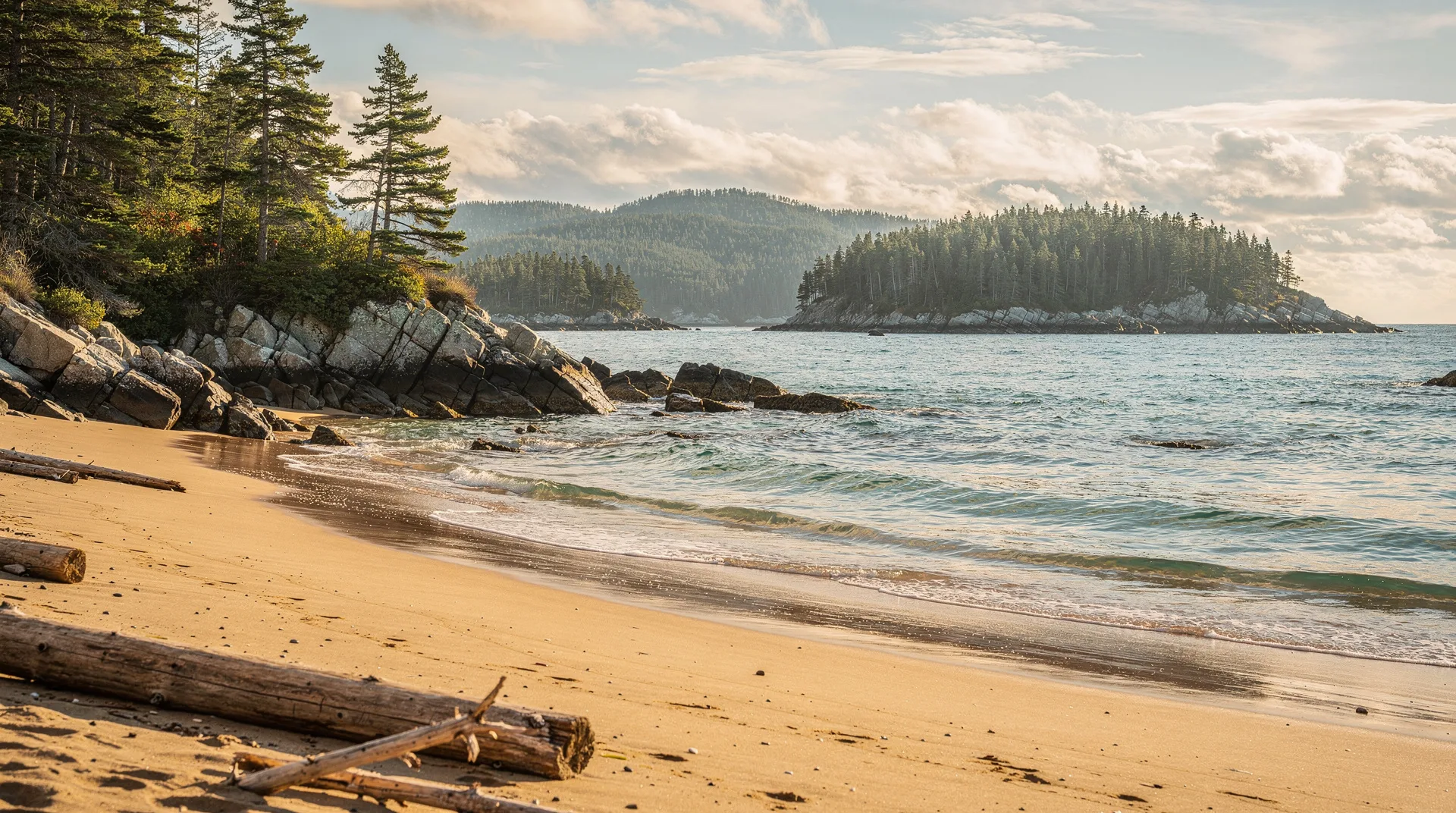
Canada's best beaches: coast to coast picks
Does Canada have good beaches?
Yes — Canada has thousands of kilometres of coastline and Great Lakes shoreline. The warmest swimming is in the Maritimes (warm Gulf of St. Lawrence waters, 20-24°C in August). Pacific beaches (Tofino, Long Beach) are dramatic but cold. Great Lakes beaches (Sandbanks, Sauble) offer freshwater swimming. PEI has the warmest saltwater north of the Carolinas.
Canada doesn’t come up in most people’s mental image of beach destinations, but it has the longest coastline on Earth (202,080 km) and some of the best beaches in North America. The country delivers red-sand Maritime coves, Pacific surf, towering Great Lakes dunes, and — briefly — warm swimming in waters most visitors don’t expect.
This guide covers the best beaches in Canada region by region, what conditions to expect, and when to visit.
At a glance
| Where | Coast to coast: Maritimes, Great Lakes, Pacific, Arctic |
| Best time | Late June to early September for swimming; October-April for Pacific surf |
| Warmest water | Gulf of St. Lawrence and Great Lakes, 20-26°C in August |
| Getting there | Varies by region — PEI and Nova Scotia beaches are drivable from Halifax, Great Lakes beaches from Toronto |
| Cost | Most Canadian beaches are free to access; provincial parks (like Sandbanks) charge a day-use fee |
The key regional truth
Canadian beaches divide into four types:
- Gulf of St. Lawrence (Maritimes): warmest saltwater in the country — reaches 20-24°C in summer.
- Pacific coast: dramatic, surfy, cold — rarely swimmable without a wetsuit.
- Great Lakes: freshwater, warm in summer (20-24°C), massive white sand beaches.
- Atlantic (Nova Scotia south shore, Newfoundland): cold, rugged, beautiful but not for swimming.
Your choice depends on whether you want to swim, to surf, or just to walk dramatic sand.
Prince Edward Island — Cavendish Beach and Basin Head
PEI is arguably Canada’s beach destination. The warm waters of the Gulf of St. Lawrence wrap the island, and red-sand and white-sand beaches stretch for hundreds of kilometres.
- Cavendish Beach: in PEI National Park, 5 km of reddish-pink sand. Warm water (20-23°C July-August). Popular but never crowded by international standards.
- Basin Head: “singing sands” that squeak underfoot. Near the eastern tip of the island.
- Brackley Beach, Stanhope Beach: quieter alternatives in the national park.
Best time: late June to early September. Peak water warmth mid-August.
If you want to pair beach days with local experiences, browse guided tours across Canada to find coastal excursions and cultural visits.
New Brunswick — Parlee Beach
- Parlee Beach Provincial Park (Shediac): advertised as having the warmest saltwater north of Virginia. Water reaches 24-26°C in August. Wide sandy beach, shallow entry, family-friendly. Popular, can be crowded on summer weekends.
- Kouchibouguac National Park: quieter, with long dune beaches and lagoons.
Best time: July-August.
Rainy or cool days are good for indoor options, and you can reserve Canada day tours and activities ahead of time.
Nova Scotia — Lawrencetown and south shore
- Lawrencetown Beach: Canada’s premier surf beach on the east coast, half an hour from Halifax. Cold Atlantic water; wetsuits essential. Excellent swell October-April.
- Crystal Crescent Beach: near Halifax, series of three white-sand beaches. Swimmable in August (water 15-18°C).
- Rissers Beach, Carters Beach: south shore, white sand, clear water.
- Martinique Beach: longest beach in NS (5 km), exposed Atlantic.
Best time for warmth: August. Surf season: fall and winter.
Ontario — Great Lakes beaches
Some of Canada’s largest beaches sit on the Great Lakes. Freshwater, no tides, warmer than most ocean beaches.
- Sandbanks Provincial Park (Lake Ontario): three beaches totalling 11 km, including the largest freshwater sand dune system in the world. Water 20-24°C July-August. Reservations required for the dunes beach in summer.
- Wasaga Beach (Georgian Bay): world’s longest freshwater beach at 14 km.
- Sauble Beach (Lake Huron): 11 km of soft white sand, iconic Ontario summer destination.
- Grand Bend (Lake Huron): busy family resort town with wide sandy beach.
- Bruce Peninsula beaches (Indian Head Cove, Singing Sands): turquoise water, rocky surrounds, dramatic Lake Huron scenery.
Best time: late June to late August.
Quebec — St. Lawrence and beyond
- Îles-de-la-Madeleine: 300 km of white-sand beaches in the Gulf of St. Lawrence. Warm water for Quebec (20-22°C in August). Remote island archipelago accessible by ferry or flight.
- Oka Beach (near Montreal): sandy beach on Lake of Two Mountains, popular summer escape.
- Tadoussac Bay: not a swimming beach — cold water and whales — but a beautiful sand crescent.
British Columbia — Pacific beaches
Cold water but spectacular scenery.
- Long Beach (Tofino, Vancouver Island): 16 km of surf beach in Pacific Rim National Park. Iconic Canadian Pacific beach. Surf year-round (wetsuit required).
- Chesterman Beach, Cox Bay: Tofino’s other famous surf beaches.
- Wreck Beach (Vancouver): clothing-optional beach below UBC cliffs.
- Kitsilano Beach (Vancouver): urban beach, saltwater but rarely swum.
- Rathtrevor Beach (Parksville, Vancouver Island): tidal flats, miles of sand at low tide, warmer water in the shallow shelf.
- Osoyoos Lake (BC interior): freshwater desert lake, Canada’s warmest by average (24°C in July). Sandy beaches in Osoyoos town.
Alberta, Saskatchewan, Manitoba — prairie lake beaches
- Waskesiu Beach (Prince Albert NP, SK): warm shallow water, long sandy beach.
- Grand Beach (Manitoba, Lake Winnipeg): 3 km of white sand, sometimes called “one of the best beaches in North America” by locals.
- Sylvan Lake (Alberta): popular summer destination with boardwalk and sandy beach.
Newfoundland and Labrador
- Sandy Cove (Eastport, NL): warm (for Newfoundland) in August. Family beach.
- Northern Bay Sands: white-sand beach on the Bay de Verde Peninsula.
- Blow Me Down Provincial Park beach: dramatic coastal scenery with small beach.
Water is cold. Most beaches are for walking and views, not swimming.
Arctic beaches
- Tuktoyaktuk (NWT): on the Arctic Ocean, accessible by the Inuvik-Tuktoyaktuk Highway. Cold but Arctic-coast bucket list.
- Baffin Island beaches: remote, cold, gorgeous.
Best beaches for specific needs
- Warmest saltwater swimming: Parlee Beach NB or Cavendish PEI
- Best surf: Tofino BC
- Best freshwater swimming: Sandbanks ON or Wasaga ON
- Most dramatic scenery: Long Beach BC or Gros Morne area beaches NL
- Best family beach: Parlee NB or Grand Beach MB
- Most remote / wild: Îles-de-la-Madeleine QC or Baffin Island
- Closest to a major city: Kitsilano (Vancouver), Cherry Beach (Toronto), Oka (Montreal)
- Best sunset: Wasaga (west-facing Lake Huron), PEI north shore
Best time to go
- Maritimes and PEI: July-August peak, shoulders June and early September are pleasant
- Great Lakes: July-August peak, water stays warm into mid-September
- Pacific: swimming rare; surfing best October-April; walking year-round
- Prairie lakes: July-August
- Arctic: July-August only
Water temperatures summary (August averages)
- Parlee Beach, NB: 24-26°C
- Cavendish, PEI: 20-23°C
- Sandbanks, ON: 22-24°C
- Grand Beach, MB: 20-23°C
- Îles-de-la-Madeleine, QC: 20-22°C
- Crystal Crescent, NS: 15-18°C
- Long Beach, Tofino, BC: 12-15°C
- Newfoundland coast: 10-14°C
What to bring
- Strong sunscreen (high UV even in temperate regions)
- Insect repellent (blackflies and mosquitoes near freshwater; late June-early August)
- Rash guard or wetsuit for cold-water swimming (Pacific, Atlantic outside Gulf of St. Lawrence)
- Windbreaker — many Canadian beaches are breezy
- Reusable water bottle
Beach hazards
- Rip currents: at Pacific beaches and larger Great Lakes beaches. Follow lifeguard advice.
- Cold water shock: Pacific and Atlantic waters can cause hypothermia fast.
- Tides: Bay of Fundy tides can strand beachwalkers; check tide tables.
- Jellyfish: rare stinging jellyfish in Gulf of St. Lawrence late summer.
- Sun: reflection off water and sand intensifies burn risk.
Pairing beaches with the rest of your trip
A beach day in Canada rarely stands alone. Most of these shorelines sit beside a national park, a harbour town or a food region, and the best trips treat the sand as one stop among several rather than the whole plan.
In the Maritimes, the beaches slot naturally into a longer loop. The Atlantic Canada 10-day itinerary strings together coastal stops where a swim fits easily between lighthouses, fishing villages and seafood dinners. If you are comparing islands, Cape Breton vs PEI helps you decide whether you want warm-water beach time or a more rugged, scenic drive. The Shediac destination guide covers the town beside Parlee Beach, and the Kouchibouguac National Park guide is worth a read if you prefer dunes and lagoons over a busy resort beach. Travellers heading to the island can plan their crossing with the Confederation Bridge vs ferry guide, and the Prince Edward Island National Park guide explains how the park shoreline is laid out.
On the Pacific side, a beach visit works best as part of a wider Vancouver Island trip. The Pacific Rim National Park guide describes the long surf beaches and the rainforest behind them, while the Tofino vs Ucluelet comparison helps you choose a base. If storms appeal more than sunbathing, the storm watching in BC guide explains why the cooler months are a draw in their own right.
Ontario beachgoers have plenty of options within reach of a big city. The Sandbanks Provincial Park guide is the place to start for dunes and shallow, sheltered water, and the Bruce Peninsula National Park guide covers the turquoise coves on Lake Huron. For Quebec, the Îles-de-la-Madeleine destination guide is the right companion for anyone willing to travel to a remote archipelago.
Choosing between warm water, surf and scenery
Before you book anything, decide what you actually want from the beach, because the three main goals rarely overlap on the same shoreline.
If swimming is the priority, aim for the Gulf of St. Lawrence or the Great Lakes and plan around the warmest weeks of summer. Calm, shallow water suits young children and relaxed floating, and these beaches reward a slow day with a picnic, a book and no fixed schedule.
If you want surf, the Pacific and the Nova Scotia Atlantic coast are the places to go. Expect cold water, a wetsuit and a different rhythm: you watch the swell, pick your moment and spend more time on the sand than in the water. Surf beaches are as much about the setting as the sport, and plenty of visitors come only to walk, photograph and watch the waves.
If scenery is the goal, you can go almost anywhere and be rewarded, but choose your light. Early morning and late evening make even an ordinary shoreline look dramatic, and the red cliffs, driftwood and fog of the coasts reward patience more than a midday visit does.
Practical beach etiquette and planning tips
A few habits make a beach day smoother wherever you end up.
- Arrive early on summer weekends. Popular beaches fill up, parking is limited, and the calmest hours are usually the first ones of the day.
- Pack out everything you bring in. Many beaches sit inside protected parks and have few bins.
- Respect dune fencing and marked paths. Dune grass holds the sand in place, and walking over it damages the very landscape you came to see.
- Check the local conditions before you go, including tide tables on the Atlantic and Pacific coasts and posted warnings at lifeguarded beaches.
- Keep a layer in the car. Evenings cool down quickly near cold water, even after a warm afternoon.
- Respect wildlife. Seabirds nest on some beaches, and giving them space is part of visiting responsibly.
For wider trip planning, the best time to visit Canada guide and the Canada in July and Canada in August guides help you line up your dates with the warmest weeks. If you will be driving between beaches, the Canada car rental guide covers the practical side of getting around.
Planning a beach-focused trip
If PEI’s beaches are the draw, our Cavendish beaches guide goes deeper on the national park shoreline, and the PEI 5-day itinerary is built around the island’s beach towns. For the Pacific coast, pair a beach visit with the Tofino destination guide or the surfing Tofino guide, and consider the Vancouver Island 7-day itinerary if you want more than a day trip.
Bay of Fundy visitors should read the whale watching Bay of Fundy guide and check tide tables before walking any beach there — see the Bay of Fundy destination guide for the tide-timing details that matter for safety. Ontario beachgoers can find more detail in the Wasaga Beach destination guide.
The honest takeaway
Canadian beaches surprise visitors. For pure swimming pleasure, the Maritimes and Great Lakes deliver warm-enough water and wide sandy beaches at surprisingly accessible price points. For scenery and adventure, the Pacific coast is unmatched. Canada isn’t a tropical beach destination, but it has a serious beach game for the six-to-ten weeks a year its waters rise above “refreshing.”
Frequently asked questions about Canada’s best beaches
Is it safe to swim in Canada’s ocean beaches?
Generally yes with normal caution, but conditions vary sharply by coast. Gulf of St. Lawrence beaches (PEI, New Brunswick) are gentle and warm in summer. Pacific and open Atlantic beaches can have stronger currents and cold-water risk; check for lifeguards and posted rip current warnings, and heed local advice.
What is the warmest beach in Canada?
Parlee Beach in Shediac, New Brunswick, is often cited as having the warmest saltwater north of Virginia, reaching around 24-26°C in August. Osoyoos Lake in British Columbia’s interior is Canada’s warmest freshwater lake on average, also around 24°C in July.